I Feel Anxious After Getting My Fortune Told at a Fortune-Telling Shop
Jul 24, 2024 - Religious gathering, Spiritual practice seminar, Bhutan business meeting
The morning dawns at the Seoul Jungto Center.
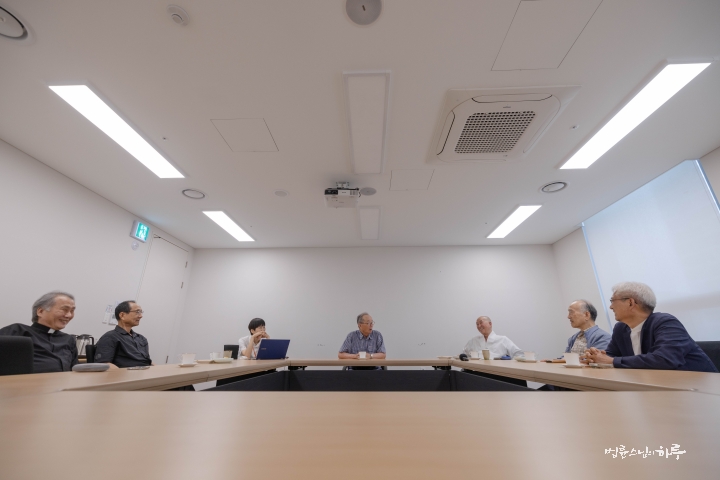
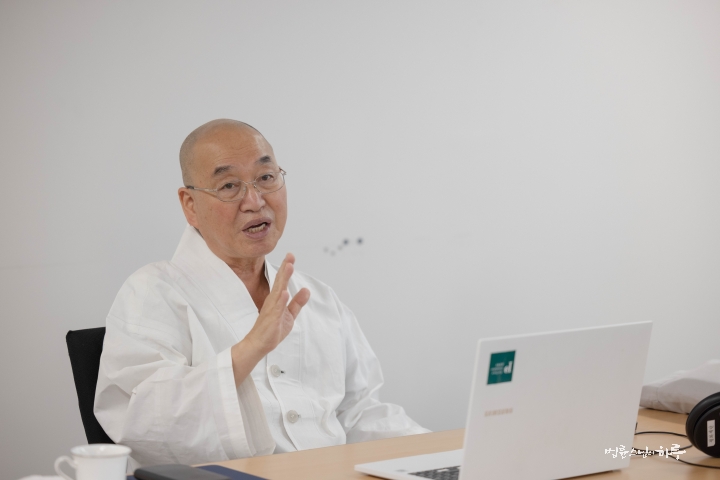
After completing his morning practice and meditation, Sunim headed to the Peace Foundation early in the morning for a meeting of religious leaders for national reconciliation and peace. When the pastors, priests, bishops, and religious leaders all arrived at the Jungto Social and Cultural Center, they began the meeting over a meal together.
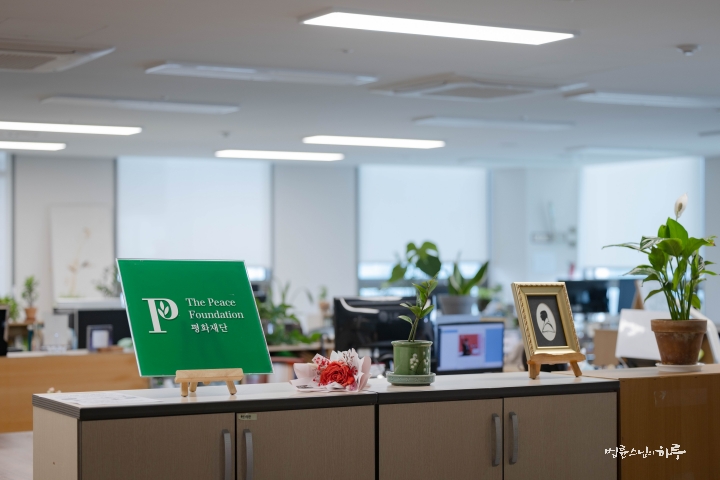
After finishing the meal, they moved to the Peace Foundation conference room to begin discussions in earnest. First, they watched a video of Sunim’s visits to Southeast and South Asian countries over the past month.
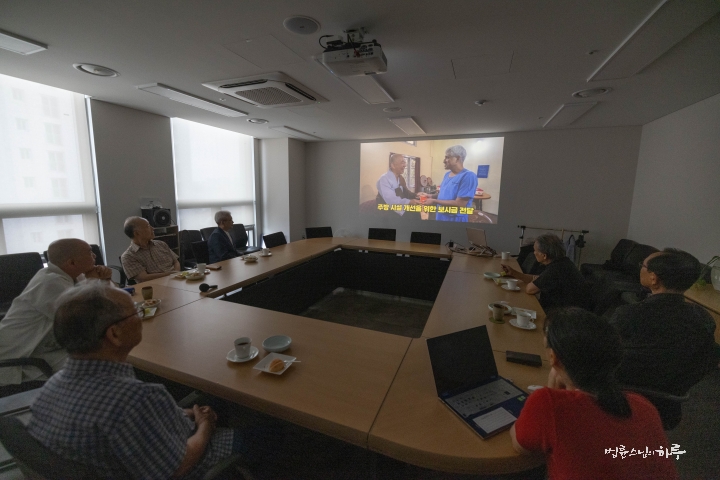
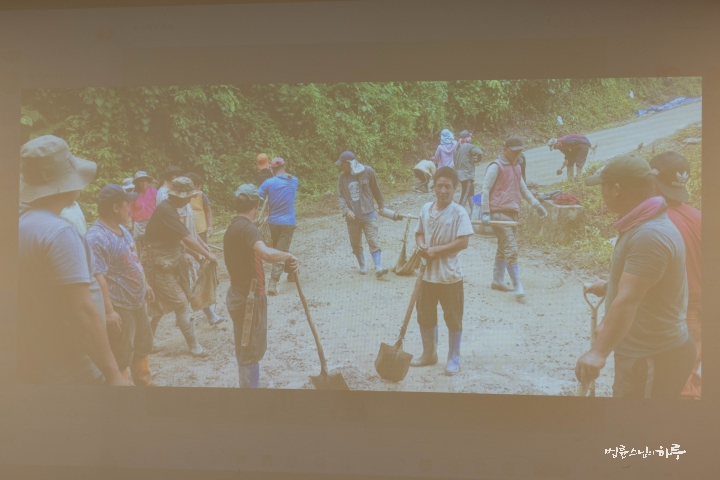
The religious leaders were all quietly moved by the footage of Sunim working with local residents in Bhutan to build irrigation canals, pave hillside roads, and repair poor homes for sustainable development. Park Nam-soo, who was chairing the meeting, spoke first.
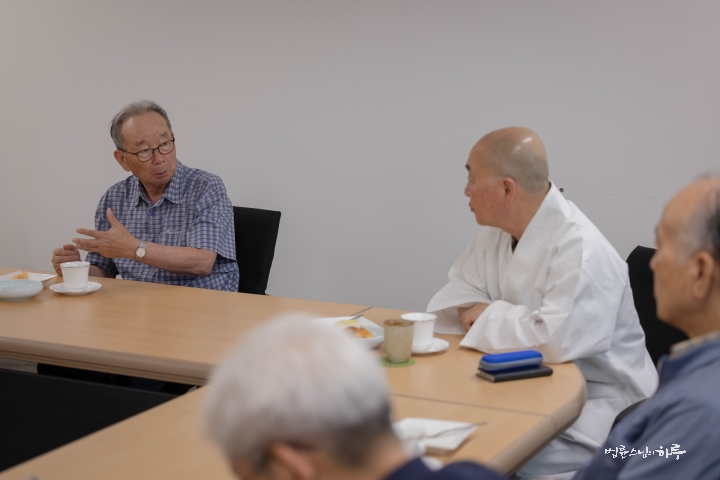
More Important Than Helping
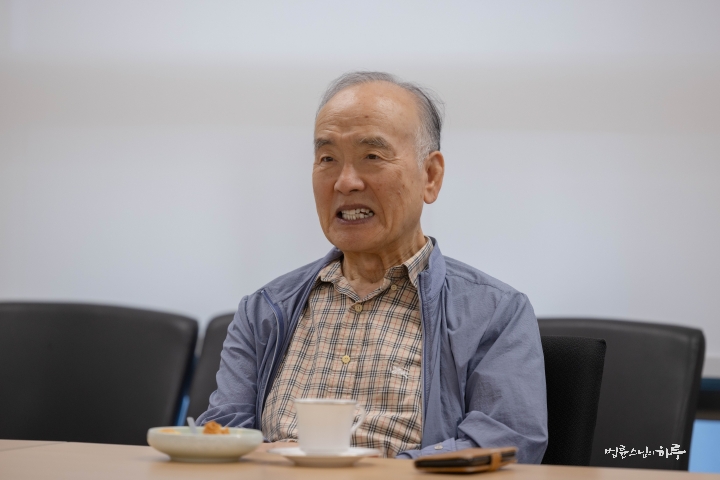
“Though it was a short video, I learned a great deal. It seems that how we help is more important than the act of helping itself. I thought that truly helping means enabling residents to become self-sufficient, rather than just making them materially abundant. We often see negative consequences when greed enters into aid efforts. There are many organizations in our country that support or volunteer in Southeast Asian countries. Watching today’s video, it seems there are many differences in how Sunim helps people in Southeast Asia through JTS. Sunim seems to prioritize having residents participate together. The approach is to help with what’s lacking if the villagers themselves want to develop their village, so it looks quite different from other organizations’ support methods. I apologize for saying this in front of the pastor, but I worry that Christianity often prioritizes missionary work.”
Bishop Park Kyung-jo also spoke with a gentle smile.
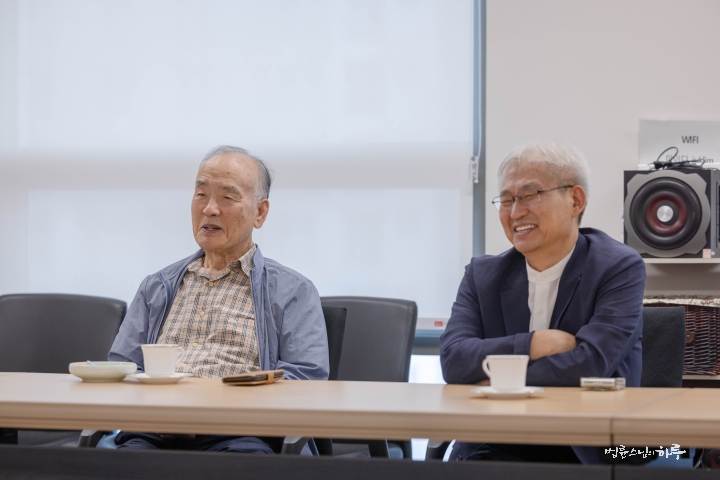
“Seeing the work Sunim does makes me feel warm inside. You’re doing a new Saemaul Movement in Bhutan.”
Sunim replied with a smile:
“Korea did a government-led Saemaul Movement, while I’m doing a civilian Saemaul Movement.”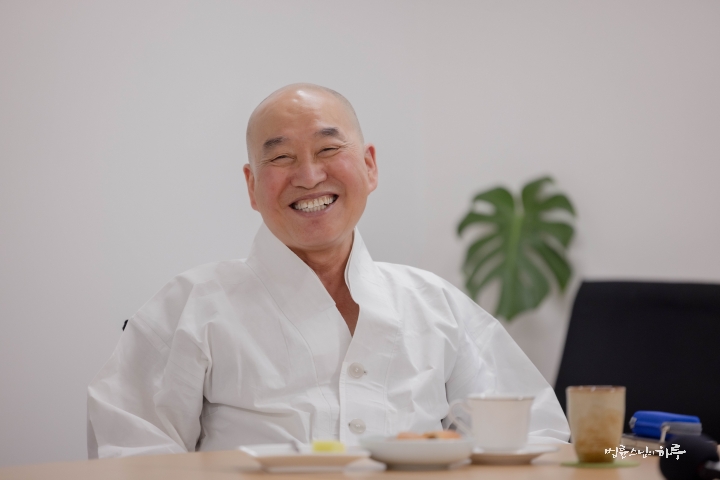
Sunim expressed concern about the side effects of the Korean Wave phenomenon occurring in Southeast Asia.
“Looking at national finances and income levels, if Korean civic groups and religious organizations provided just a little more support for Southeast Asian people, it would be tremendously helpful for enhancing Korea’s national prestige, overlapping with the Korean Wave. It’s a bit regrettable. Now that only the Korean Wave is being transmitted, it seems to keep playing a role in stimulating the desires of Southeast Asian people. Especially among young people, the tendency to want to leave their own countries is also growing stronger.”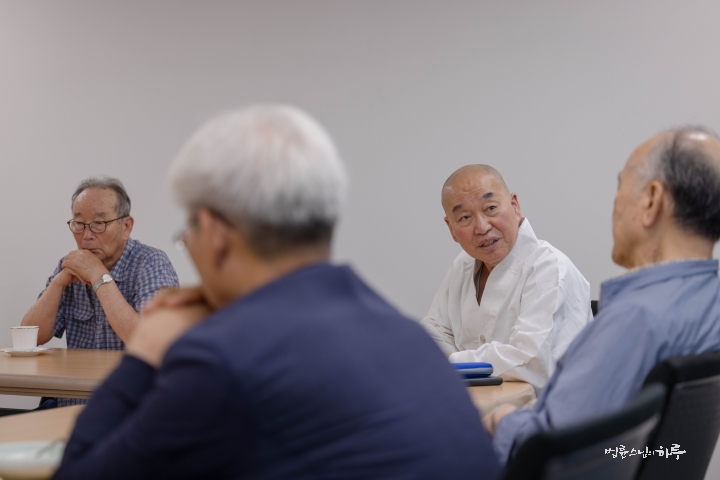
The religious leaders offered various analyses on why Southeast Asian countries have been unable to escape poverty. Pastor Park Jong-hwa pointed out that a culture of recognizing diversity and cooperation seems important.
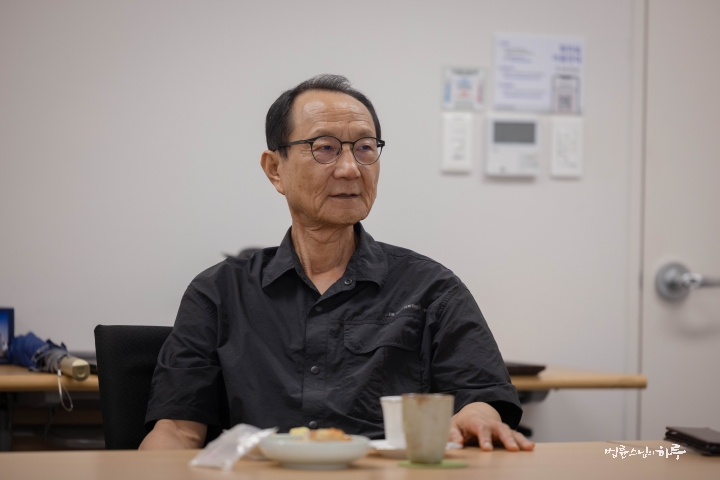
“In the case of poor countries, one religion is usually dominant. But I think Korea has achieved growth at an incredibly fast pace because we have a culture where different things freely compete and cooperate.”
Sunim diagnosed that the remnants of feudal society seem to be a factor in poverty.
The Philippines is predominantly Catholic, but social development seems slow because many remnants of feudal society remain. Singapore had no remnants of feudal society, so social development was fast. Indonesia and Malaysia, though Muslim countries, have less rigid societies because the remnants of feudal society are weak, while Pakistan has a more rigid society because the remnants of feudal society are strong. In India, the more rural you go, the more remnants of feudal society remain centered on Hinduism, so Bihar state, which was historically the center of civilization, is now the poorest. Rather, industrialization is happening rapidly in areas where ethnic minorities lived. In the Middle East region as well, I think the bigger reason is not because of Islam, but because they still can’t let go of the remnants of feudal society. Turkey is also a Muslim country, but after declaring secularization, the pace of social development has accelerated. Most of Africa and Latin America believe in Catholicism and Protestantism, but they haven’t been able to escape poverty. The reason seems to be the remnants of feudal society rather than a problem with religion.”
Next, the religious leaders shared various opinions on what role interfaith meetings should play to promote exchange and cooperation between religions within South Korean society. Bishop Park Kyung-jo made a suggestion first.
“I was so grateful when you visited our Anglican cathedral at the recent interfaith meeting. So I’d like to propose that we visit the leaders of other religions going forward.”
Park Nam-soo also made a suggestion.
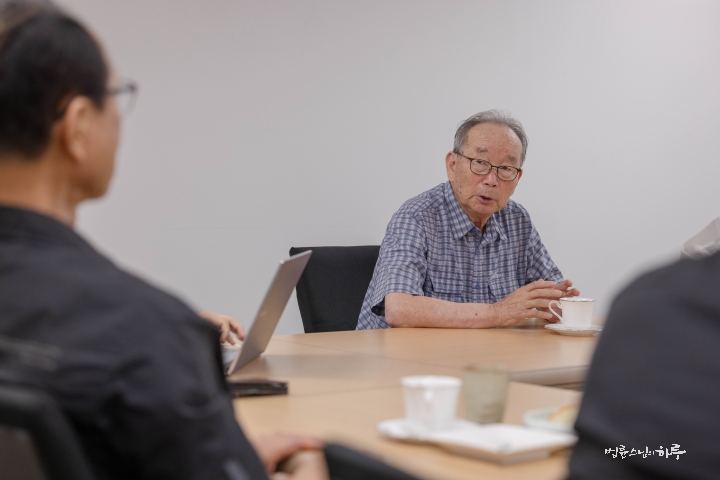
“I think the biggest challenge of our time is the climate crisis. So I think it’s necessary for interfaith meetings to discuss what role we should play in the era of climate crisis and issue messages.”
Sunim also made a new proposal.
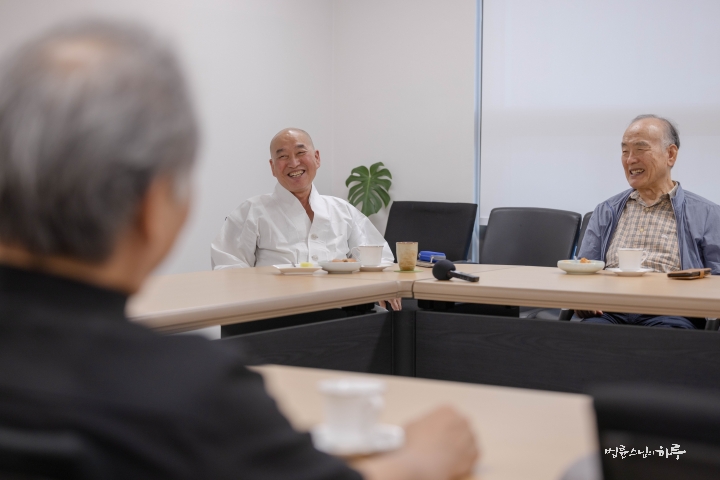
All the religious leaders readily agreed.
“That’s a good suggestion. We’re showing our age too much now.” (laughter)
“It feels like time has passed so quickly in just a moment.”
Sunim said with a laugh:
“Just a moment? It’s been almost 30 years since we started interacting while helping North Korean compatriots.” (laughter)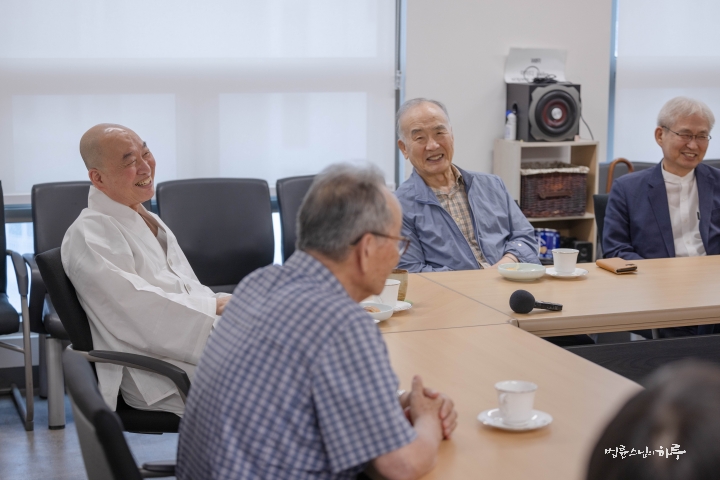
Before they knew it, it was time to wrap up. At next month’s meeting, they agreed to have more concrete discussions on various topics, including how to hold the upcoming 200th anniversary of Choe Je-u’s birth, how to form the next-generation religious leaders’ meeting, and what role interfaith meetings should play in the era of climate crisis.
After seeing off the religious leaders, Sunim moved to the Jungto Center broadcasting studio to conduct a live Dharma Q&A session.
At 10 AM, the live Dharma Q&A broadcast began with all Jungto Society members entering the video conference room. After the audience greeted Sunim with three bows to request his teaching, he gave an opening remark.
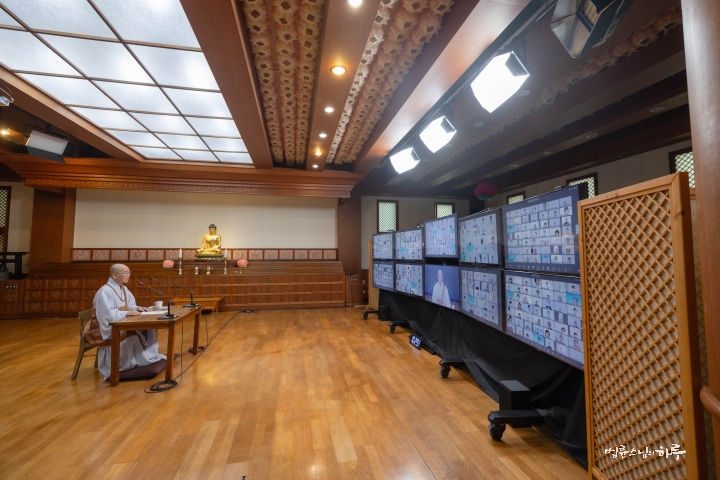
Reflecting on a Month-Long Visit to 10 Asian Countries
I completed my month-long tour well and returned last Sunday. During the month I was abroad, I did hold Dharma talks, but I’m sorry that the lighting was dim and I couldn’t receive enough questions. We practice diligently while also helping those in need according to the Buddha’s teachings. I think it’s a worthwhile endeavor, even if it’s a bit laborious, if we can be of even a little help to those in need, beyond Jungto Society and beyond South Korea.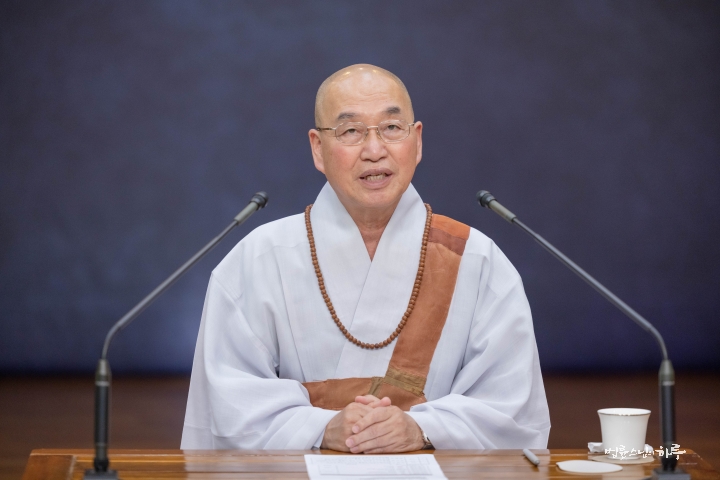
After the video ended, Sunim continued speaking.
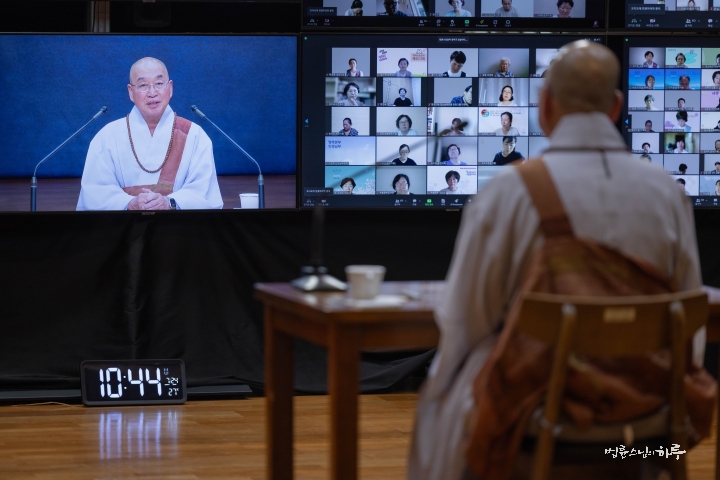
Three Activity Goals of Jungto Society Members
“I’ve shared the journey of the past week with you all. The activity goals of Jungto Society members can be largely divided into three. First is to make oneself happy. We must always be aware of and manage our minds well so that there is no suffering in our hearts. Second is to share this good Dharma with our neighbors. The reason we conduct Jungto Dharma School, Sutra Course, Happiness School, and operate Enlightenment Retreats, Sharing Retreats, and meditation retreats is because we hope that not just ourselves, but all people in the world will encounter this good Dharma and live happily. Third is to expand activities to help poor people suffering from material difficulties. We must provide food for the hungry, medicine for the sick, and learning opportunities for children who cannot study. In impoverished areas, we must do work to help them live self-sufficiently. So we help build houses for those without homes, repair irrigation canals where they have collapsed, build roads where there are none, and bring electricity to places without it, so that they can carry on with basic living.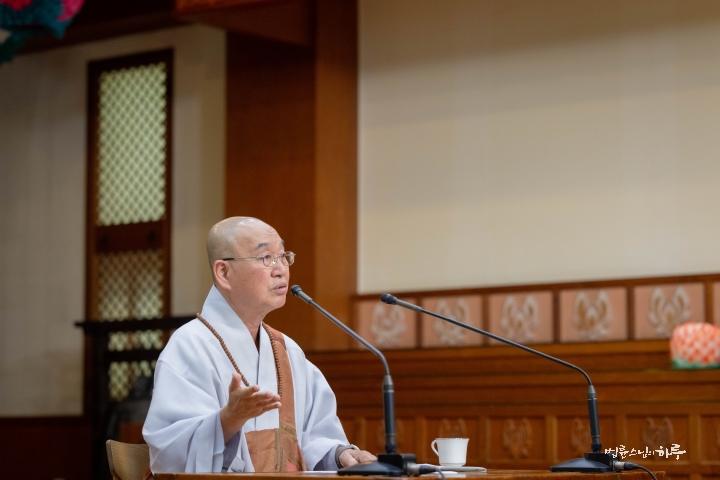
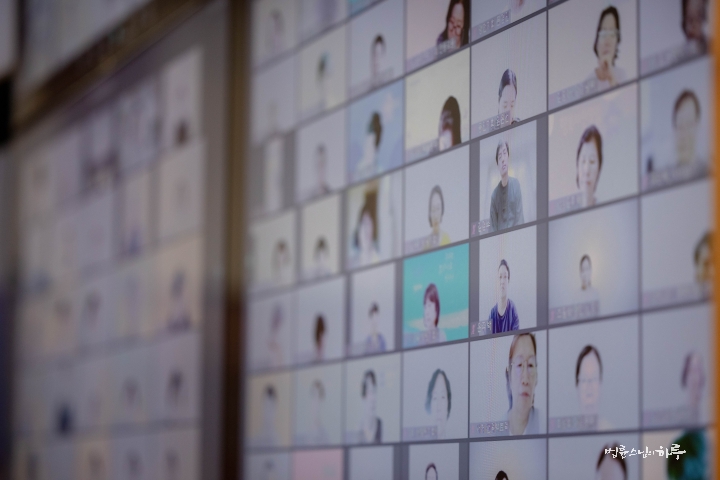
Then he had a dialogue with those who had requested questions in advance. Three people pressed the raise hand button and asked Sunim questions.
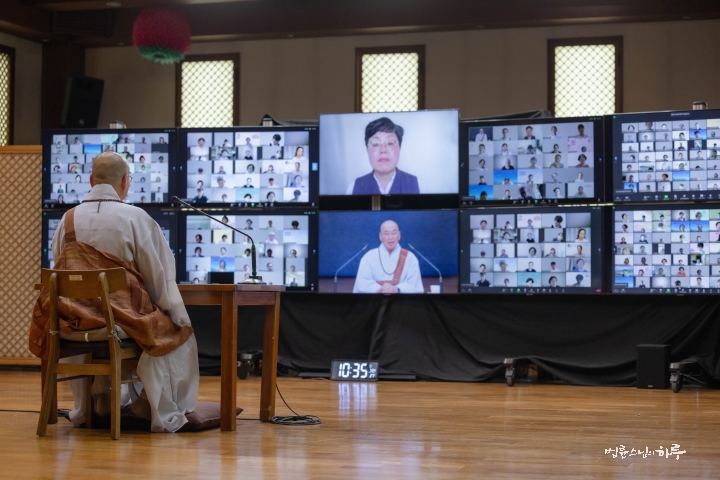
Among the people who come to the multicultural center, there are some who don’t change no matter how much we help them. What kind of mindset should we have in such cases?
I’ve been in conflict with my upstairs neighbor for 5 years due to water leakage. What perspective should I have towards someone who only asserts their own position?
After hearing about our nation’s history, culture, and K-culture, I wondered if it conflicts with the concept of emptiness. How should I understand this?
After an hour of Q&A, the live broadcast ended after 11 o’clock. Sunim left the broadcasting studio, had lunch, and then moved back to the Peace Foundation.
From 1 PM, he held a meeting with JTS and the International Cooperation Team about the sustainable development project in Bhutan and overseas schedules for the second half of the year. First, they discussed the sustainable development project.
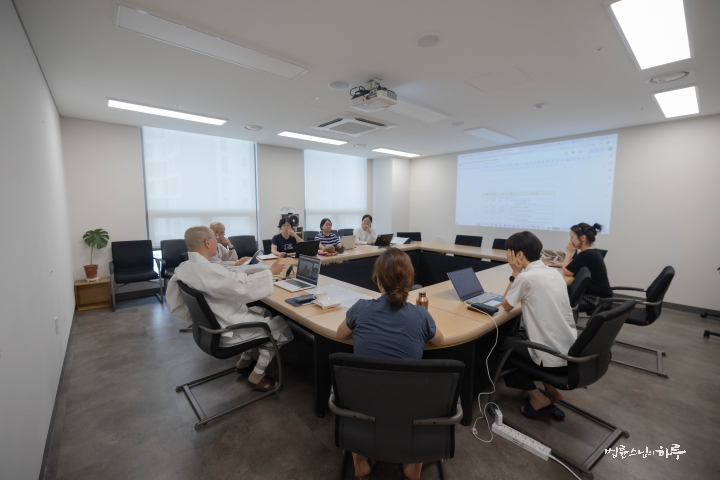
Sunim also discussed the August visit schedule, principles for dispatching volunteers, medical support plans, heavy equipment rental, dispatch of Korean activists, and overseas schedules for the second half of the year. Towards the end of the meeting, a video was sent from Bhutan showing villagers working together on newly started road paving.
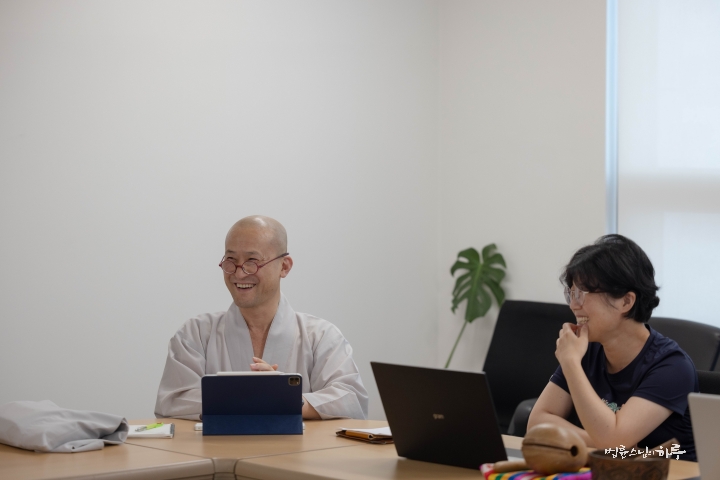
After finishing the meeting at 3 PM, from 4 PM he spent two hours discussing the Peace Foundation’s 20th anniversary ceremony and the foundation’s business direction with the Peace Foundation planning committee members.
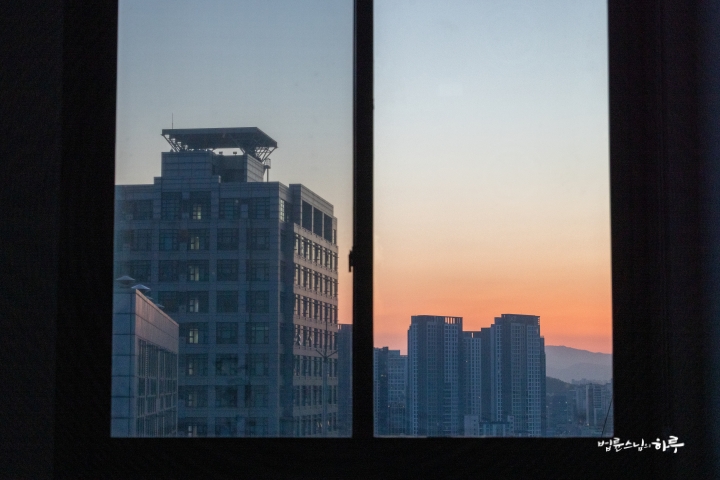
As the sun set, from 7:30 PM he conducted a live Dharma Q&A broadcast for evening members at the Jungto Center broadcasting studio. As in the morning session, he briefly shared his journey visiting 10 Asian countries over the past month before starting the dialogue.
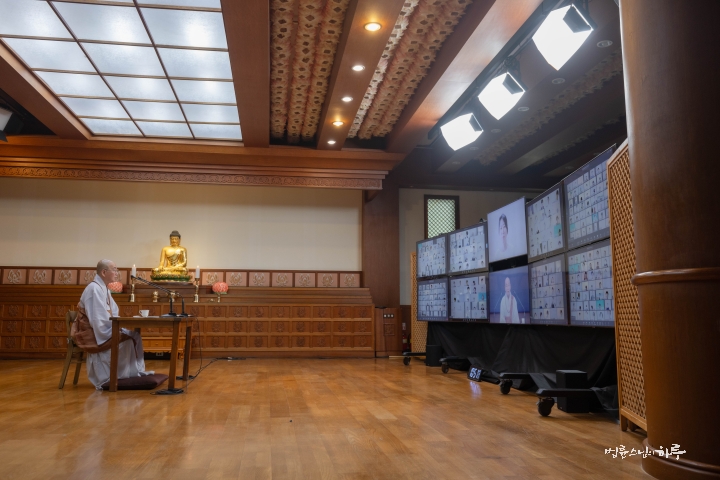
In the evening, three people who had requested in advance had conversations with Sunim. One of them, who was practicing, sought Sunim’s advice on how to adjust their perspective after visiting a fortune-teller, which had left them feeling anxious.

I Feel Anxious After Getting My Fortune Told at a Fortune-Telling Shop
“I’m a practitioner, but I occasionally visit fortune-telling shops. This time, I went because it had been a year since I got a talisman. I ordered a talisman because I was worried about my son-in-law who works with knives at his butcher shop, and I also had my daughter’s name changed. The person who studied at the temple and gave my daughter her name said it wasn’t good. They said changing her name would improve the relationship between the couple and make them wealthy, so we decided to change it. I tried not to get my fortune told, but ended up doing it anyway. They said I shouldn’t leave the vicinity of my house in the eighth lunar month. There’s also my nephew’s wedding, and I’m feeling unnecessarily anxious. I also feel regretful, thinking, ‘If I had donated this money to JTS instead, it could have been used for a good cause…’ How should I get my mind straight about this?”
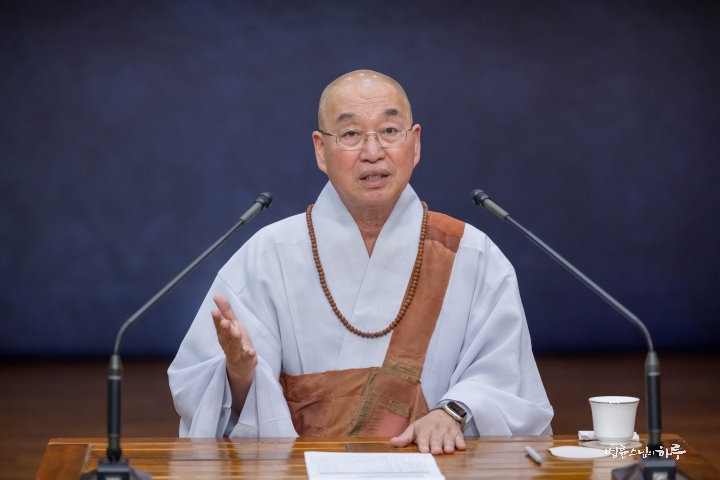
“If there’s no significant harm, just do it if you want to. Some people spend money on golf, others on drinking alcohol. There are many people in this world who spend money frivolously. What’s the big deal about spending a few hundred thousand won to get your palm read or your fortune told? If you want to get your fortune told, go ahead.‘I don’t drink alcohol, I don’t go golfing, and I don’t go dancing! I’m not wasting money elsewhere, so what’s wrong with spending a little on this?’
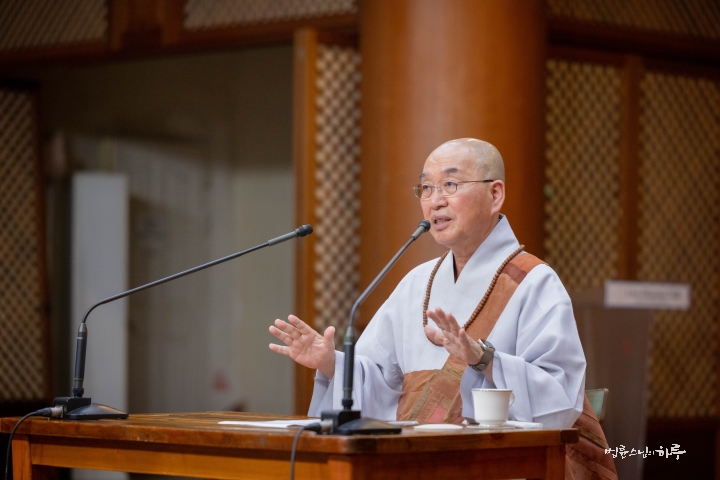
Getting your fortune told is not a fundamental solution to psychological anxiety. If the cause of your anxiety is a physical issue, it would be helpful to get checked at a neuropsychiatry clinic and take tranquilizers to stabilize your mind. If you reach a state where your mind is not anxious or restless even when you close your eyes and remain still while bowing or meditating, you won’t need to make such efforts. It’s not gambling, but it should be seen as entertainment, like occasionally inserting a coin into a game machine when passing by. Spending some money once a year to check your fortune out of boredom should be considered a game. Realistically, if changing a name could change destiny, why would we need to work? We could just change everyone’s name to a good one. Think about it logically. If business success depended on names, why would we work? If college admission depended on names, why would we study? If everything could be solved by changing names, that would be it. If changing a name could make a business successful, why bother distributing promotional materials?
“You’re right, it’s because I’m psychologically anxious. I’ll meditate, bow, and practice diligently to achieve peace of mind. Thank you.”
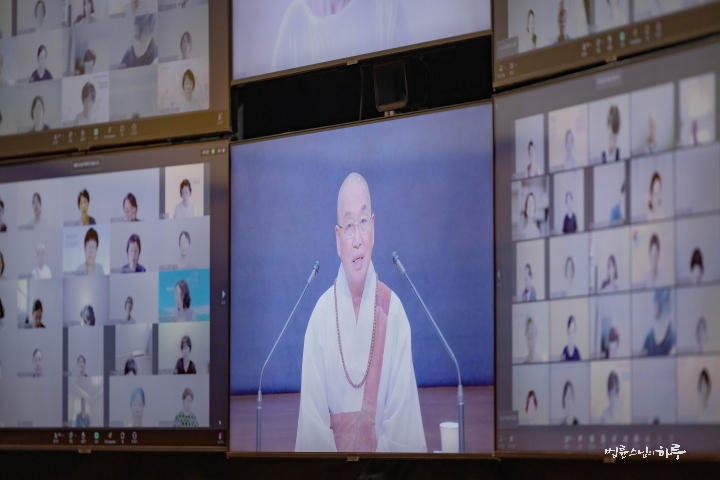
The questions continued.
How can a practitioner maintain the middle way and be comfortable and useful in any situation?
My two children, aged 13 and 10, fight with each other. As a mother, what should I say and do for them?
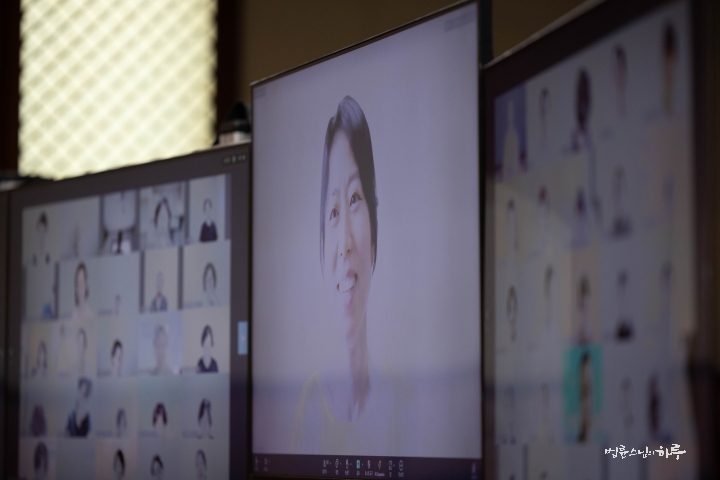
After the conversation, Sunim gave closing remarks.
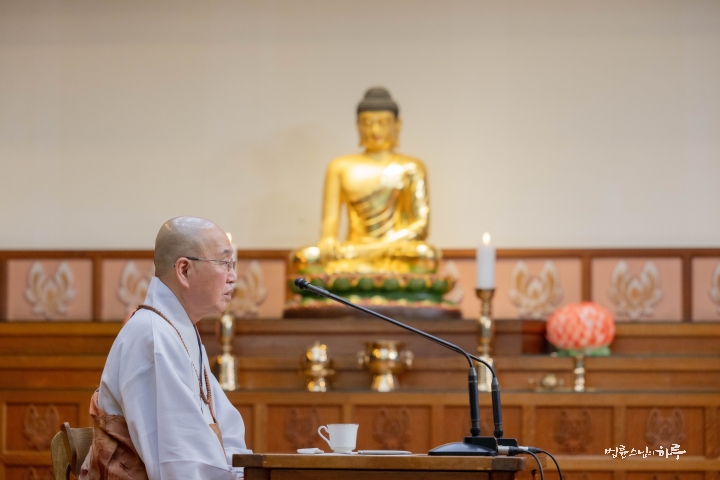
A Time to Pause Activities and Focus Entirely on Practice
After the meditation ends, your activities will return to normal, but those who have entered the community as resident practitioners will need to practice for ten more days. I also plan to stay and practice with the community instead of going abroad. On August 4th, we have the opening ceremony for the 6th 100-Day Prayer. It’s the day we start the 100-Day Prayer with renewed hearts, so I hope all of you will participate. We all promised to attend the opening and closing ceremonies when we started the 1000-Day Prayer. Those who have been praying consistently until now can finish strong, and those who have missed prayers in between can use this opening ceremony as an opportunity to start anew. So I ask that everyone attend without exception.In August, after the graduation ceremonies for the Jungto Buddhism Course and Sutra Course, we’ll wrap up Jungto Society’s first-half-year activities. In September, we have the entrance ceremony for the new Jungto Buddhism Course and Sutra Course. I hope all of you will take an interest and actively participate so that many people can enroll in the Jungto Buddhism Course and experience happiness. Then, I’ll see you at the opening ceremony of the 6th 100-Day Prayer on August 4th.”
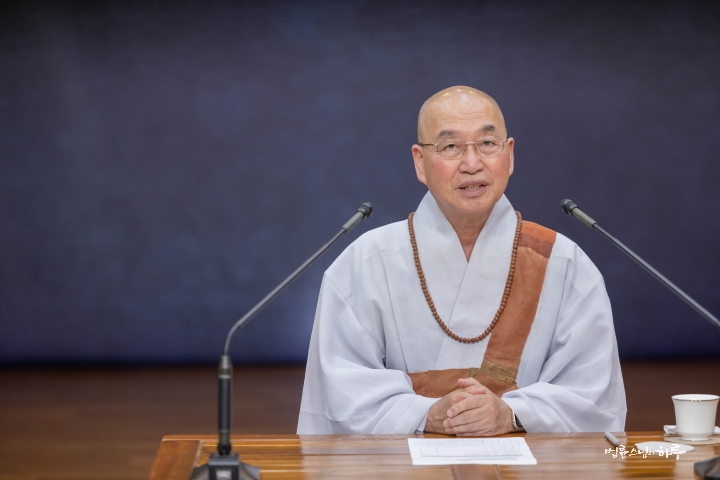
It was past 9 PM when the live broadcast ended.
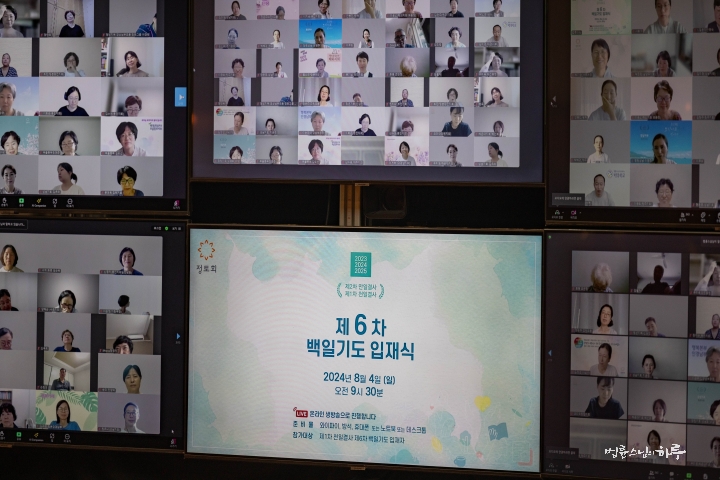
Tomorrow, after a breakfast meeting with North Korea experts at The Peace Foundation, Sunim plans to move to the Mungyeong Retreat Center for the summer retreat and meditation practice.
A Day in the Life of Sunim was translated by AI.