Drinking Alcohol Feels Good, But I Regret It the Next Day
Jul 16, 2024 - Singapore, Dharma Q&A for Korean Expatriates
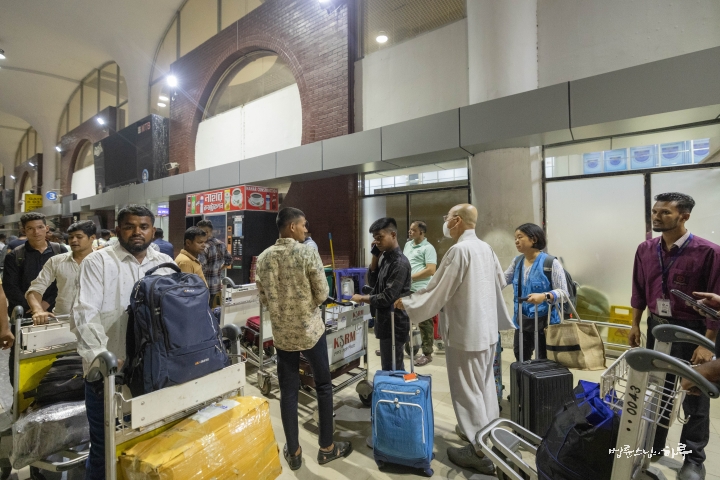
After completing the departure procedures, he left Dhaka Airport at 2:45 AM. He spent the night sleeping and traveling in the sky.
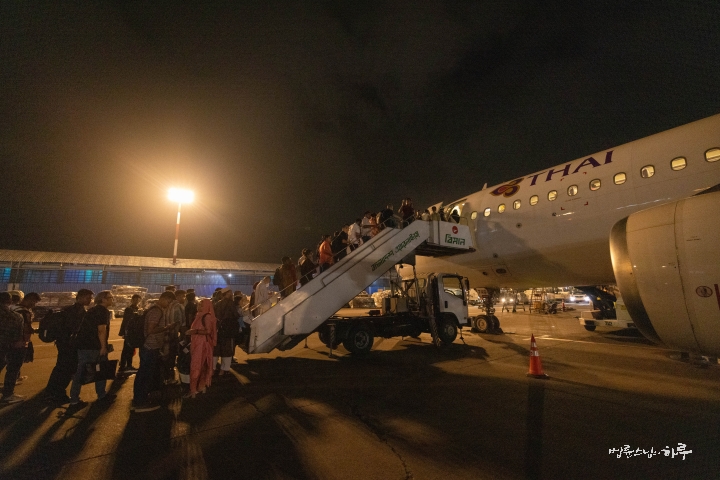
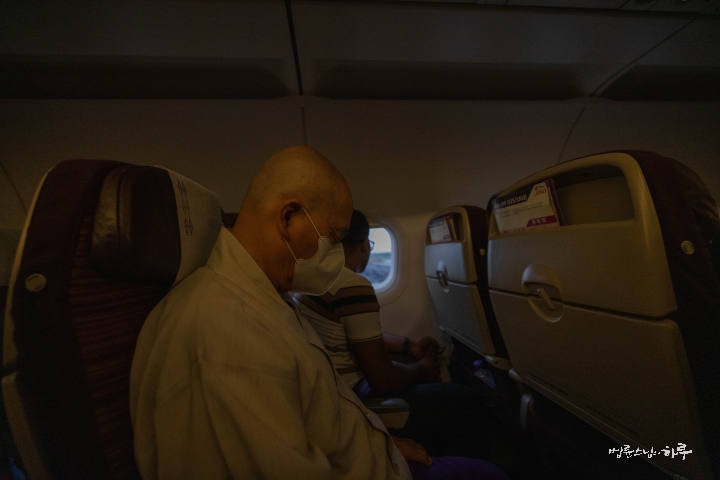
After a stopover at Bangkok Airport, he boarded another plane bound for Singapore.
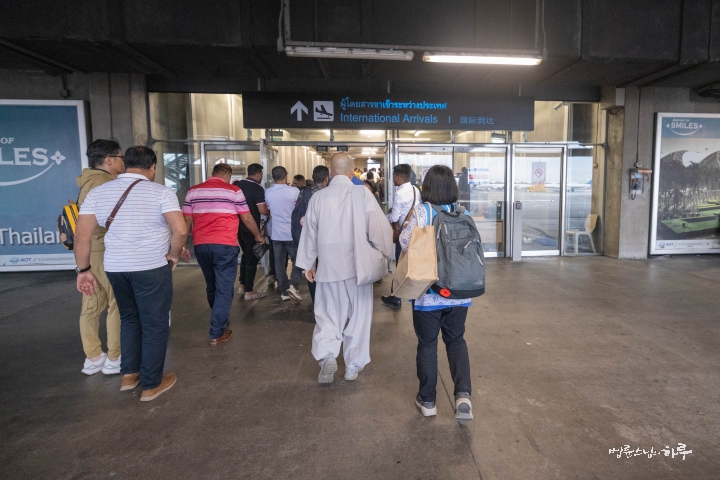
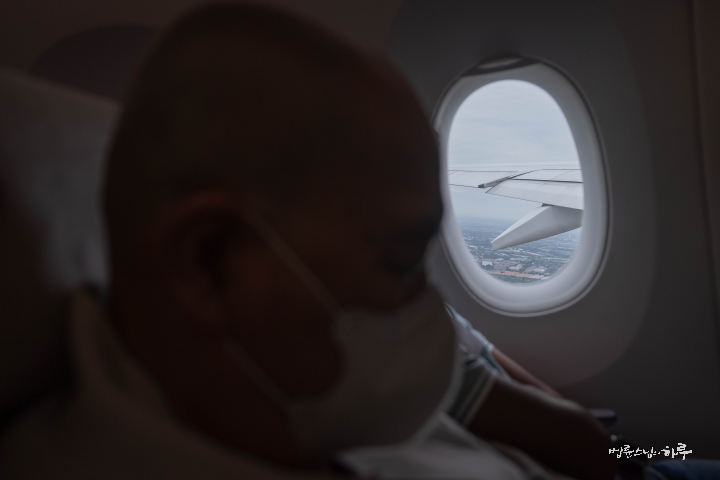

It took 6 hours and 30 minutes to travel from Dhaka to Singapore. Upon arrival at Singapore Airport, it was 11:15 AM local time.
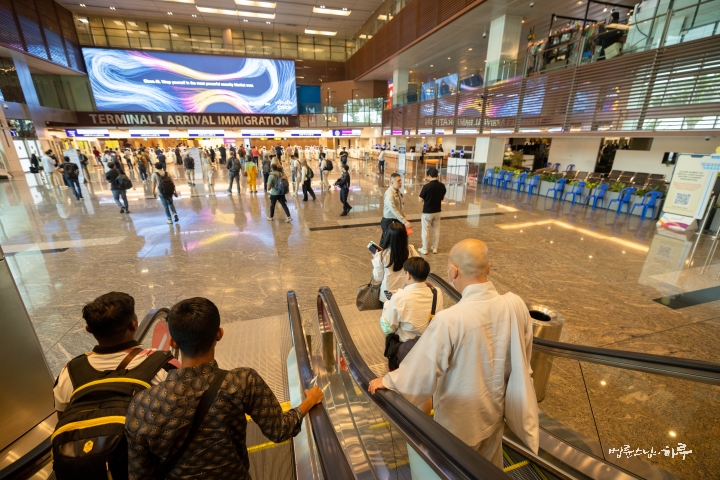
After collecting his luggage and exiting the airport, Jungto Society members warmly welcomed Sunim with a sign that read ‘Welcome Venerable Pomnyun Sunim’ and placed flower garlands around his neck.
“Sunim, you must be tired from your long journey. Welcome to Singapore.”
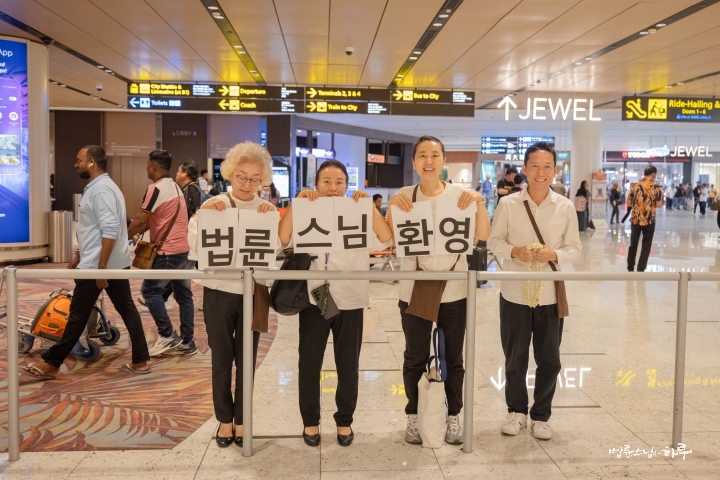
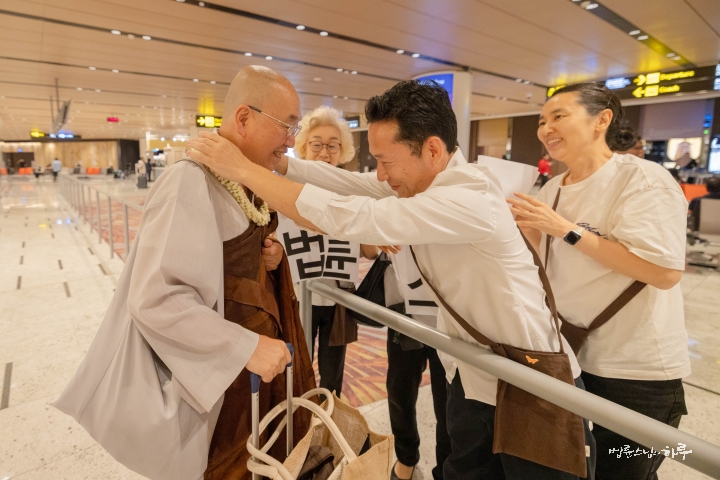
After a modest welcoming ceremony, they took a commemorative photo together and moved to a restaurant for lunch.
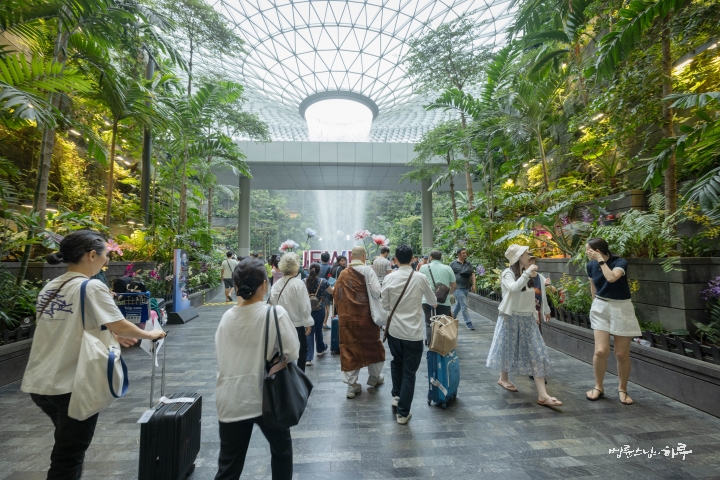
As expected of a city close to the equator, it was very hot and humid. Sunim had lunch and chatted with Jungto Society members.
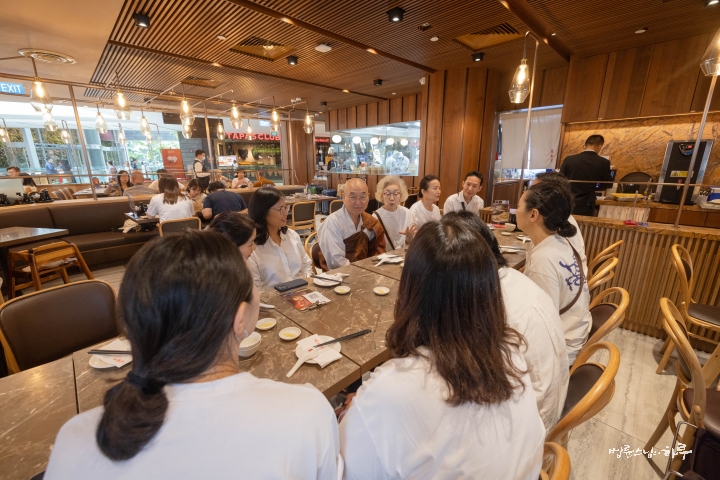
Since the lecture was canceled in 2020 due to the COVID-19 pandemic, many people had been eagerly awaiting Sunim’s lecture, which was finally happening after four years.

After exchanging greetings, they moved to the accommodation. Sunim has been experiencing a swollen throat and flu-like symptoms since the day before yesterday, and he hasn’t fully recovered yet. To ensure he could deliver the evening lecture properly, he took ample rest in the afternoon.

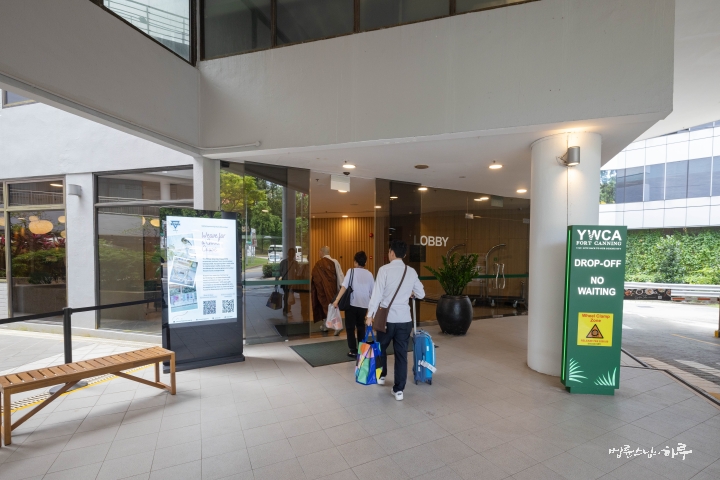
At 6 PM, Sunim headed to the YWCA Grand Hall where today’s lecture was to be held. Volunteers were busy preparing for the lecture in various areas.
“Nice to meet you. Thank you for your hard work.”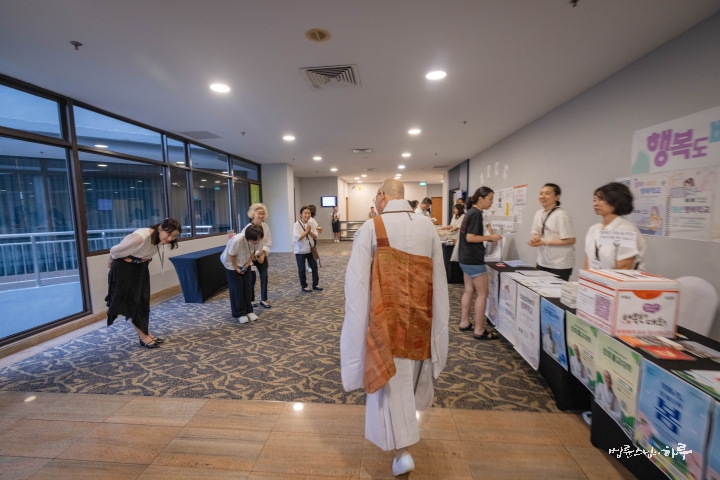
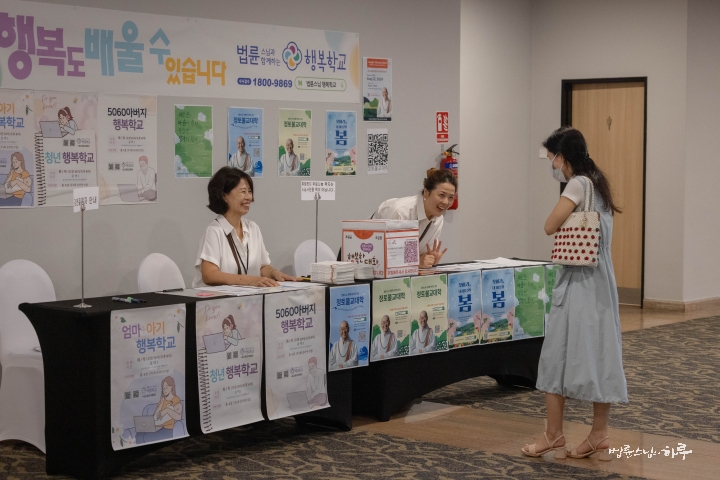
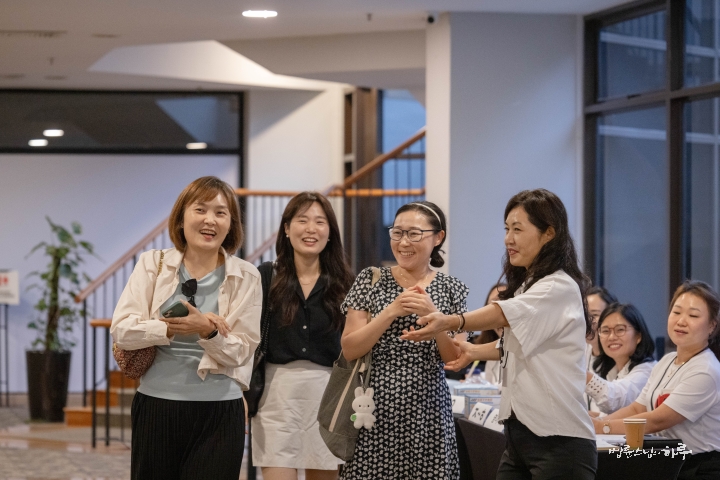
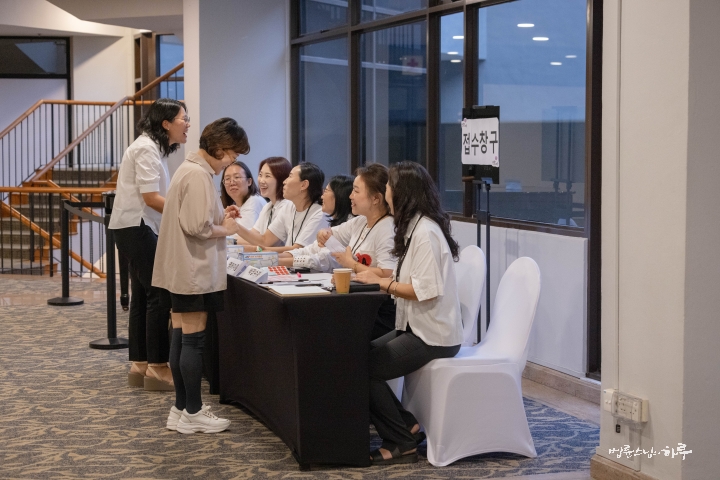
From 6:20 PM, Sunim had tea with local dignitaries from Singapore. The attendees included Ambassador Hong Jin-wook of the Korean Embassy in Singapore and his wife, the president of the Korean Association and his wife, the consul and his wife, the president of the National Unification Advisory Council, the president of the Overseas Korean Traders Association (OKTA), and the president of the Women’s Association.
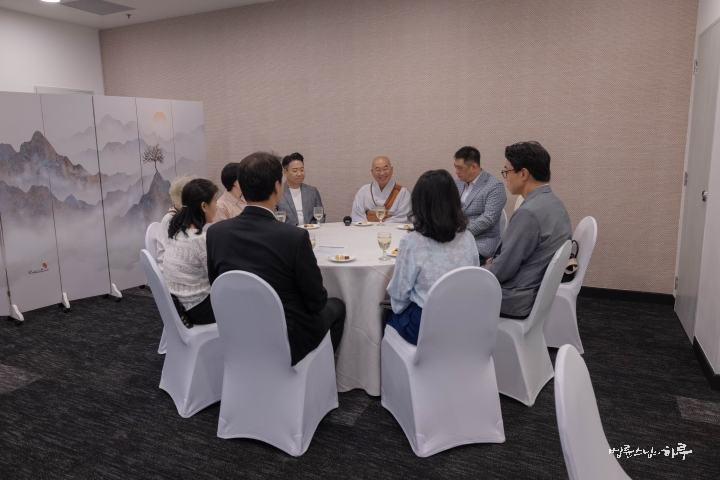
The ambassador expressed concern about Sunim’s busy schedule and inquired about his well-being.
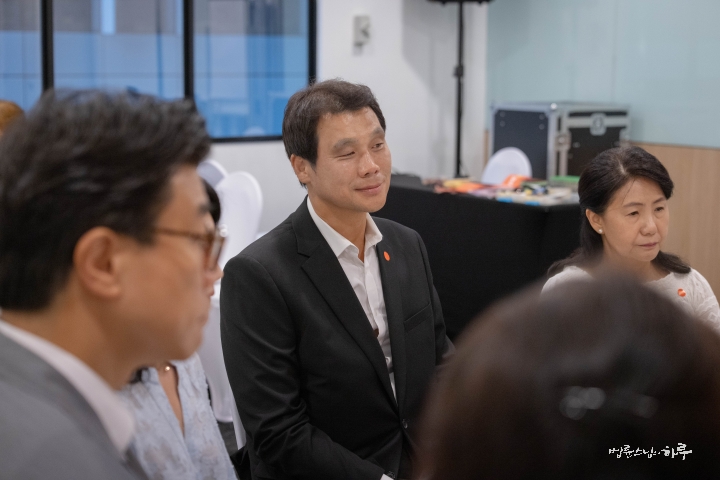
“We are truly fortunate. I heard that it’s been a long time since you’ve visited Singapore due to COVID.”
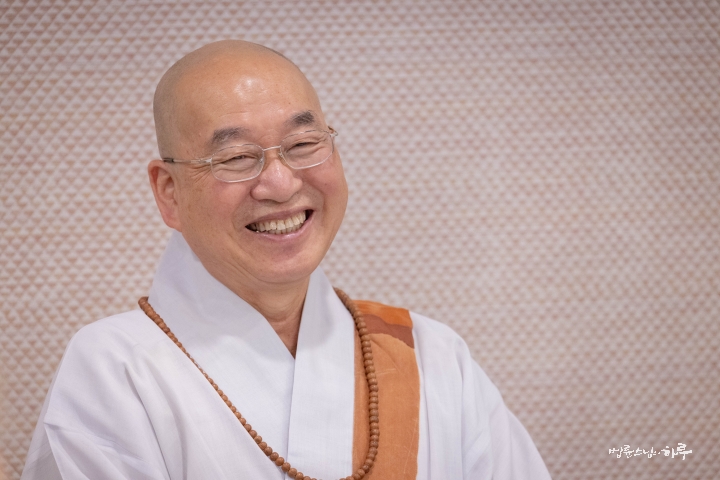
“It’s been four years since I last came here after COVID. I usually travel to Southeast Asia for relief activities, so I often give lectures in Bangkok or Ho Chi Minh City while I’m there for aid work. But since Singapore isn’t a target area for relief efforts, I come here solely for lectures.”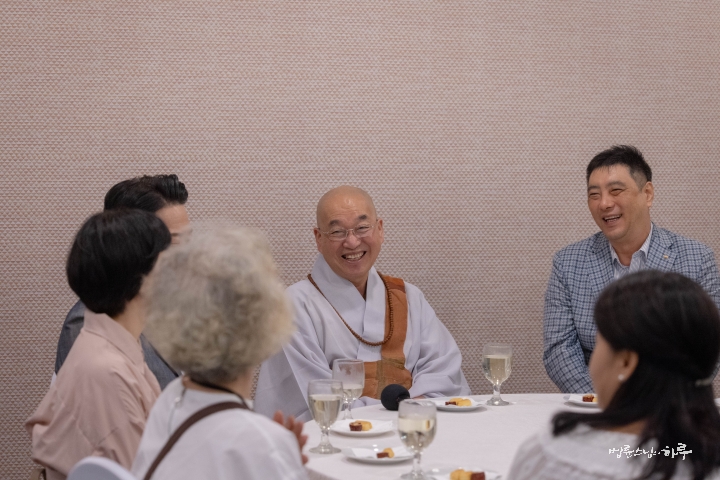
“Your schedule seems incredibly tight. I heard you mainly use budget airlines.”
“Remote areas are usually served by budget airlines.” (laughs)“It must be quite challenging to sleep on planes.”
“It’s alright.”
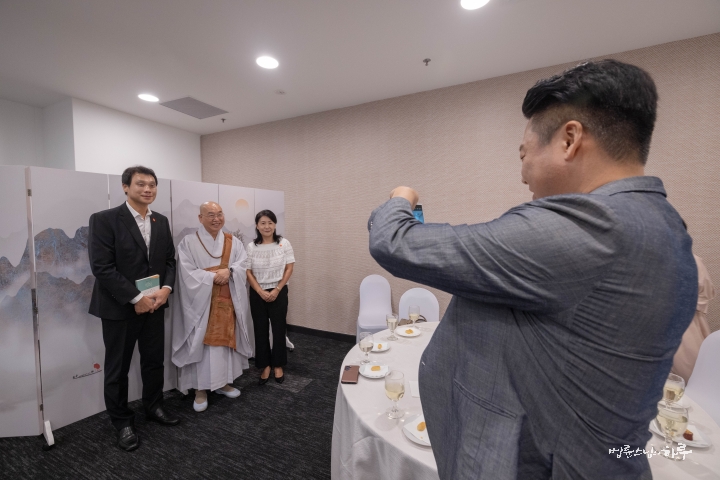
After the tea gathering, everyone took a commemorative photo and moved to the lecture hall together.
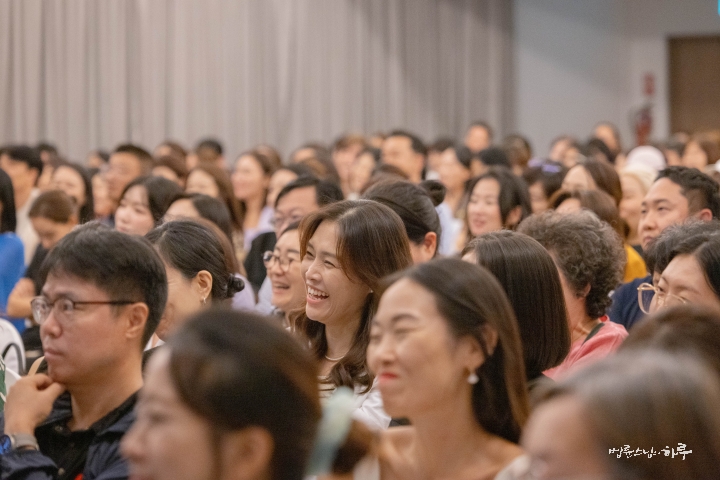
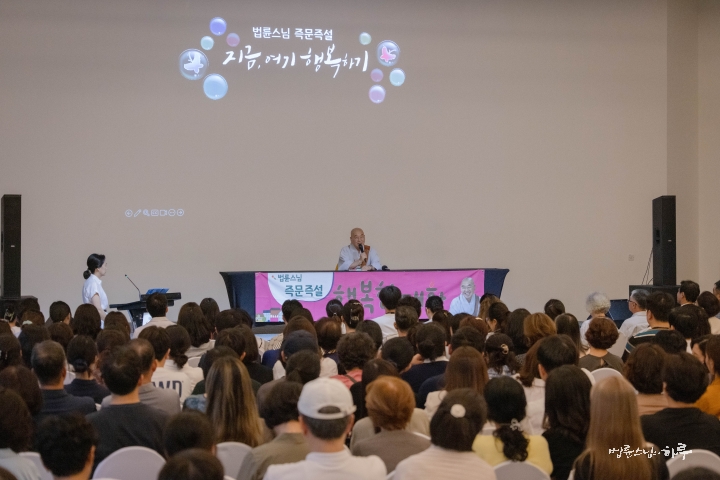
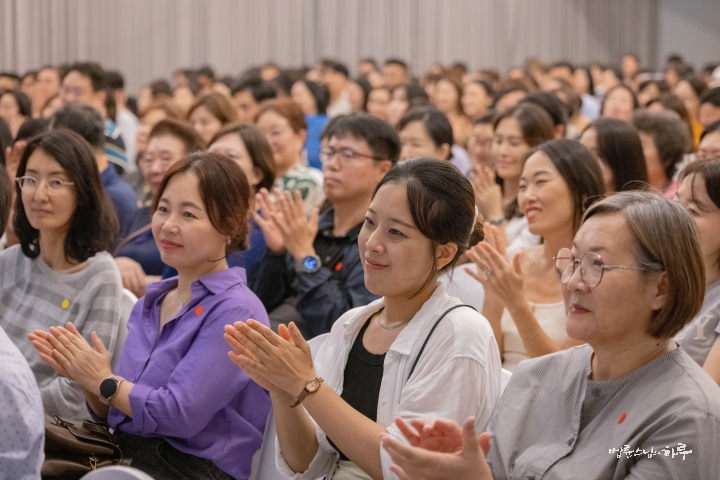
At 7 p.m. sharp, the 400-seat lecture hall was filled to capacity. First, the audience watched a video showing Sunim’s activities over the past week, including his visit to Bhutan and emergency relief efforts for flood victims in the Assam region of India.
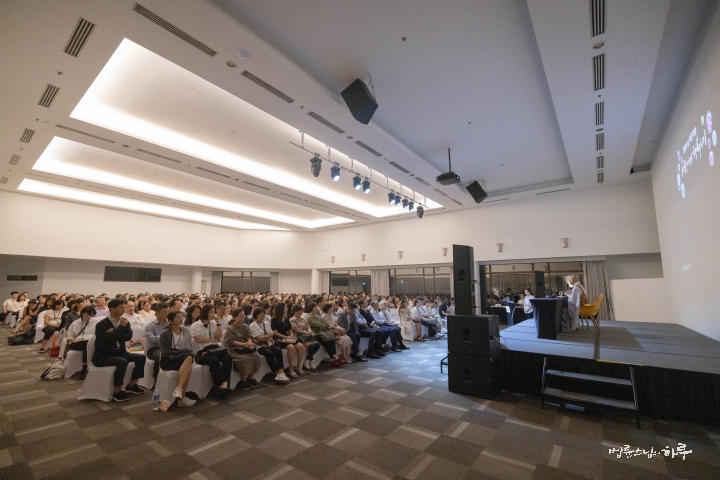
As the video ended, Sunim took the stage amidst loud applause. Although he usually prefers to stand while lecturing, today he asked for understanding and began his talk seated due to knee pain.
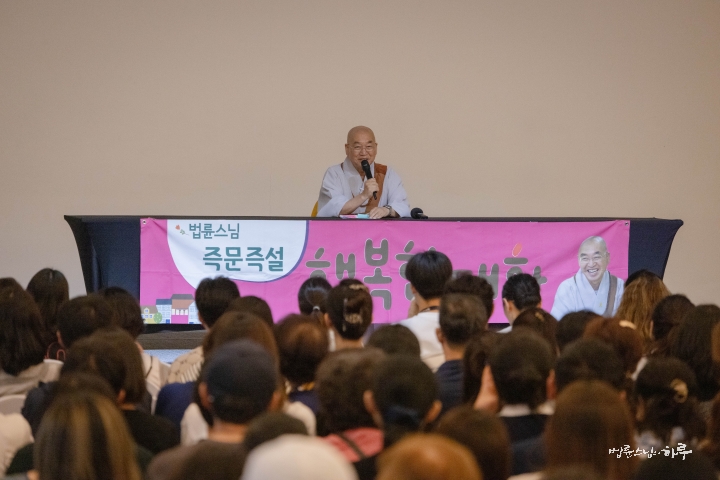
Religion has two inherent characteristics. One is to threaten, saying ‘You’ll go to hell if you do that,’ and the other is to tempt, saying ‘You can go to heaven if you do this.’ In modern diplomatic terms, this is called ‘carrot and stick.’ The U.S. policy towards North Korea has often been a repetition of carrots and sticks. It’s like saying, ‘If you do this, we’ll help develop your economy,’ or ‘If you don’t listen to me, I’ll wipe you off the map.’ We do the same when teaching children. We say things like, ‘I’ll give you pocket money if you run an errand,’ or ‘You’ll get nothing if you don’t listen.’ Temptation is based on mysticism, while threats are based on fear. Therefore, religion can be seen as existing on the foundation of mysticism and fear, like ‘You’ll go to hell if you do wrong.’ That’s why young people today don’t readily accept religion. This isn’t unique to Buddhism; it’s the same for Christianity and Islam. In Islamic regions, this phenomenon seems less pronounced because traditional culture is still strong, but if you look deeper, you can see that even there, young people may formally have a religion, but their faith is almost gone.
**How Can We Solve the Anguish People Have?
**
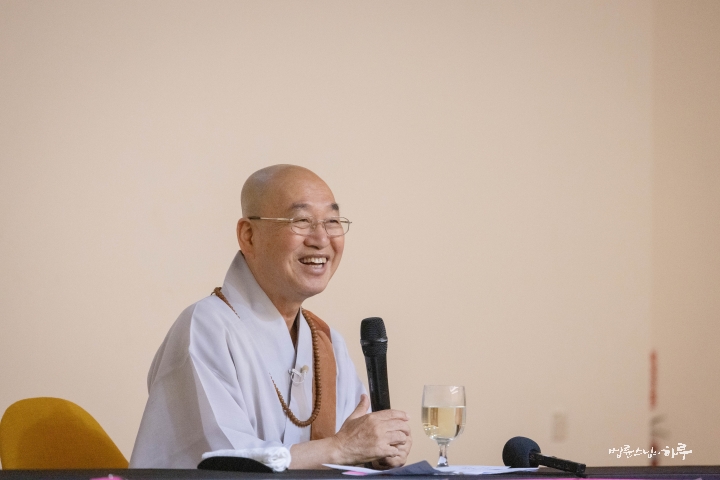
‘How can we help solve the anguish that young people have?’
We need to change our perspective and ask this question instead. If we can help solve their worries, wouldn’t they come even if we don’t ask them to? If we miss this perspective, we’ll inevitably face an era without religion. In Europe, religion already only plays a role as traditional culture and hardly serves the role of solving human anguish, or in Christian terms, the role of the gospel. Our country is also rapidly changing in that direction.Recent statistics show that less than 50% of the population over 18 has a religion, and among the MZ generation, those between 18 and 29, only about 30% have a religion. We’re gradually moving towards an era where religion is unnecessary.
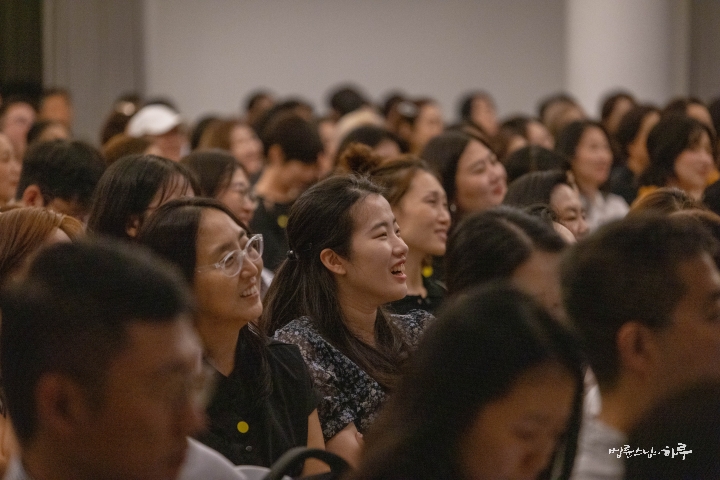
Following this, questions were taken from those who had submitted them in advance. Over two hours, nine people shared their concerns and engaged in dialogue with Sunim.
The second questioner asked for Sunim’s advice, expressing concern that letting go of attachment to success might lead to a gradual decrease in work performance, ultimately resulting in unhappiness.
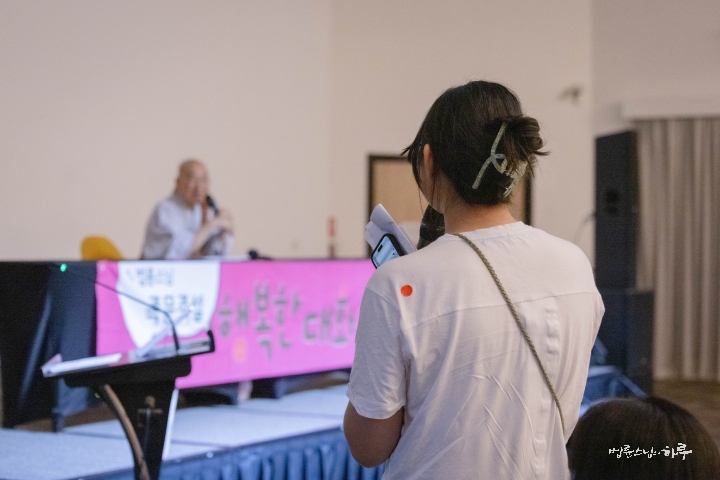
Won’t We Fall Behind in Competition if We Let Go of Attachment?
“Working hard to achieve good results and feeling anxious about not meeting expectations serves as a strong driving force to focus more on work and achieve satisfactory results. However, Buddhism teaches us to let go of attachment to success. Even if it makes us feel free and happy immediately, it seems difficult to achieve good results. Rather, if we fall behind in competition and suffer disadvantages as a result, won’t we ultimately become unhappy? What do you think about this, Sunim?”
“You can work hard to achieve the goals you’ve set, as you think. But there’s a contradiction in your question. For example, let’s say there’s a hot object here. It’s red and looks nice, so you want to have it and grab it with your hand. It’s hot, so the moment you grab it, your hand will start burning. What would you do then?”“I should put it down quickly.”
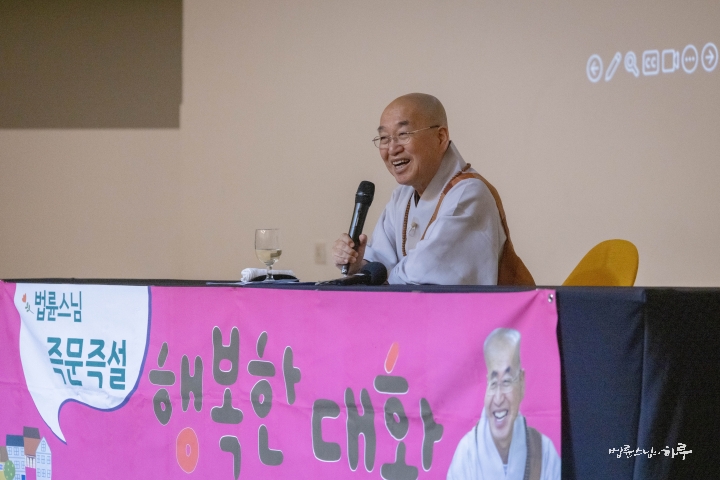
“There are historical examples where human nature’s pursuit of comfort leads to letting go of attachment to success, which in turn leads to a lack of economic growth, falling behind in competition between nations, becoming obsolete, and citizens falling into chaos. How should we view cases where pursuing comfort by letting go of attachment to success leads to being attacked by countries that strive for success?”
“Yes, if you think that way, then you can be attached. No one else will take responsibility for your actions. You should live your life taking responsibility for yourself.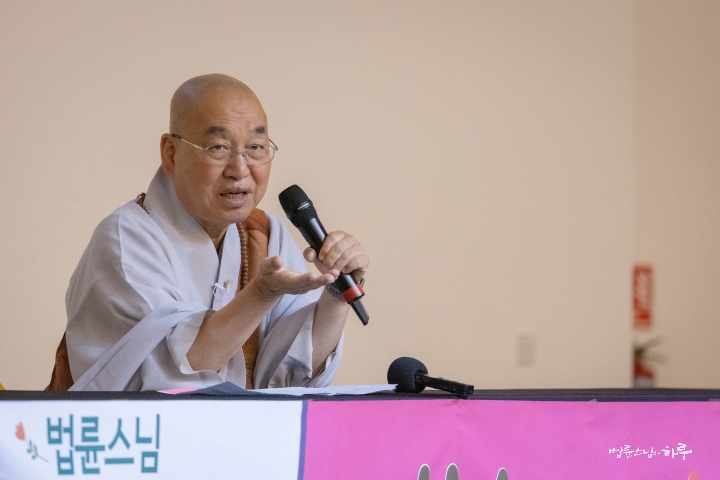
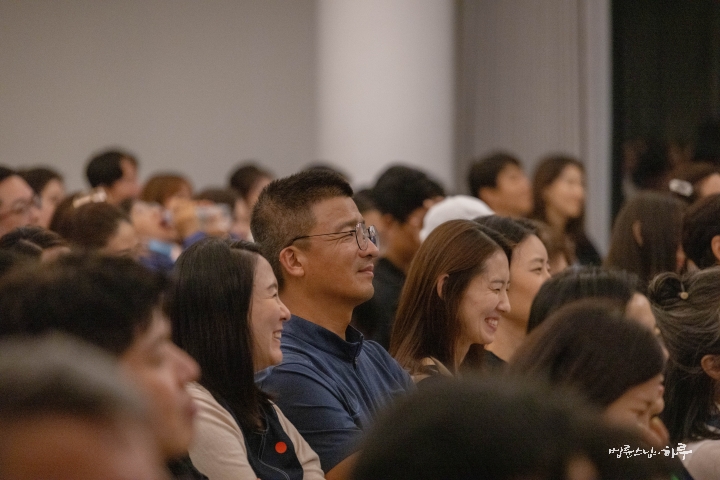
“Thank you. I understand now.”
The questions continued. The fourth questioner asked for Sunim’s advice on how to control their drinking, explaining that they feel happy while drinking but regret it the next day when thinking about their family and health.
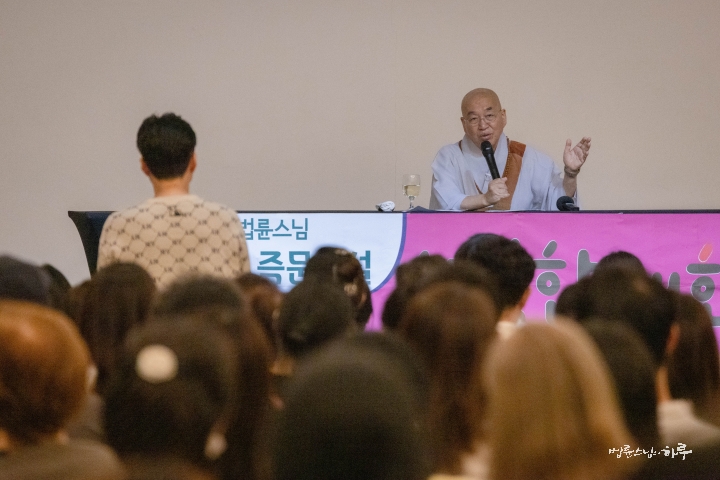
I Feel Good When I Drink, but Regret It the Next Day
“I work in real estate in Singapore. I often drink in the evenings due to work stress. I drink not only when I’m stressed but also when I’m in a good mood. How can I control my frequent drinking? I try to live with the mindset of ‘being happy here and now.’ When I go out drinking and talk with people for three or four hours, I feel very happy at that moment. However, when I think about my wife and children, I realize I should stop or reduce drinking for my health. Rationally, I know I shouldn’t drink, but I also need the instinctive happiness I feel in those drinking situations. How can I find a balance?”
“How do you want to control it? Do you want to stop drinking altogether or drink less?”“I’d like to control it by having only two drinks or ending after the first round. But it’s difficult to do that in drinking situations. When people around me get excited, I get carried along, and sometimes I even lead the atmosphere. The next day, I regret and reflect on why I did that, but it’s hard to change.”
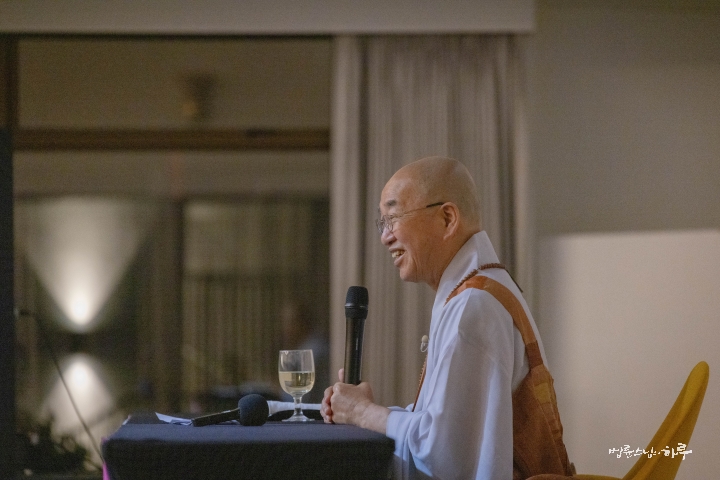
“If you continue drinking according to your instincts, one day you’ll suddenly fall ill, go to the hospital, and be diagnosed with cirrhosis. Only then will you quit drinking. Or, one day your wife, after trying to stop you repeatedly, will pack her bags and leave. That’s when you’ll quit. You already know it’s better to drink less or not at all. But you can’t change yourself, and my words won’t change you either. This is because the habit has already formed, making it difficult for you to control yourself.
If you really want to quit drinking, you need to set a principle not to drink in any situation. There should be no excuses to fix this. If you set a rule like ‘I’ll only have two drinks,’ the chances of keeping it are very low. This is because in a drinking situation, it’s hard to get up and go home after just two drinks. You’ll likely end up saying, ‘Let’s have just three drinks today,’ or ‘Let’s go for a second round just today,’ or ‘I’ll start following the rule from tomorrow.’ The reason I suggested living according to your instincts is that if you can’t quit anyway, it’s better not to create unnecessary anguish. It’s better to drink without the added stress. Rather than setting a promise you can’t keep and tormenting yourself with worry, it’s better to at least have peace of mind. How old are you this year?”
“I’m forty-six years old.”
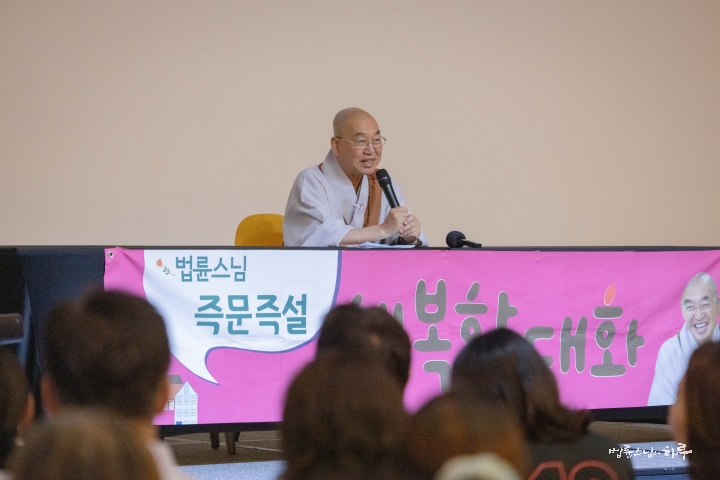
The questioner’s wife was sitting next to him. Sunim asked her a question.
“How about you? Would you prefer your husband to die early or not?”The questioner’s wife stood up and answered.
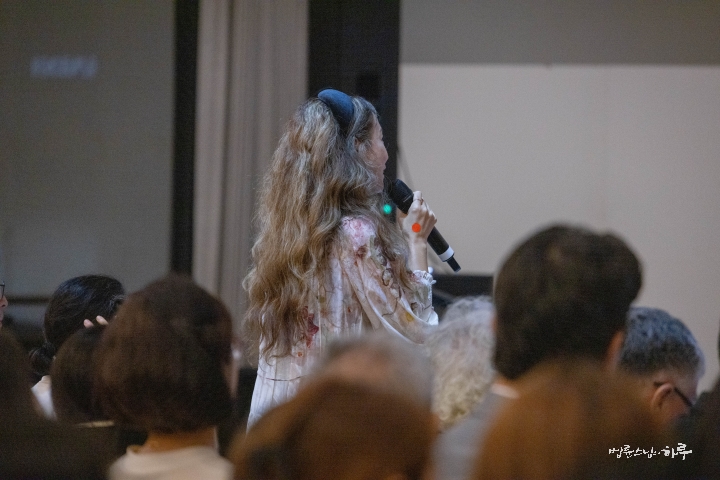
“I still need my husband, so he can’t die now.”
Sunim continued his response.
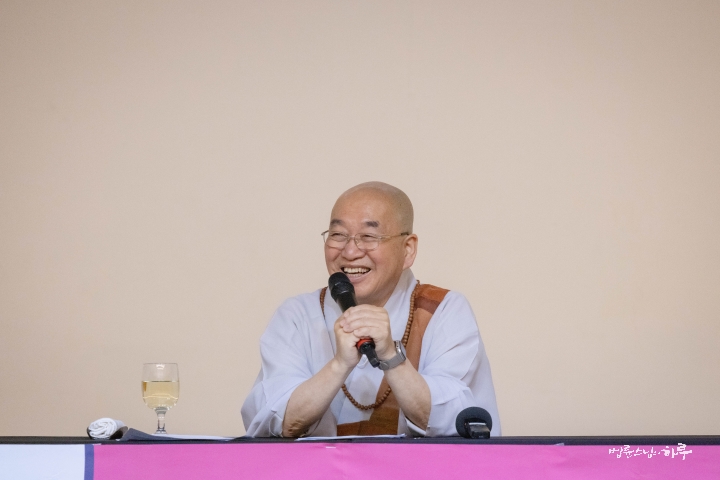
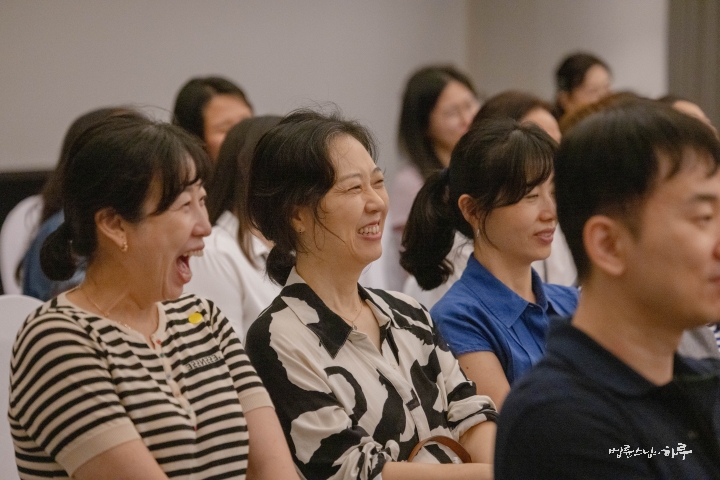
As the audience burst into laughter, the questioner responded loudly.
“Thank you for your words. I’ve come to my senses.”
Applause erupted in support of the questioner.
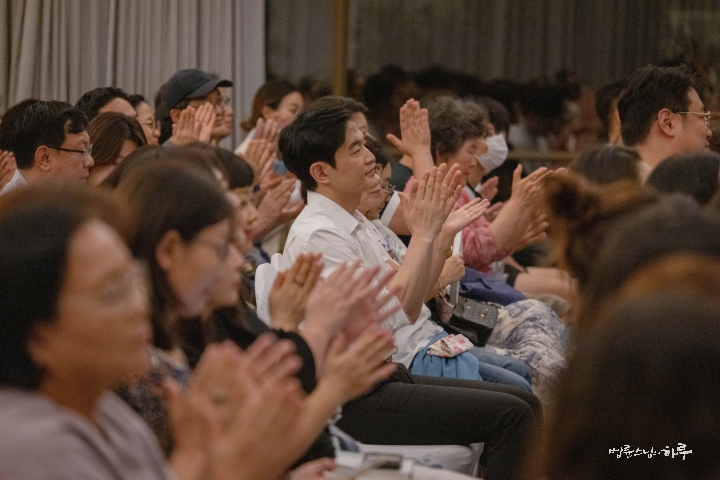
The conversation continued with various life concerns and topics.
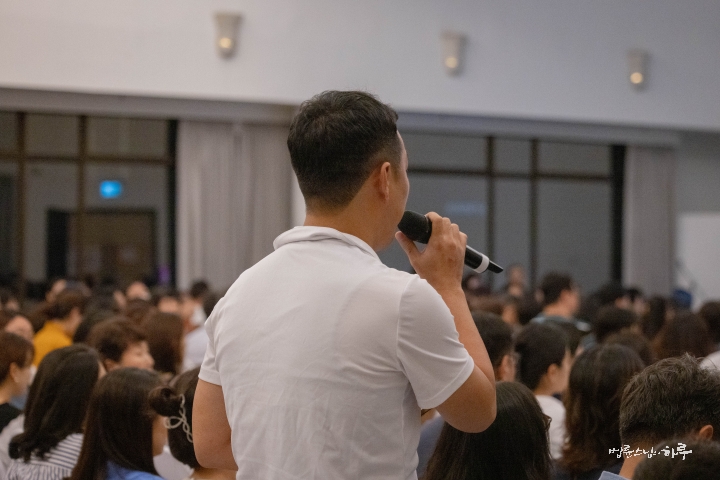
When hurt by others, I’m afraid of responding the same way and creating conflict, but I regret it if I avoid the conflict out of fear. What should I do?
I’ve changed my career to the AI field and always feel my skills are lacking compared to my colleagues. Should I pursue a master’s degree despite time constraints?
I used to be passionate, but I’m becoming increasingly lazy. Am I inherently lazy, or is this just a phase of boredom? How should I view this?
If faced with a situation where I might choose to eat poisoned food, what should I do to escape this foolishness?
I sell products that treat skin conditions. Is there a way to pursue both profit and customer satisfaction while growing the company?
As I enter menopause, I’m developing a fear of death. Is there a wise way to prepare for death?
What is the exact meaning of self-esteem? How can I improve my self-esteem?
After the lecture, Sunim immediately came down from the stage for a book signing. Many people lined up to get Sunim’s signature.
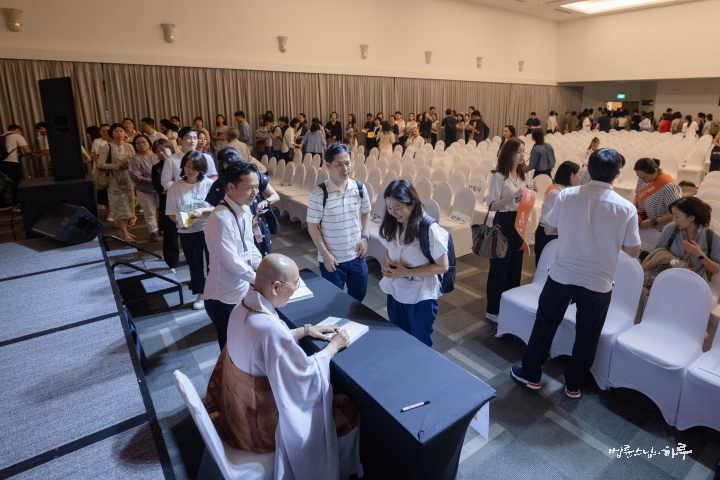
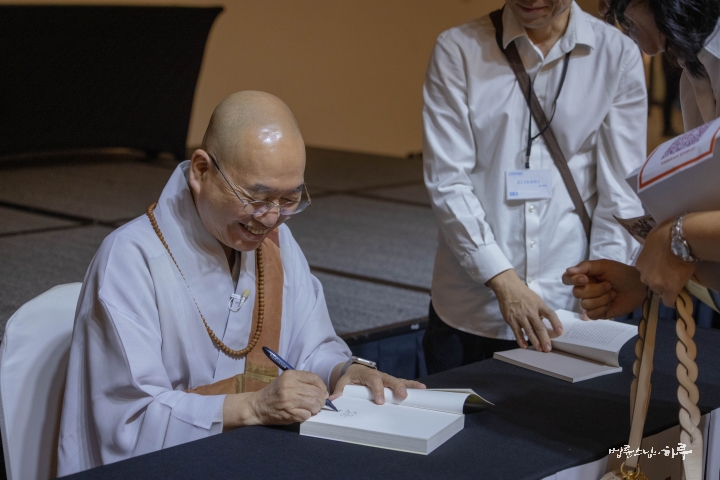
“Thanks to you, Sunim, my life has become much happier.”
“Please stay healthy for a long time.”
“Thank you, Sunim. I really enjoyed today’s lecture.”
“I went on the Northeast Asian History Tour as a college student in 2007. I’m living well thanks to you, Sunim.”
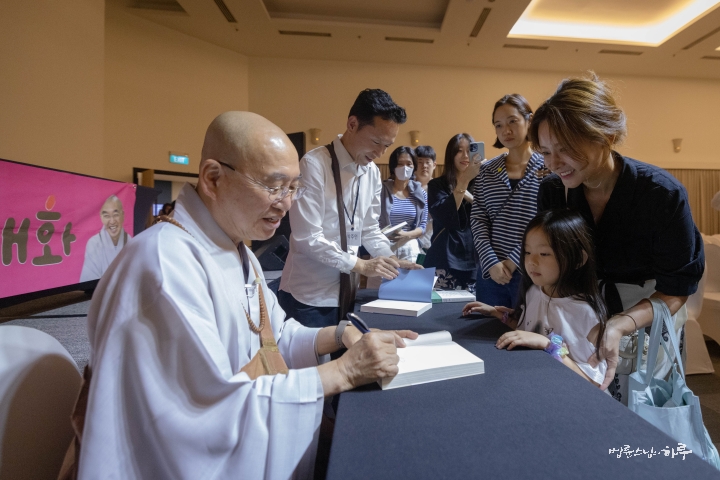
Participants expressed their gratitude to Sunim one by one. Sunim received their greetings with a bright smile. After the book signing, he took a commemorative photo with the volunteers who prepared the lecture.
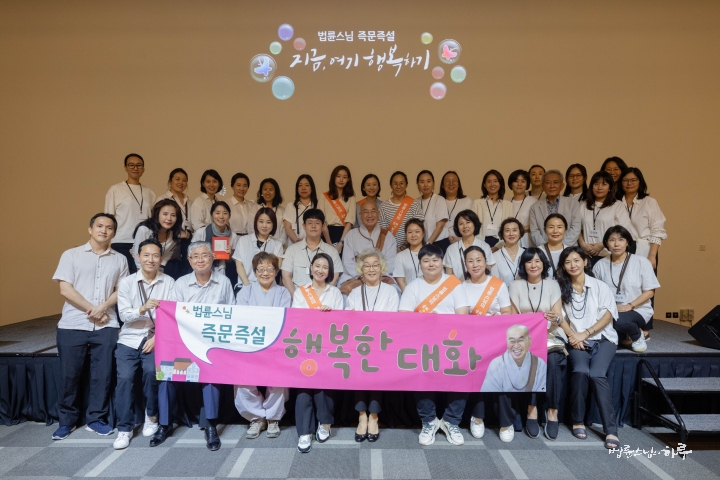
“Singapore, fighting!”
Sunim also expressed his gratitude to the volunteers before leaving the lecture hall.
The volunteers had a time to share their thoughts with Dharma teacher Myodeok. Various impressions were shared.
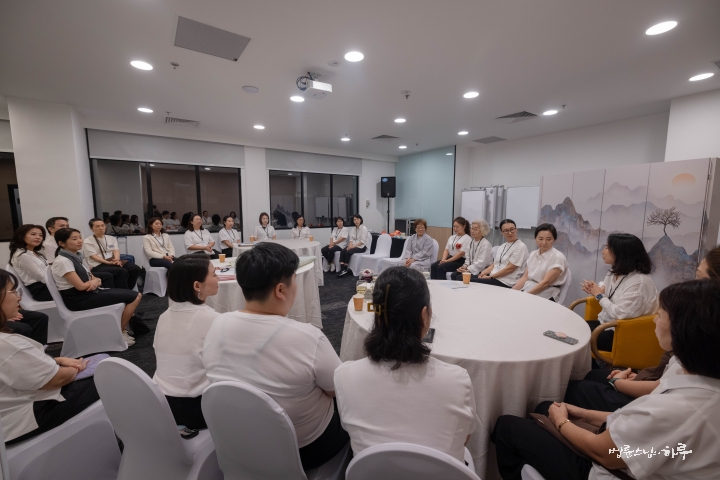
“I’ve always received benefits from Sunim’s teachings, so it was very meaningful to be able to give back through volunteering this time.”
“Volunteering made me feel like my self-esteem was improving, and I was glad to personally experience what a mosaic Buddha is like.”
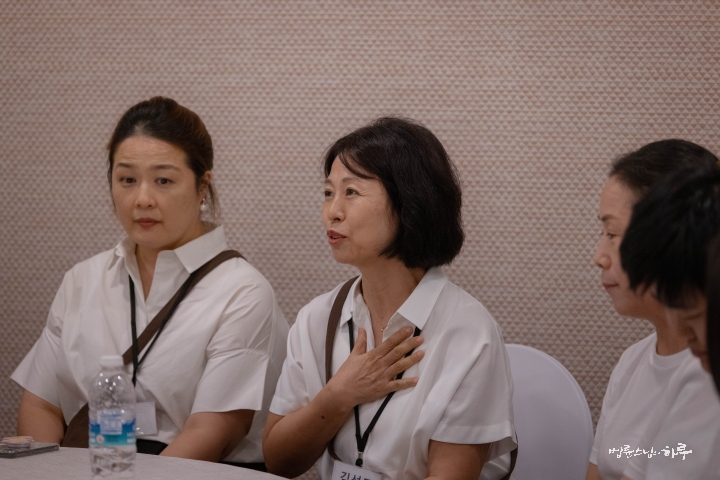
“I was worried about what would happen if few people came. Fortunately, many people attended, and the lecture ended successfully, so I feel relieved now.”
“This is the first time I’ve seen so many Koreans at once in Singapore. The most impressive thing was that 400 Koreans gathered in Singapore.”
“It seems like the help and efforts of many people came together like a mosaic Buddha, allowing us to successfully complete the lecture. I learned a lot from seeing Sunim lecture so passionately despite not feeling well.”
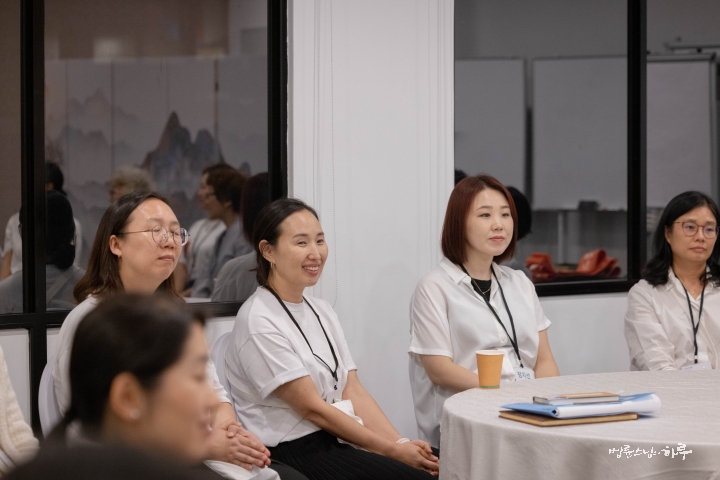
They concluded the sharing session with a big round of applause, encouraging each other for their hard work.
Tomorrow morning, there will be a live broadcast of the Dharma assembly from the accommodation. Then, Sunim will depart from Singapore for Bangkok, where he will give a Dharma Q&A lecture for Korean expatriates living in Bangkok in the evening.