How Can We Avoid Stress?
Jul 15, 2024 - Meeting with Ramon Magsaysay Award Winner Korvi Rakshand, JAAGO Foundation
Jul 15, 2024 – Meeting with Ramon Magsaysay Award Winner Korvi Rakshand, JAAGO Foundation
Hello. Today is the day to visit the JAAGO Foundation, run by Korvi Rakshand, who received the Ramon Magsaysay Award for providing free educational services to underprivileged children in Dhaka, Bangladesh.
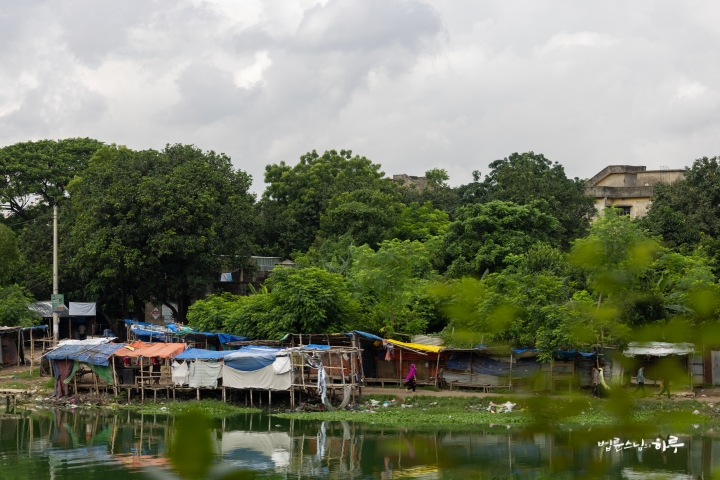
After completing his morning practice and meditation, Sunim had breakfast at his accommodation and headed to JAAGO Banani School at 8:45 AM.
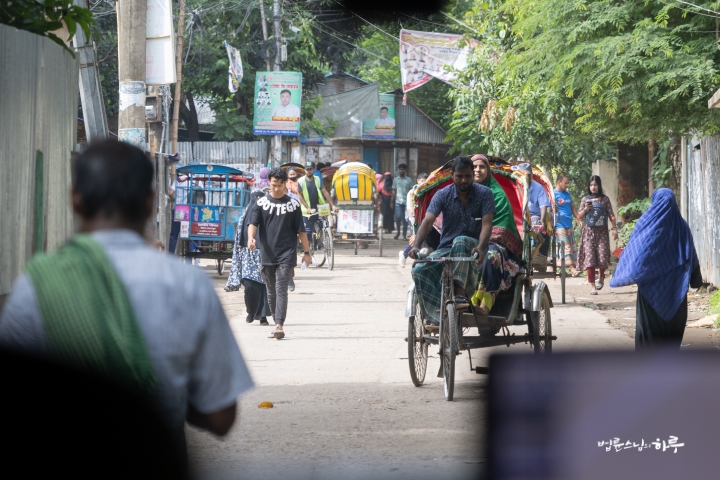
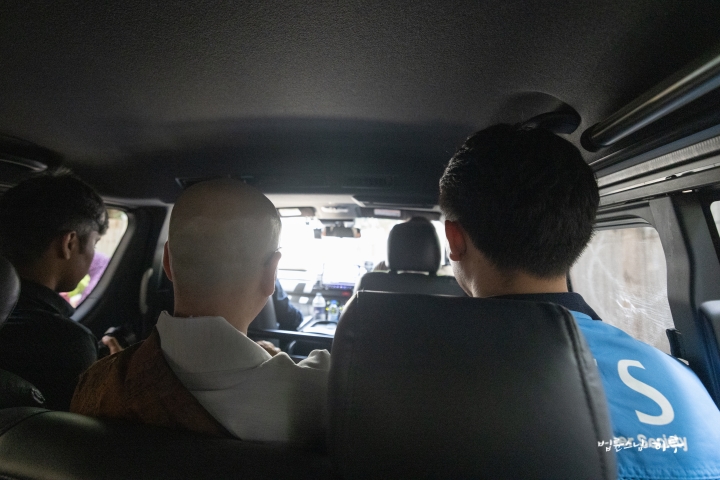
The JAAGO Foundation sent a car. Guided by a staff member, we arrived at the school located in the Korail slum of Dhaka.
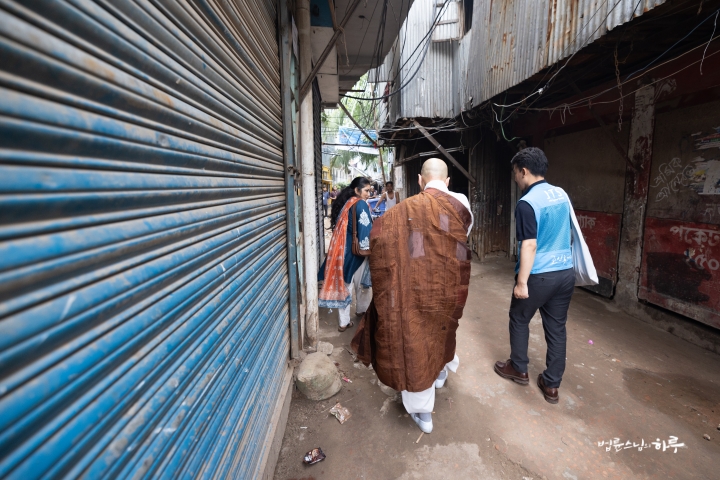
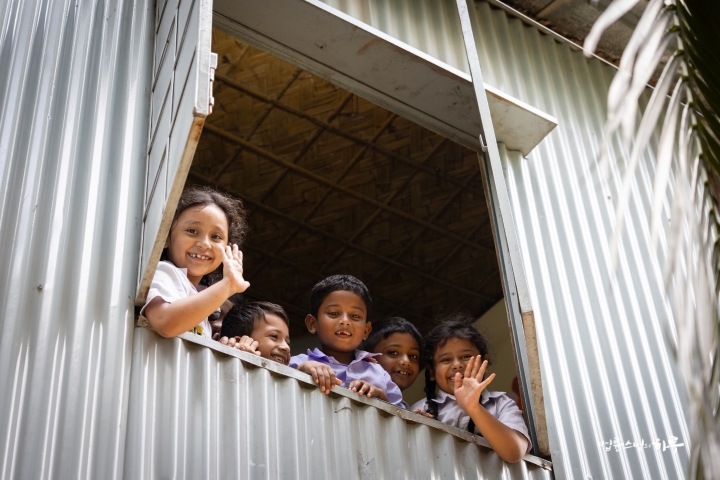
As we entered the school gate, children greeted us with placards and presented bouquets of flowers.
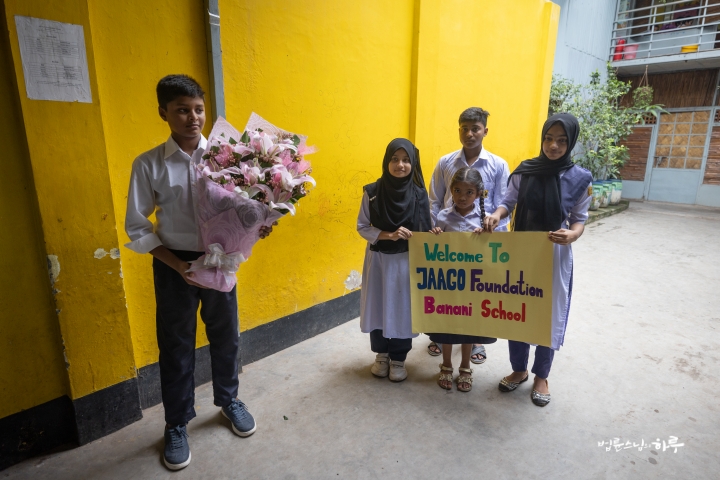
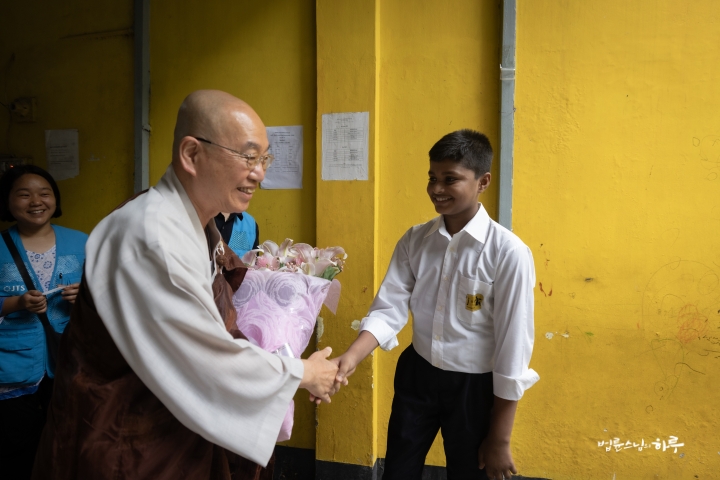
The principal warmly welcomed us.
“Thank you for coming such a long way.”
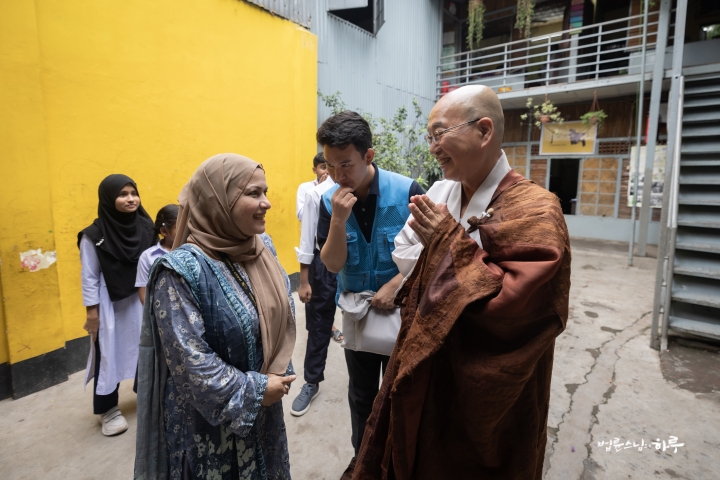
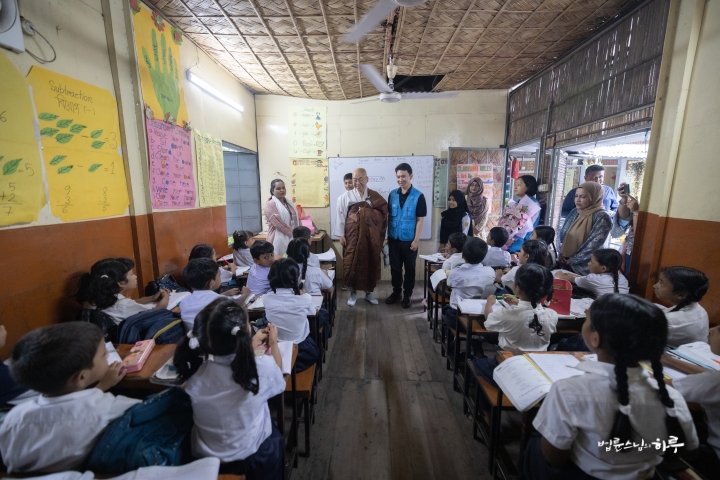
Guided by the principal, we first entered the nursery classroom on the first floor.
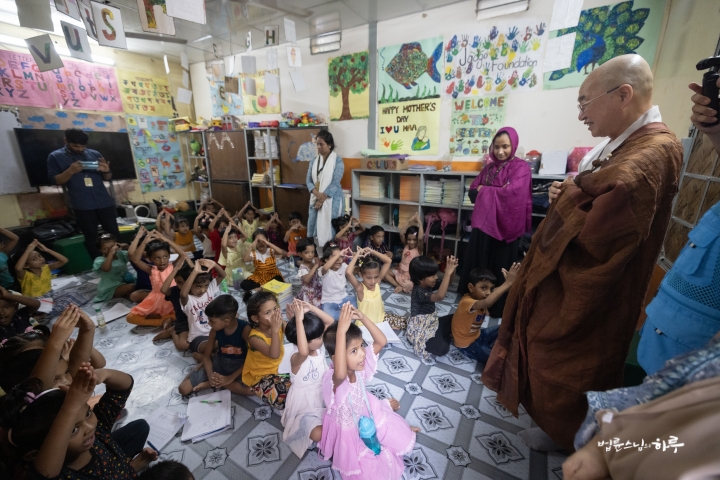
“This is the classroom for 4 to 5-year-olds. We accept only 45 students per year. The teacher is currently teaching English. All classes are conducted in English. We also teach Bengali.”
As Sunim entered the classroom, the children said they wanted to sing a song for him.
“Okay. Sing a song you learned at school.”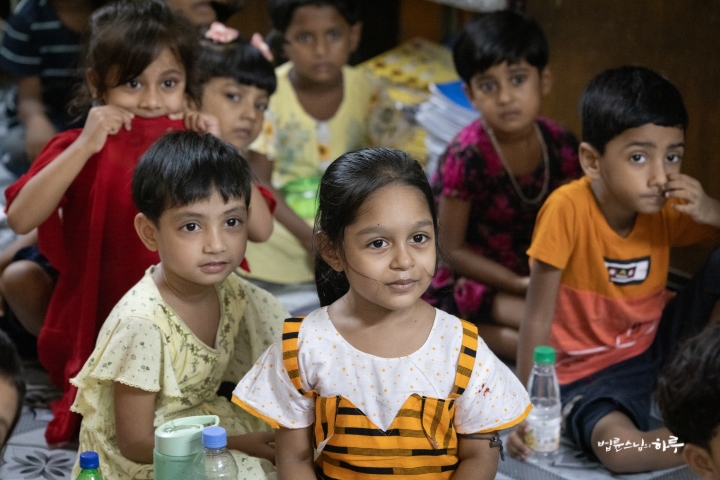
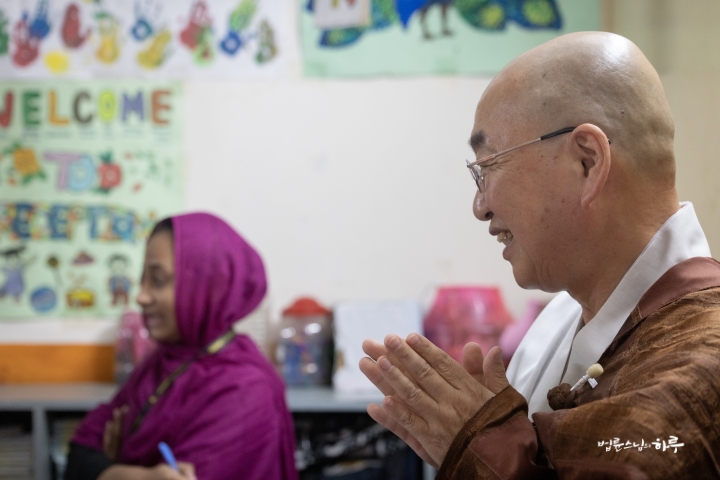
After the children sang a song, Sunim applauded and said:
Next, we visited the first-grade classroom. The teacher was asking the children about their dreams.
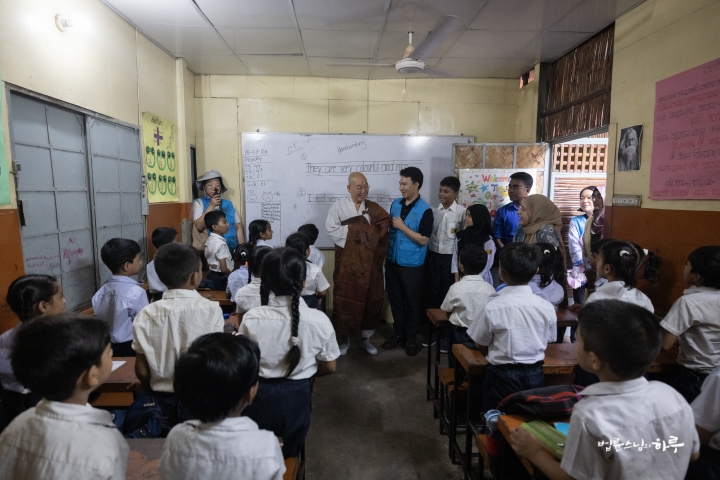
The children answered with confident voices.
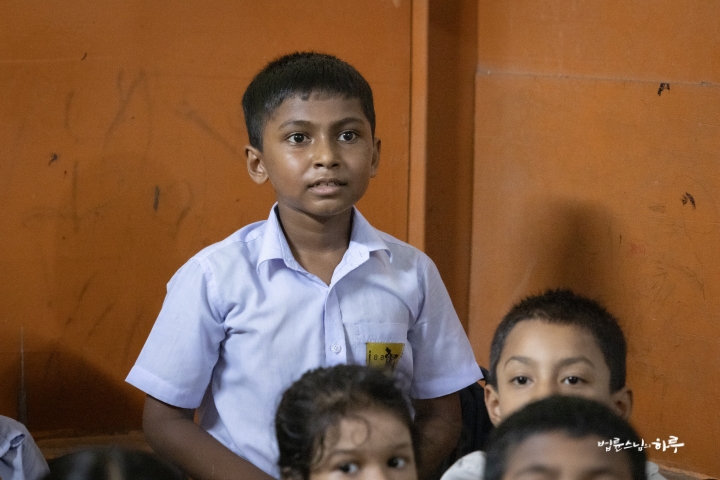
“I want to be a police officer.”
“I want to be a doctor.”
“I want to be a great teacher like our class teacher.”
Sunim also shared with the children what his childhood dream was.
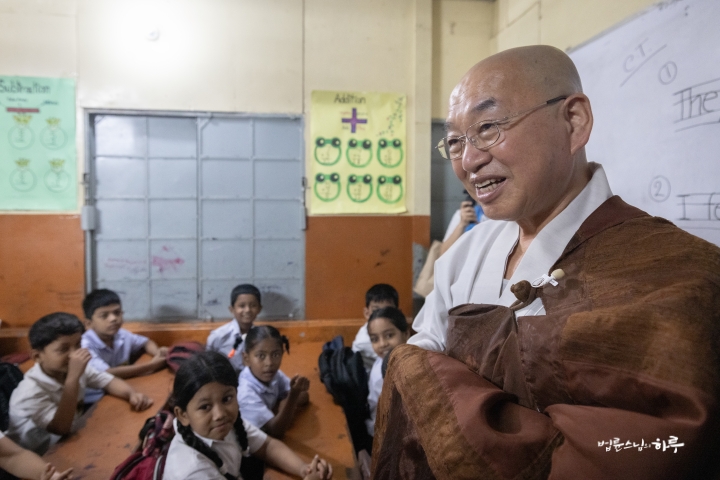
The children recited a poem in Bengali. After listening to the poem, Sunim asked:
“There’s a world-famous poet from Bengal. Do you know who it is?”The children raised their hands confidently and answered:
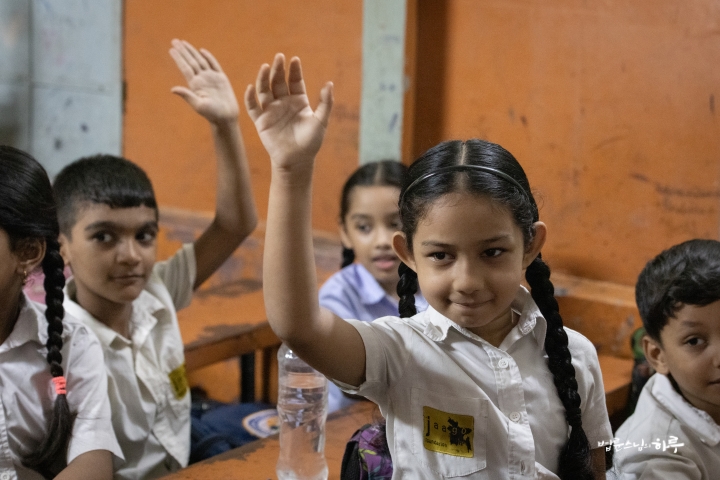
“Poet Tagore!”
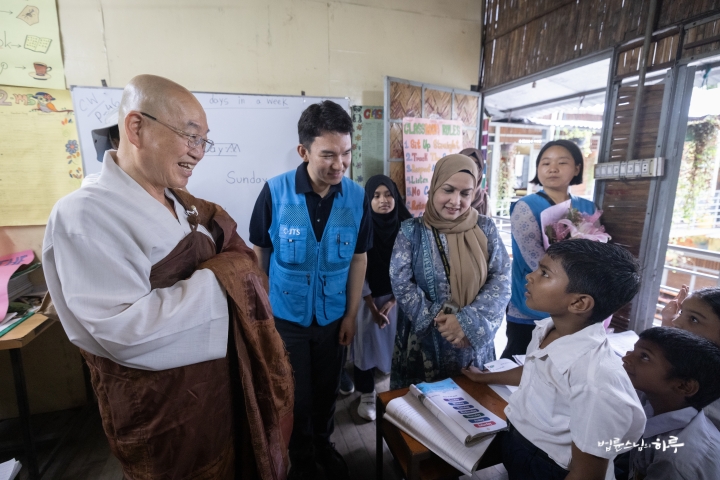
“Okay, that’s correct.” “I’m from Korea. 100 years ago, Poet Tagore wrote a poem about Korea called ‘The Lamp of the East.'”Next, we went to the second-grade classroom. As we climbed the stairs to the second floor, the second-grade classroom appeared.
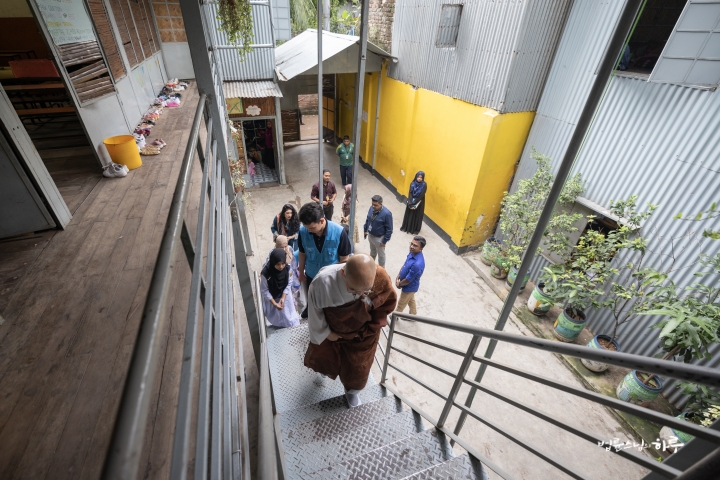
Sunim asked what they were learning.
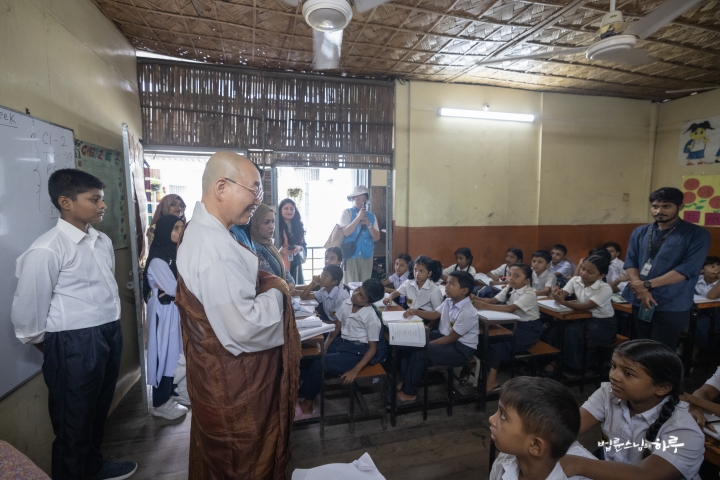
“We are learning about the days of the week.”
The children recited from Sunday to Monday.
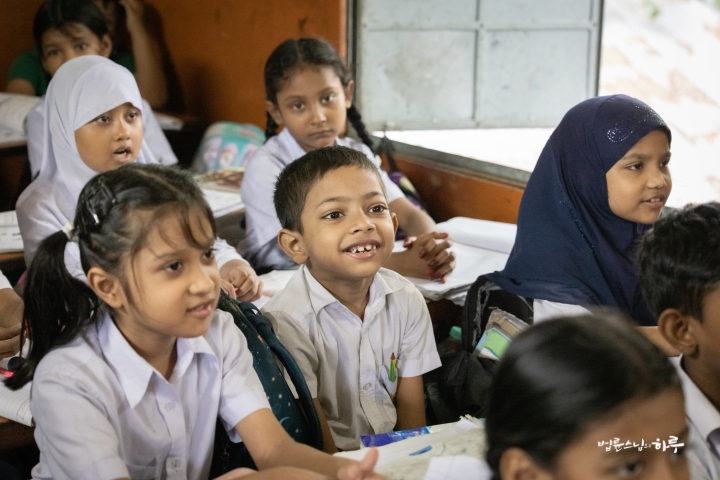
“What is your name, Sunim?”
The children answered loudly:
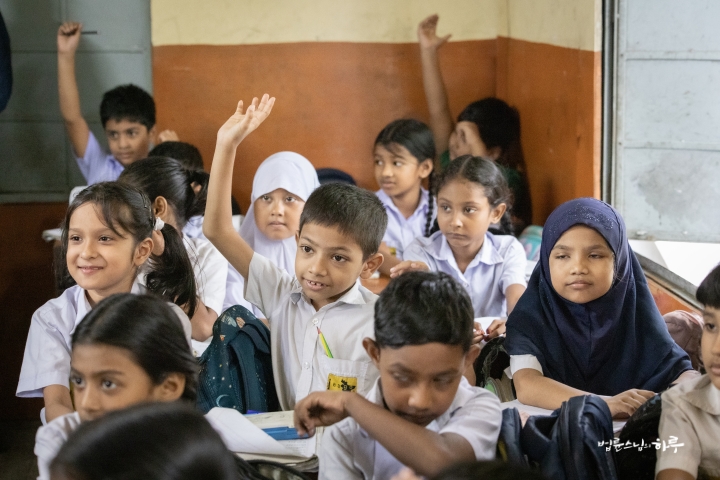
“Volleyball!”
“Football!”
Sunim smiled and said:
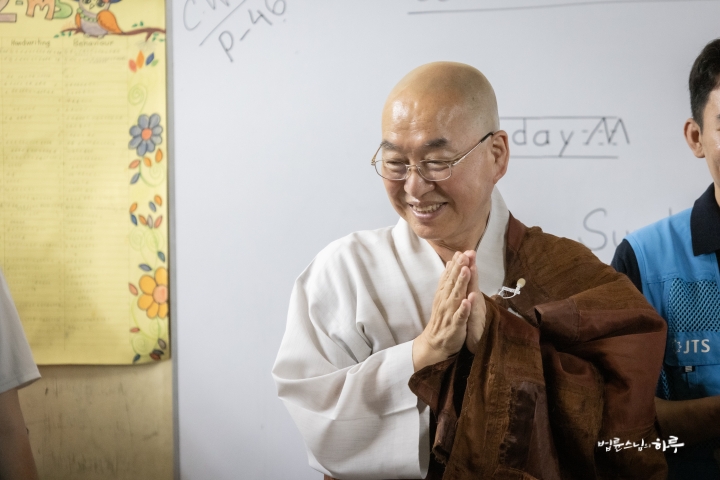
“Yes!”
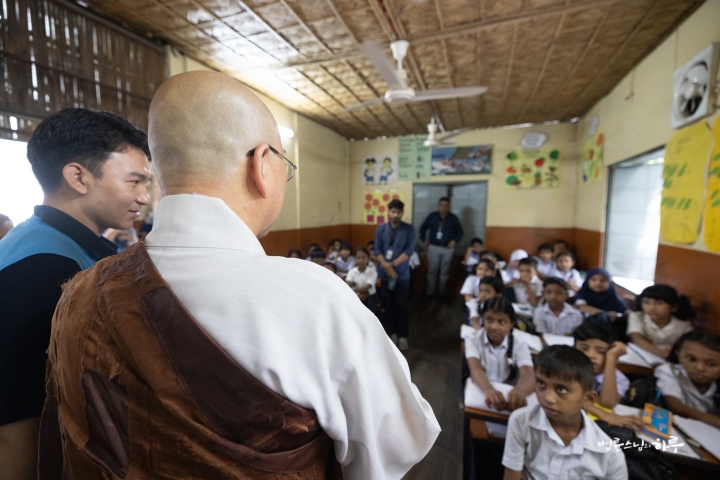
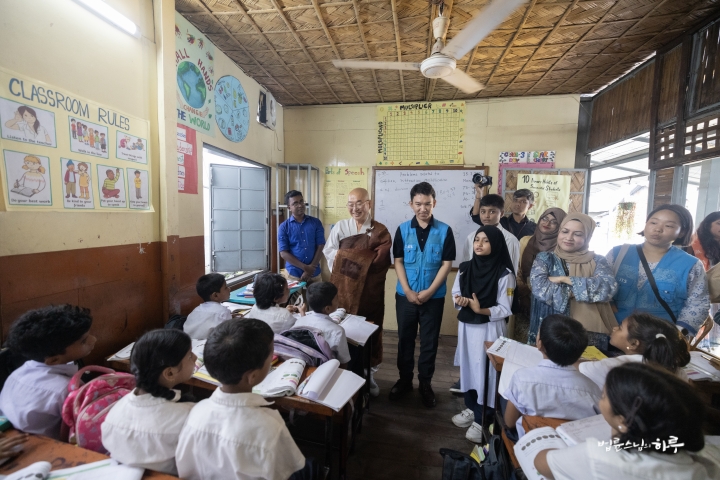
Next, we went to the third-grade classroom. It was math time, and they were learning addition, multiplication, subtraction, and division.
“Yes!”
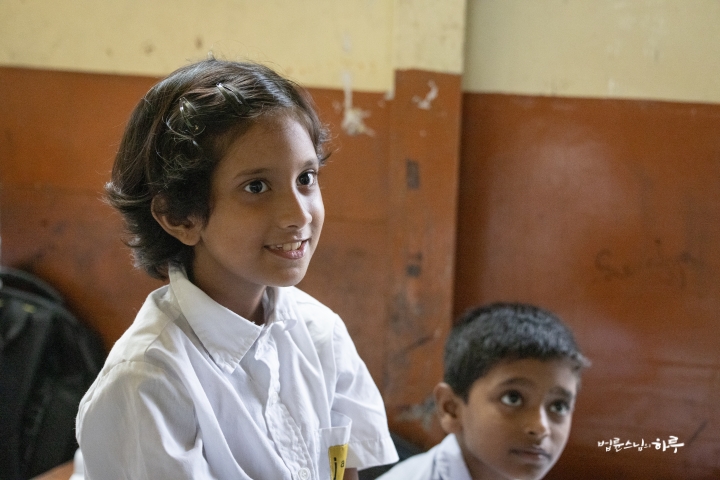
When Korea was mentioned, the children said they liked Blackpink and BTS.
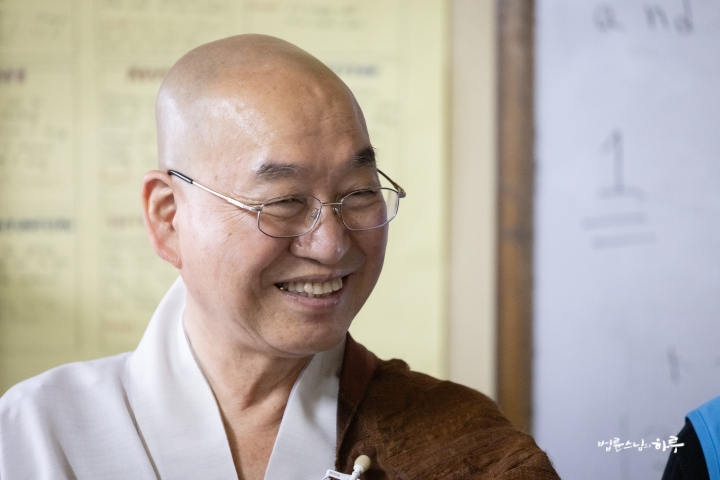
“I can promise you.”
Next, we went to the kindergarten classroom. The children sang a song about how to brush teeth with choreography.
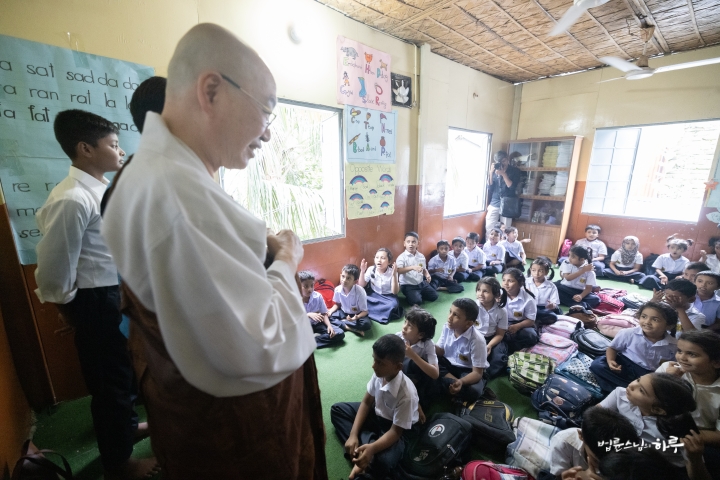
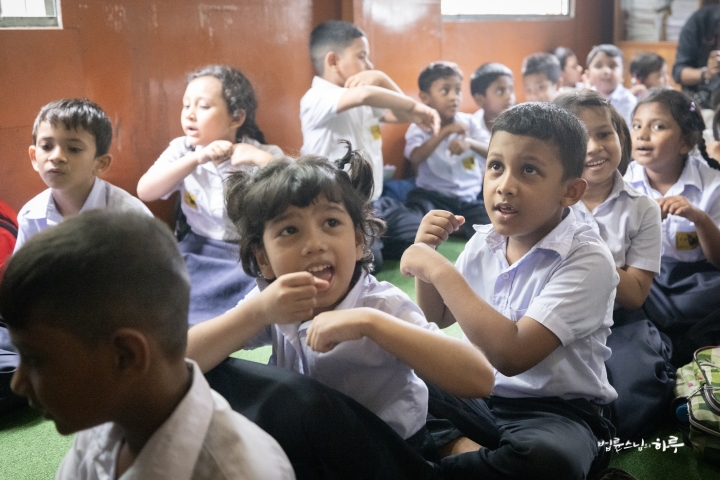
Sunim praised the children greatly and said:
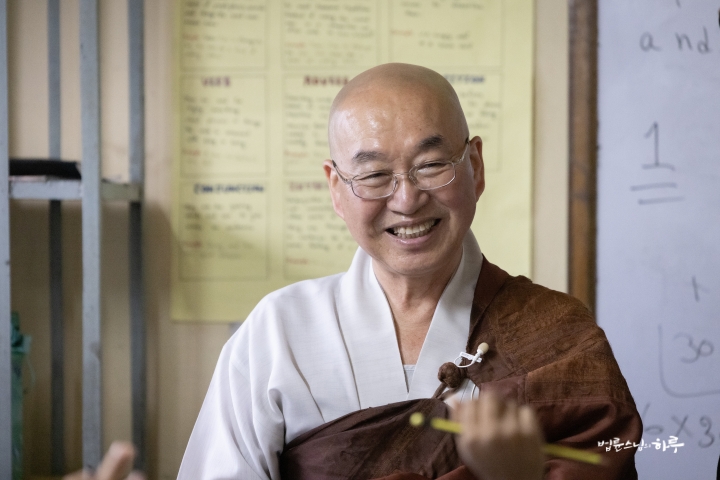
Lastly, they showed us how children in rural areas attend classes using online technology.
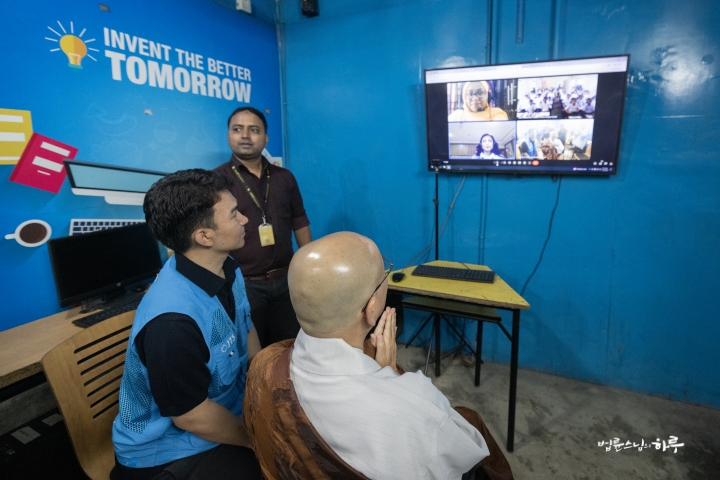
The teacher continued with the explanation:
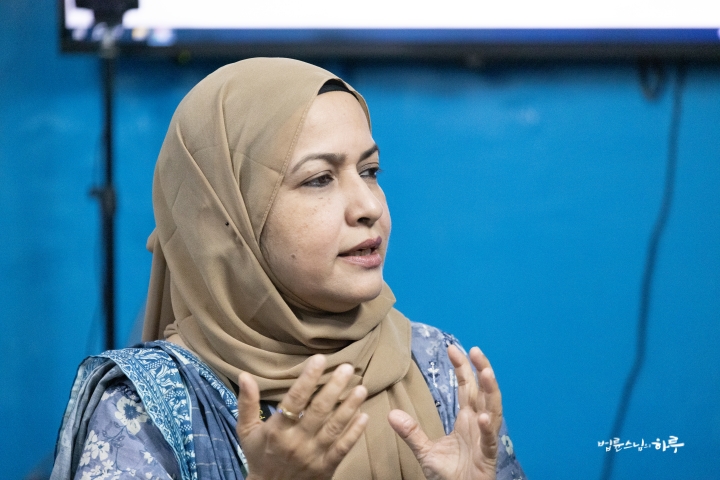
“JAAGO’s online schools in rural areas operate in the same way as regular schools, with teachers conducting classes using video conferencing technology from the JAAGO center in Dhaka. Students watch lectures on a large screen while interacting with the teacher. Trained volunteers help and monitor students on-site. JAAGO’s goal is to use digital technology to solve both the education problems of poor students and the shortage of qualified teachers. JAAGO, which started with one classroom and 17 students in a slum, has grown into an organization with 206 classrooms, providing education to 4,500 students.”
The teacher immediately attempted to connect online with students in rural areas.
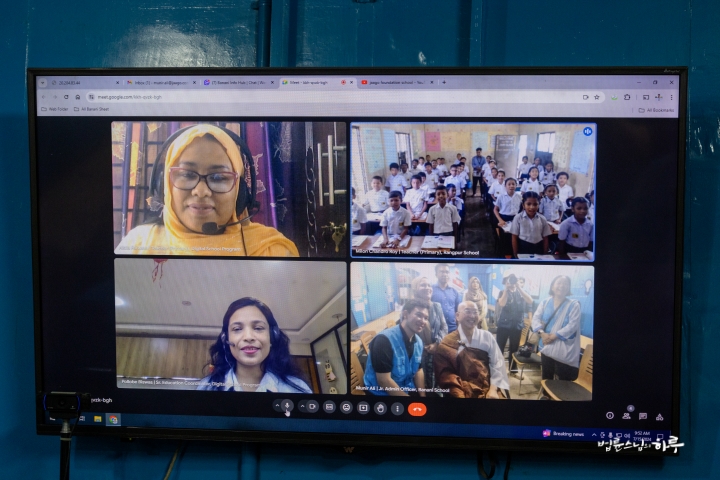
“This is a digital classroom. We are now connecting via video with classrooms in other regions. Students from Rangpur Elementary School in the countryside have entered the screen. The woman you see on the screen is the teacher.”
The teacher asked Sunim to say a few words for the students. Sunim gave a brief greeting:
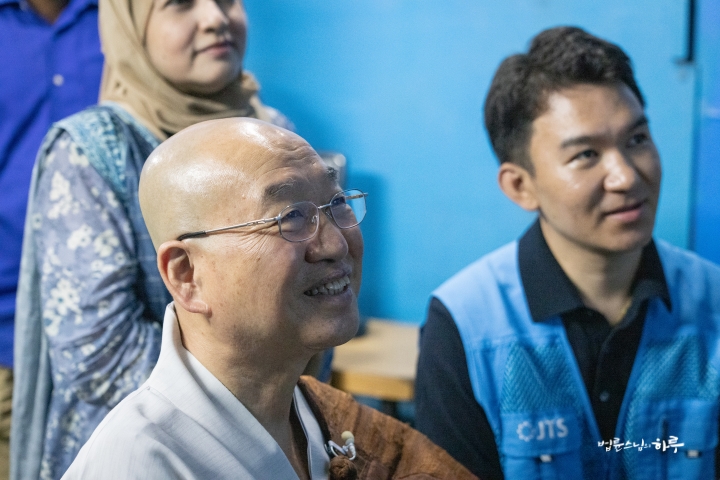
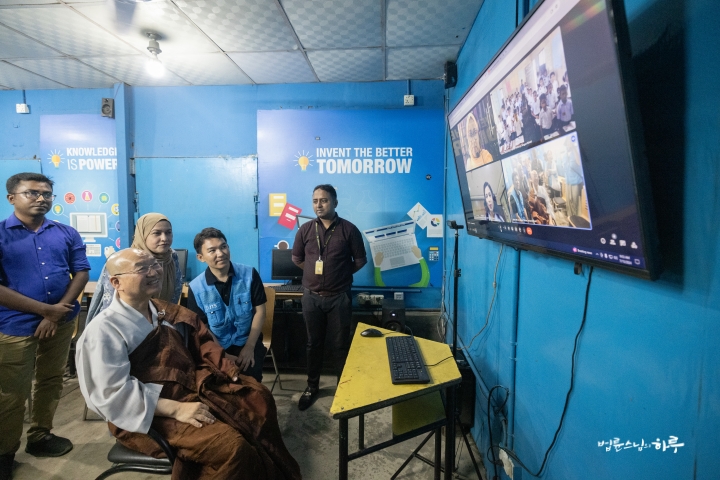
After greeting the students, Sunim left the online video conference room. He sat in a circle and had a conversation with the teachers.
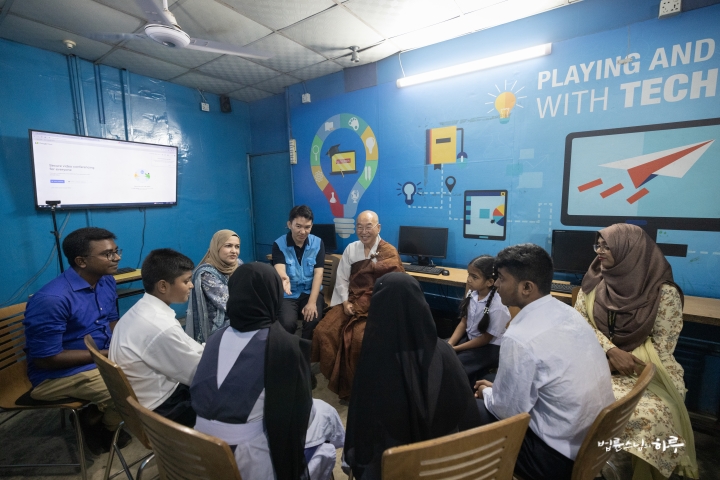
The teacher explained about JAAGO Banani School.
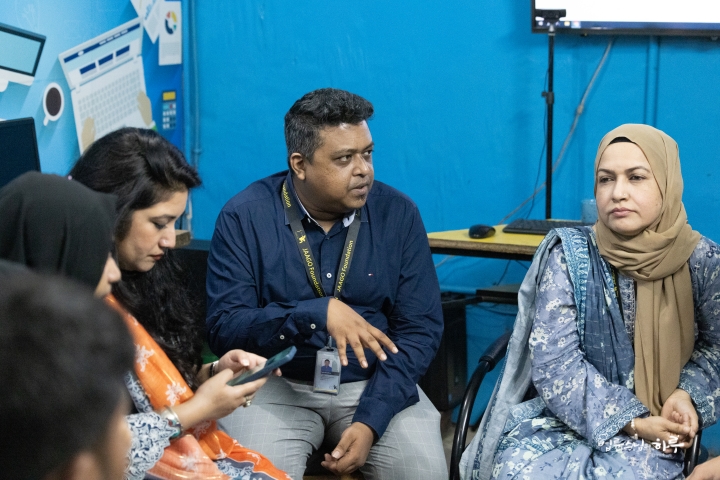
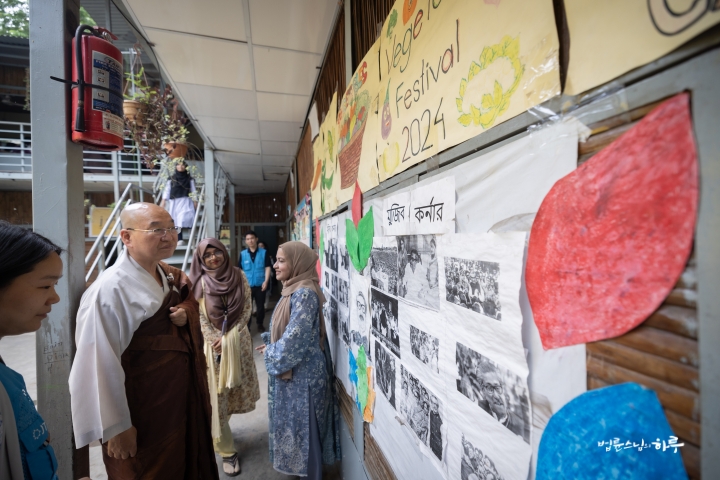
“This building houses grades 1 through 4. Due to limited space, grades 5 through 10 study in another building. Although it’s a slum area, the rent is very expensive. Student recruitment takes place for 3 months from September to November. It takes 3 months to review qualifications.”
Sunim then asked questions about things he was curious about.
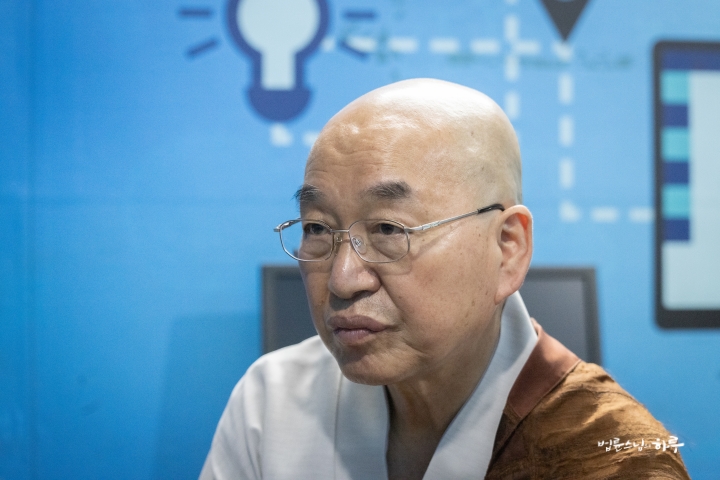
“We can’t accommodate even 1% of the poor students in this area. This is a Muslim area, and this is the largest school operated by the JAAGO Foundation. We can accommodate 45 students in the morning and 45 in the afternoon for each grade, totaling 90 students. As JAAGO Foundation becomes more famous, our biggest concern is that too many students are flocking to us. The number of slum children who want to study is growing exponentially.”
“Aren’t there any government-run schools here?”“There are government-run schools. However, government schools only provide free education, and students have to bear the cost of uniforms and textbooks. Most children struggling with living expenses end up dropping out. But JAAGO Banani School provides everything free of charge for poor children. We bring in qualified teachers to teach. Some graduates have even gone to study in Europe on full scholarships.”
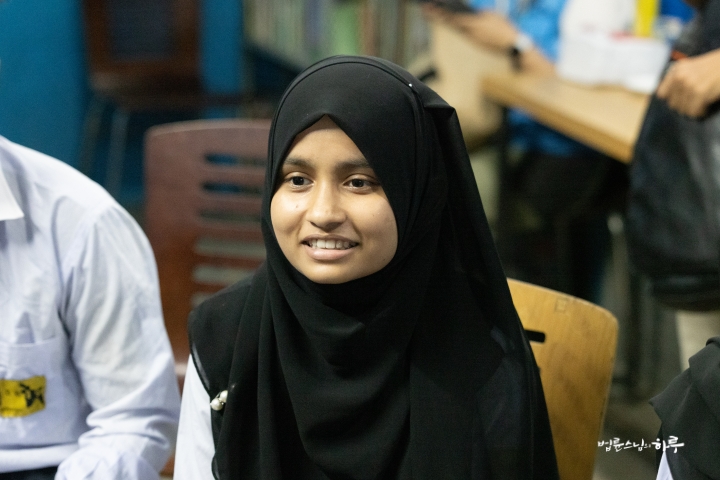
Sunim also asked in detail about admission criteria and school operation methods.
“Since not all children in the poverty-stricken area can attend this school, there must be eligibility criteria. What are those criteria?”“We visit homes to check how many children there are, and verify parents’ ID cards and birth certificates. We confirm eligibility through interviews with parents. There are four meetings a year between parents and the school. This is to inform parents about educational methods and to understand the current status of students. We also conduct classes for parents to teach them how to take care of their children. This is because parents’ awareness of education is very low. Most classrooms use digital technology to conduct online education. When taking exams, on-site teachers guide students on what to do. It’s a collaborative approach between on-site teachers and online teachers.”
Initially, from the introduction, we thought it was a school that only taught English to poor children, but after hearing the explanation, we realized that it operates like a regular school.
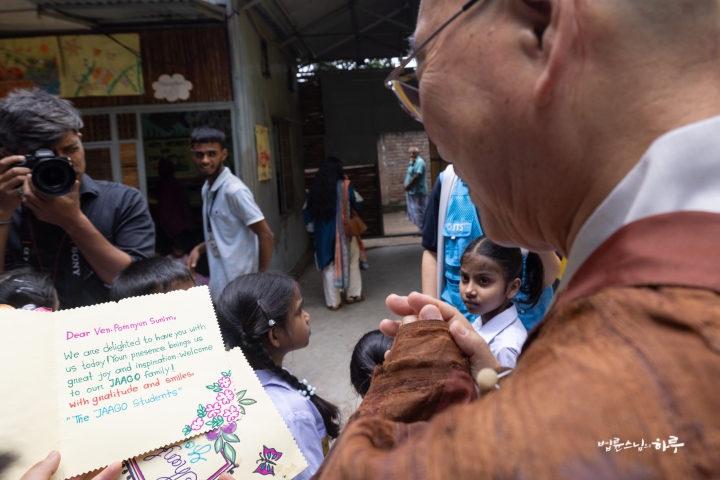
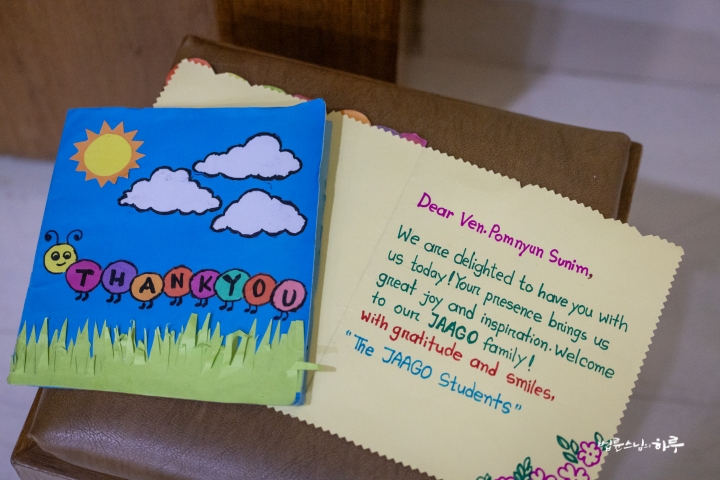
After finishing the conversation, the children handed Sunim letters they had written. The handwritten letters had neat handwriting.
“These are thank you letters written by the children themselves. We are so happy that Sunim, who inspires many people, visited our school.”
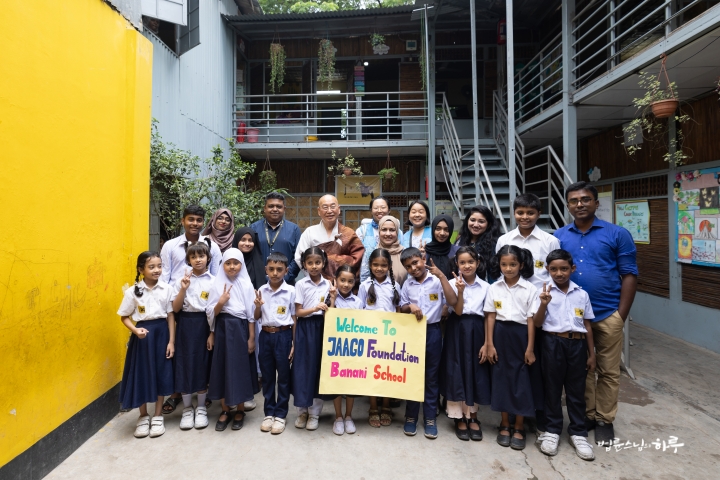
After taking a commemorative photo with the teachers and children, Sunim left the school at 11 o’clock.
There was a large open space right across from the school. Sunim asked if it would be possible to build more schools on the open space.
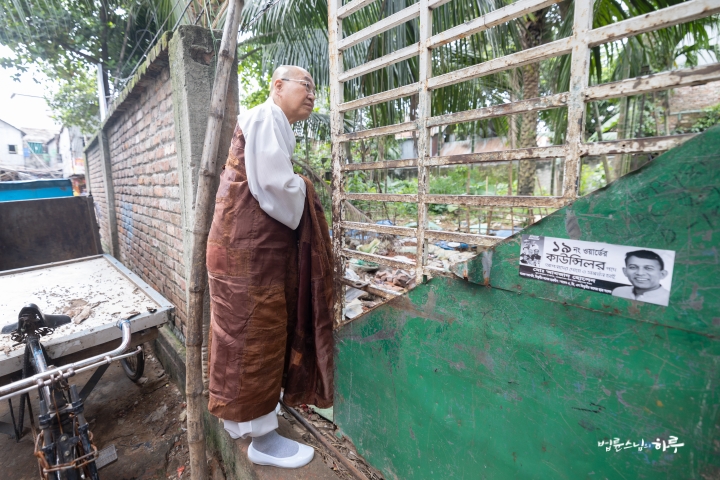
“It’s a graveyard.”
“Is it untouchable because it’s a graveyard? Can’t we build more schools here?”“It’s land that can’t be used.”
“If the deceased ancestors were to say they’d be very happy to have their land used as a school for future children, wouldn’t that be great?”“It’s a sensitive issue, so we can’t use it.”
The school building seemed too small and in need of expansion, but the conditions didn’t allow for it. With a sense of regret, Sunim turned away.
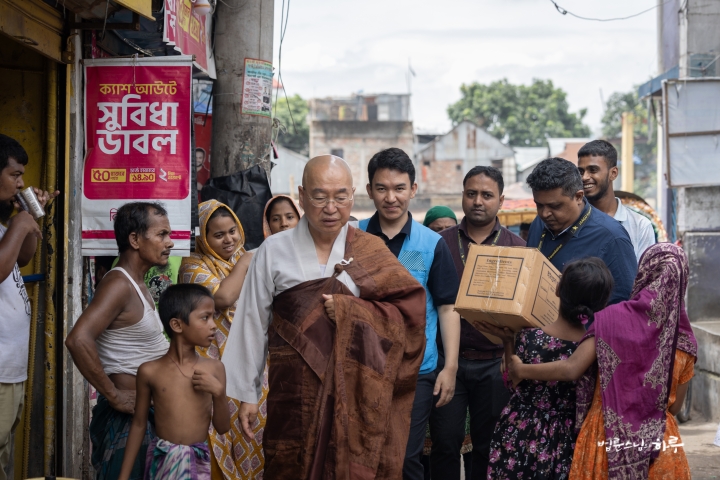
We got back in the car and moved to the EMK Center operated by the JAAGO Foundation.
The EMK Center is a space for youth movements. JAAGO’s success and change activities have gained a good reputation, leading to expansion into other areas. One of the important programs is the “Volunteer for Bangladesh (VBD)” program established in 2011. This program is a youth-led community engagement campaign created to involve young people in positive social change. VBD has now expanded into a movement of 50,000 youth leaders. The EMK Center hosts meetings on various topics such as women’s rights, children’s rights, climate change, and democracy. They have also conducted the “Safe Haven Project” to support the physical and mental well-being of children in Rohingya refugee camps.
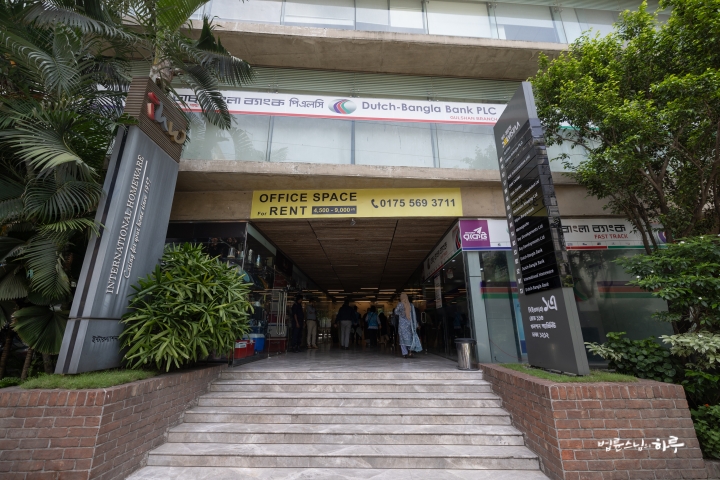
Upon arriving at the EMK Center, Ramon Magsaysay Award winner Korvi Rakshand greeted Sunim with a bright smile.
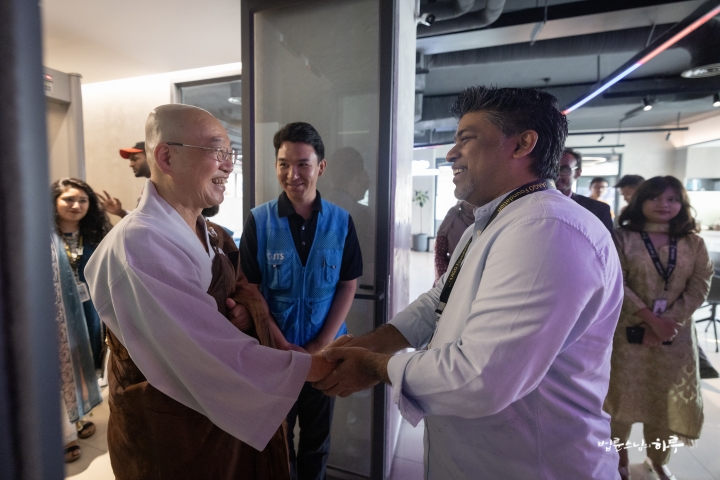
“Thank you so much for coming in person, Sunim. Did you have a good look around the school?”
“Yes, I did. The children were very bright.”The two sat down and talked for an hour. Mr. Rakshand explained why he created the JAAGO school.
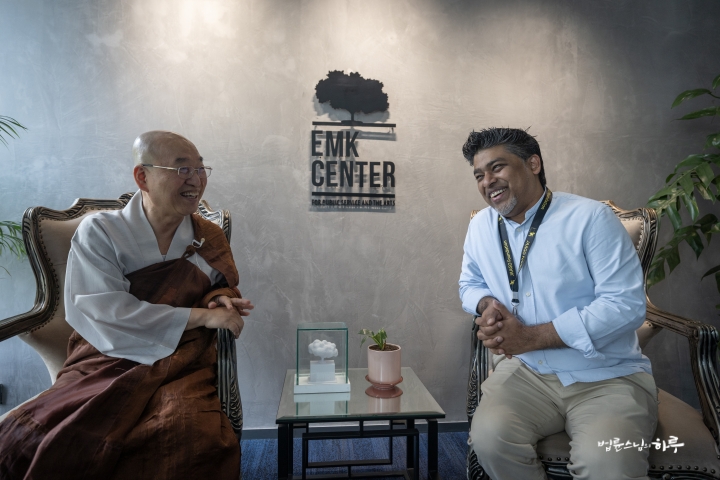
“The reason I came up with online classes was to provide educational opportunities to poor children as well. It’s very difficult to bring qualified teachers to rural areas because they are far from the city. However, by introducing online technology, we were able to connect qualified teachers with children. Especially in the deep mountains where indigenous people live, it was too difficult to have offline classes, but with online technology, we could easily solve this problem.”
When the topic of online classes came up, Sunim smiled and said:
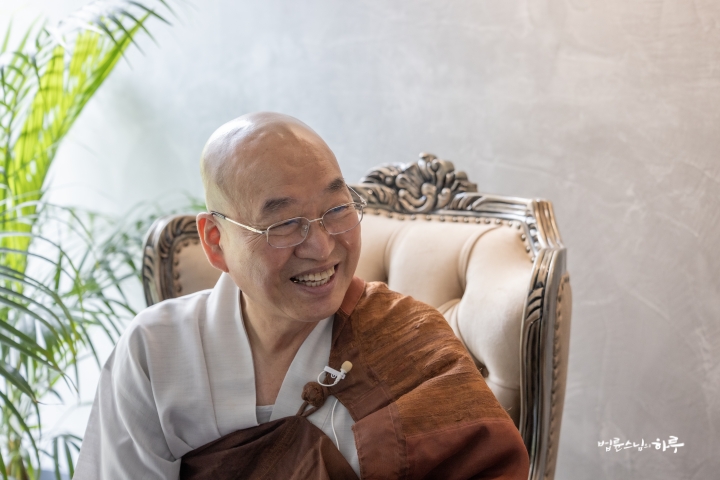
Sunim made one request to Mr. Rakshand.
“Yesterday in Sylhet, I met Ravi Kannan, who treats cancer patients. When parents get sick and can’t engage in economic activities, their children end up dropping out of school. So I suggested starting a program to provide basic education for the children of patients. I asked if it would be good to prepare a program in connection with the JAAGO school, and Ravi Kannan also thought it was a great idea. If so, I will support the classrooms, school supplies, and other necessities needed to run the program.”“I think that’s an excellent suggestion.”
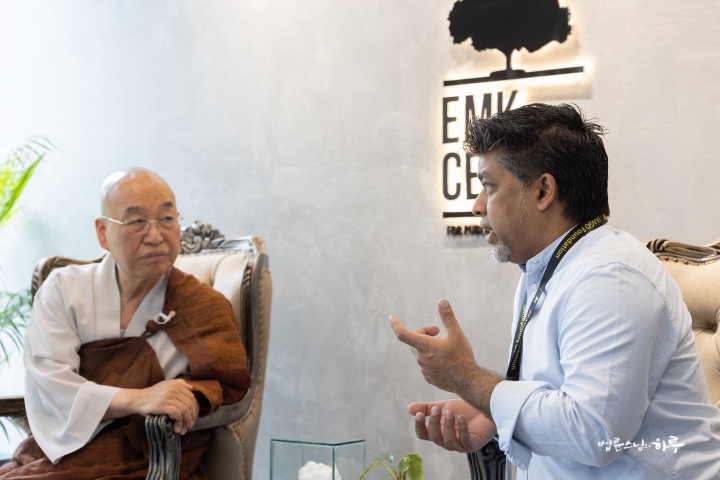
Sunim highly praised Mr. Rakshand for introducing the online education method for children in slums and requested him to research whether this method could be applied to children in Rohingya refugee camps as well.
How Can Rohingya Refugee Camp Children Learn in a Timely Manner?
“Currently, there are 1 million people living in the Rohingya refugee camp in Cox’s Bazar, Bangladesh. More than half of them are children and youth. However, these children are unable to receive any education. The Bangladesh government doesn’t allow classes to be taught in Bengali because they hope the Rohingya refugees will not settle in this country but return to Myanmar. English classes could be an option, but there aren’t many people in the refugee camp who can speak English. However, given the situation in Myanmar, it’s unlikely that the refugees will be able to return to their homeland in a short time. Meanwhile, the children will continue to grow, but there are no plans for their education. So I came to meet you with the idea that it would be good to solve the education problem for children in Rohingya refugee camps by connecting them online. I will provide the necessary support, so please research how we can provide educational opportunities to children in Rohingya refugee camps by connecting them online. It would be great if we could get permission from the Bangladesh government to provide educational opportunities for them as well. Let’s find a way together somehow.”“Yes, we will research this as well.”
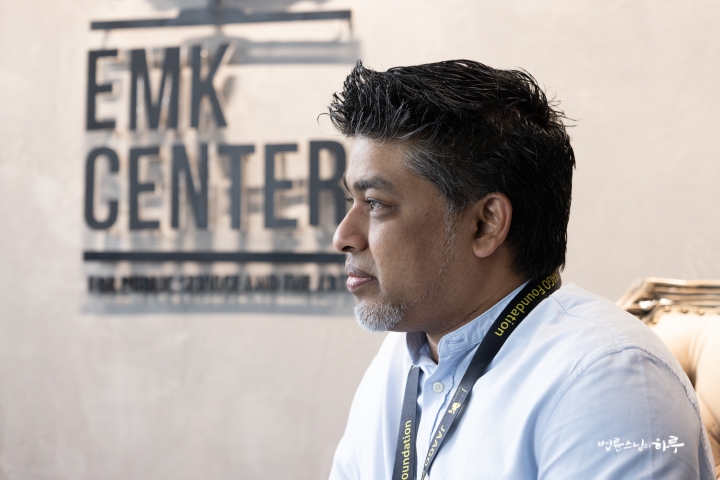
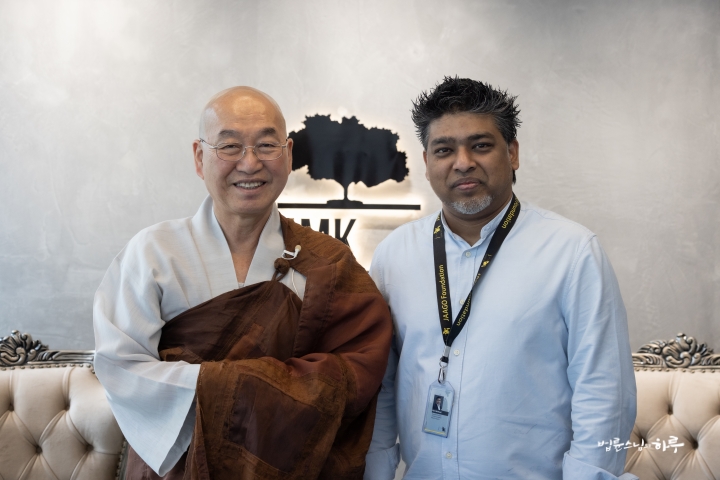
After an hour of conversation, we took a commemorative photo together.
Mr. Rakshand gave a tour of the EMK Center. Since it’s a center for young people, he said that young people are also managing it.
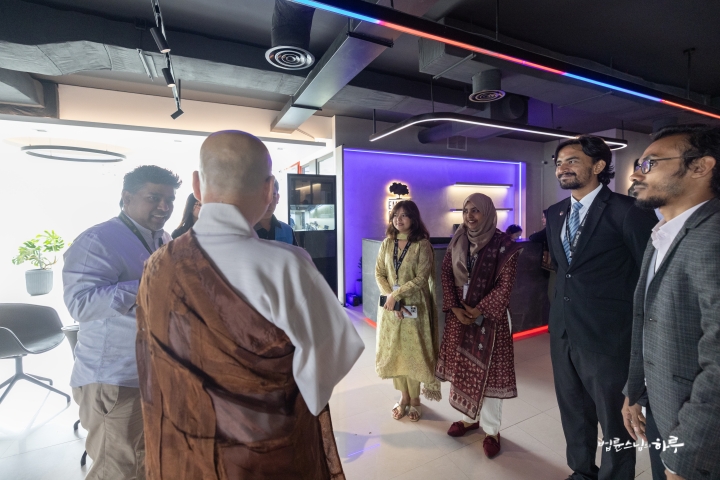
“These young people are managing the center. They came right after graduating from university.”
There were various spaces, which he introduced one by one.
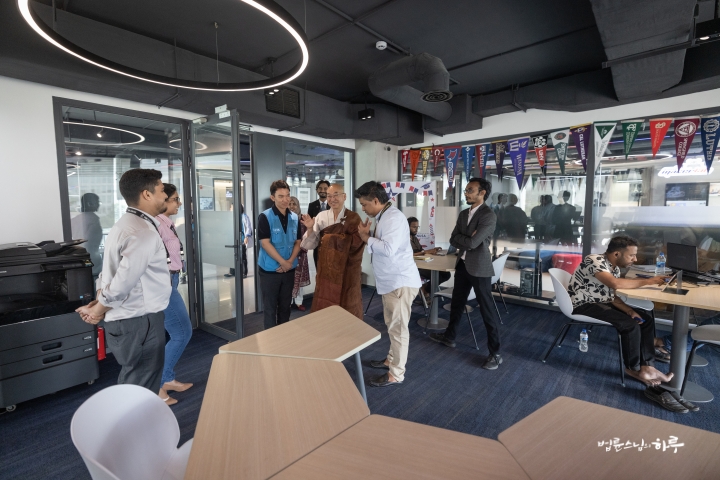
“When college students want to study abroad, they need counseling, which also costs money. Here, we provide free counseling for college students who can’t afford it.”
Art works were also on display.
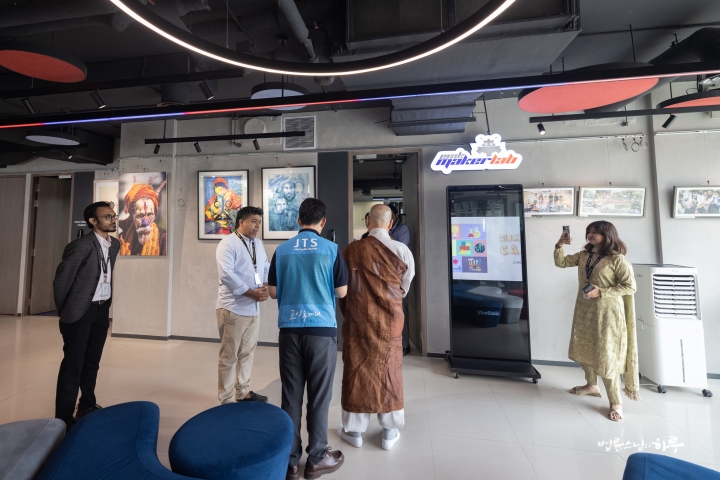
“This is a space where artists can exhibit their works. Any young person can display their work here, and it’s all free. It’s a space created for young people to show their hidden talents.”
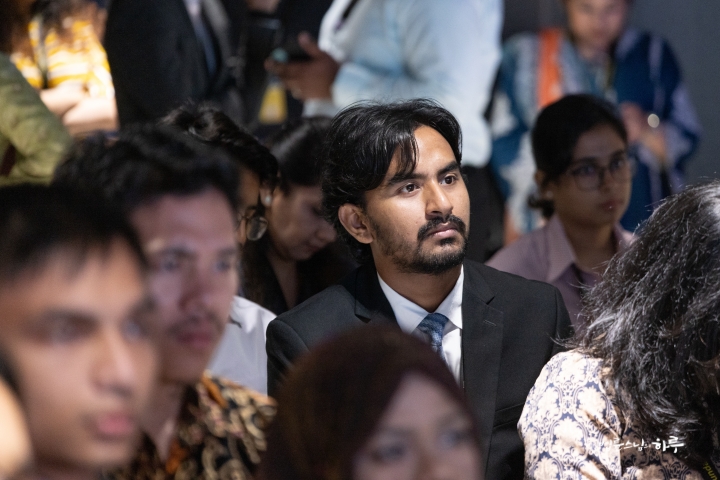
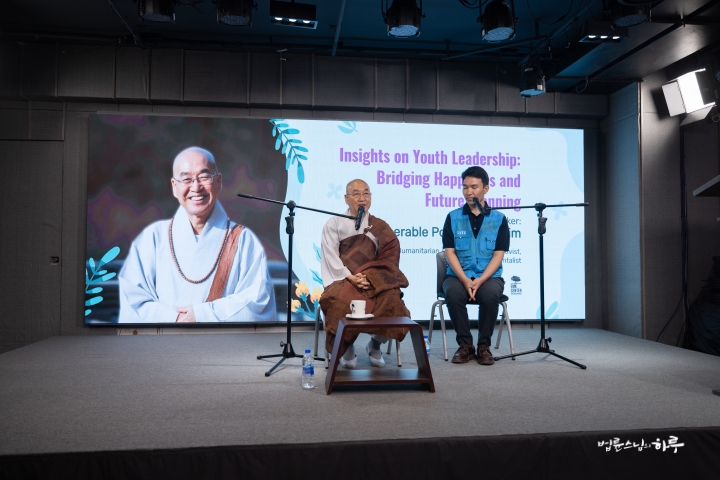
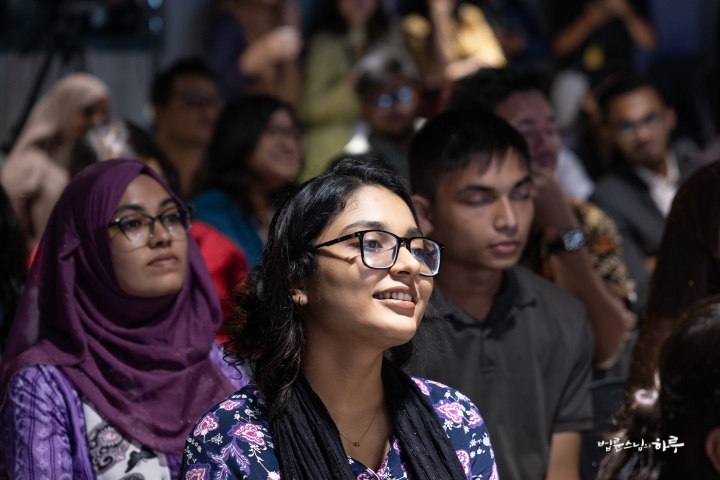
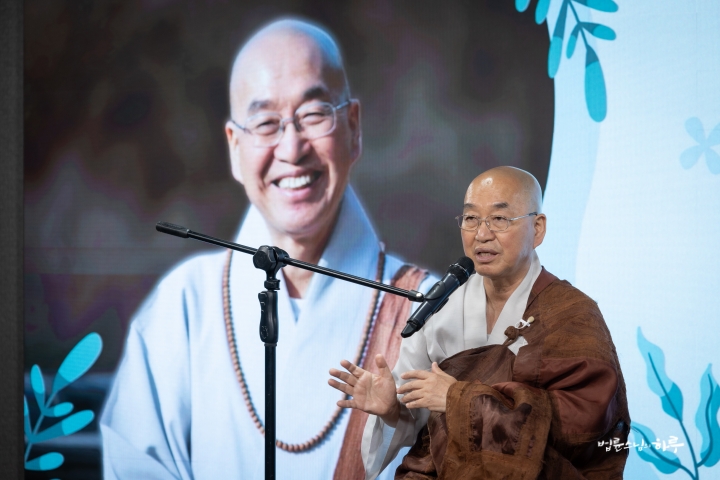
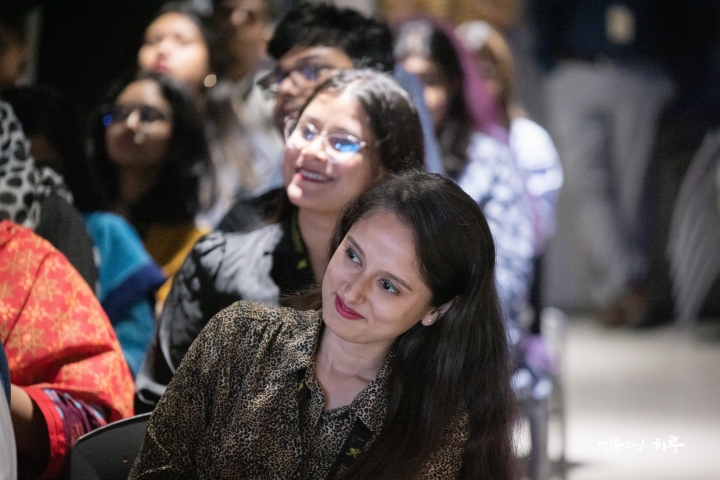
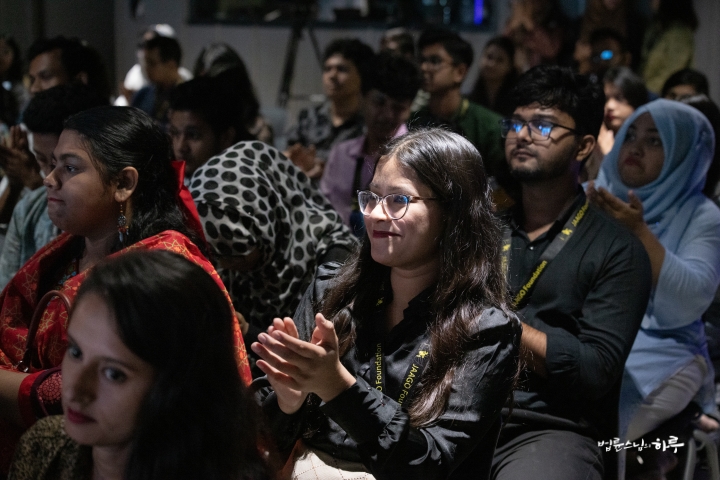
After touring the EMK Center, we moved to Kennedy Hall at 11:45 AM. About 100 young people had gathered to listen to Sunim’s lecture. The lecture topic requested by the JAAGO Foundation was ‘Insights on Youth Leadership’.
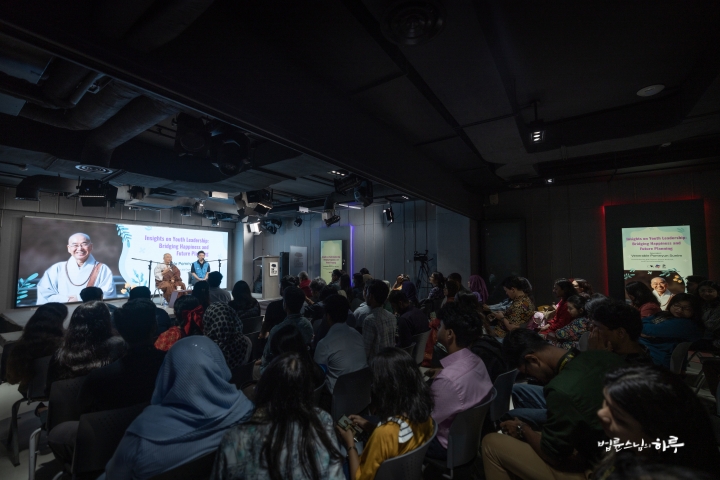
As the host introduced Sunim, he walked onto the stage amidst loud applause. Sunim began the conversation by explaining why he had come to visit the JAAGO Foundation from afar.
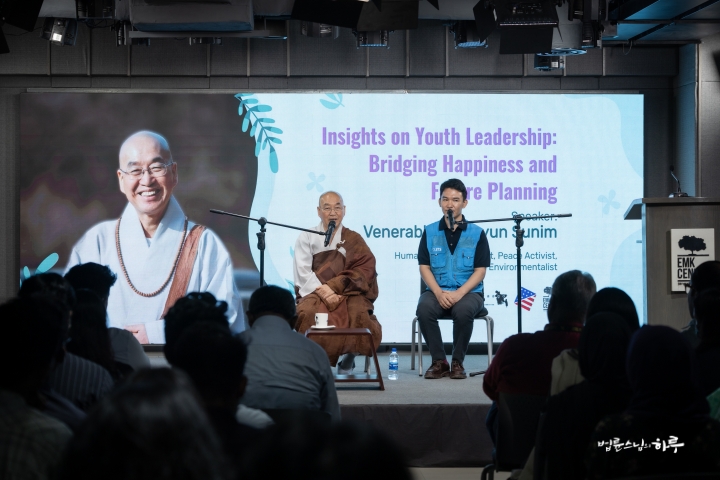
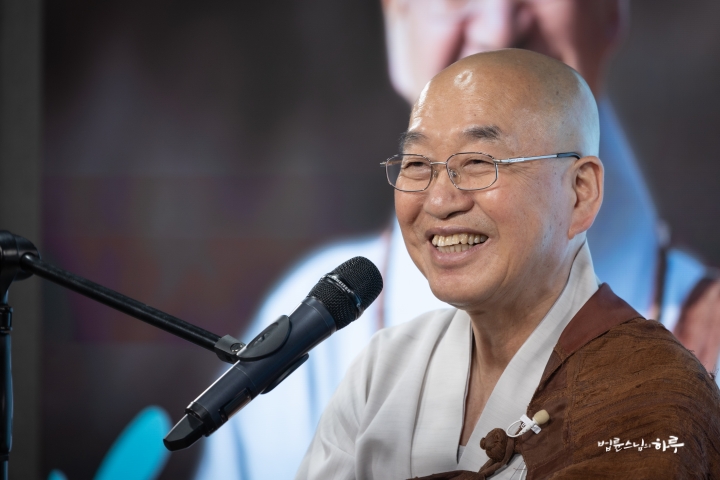
For the Countless Children Still Without Access to Education
From what I understand, it started with one classroom of 17 students and has now grown to provide educational opportunities for 4,500 students. There are still many more children in this world who lack access to education. Therefore, we must work together to further expand this approach. What saddens me most is the fact that children in the Rohingya refugee camps in Cox’s Bazar are not receiving any education at all. I hope that the JAGGO Foundation’s education program can provide a new solution to this problem as well. Currently, there are many Myanmar refugees not only in Bangladesh but also in Thailand. If we could introduce this educational system to the refugee camps along the Thai border, we could provide educational opportunities to even more children. I heard that Dr. Korvi Rakshand, after studying abroad in the UK and on the path to a promising career, realized that sharing his talents with poor children and giving them hope was more meaningful than living for personal gain. This led him to establish the JAGGO Foundation. I, too, believe that sharing one’s talents with others is the path to living a happier life.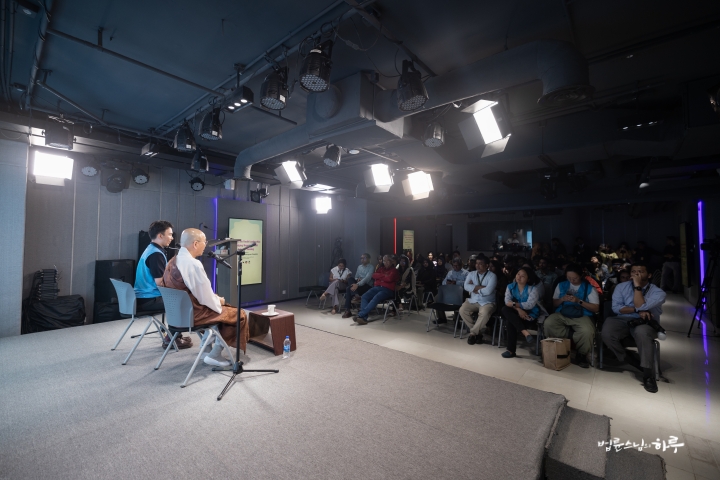
Following this, anyone could ask Sunim questions. The activists from the JAGGO Foundation shared various concerns.
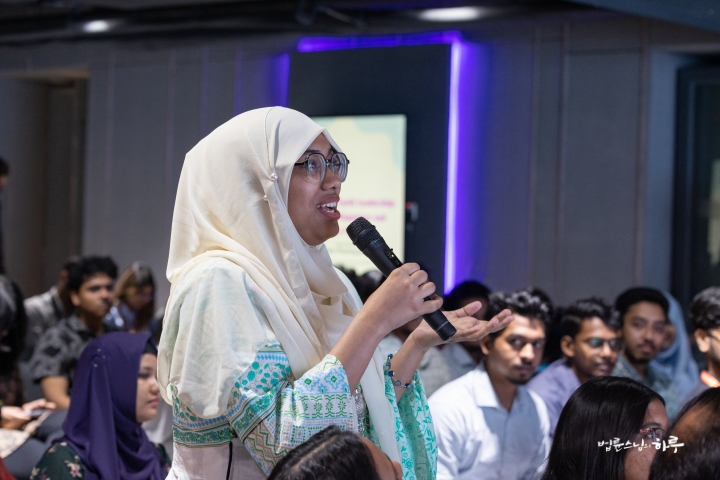
Four young people raised their hands and engaged in conversation with Sunim. One of them asked what an individual could do to address environmental issues and equality problems.
What Should an Individual Do to Overcome the Climate Crisis and Achieve Equality?
“I’m very interested in solving social problems. However, it seems there’s little an individual can do to solve the climate crisis and eliminate class and gender discrimination. What can an individual do to practice environmental protection and achieve equality?”
“The climate crisis is becoming more serious day by day. Right now, we’re only seeing signs, but in 10 or 20 years, we’ll all feel it on our skin, and it will make life difficult.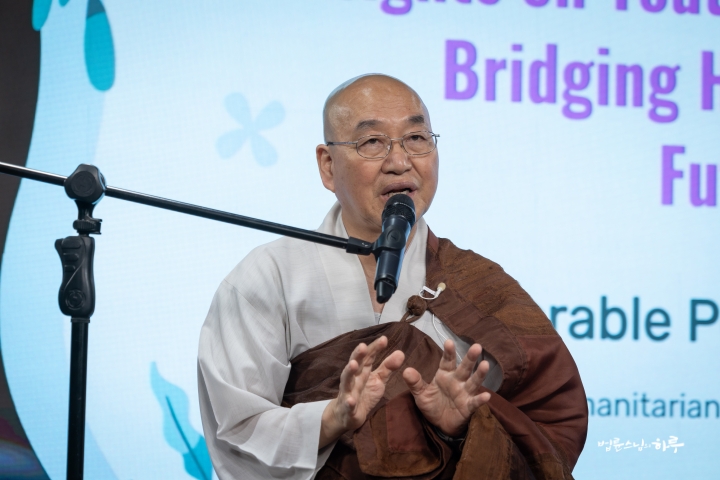
“Thank you.”
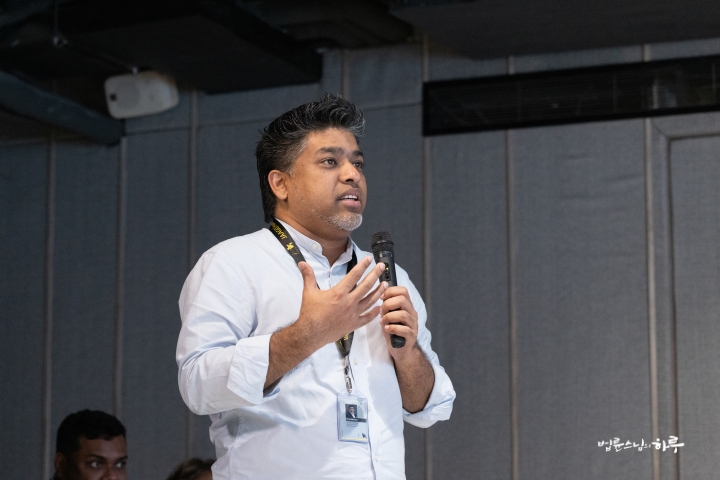
As questions continued to pour in, the final question was asked by Korvi Rakshand.
How Can We Avoid Stress?
“We have many activists in our foundation. Some face pressure from their families, asking why they earn so little despite graduating from good universities. Others feel intimidated when compared to their friends. How can we continue our activities vigorously without experiencing stress?”
Sunim used South Korea’s economic growth as an example, emphasizing that although the GDP has increased 350 times compared to 65 years ago, people haven’t become proportionately happier. He then explained what perspective one should have to avoid stress.
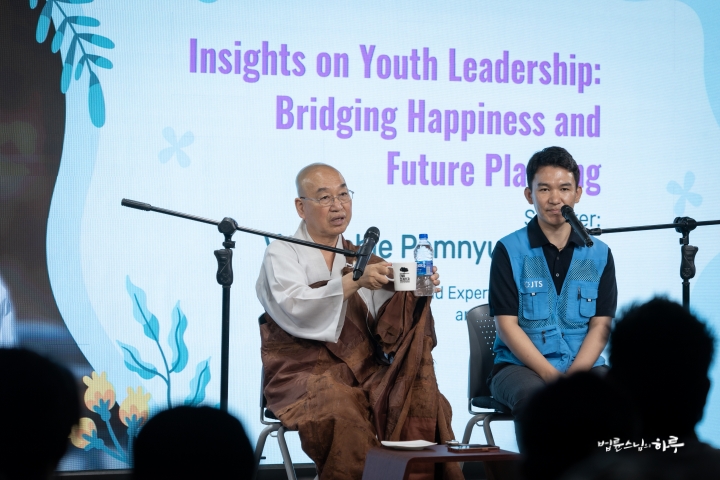
“The cup is large.”
“How does the cup compare to the water bottle?”“The cup is small.”
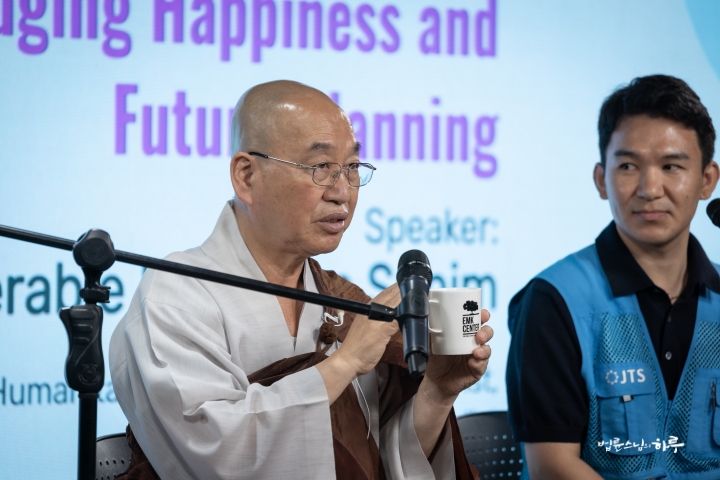
“It depends on what we compare it to.”
“However, when we live under the same conditions for a long time, our minds become fixed with the perception that the cup is large. Conversely, if we live under opposite conditions for a long time, our minds become fixed with the perception that the cup is small. So we mistakenly think, ‘I perceive this cup as small because it is actually small.’ Some people think they perceive this cup as large because it is actually large. But this cup is neither big nor small. The idea that this cup is big or small doesn’t exist in the cup itself; it’s just our perception.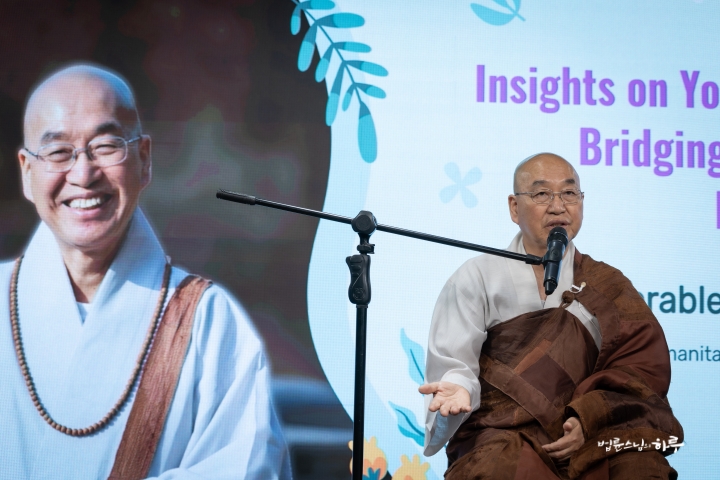
“Thank you so much!”
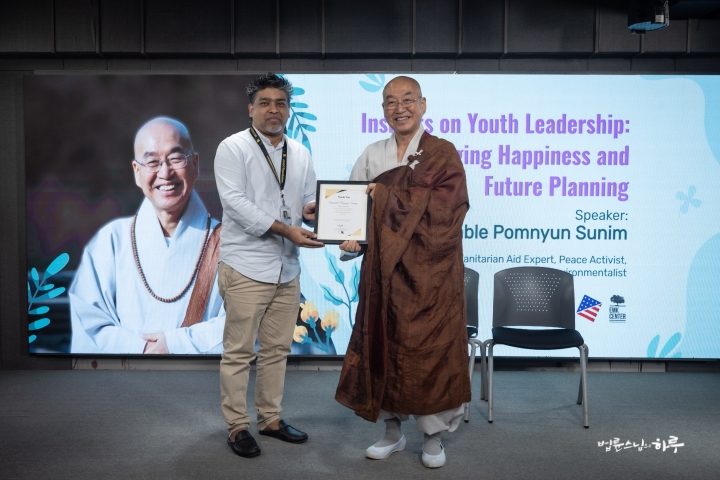
After the Dharma Q&A, the JAGGO Foundation presented Sunim with a commemorative plaque for his visit.
Sunim presented a donation to the JAGGO Foundation.
“Please buy necessary school supplies and sports equipment for the students.”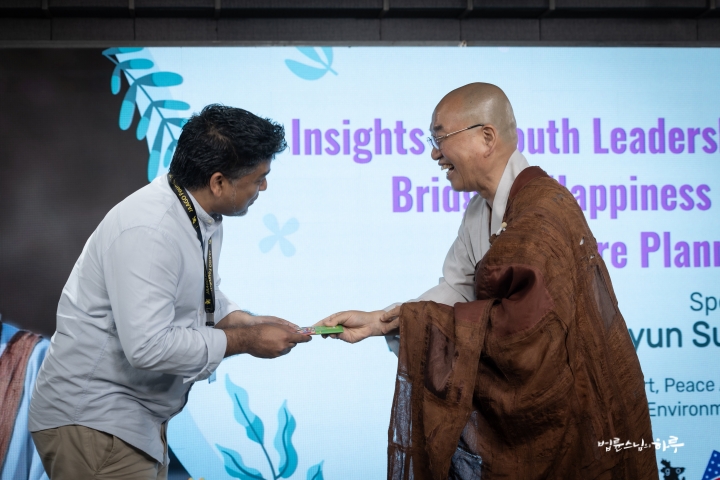
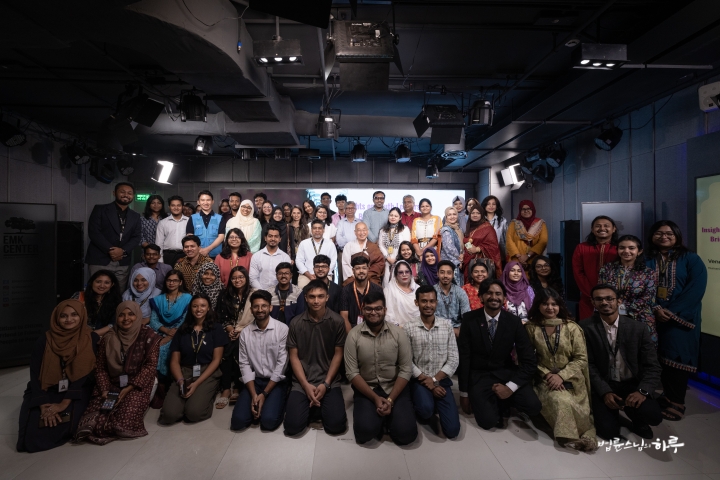
All the young attendees gathered in front of the stage for a group photo.
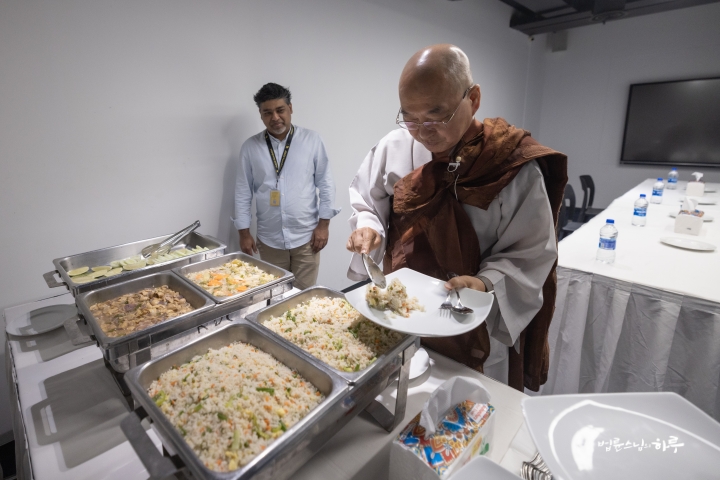
The group moved to another location for lunch and continued their conversation. The JAGGO Foundation had prepared the meal with great care.
Lakshanda shared that the Korean Wave is also incredibly popular in Bangladesh.
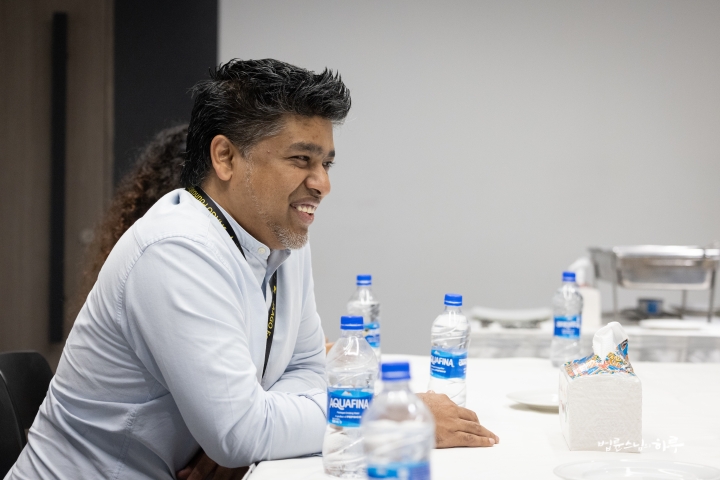
“There are now so many people in Bangladesh who love Korean dramas, Korean movies, and Korean music.”
Sunim smiled and said:
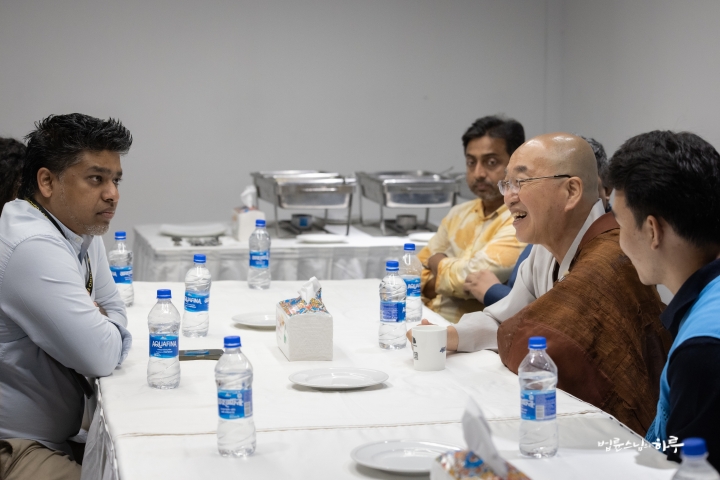
After discussing potential areas for future collaboration and cooperation, the group left the JAGGO Foundation.
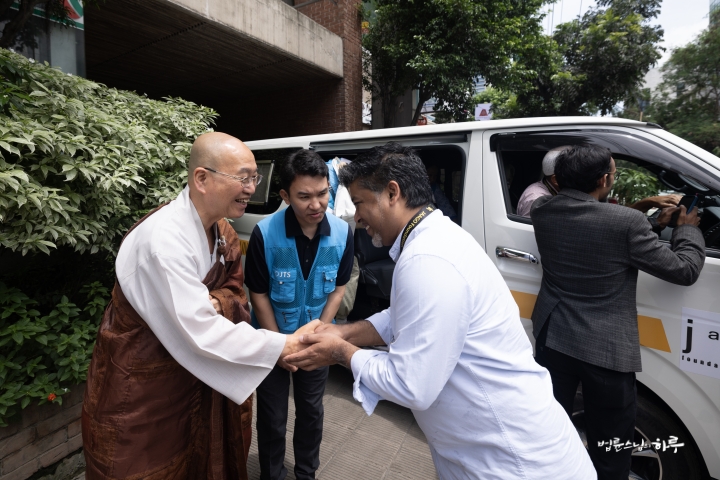
“Thank you so much for coming.”
After exchanging farewells, the group moved to the UNHCR (United Nations High Commissioner for Refugees) office at 1:20 PM.
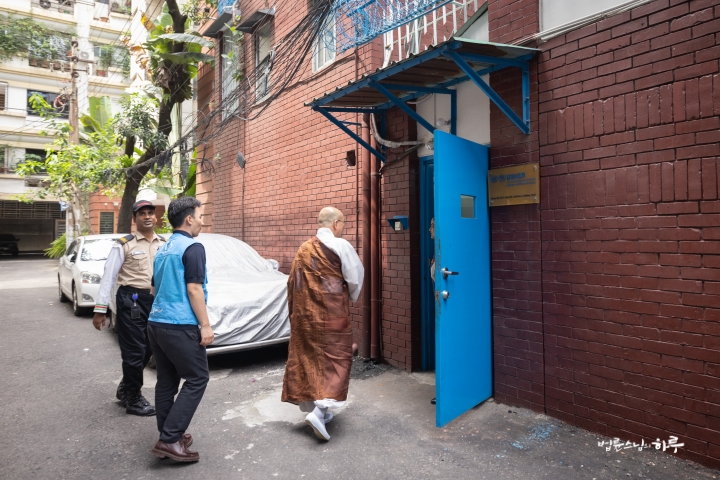
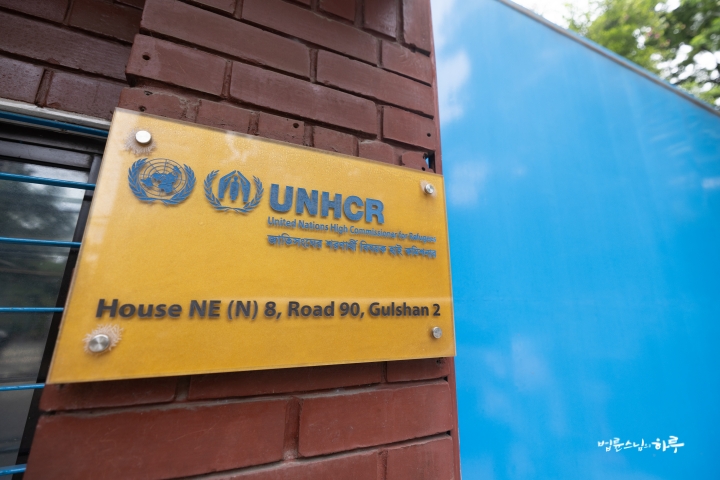
There is a UNHCR office in Dhaka that supports the Rohingya refugee camps. JTS has previously provided 100,000 gas burners to the Rohingya refugee camps on two separate occasions. The UNHCR wanted to discuss additional support for essential items, so we visited the office.
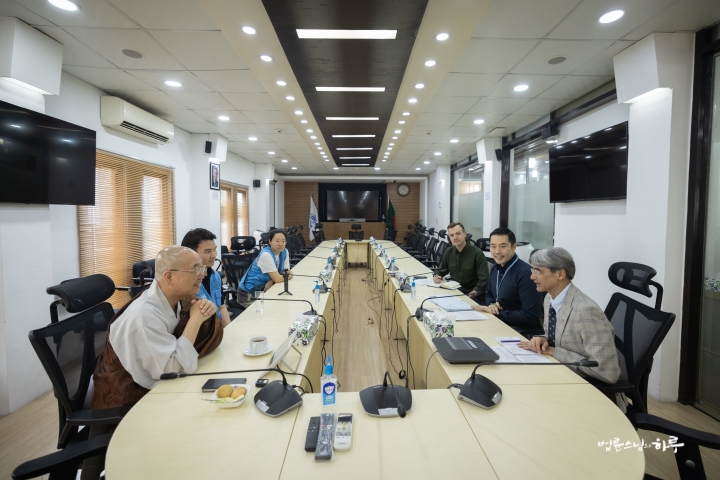
Shubash, the head of the UNHCR Refugee Protection Team, thanked JTS for their support of the Rohingya refugees and then explained the increasingly dire situation in the Rohingya refugee camps.
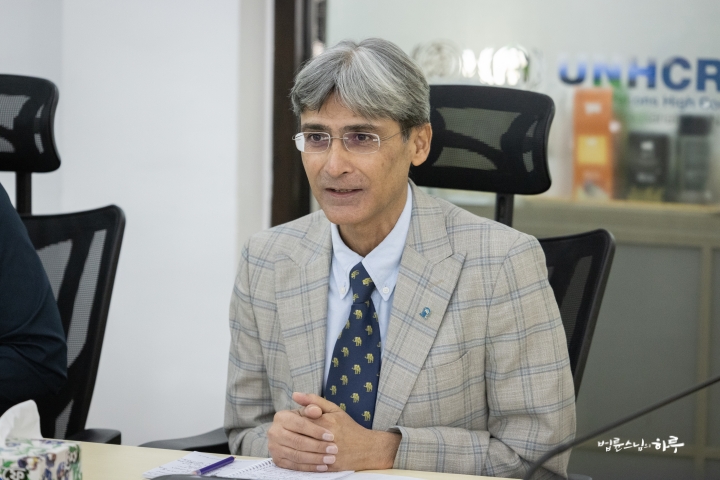
“Due to the impact of the war between Ukraine and Russia, funding for the Rohingya refugee camps has drastically decreased. The ongoing conflict in Rakhine State, Myanmar, has made it even less likely for refugees to return to their homeland. The refugees are living without hope and without a future.”
Sunim also expressed concern about the situation in the Rohingya refugee camps and made a few requests.
All Children Must Learn at the Right Time
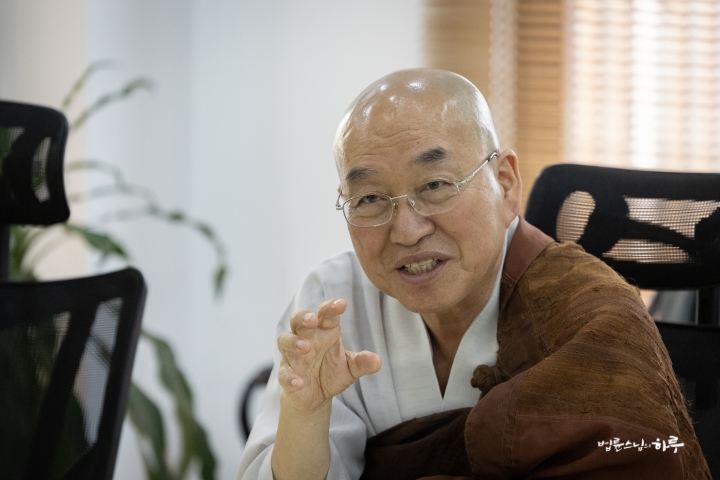
“Yes, we also consider children’s education to be of utmost importance. We will look into it.”
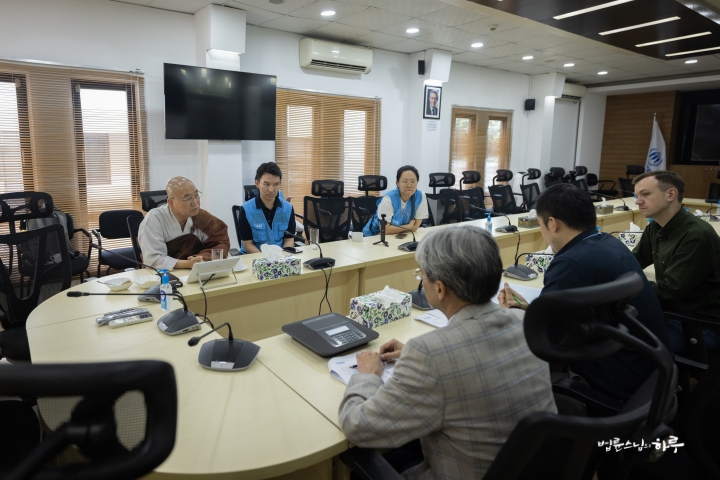
UNHCR mentioned that due to reduced international funding, they are facing difficulties in supplying essential items to the refugee camps. They requested JTS to provide a large quantity of soap. Sunim promised to send a JTS representative for further investigation before providing support.
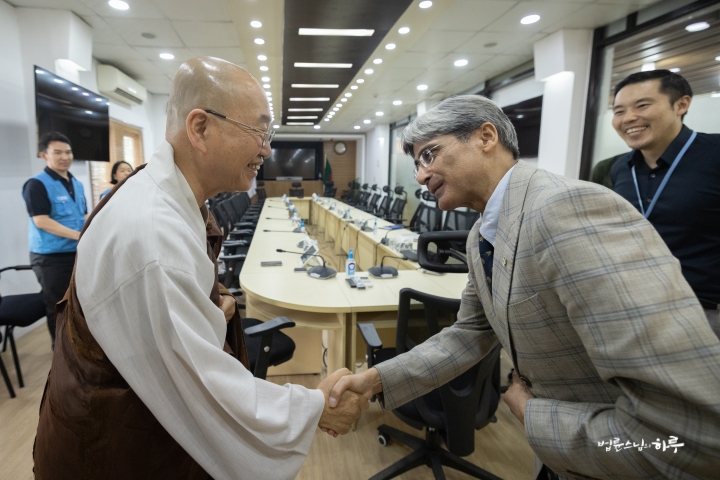
After an hour and a half of discussion, all participants exchanged greetings, and left the UNHCR office.
As the sun set, we returned to their accommodation for dinner. In the evening, Sunim worked on proofreading manuscripts and other tasks.
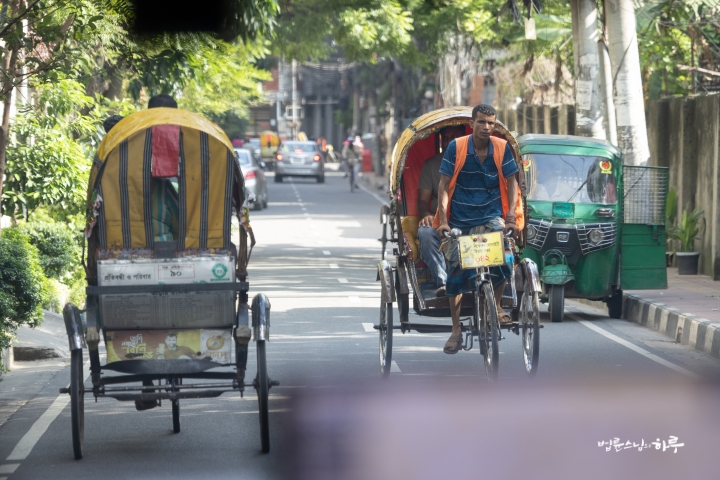
At midnight, we left our accommodation and headed to Dhaka Airport to travel to Singapore.
Tomorrow, we will depart from Dhaka Airport at 2:45 AM for Singapore. In Singapore, Sunim will meet with Jungto Society members living there and local dignitaries. In the evening, Sunim will give a Dharma Q&A lecture for Korean expatriates.