My Heart Aches for a Colleague Who Has Passed Away
July 10, 2024 - My Heart Aches for a Colleague Who Has Passed Away
Today marks the fifth day of Sunim’s visit to Bhutan. He toured the Paro Taktsang Monastery with Bhutanese officials, met with the former GNH Director of Bhutan, Dasho Karma Tshiteem, and concluded his visit.
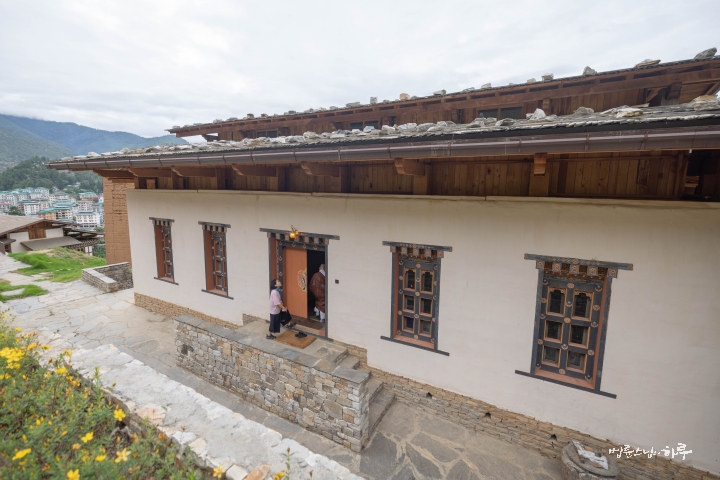
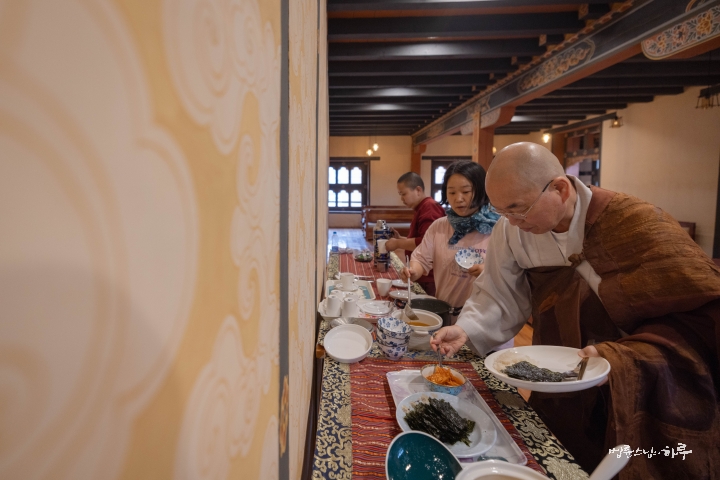
Sunim began his day at 6 AM with breakfast at the Bhutanese Nuns Foundation (BNF) after completing his early morning practice and meditation.
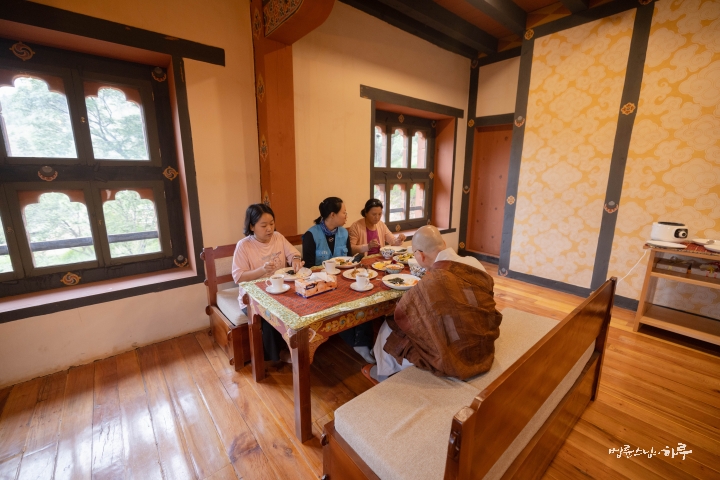
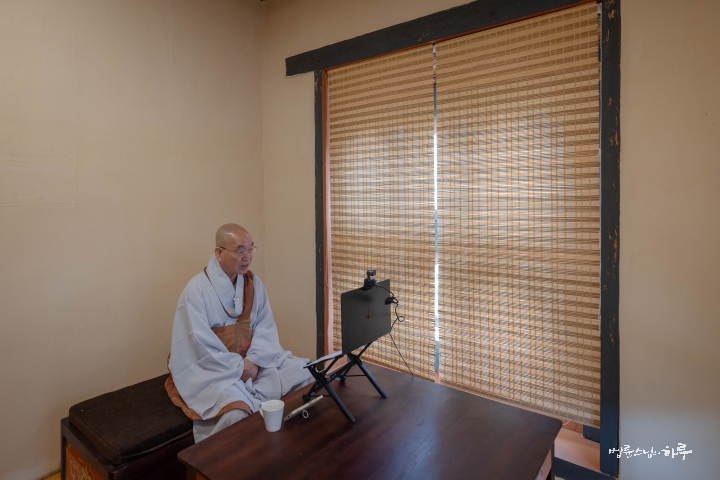
At 7 AM sharp (10 AM Korean time), Sunim began the live broadcast of the Weekly Dharma Assembly. As Jungto Society members entered the video conference room, Sunim greeted them.
The video showed the inauguration ceremony of the women’s dormitory at the Royal University of Buddhism in Battambang, Cambodia, which took place on the 4th.
▲ Watch the video
A Day When Lifelong Dreams Came True
“Did you see it well? Your small acts of generosity have come together to help them fulfill their long-cherished dreams. The completion of the women’s dormitory at the Royal University of Buddhism in Battambang, Cambodia, was a lifelong dream for them. It was something they thought would happen in the distant future, but thanks to your donations, that dream has become a reality before their eyes. This inauguration ceremony has given them great hope for their lives. I would like to take this opportunity to once again thank all the JTS supporters who have been supporting us.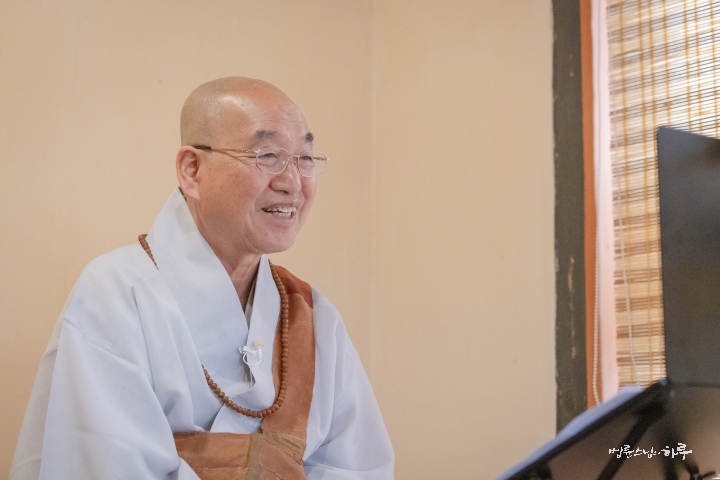
Greater Joy Than Fulfilling One’s Own Desires
We can experience greater joy when we share food with the hungry and clothes with the naked, rather than when we eat a delicious meal or buy a nice outfit for ourselves. We can experience greater joy when we provide a comfortable place for the homeless to sleep, protected from heat, cold, and rain, than when our personal desires are satisfied. That’s why this work is not for others, but for ourselves. Compassion is treating the world’s affairs as our own, just as we wash our bodies and take care of our belongings. It’s not that we need compassion to do work for the world, but when we willingly do work for the world as if it were our own, we call that mindset compassion. Once again, I would like to take this opportunity to thank all those who volunteer and donate.”Sunim then had conversations with three participants who had submitted questions in advance. One of them, whose colleague had recently passed away, asked Sunim for advice on how to cope with the heartache.
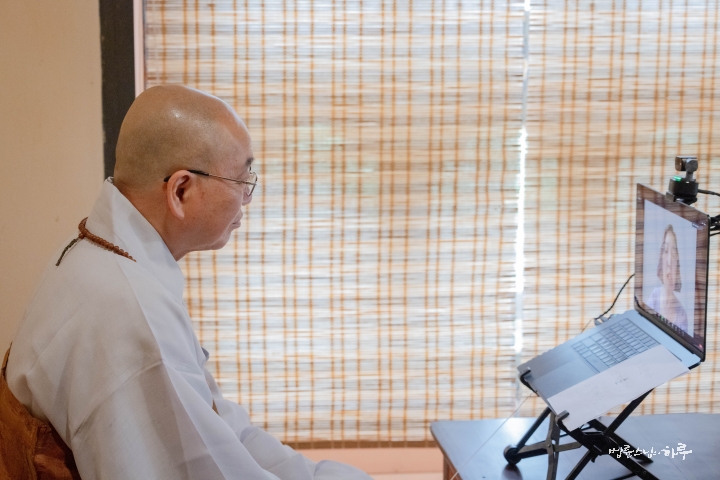
My Heart Aches for a Colleague Who Has Passed Away
“A colleague who worked with me suddenly passed away. This colleague embraced me with warmth when I was struggling, gave me courage and hope at every difficult moment, and led me to where I am now. Although I said ‘Goodbye, farewell!’ and sent them to heaven, my heart aches so much, and memories of working together keep coming back. The gratitude for being there for me during tough times makes the feeling of loss even greater. What mindset should I have to return to my daily life?”
“Today I finished exploring Bhutan, and tomorrow I will go to the Assam region in India to help people affected by floods. Since you all have to go to work and take care of household chores, I will be your eyes, hands, and feet, playing the role of helping those in need in this world. I’ll share more news with you next week.” “When a family member, colleague, relative, or friend who was a part of our daily life suddenly passes away, our hearts feel empty, and we can’t help but tear up just thinking about the person who left. I think such a reaction is natural. These days, many people can’t control their sadness even when their beloved pets die. When a house we owned burns down or we lose money, the emptiness is indescribable. Even losing just one cherished item can make us think about it for days – that’s the human mind. So what you’re saying is something we can all empathize with.The questions continued. After answering all the questions, Sunim gave his closing remarks.
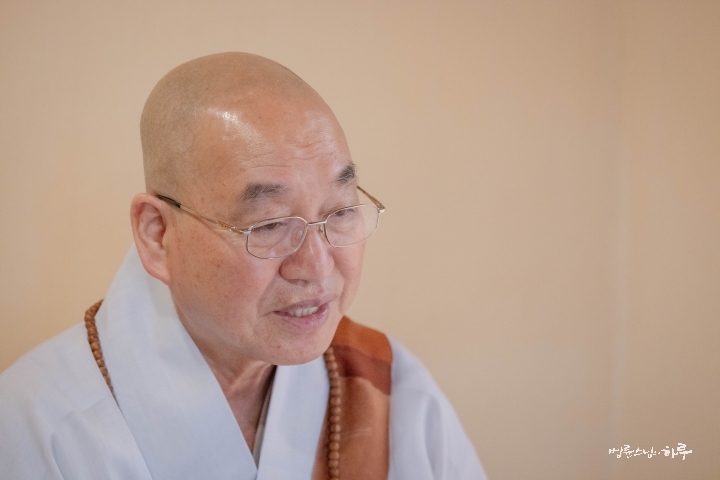
After Sunim finished the live broadcast, it was 8 AM. Having completed the early morning broadcast, he headed to Taktsang Monastery in Paro with a light heart.
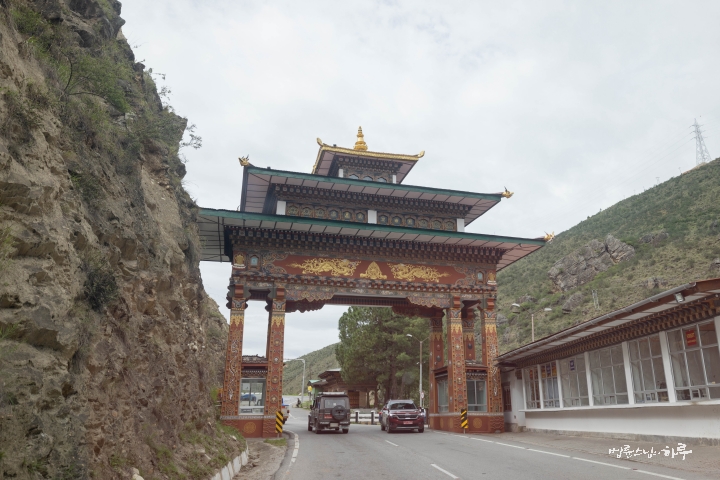
Today, the driver who first drove for sunim when he visited Bhutan appeared again.
“Sunim, I’m happy to see you again. How is your health?”
“Yes, anytime, everywhere, everything is okay!”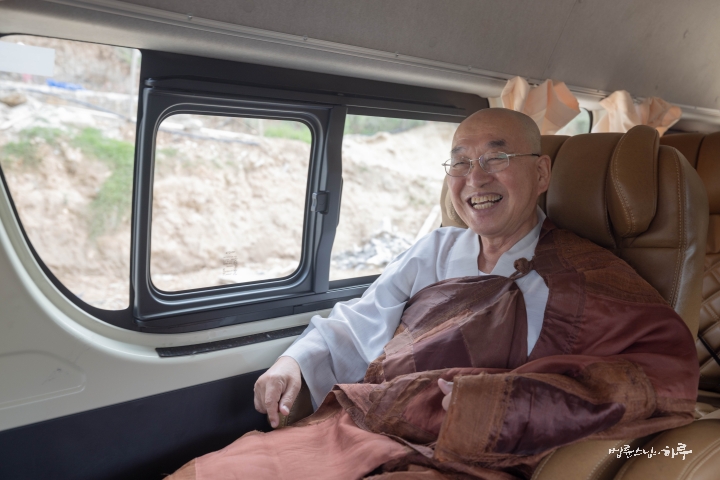
Sunim answered energetically.
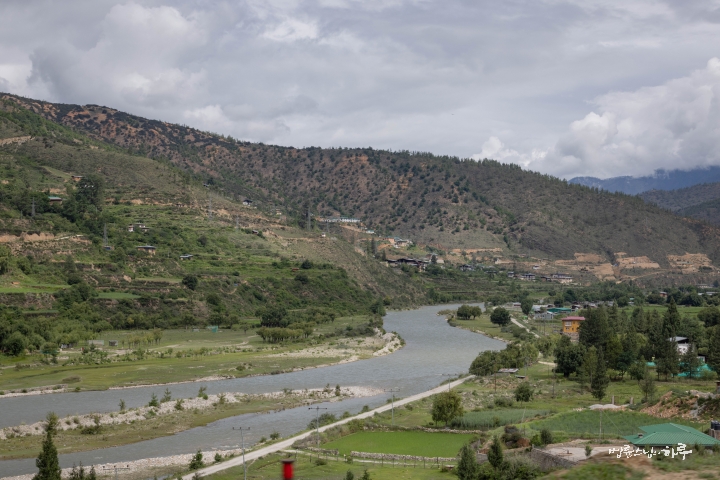
After driving for 1 hour and 40 minutes, we arrived at the entrance of Taktsang Monastery at 9:50. The agricultural officer of Paro district, planning officer, and central government officials were waiting. Today is the day when Buddha first preached, and although it was a holiday, the officials gathered early at Taktsang Monastery to conduct a site visit with the monk.
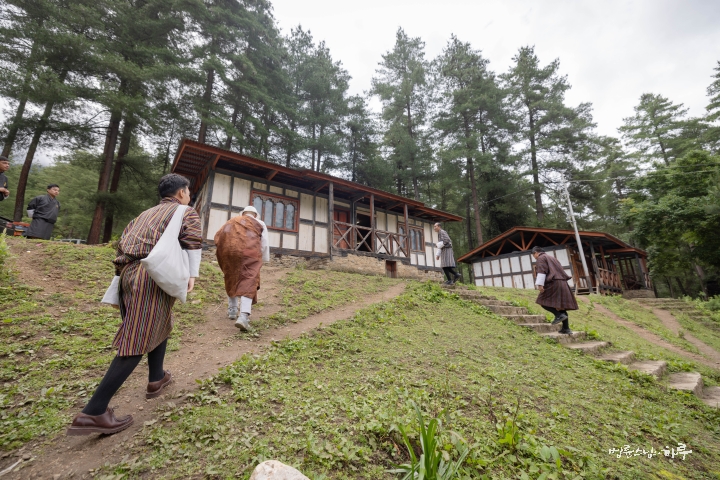
During his visit last April, the monk hiked to Taktsang Monastery, located at an altitude of 3,100 meters, with the Governor of Paro. They paid respects at the monastery and had many discussions about how to develop this place for tourism in an environmentally friendly way. Today, he had more detailed discussions with the officials in charge of implementation.
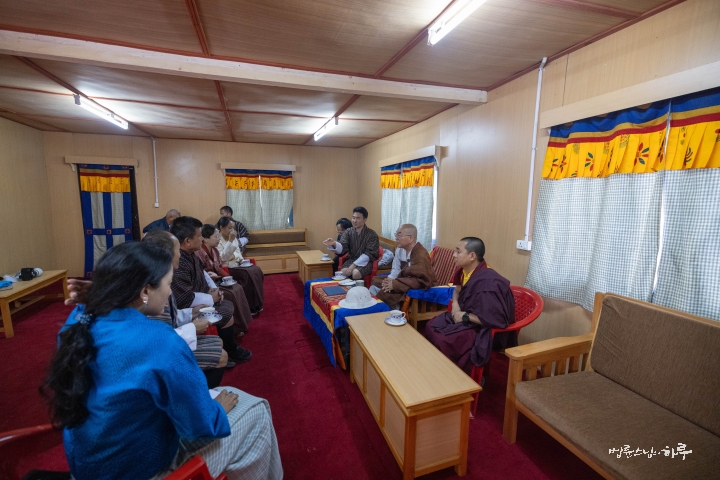
Sunim joined them for tea and conversation before exploring the park.
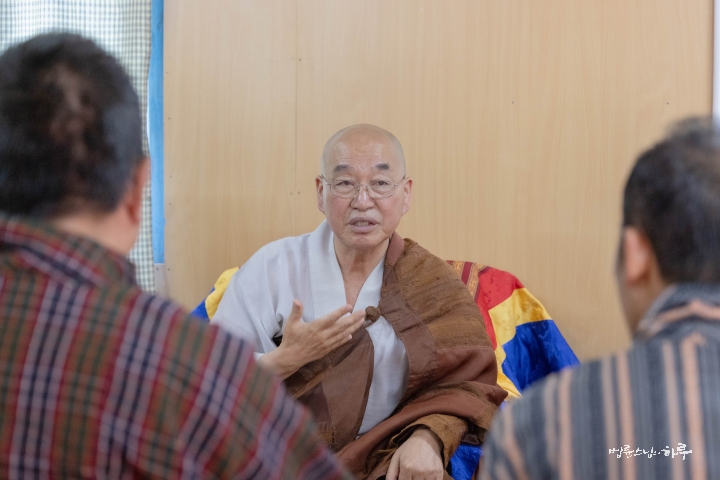
“We are grateful that you have visited us and are offering to help.”
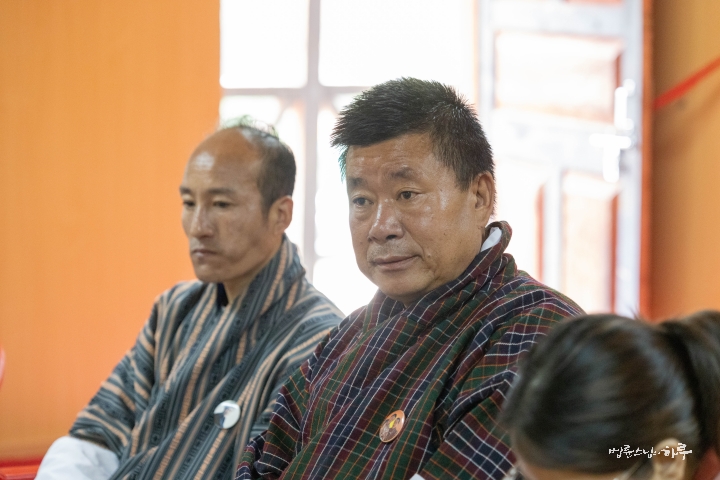
First, Sunim suggested to the agricultural officer that it would be good to plant green manure crops in the harvested rice fields.
“If you scatter grass seeds in the rice fields around harvest time, grass will grow, and when you plow it under, it can enrich the soil without chemical fertilizers. Is this method being used in the Paro region?”“It’s not being done in Paro, but I know it’s being done in some eastern regions. However, it’s not a widely known method.”
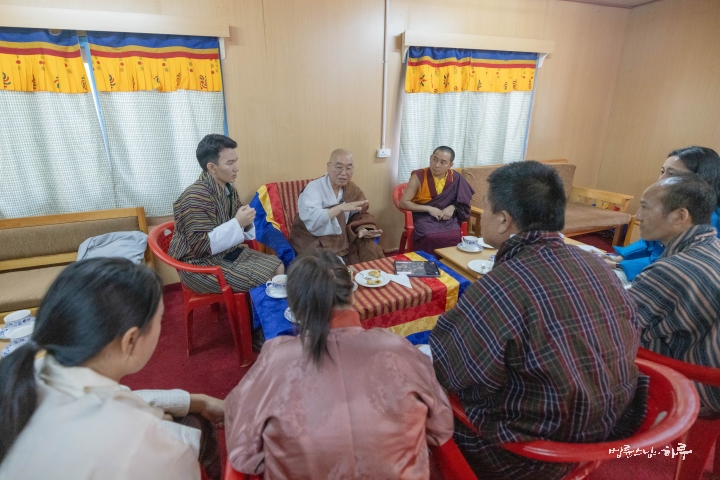
Next, Sunim shared his ideas with the planning officer on how to develop the area around Taktsang Monastery.
How to Preserve Bhutan’s Charm at Taktsang Monastery for the Long Term
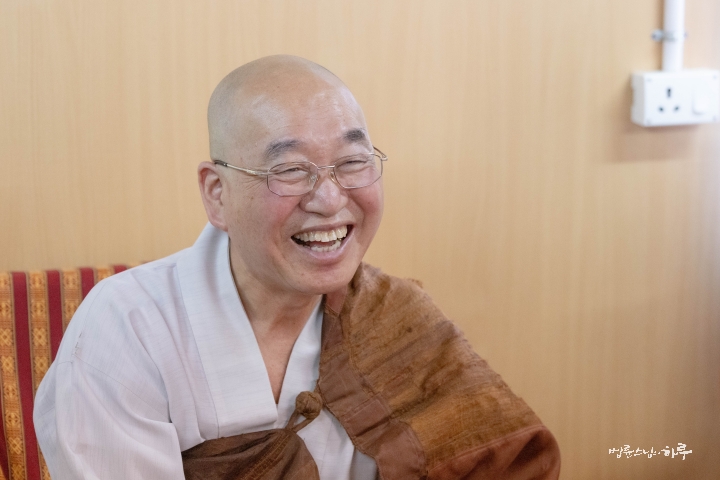
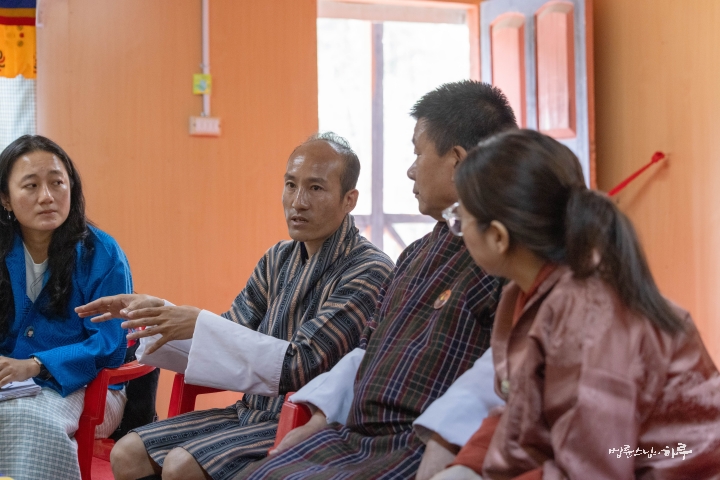
The officials all agreed with Sunim’s ideas. After 40 minutes of conversation, they toured the park entrance together.
“Alright, let me explain as we walk around.”The park entrance was currently an empty lot with no facilities.
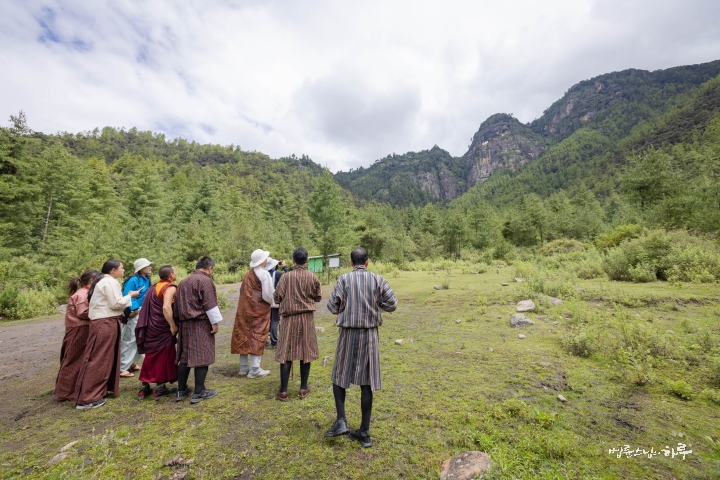
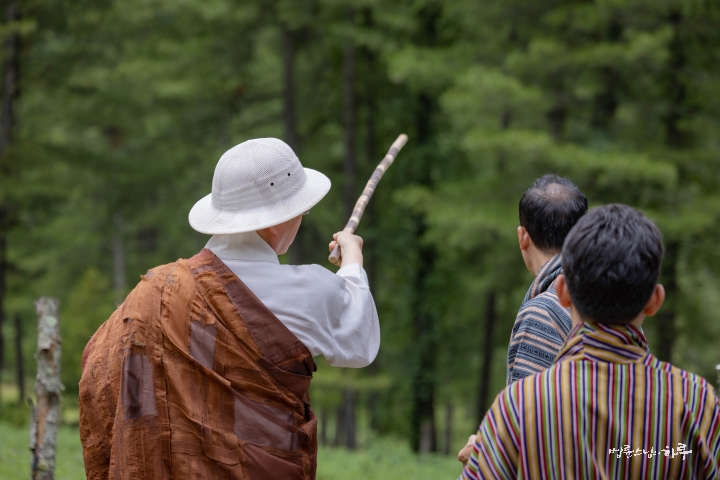
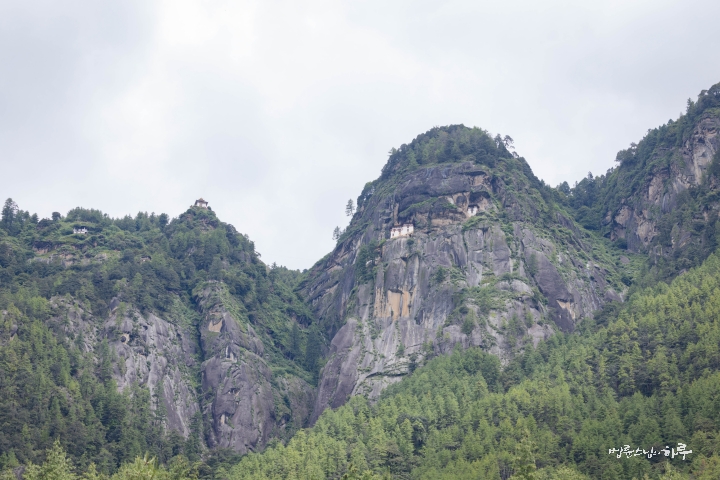
They continued up the path. Tree roots were exposed along many of the hiking trails.
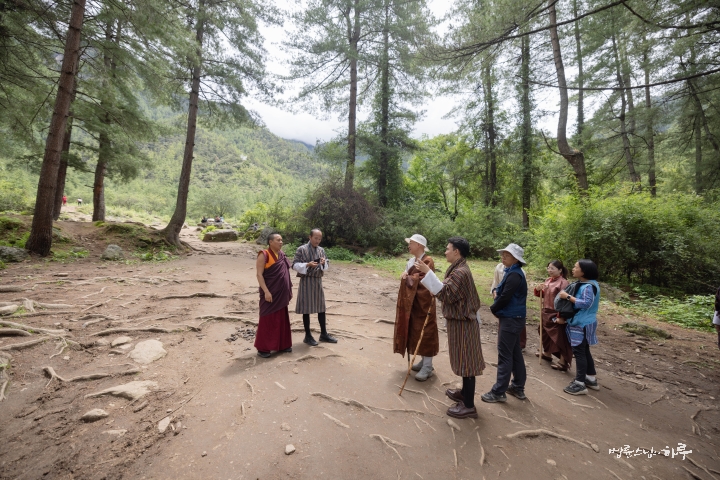
The biggest problem was that the paths for horses and people were not separated.
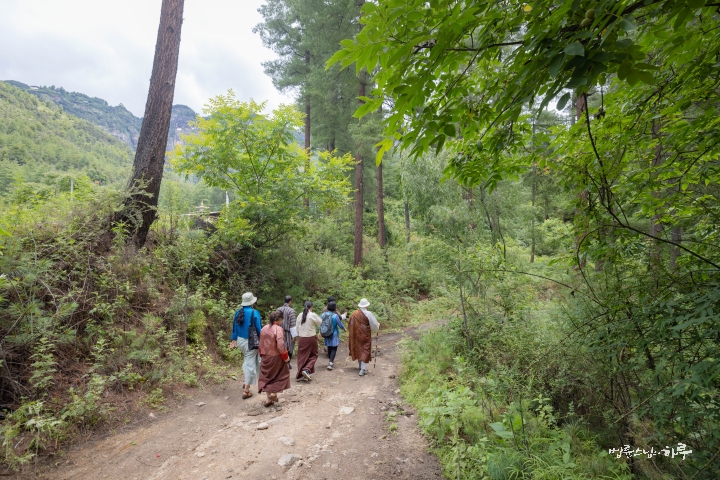
After touring the park entrance, they walked down the road leading from the park entrance to the village, examining it closely. Sunim pointed out areas that needed improvement in detail.
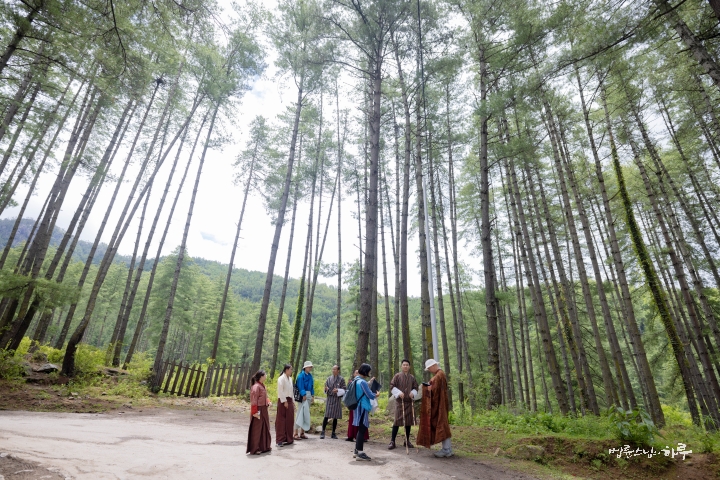
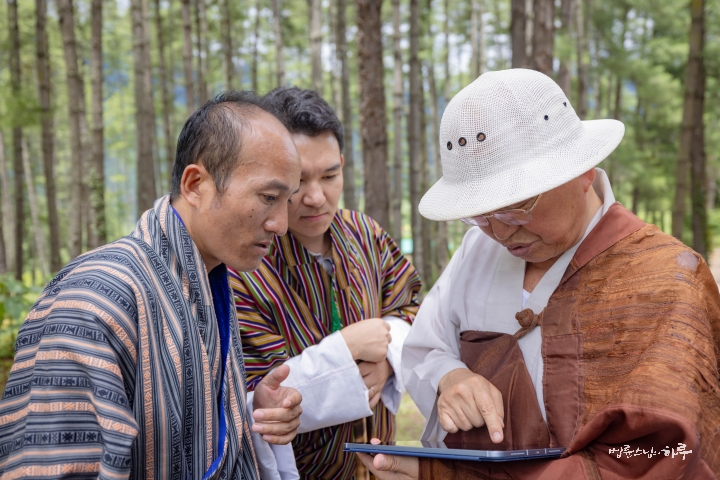
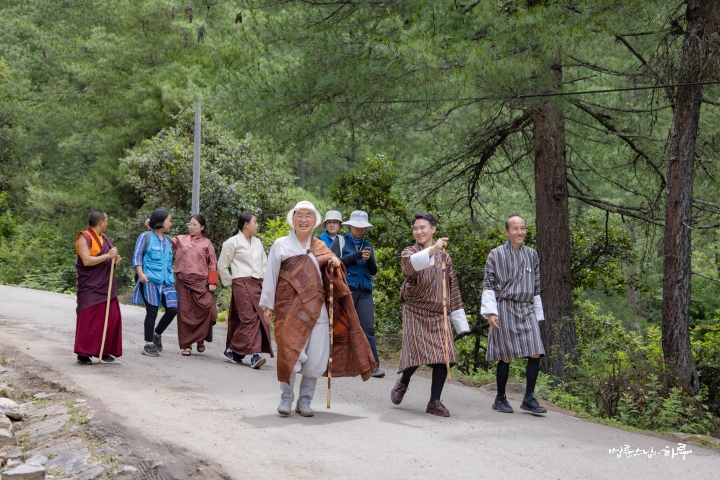
They then drove to survey the wider surrounding area.
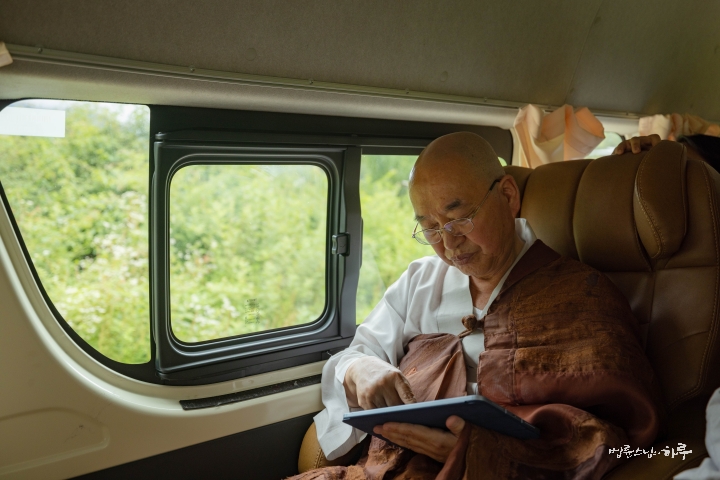
In preparation for the increasing number of tourists, Sunim suggested the most appropriate locations for securing a large parking area and creating new access roads without damaging nature, showing the officials a map.
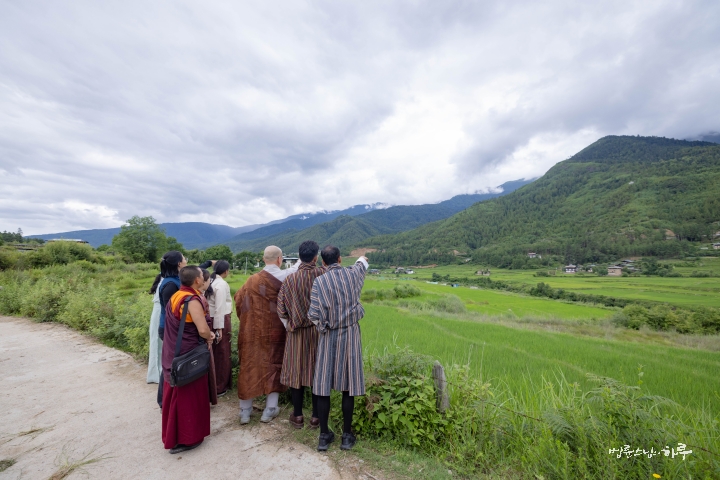
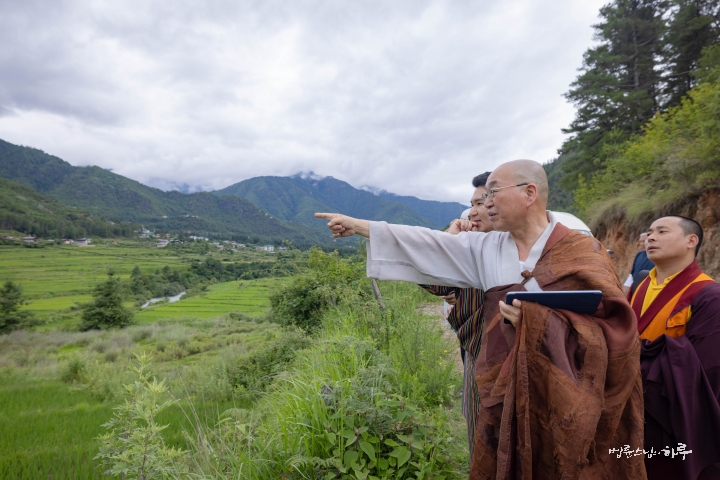
The current access road is very narrow as it passes between private houses. Sunim explained that traffic congestion could occur as the number of tourists increases, so a new access road needs to be built, and he suggested several alternatives.
They wanted to continue the conversation, but Sunim had an appointment in Thimphu at 2 PM. He gave soap and toothpaste as gifts to the officials and said goodbye.
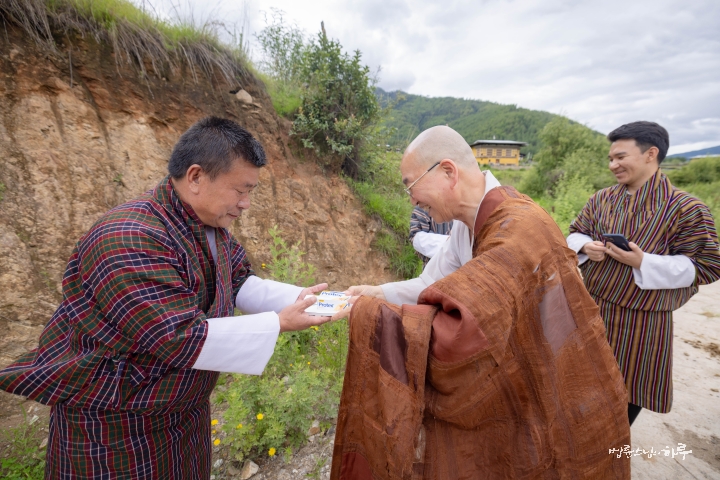
“Thank you.”
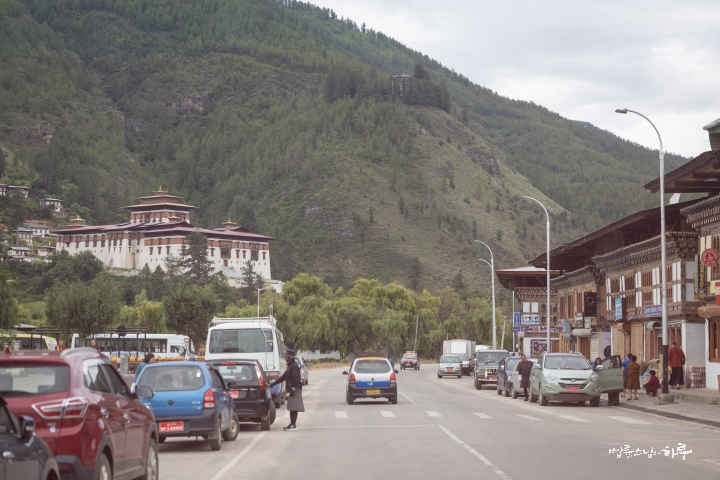
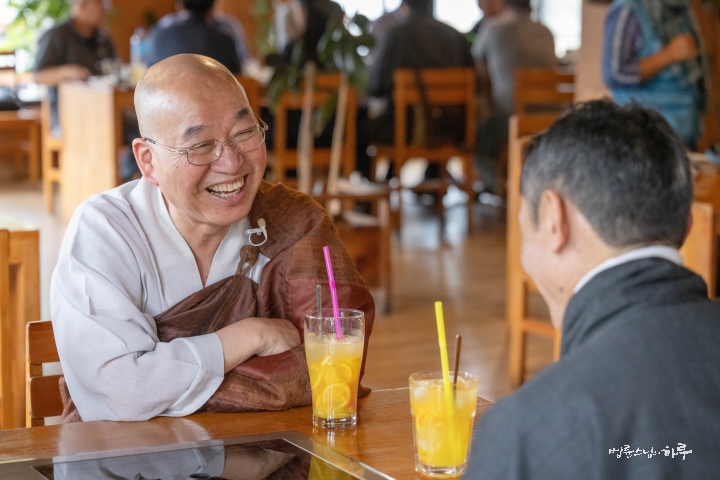
Sunim left Paro at 12 PM and arrived at Sanmaru, a Korean restaurant in Thimphu, at 1:40 PM. After a quick meal of one roll of kimbap, he had a conversation with Dasho Karma Tshiteem from 2 PM.
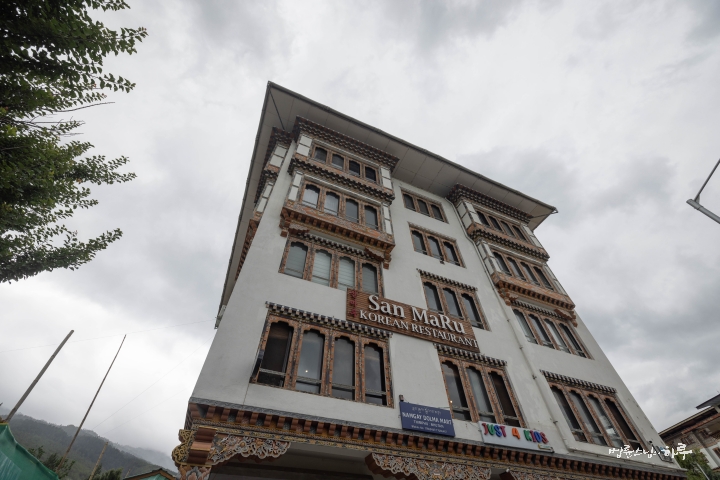
Tshiteem is a former chairperson of the Royal Civil Service Commission and former director of the GNH (Gross National Happiness) Commission in Bhutan. He currently oversees the ‘De-Suups’ program across Bhutan, which aims to promote national service among Bhutanese youth.
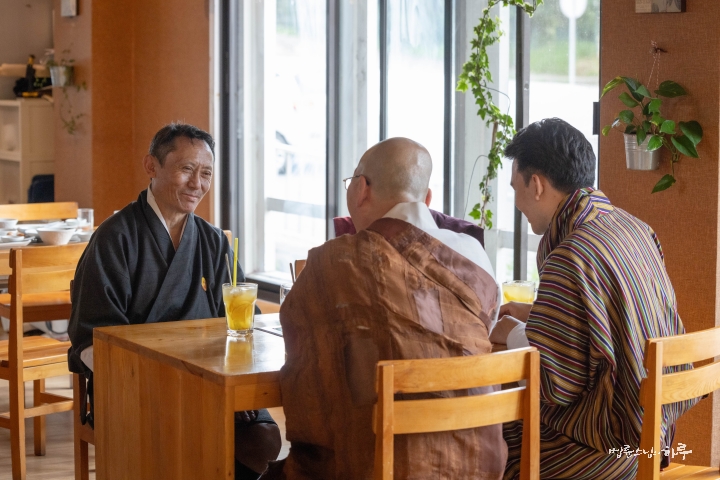
First, Sunim shared the results of the pilot project for sustainable development that he conducted in Zhemgang and Trongsa in the first half of this year. Then, Tshiteem explained in detail how the De-Suups program he is running operates.
Development That Leverages Bhutan’s Strengths
They also discussed the Gelephu New City development project that the Bhutanese government is currently focusing on. Sunim suggested that development should maximize Bhutan’s strengths.
Karma Tshiteem expressed his respect for Sunim’s thoughts while also expressing concern that Bhutanese people are becoming increasingly attached to money.
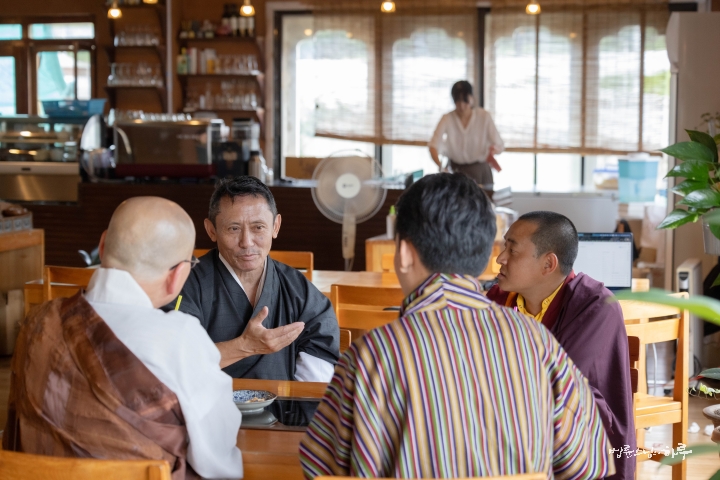
“What you say is right, but people’s desires are growing day by day. Still, Bhutanese people are relatively less greedy and satisfied with their lives.”
“I’m currently working with Bhutanese officials, and compared to officials from other countries, they are very honest and enthusiastic. They’re young, so they may lack experience or ideas, but with a little training, I think they could become excellent people.”“I’m really glad that you’re supporting Bhutan like this.”
“I don’t think of it as support. I think of it as ‘doing it together.'”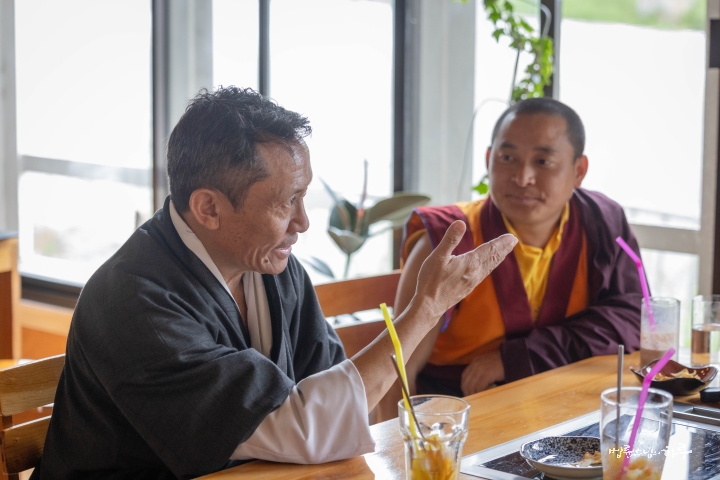
“Most countries or NGOs just provide support but don’t work together with the residents. But you work together with the residents, so it seems like a very different approach. I think this new approach will have great value later, and I hope your activities are well documented.”
After an hour and a half of conversation, Sunim finally talked about his future plans.
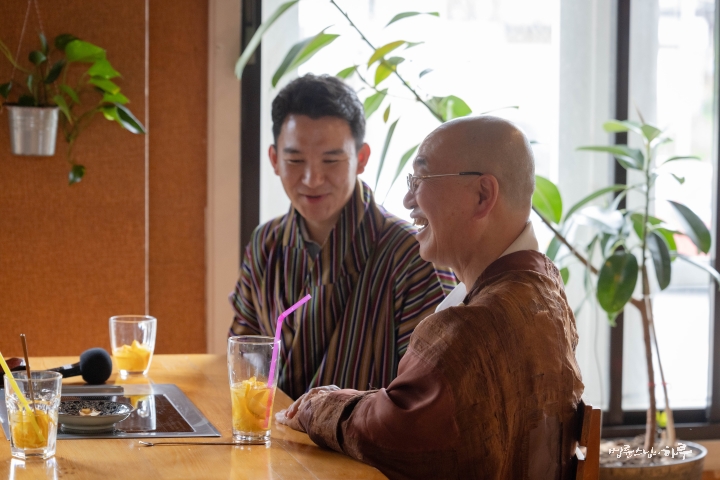
Sunim emphasized that the De-Suups program run by Tshiteem and JTS’s sustainable development project should eventually work in organic cooperation.
While they were talking, the head of the Tarayana Foundation arrived at 3:30 PM. The Tarayana Foundation was established in 2003 under the leadership of the first queen, Ashi Dorji Wangmo. It aims to support Bhutan’s poor and promote sustainable development. With the goals of poverty alleviation, education enhancement, health and sanitation improvement, environmental protection, and social integration, it conducts housing improvement, education support, and community development projects. Having heard about Sunim’s sustainable development project in Bhutan, they contacted him wanting to meet in person. Sunim hurried to the Tarayana Foundation.
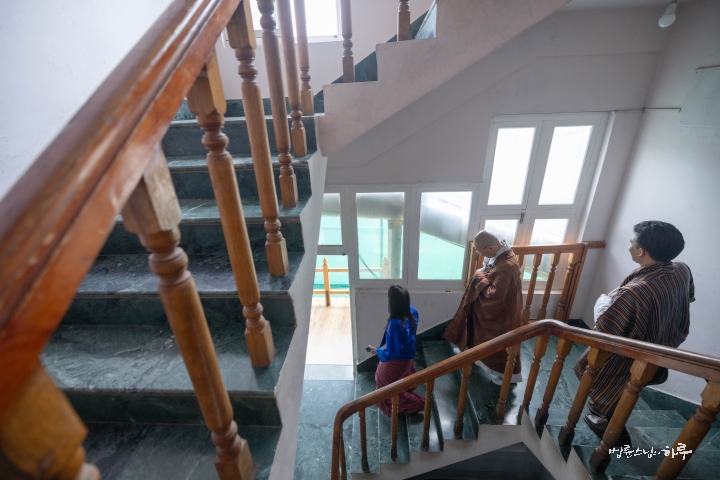
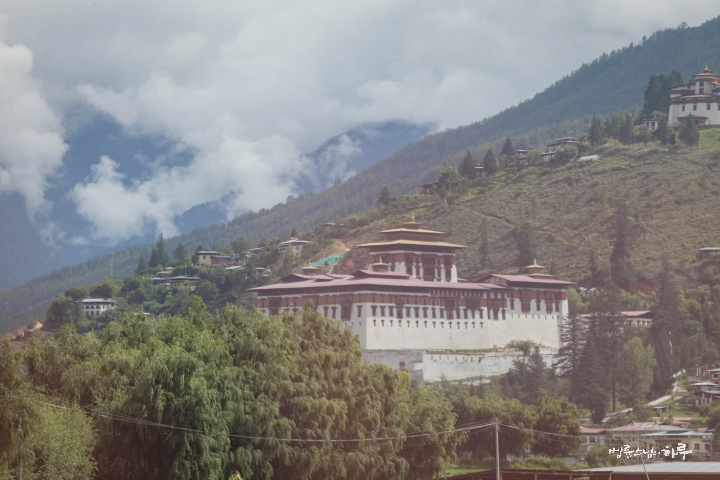
Guided by the foundation’s head, Sunim went to the first queen’s palace to talk. The queen’s grandson, who is a Rinpoche, happened to be there, so they had many conversations about Buddhism.
Although the Rinpoche is still young, he asked for Sunim’s advice on how to practice to become a great monk and how to enlighten sentient beings. Sunim explained how to develop compassion.
“To enlighten sentient beings, you must go out into the world and deeply feel their suffering. That’s how compassion arises. However, when you enter the world, there are many temptations. You must overcome those temptations well.”Sunim then shared various anecdotes from his experiences.
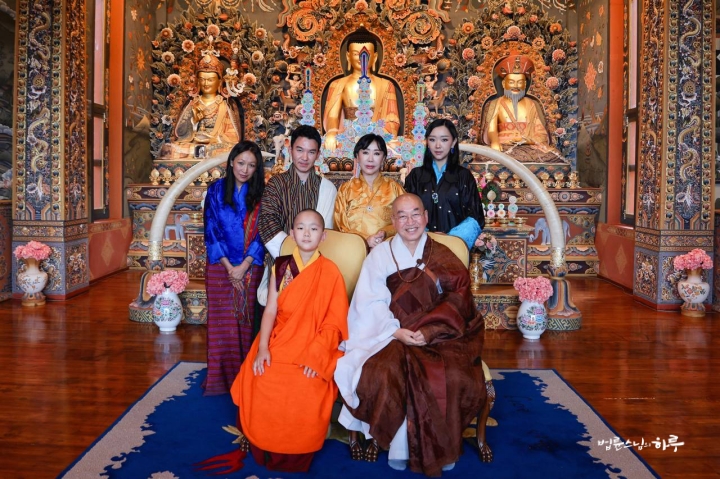
After an hour of conversation, they took commemorative photos and returned to the Sanmaru restaurant.
From 5:30 PM, Sunim had a conversation with the bhikkhuni nuns active in the Bhutan Nuns Foundation (BNF).
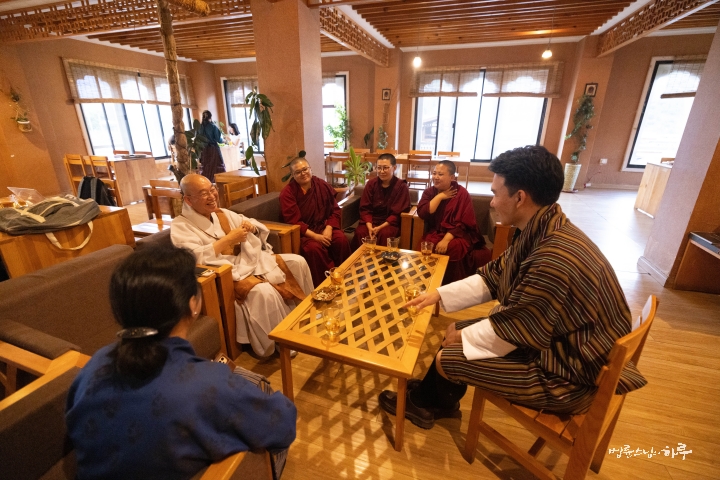
In Bhutan, there are many sacred sites where Guru Rinpoche’s footprints have become precious. The bhikkhuni nuns asked Sunim how to view the footprints engraved on rocks.
How Should We View Footprints Engraved on Rocks?
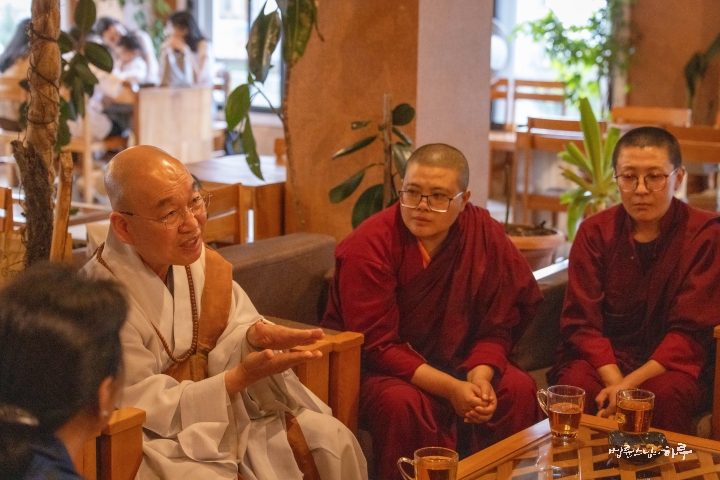
The bhikkhuni nuns continued to ask questions.
Can Meditation Make Us Levitate?
“There’s a meditation method popular in India that claims we can levitate after six months of practice. What are your thoughts on this, Sunim?”
“I’ve heard that during meditation, some people experience a slight floating phenomenon. When I heard about this, I responded: ‘What’s the point of floating in the air? What good does it do? Isn’t an airplane that can carry hundreds of people to America even more amazing?’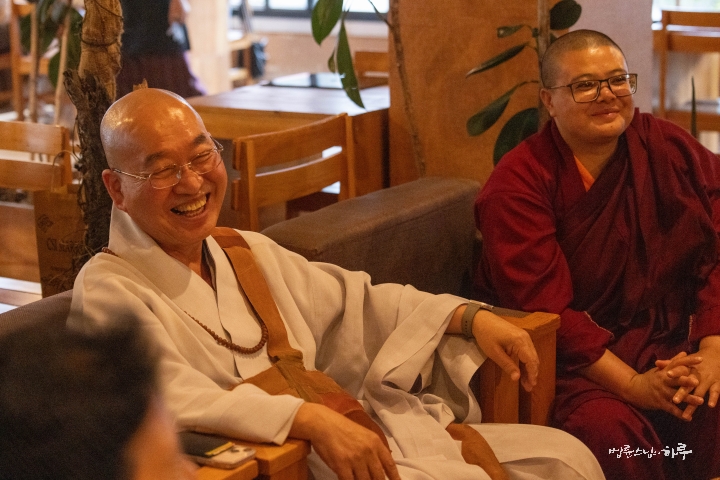
The very confusion about whether mysterious phenomena like Rinpoche’s footprints appearing on rocks or levitation during meditation are real or not stems from ignorance. The Buddha’s teachings are meant to enlighten us from foolishness, but instead, they’re being mystified, making people foolish again. When we encounter phenomena we don’t understand, we should ask, “Why does this happen?” and seek the cause. This is how we can free ourselves from mysticism and fear.
That’s why the Heart Sutra emphasizes Sinhaehaengjeung (faith, understanding, practice, and realization). These are the four stages of our practice. We need faith to start, understanding of Buddha Dharma principles to gain clarity, which leads to practice. Finally, we must experience and realize it ourselves. The Buddha’s teaching is to become a free person without suffering through this process.”
As they continued their conversation, the sun began to set.
At 6:20 PM, Sunim had dinner with central government officials who had accompanied him on the Bhutan tour, Ms. Tashi, the secretary general of the Bhutanese Nuns Foundation (BNF), and the bhikkhuni nuns.
“Please eat whatever you’d like to your heart’s content.”While eating dinner, they shared memories of their time together in Bhutan.
“It rained heavily every day before you came, Sunim, but surprisingly, it rained very little during your stay.”
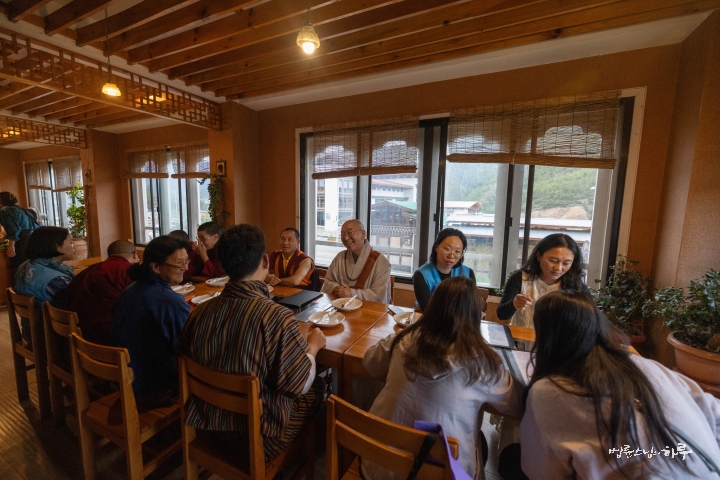
The central government officials expressed their gratitude to Sunim, saying they had learned so much.
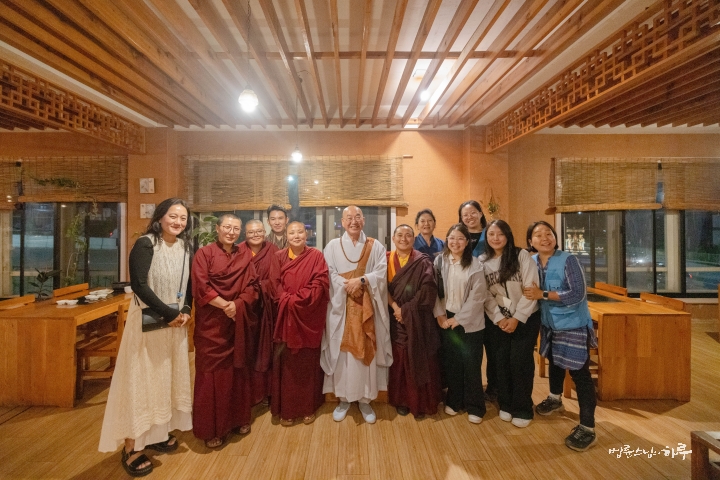
After taking a group photo, they left the Sanmaru restaurant. From September, after the rainy season ends, pilot projects for sustainable development are expected to proceed more actively. Sunim waved goodbye to the central government officials.
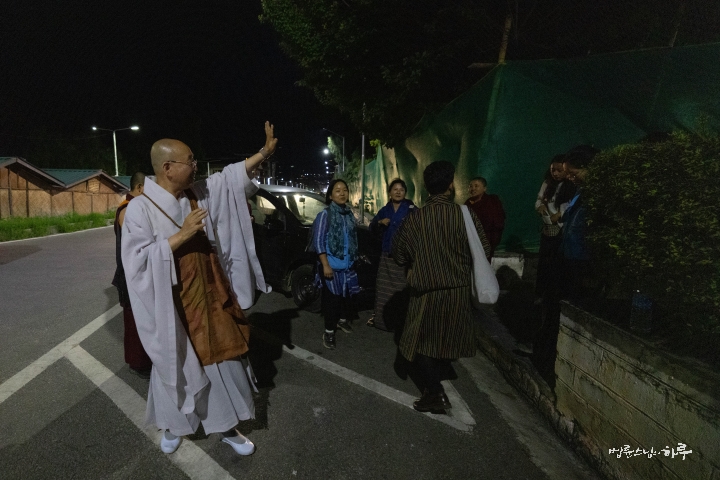
Monk Dorji, who had accompanied the Bhutan tour, also expressed his gratitude.
“It was an honor to be able to accompany you this time, Sunim.”
“Yes, I understand well what you’re doing, Sunim. I’ll do my best in whatever I can. I’d like to join you whenever you visit.”
Sunim finished the conversation after 8 PM and returned to the BNF foundation.
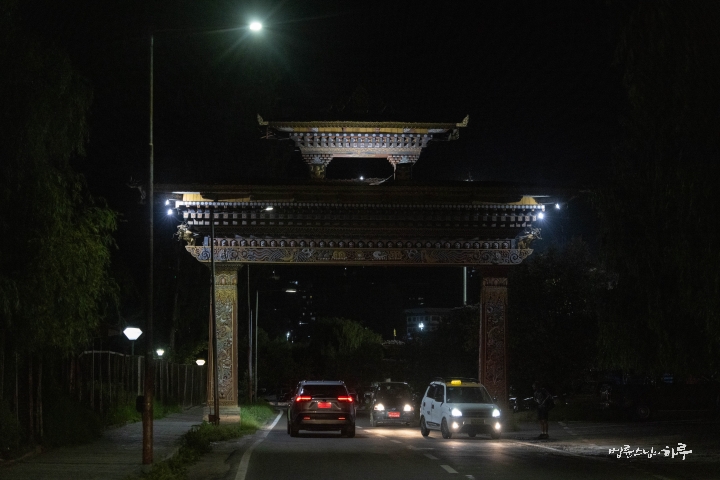
This concluded the five-day Bhutan tour. Although everyone had advised against Sunim visiting during the rainy season when landslides are frequent, fortunately, the tour was completed safely without any incidents.
Tomorrow, Sunim will leave Bhutan for India. He plans to cross the border by car and then take a train to Assam state in India to inspect the emergency relief sites for flood damage.