Let’s Make Sure There’s Not a Single Person Suffering
Jul 8, 2024 - 3rd Day of Bhutan Survey, Bardo Gewog, Khamsar Chiwog
Hello. Today is the third day of our survey in Bhutan.
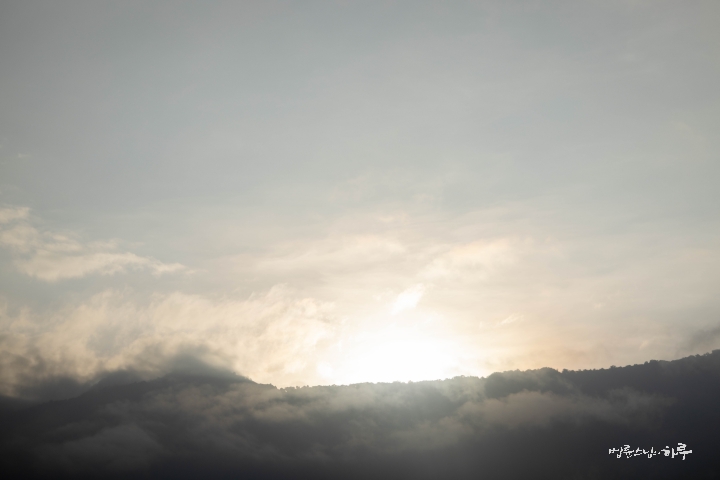
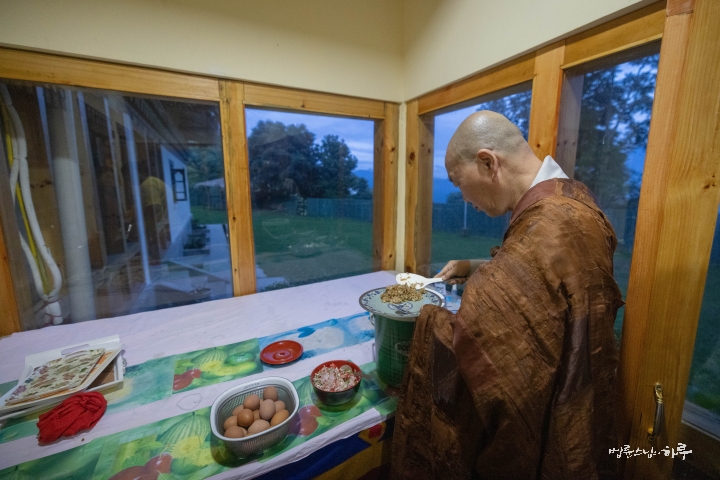
Sunim had breakfast at 5 AM and departed from the lodging.
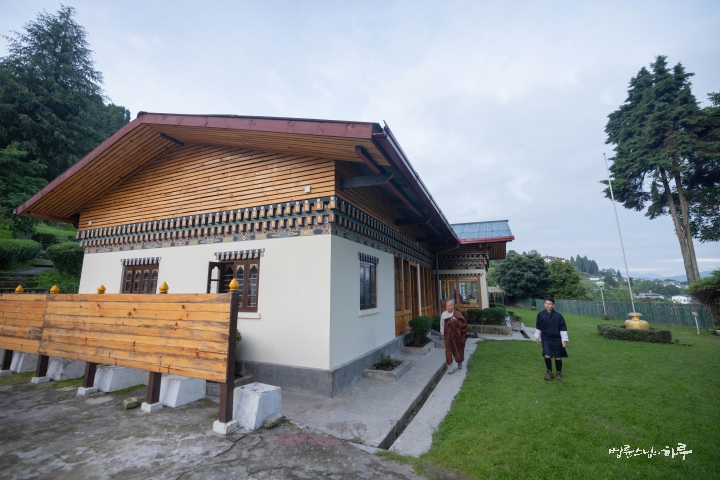
On the way from Zhemgang to Langdurbi, a landslide blocked the road. So, he decided to visit Bardo Chiwog first using the Zhemgang-Bardo local road. The sun came out for a change during the rainy season when it rains almost every day.
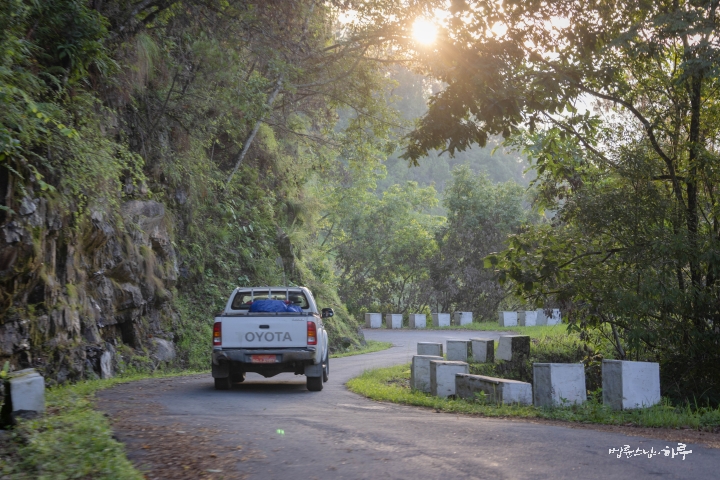
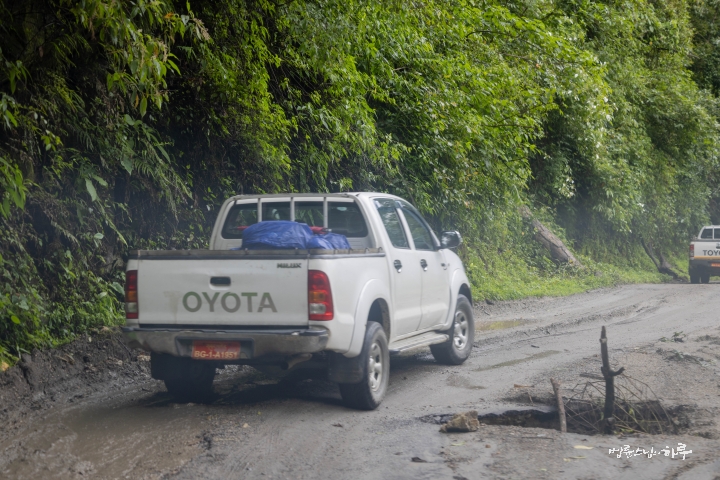
There were several places on this road where landslides had occurred, and the car had to carefully navigate around the rocks. Many parts of the road were also deeply rutted.
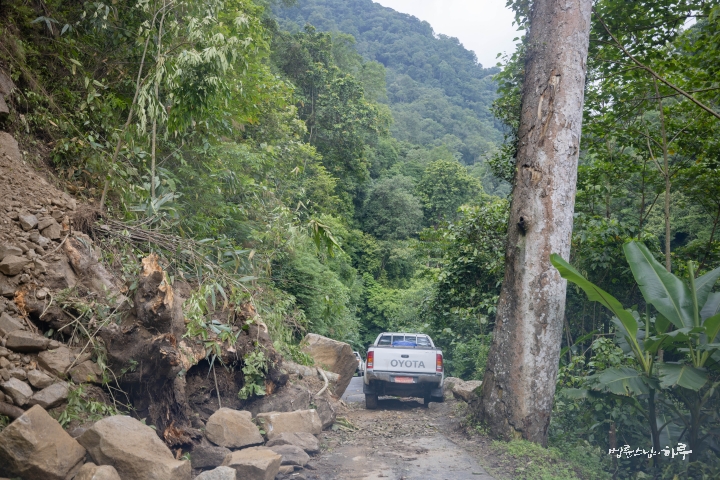
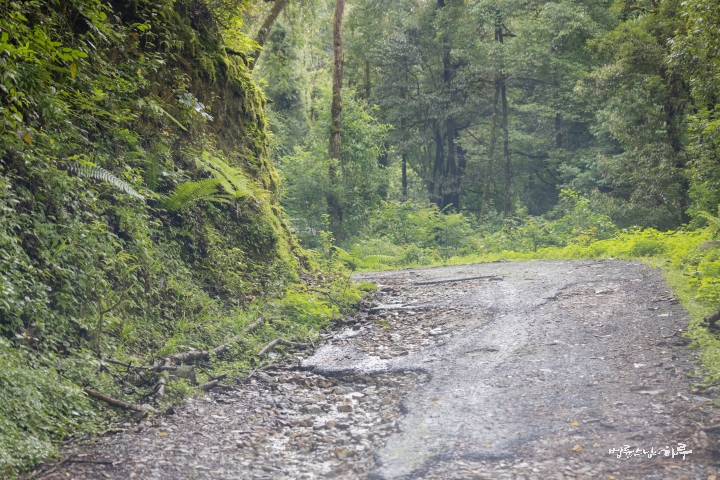
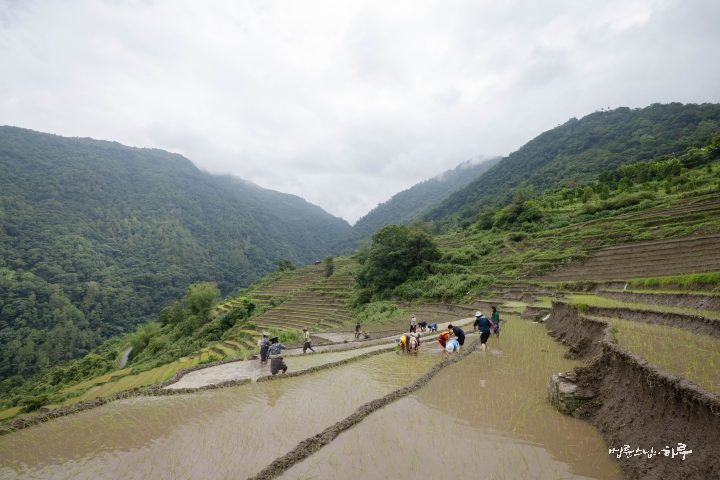
After a bumpy 4-hour and 30-minute drive on the unpaved road, Sunim arrived at Bardo Chiwog at 10 AM. While rice planting was mostly finished in the Trongsa area, some places in the Zhemgang region, which is warmer in the south, were still planting rice. Sunim had planned to talk with the residents, but since they needed to plant rice, Sunim decided to go to the fields to converse with them.
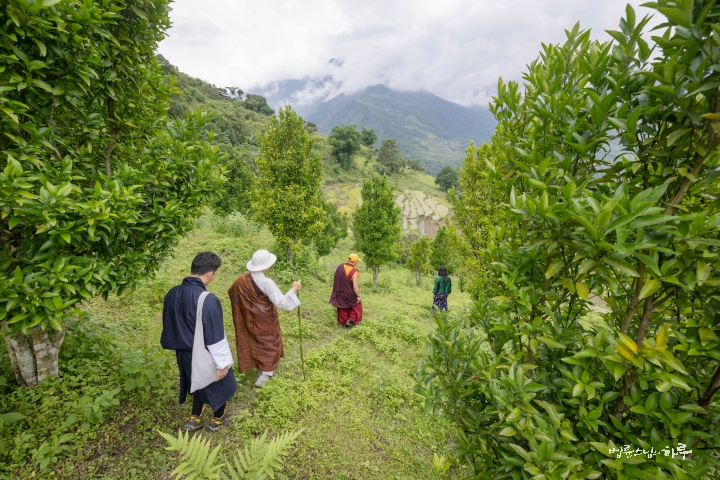
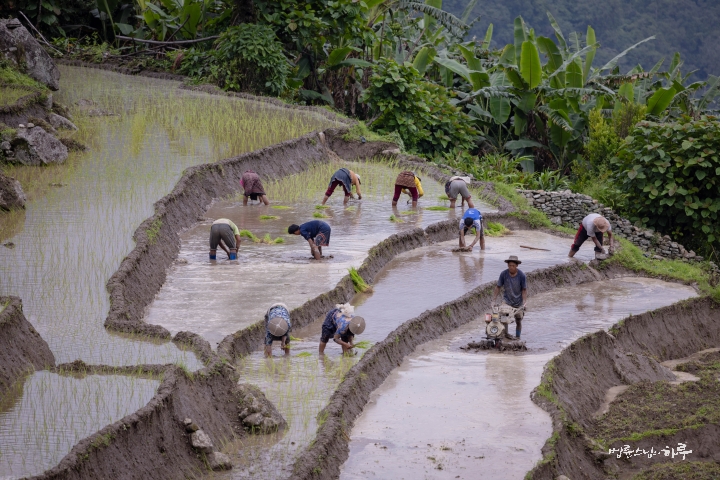
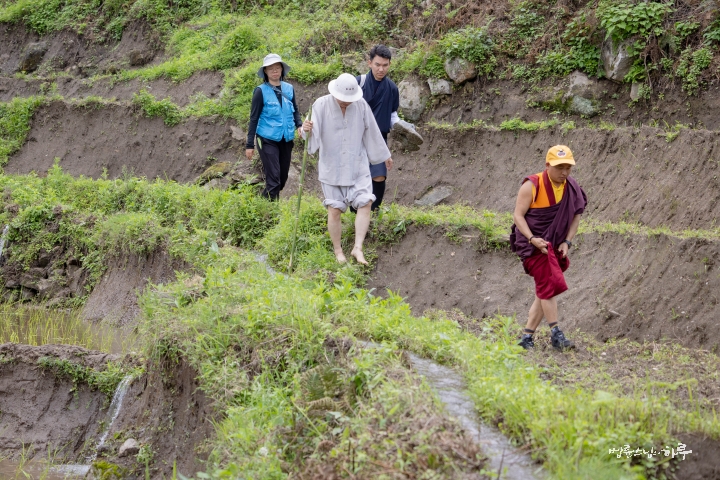
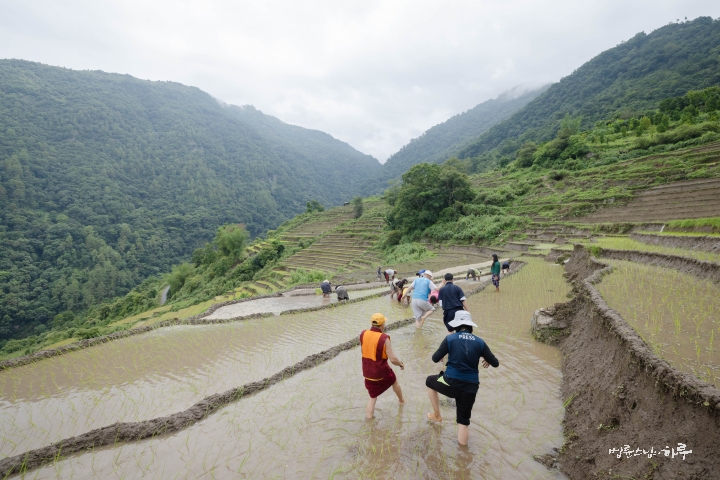
There were no paths between the rice fields, so Sunim had to cross several fields to finally reach the one where rice planting was in progress. While Korea has been using rice transplanting machines for a long time, in Bhutan, they were still planting rice by hand.
“How have you all been?”“Good!”
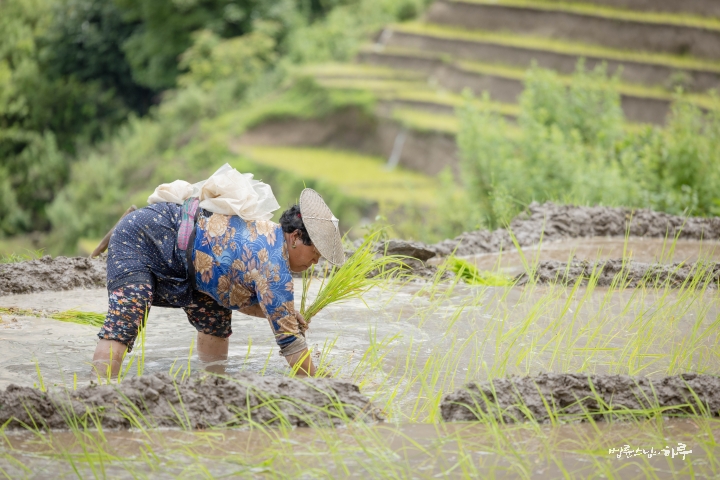
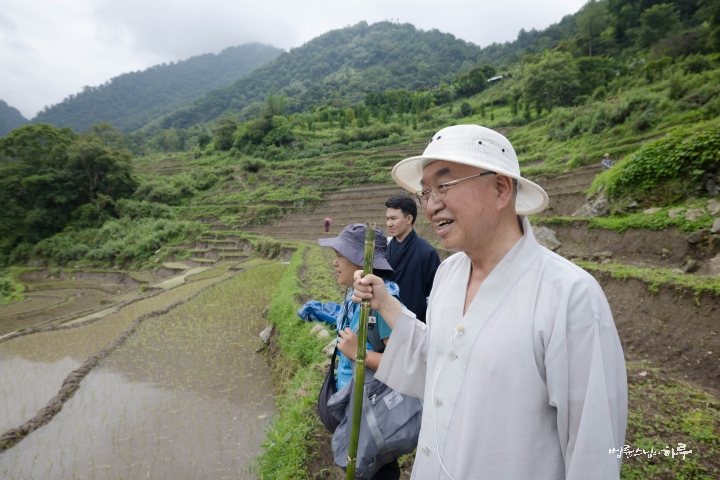
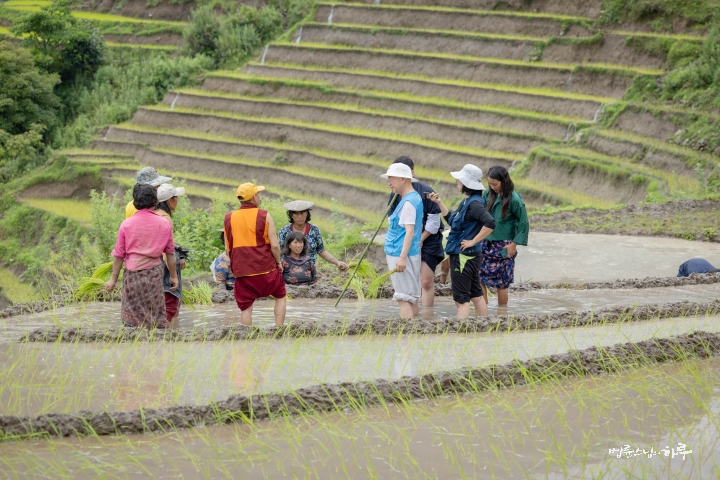
Sunim also rolled up his pants, entered the rice field, and helped the villagers with rice planting.
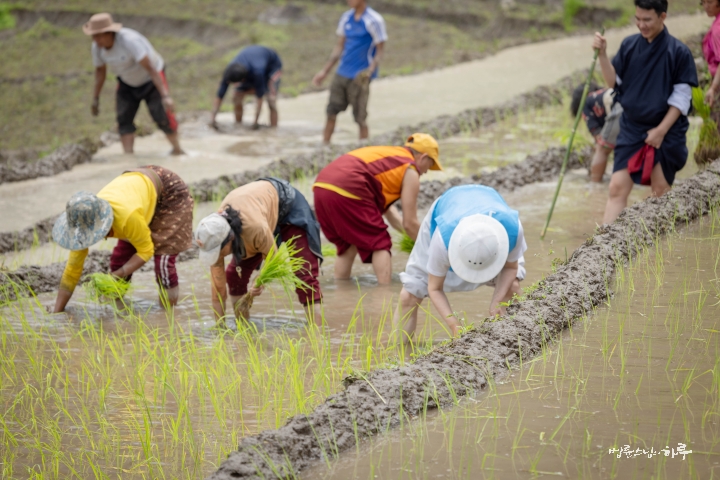
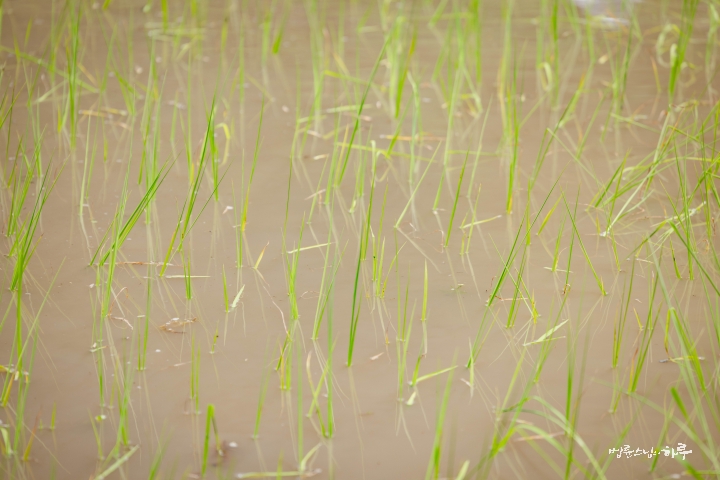
The rice seedlings were much larger than those in Korea. In Korea, several seedlings are planted at once, but in Bhutan, they were planting one seedling at a time. Since these were terraced fields carved into the mountainside, it was also difficult to plant in straight lines. Another difference from Korea was that they planted the rice immediately after flooding the field. Sunim asked the villagers:
The villagers replied:
“Here, the soil is sandy, so after flooding, the ground becomes hard and difficult to plant rice in. That’s why we plant rice immediately after harrowing.”
Working together, they quickly finished planting one field.
“We’re not sure.”
“Are you paid daily wages for this work?”“No, this is a labor exchange. Today we plant rice in a friend’s field, and tomorrow they’ll help in our field.”
“Keep up the good work.”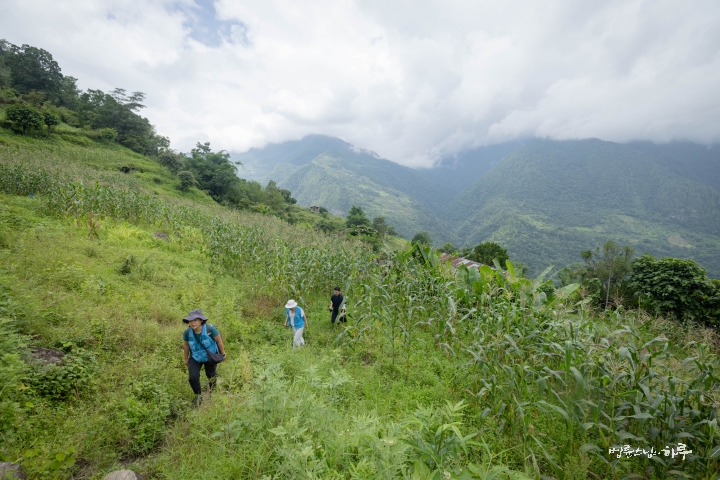
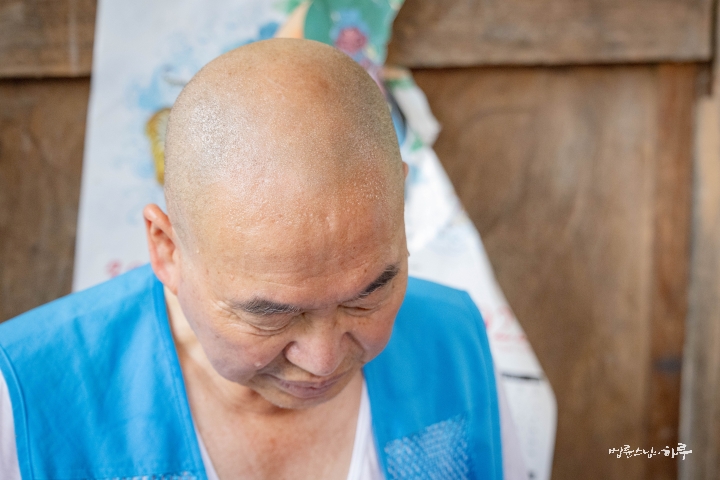
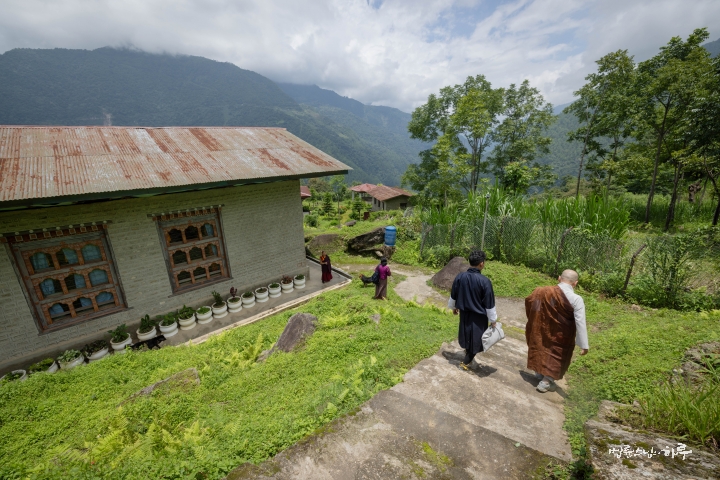
After saying goodbye to the villagers, Sunim got back in the car and headed to the Bardo Gewog community hall.
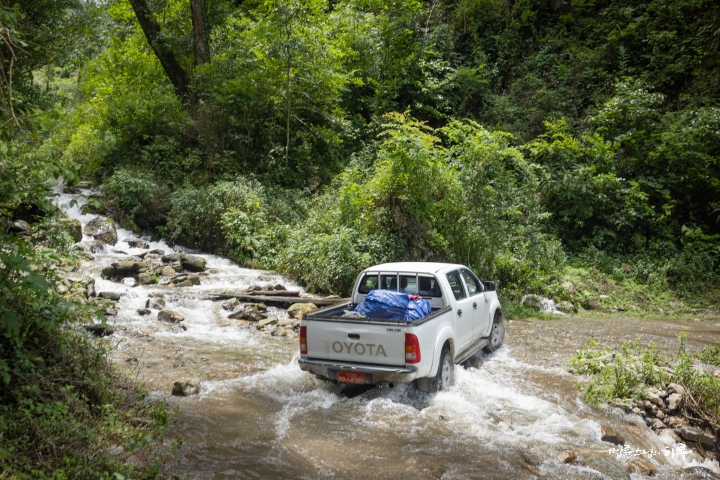
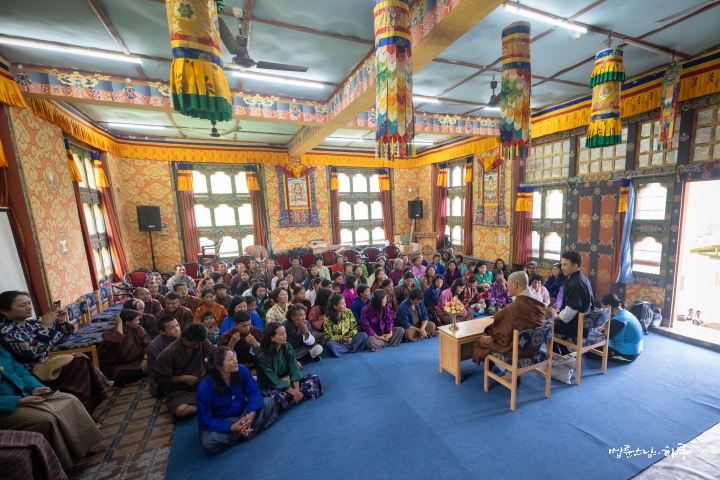
Sunim drove for another 50 minutes on mountain roads. When he arrived at the community hall, about 70 residents from Khamsar Chiwog were gathered, waiting for him.
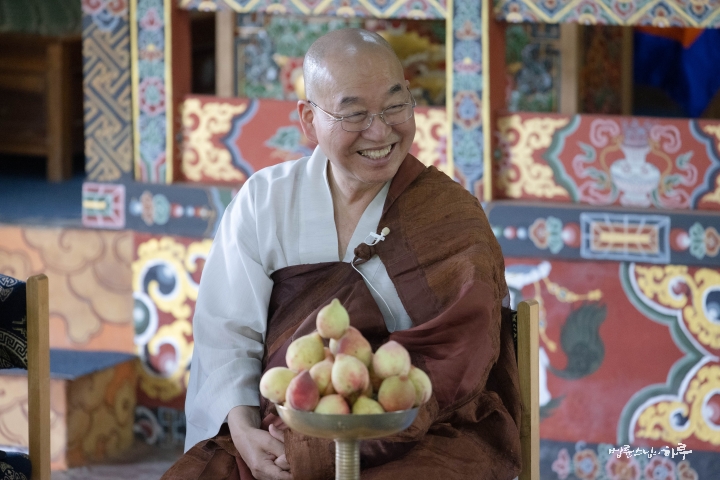
Sunim first greeted the residents. He apologized for not being able to proceed with the irrigation canal construction that was promised during the last survey.
“It has been repaired enough for water to flow through.”
“We expect no significant issues this year as we’ve had good rainfall.”
“Let’s start the irrigation canal construction this winter after the harvest in autumn. You must be very disappointed that I keep coming but we haven’t started any work yet, right?”“No, not at all.”
Until now, it was difficult to provide sufficient explanations due to interpretation limitations. Today, however, we have Rinchen Dawa, who is from Khamsar village and speaks Korean well, so we can interpret directly into the Khamsar regional language.
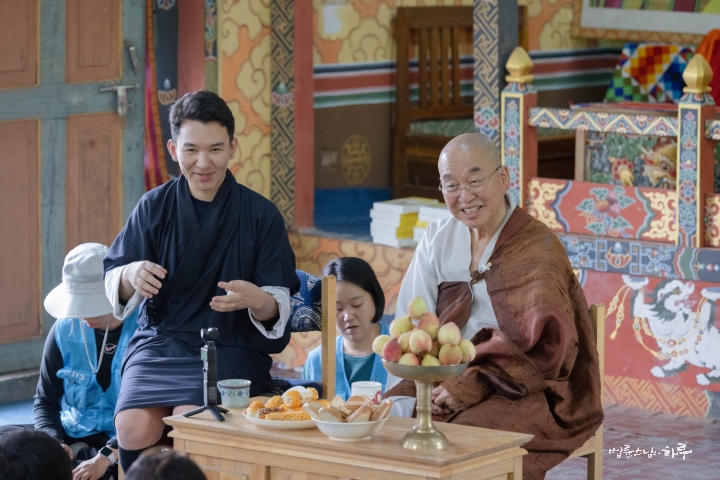
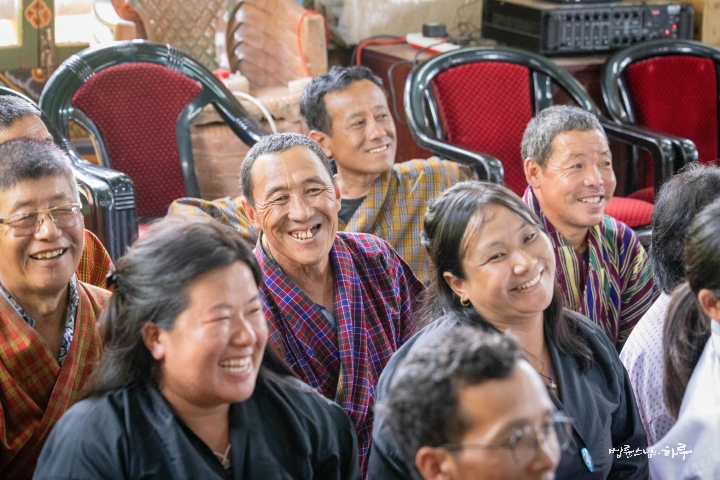
Sunim explained the principles of JTS projects in detail.
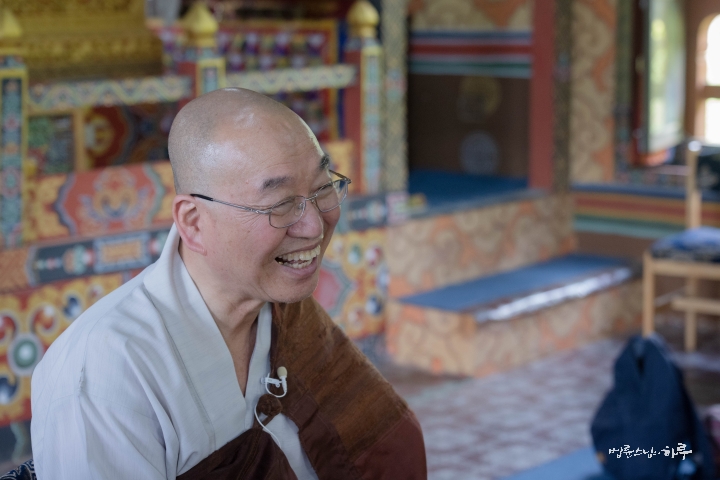
“Yes!”
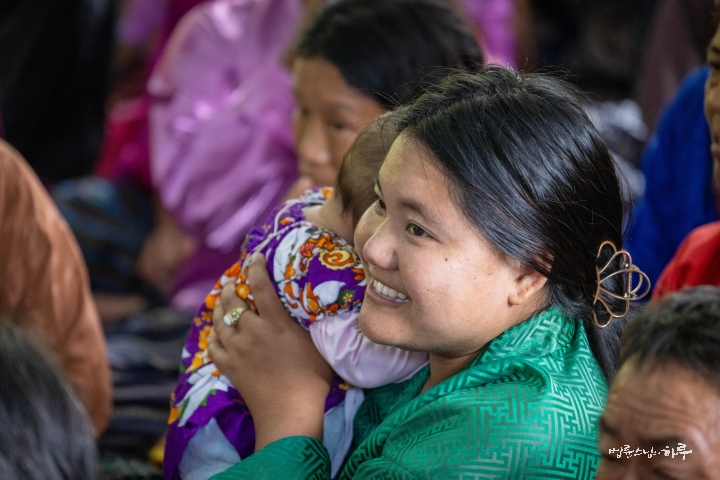
If You Say ‘Please Do It for Us’, I’ll say NO; If You Say ‘We Will Do It’, I’ll say YES!
“JTS cannot support requests like ‘Please do this for us’ when you’re not doing anything yourselves. We can support requests like ‘We’re trying to do this, but we’re lacking in this area.’ For instance, there’s been a landslide blocking the road to Rangdelbhi Chiwog. Saying ‘Someone please clear it’ is a request for the government. However, if you take shovels and say ‘We will clear it ourselves,’ JTS will support whatever you need for that. If you say ‘It’s too hard with just shovels. Can we rent an excavator for two days?’ JTS can support that. We’ll support anything you can do yourselves, but we won’t support requests where you do nothing and ask us to do everything.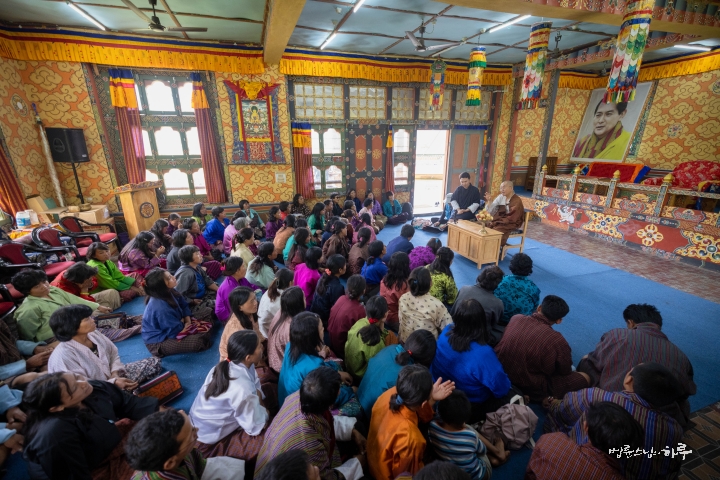
“Yes!”
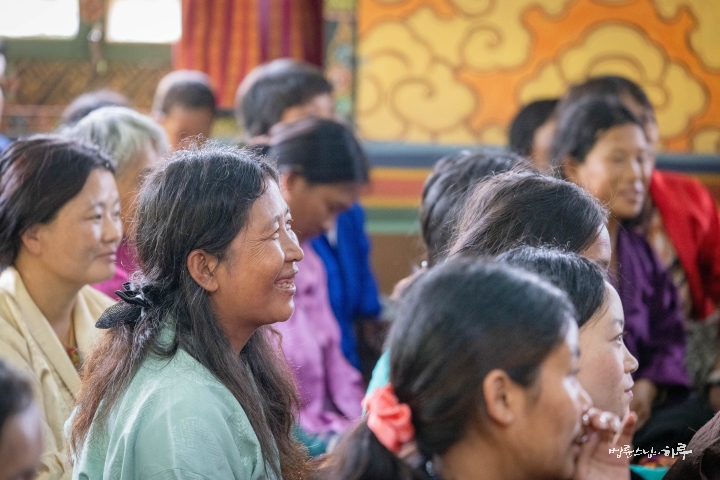
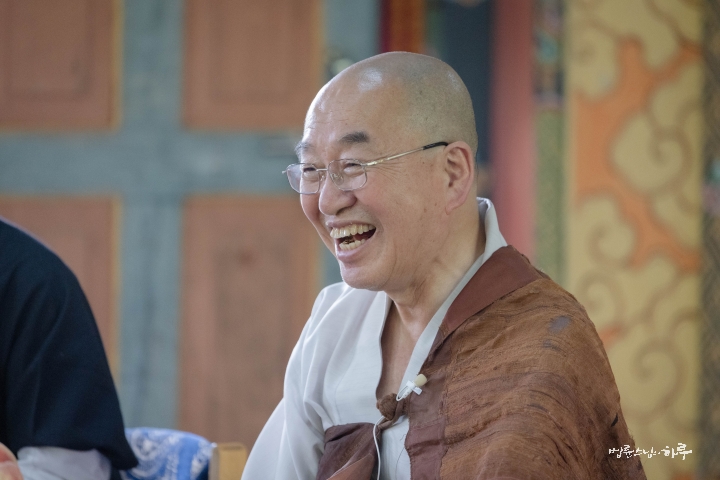
If you want someone else to do something for you, please talk to the government, not JTS. However, if you say, “I will do this, but I need some help,” we will review and support any such request. If you say, “I have no food,” we will provide support. But if you say, “I want to eat more delicious food,” that’s for you to handle. If you say, “I have no clothes to wear outside,” we will help. But if you want pretty clothes, that’s up to you. The same applies to building irrigation channels. If you’re going to say “Please do it for us,” talk to the government. If the landowners gather and say, “We want to build irrigation channels like this,” JTS will support that.
Let’s work together on things needed for the village. Let’s improve kitchens for the convenience of wives, install irrigation channels, build necessary roads, and make our village a better place to live.
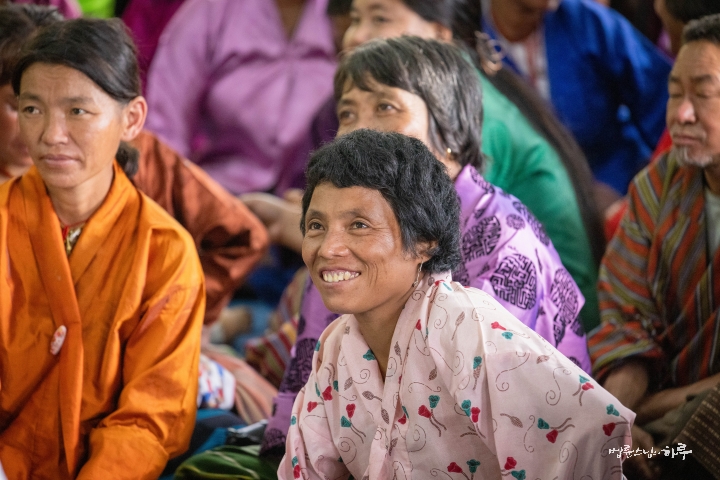
Then, the villagers comfortably shared what they wanted to propose.
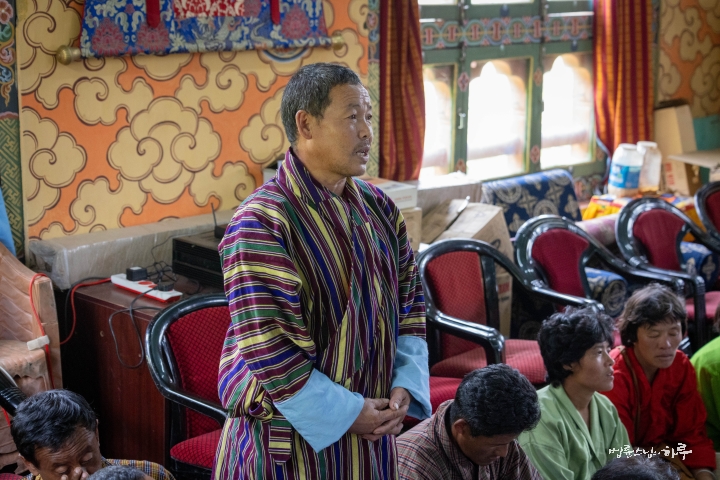
“Currently, our village has two irrigation channels, but can JTS support building irrigation channels for other areas not covered by these?”
“How many households would use this irrigation channel?”“Nine households.”
“If JTS provides cement, can these nine households work together to build the irrigation channel?”“Yes, we can.”
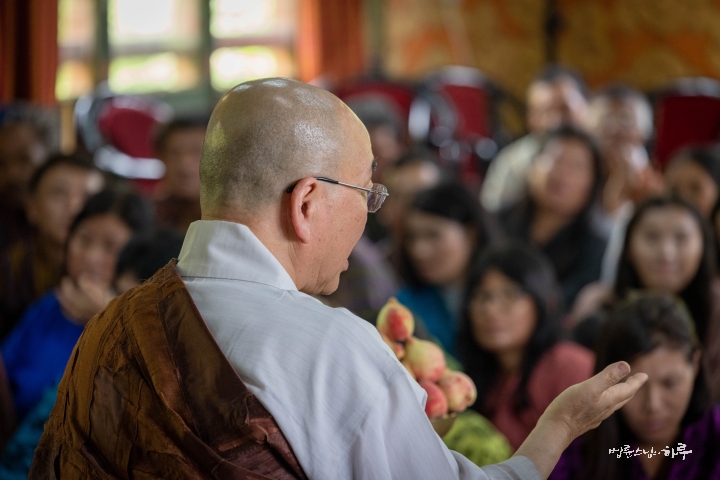
“Our village has enough land to make paths.”
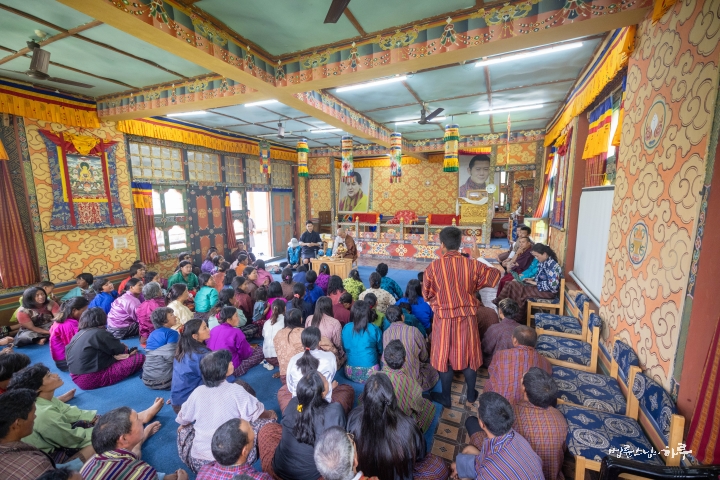
Proposals for road paving, housing improvements, kitchen renovations, and water source repairs continued to pour in. After an hour and a half of gathering various suggestions and opinions, Sunim finally gave the residents one last boost of courage and hope.
Let’s Make This the Happiest Village in the World
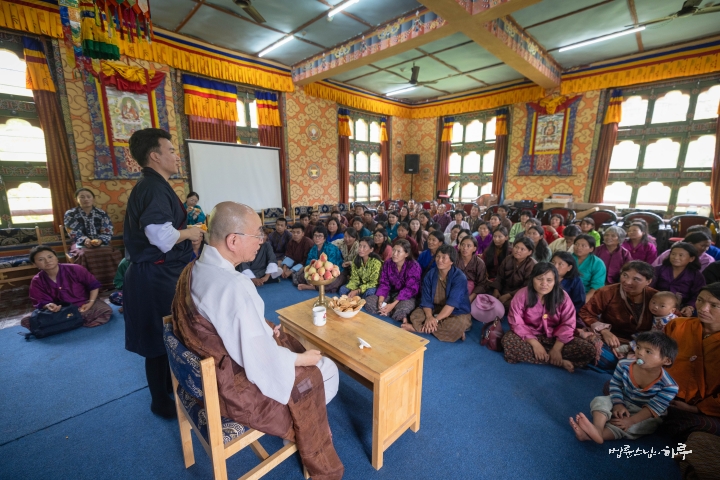
The villagers applauded loudly, expressing their joy. Then, Dorji Sunim offered a prayer of blessing for the villagers.
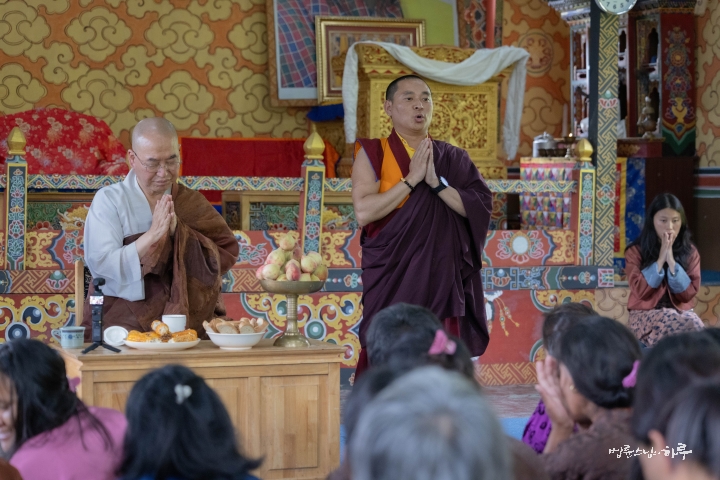
After the prayer, Sunim distributed soap to the residents.
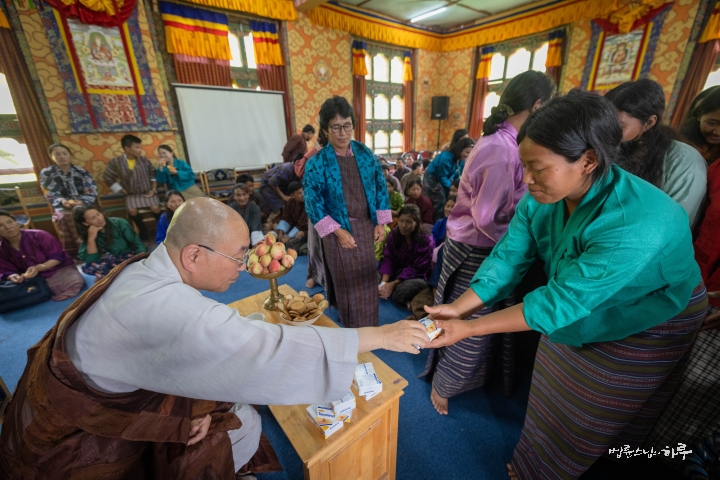
After leaving the village hall, they moved to Chokba’s house in Pollabi Village. After lunch, they held a meeting with the village leaders.
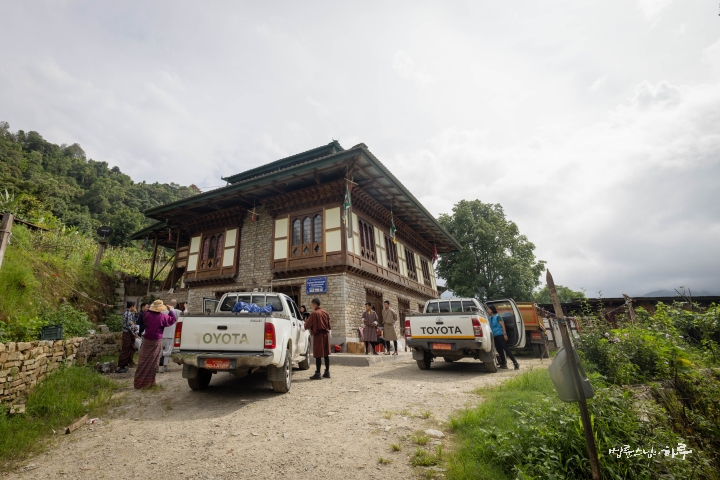
Bardo Geog consists of three villages: Bardo Chiwog, Khomsar Chiwog, and Pholavy Chiwog. In the presence of the Chogbas representing each village, along with Mangmi and Gup, they discussed how to address the residents’ requests.
First, Sunim talked about what needs to be done now and in the future.
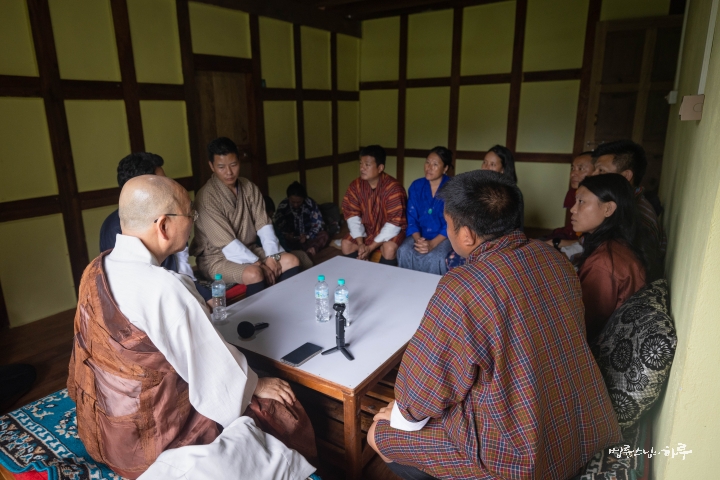
“It’s difficult to do construction work now because it’s the rainy season.”
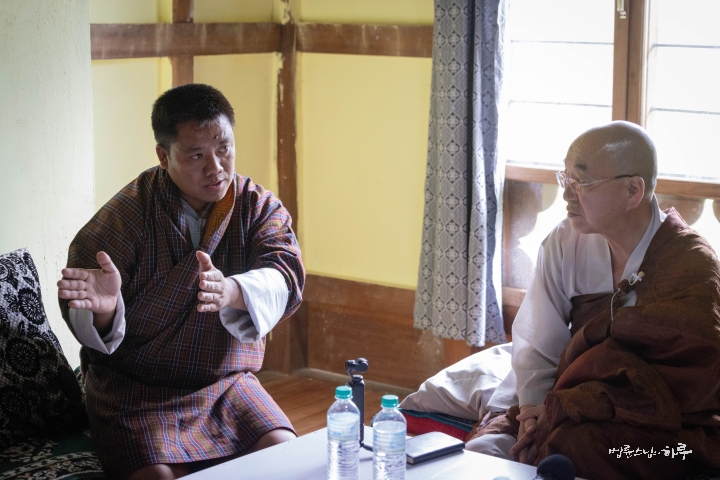
During the rainy season like now, when it rains every day, you need to check the channels several times a day to see what problems arise. For example, if rocks roll down and block the irrigation channel, water will overflow. If this overflow washes away the soil from the embankment, the entire irrigation channel could collapse. This would make the construction project much larger. During the rainy season, you need to inspect areas that might become problematic in advance.
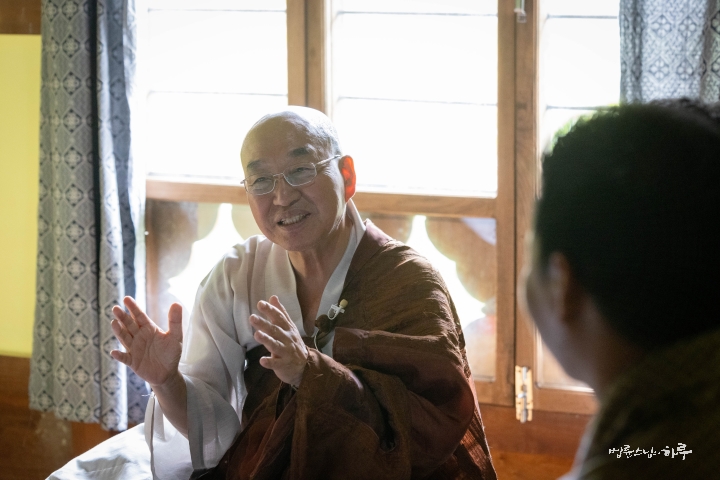
A one-hour discussion was held on various topics including the development of the second water source, construction of irrigation channels, road paving, and housing improvements. Finally, the need for heavy machinery was brought up.
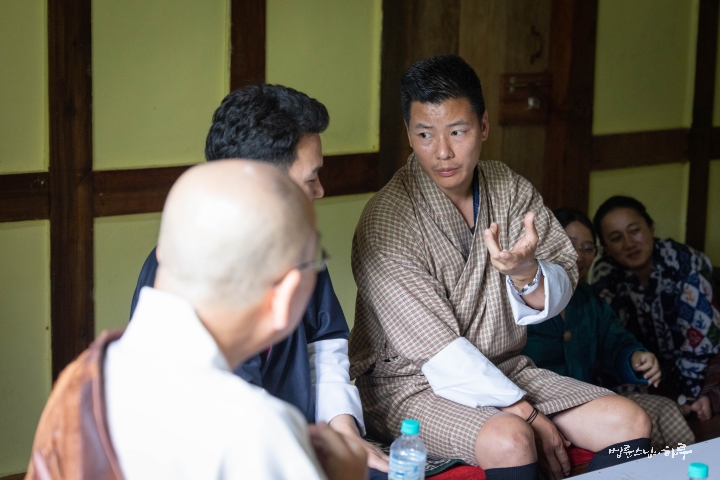
“We’ll have a lot of construction work to do in the future, so it would be good to have an excavator and a dump truck.”
Sunim replied.
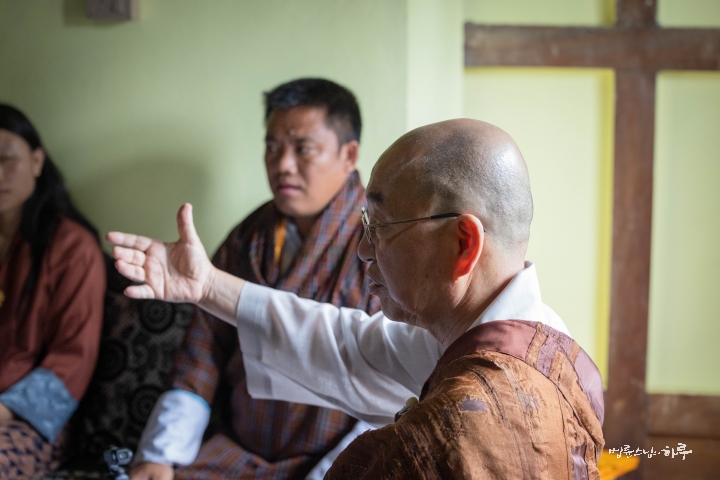
The Chokpas unanimously expressed their gratitude to Sunim.
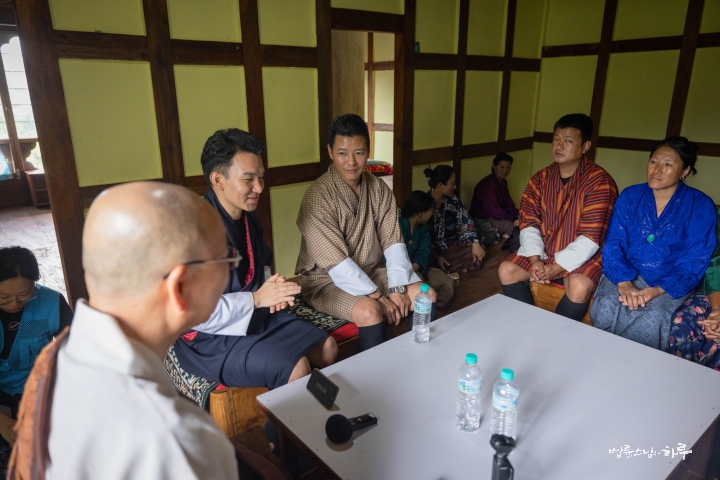
“With JTS supporting us like this, we just need to move. There’s no reason we can’t do it. We can do anything!”
Sunim smiled and said.
Until There Is Not a Single Person in Suffering
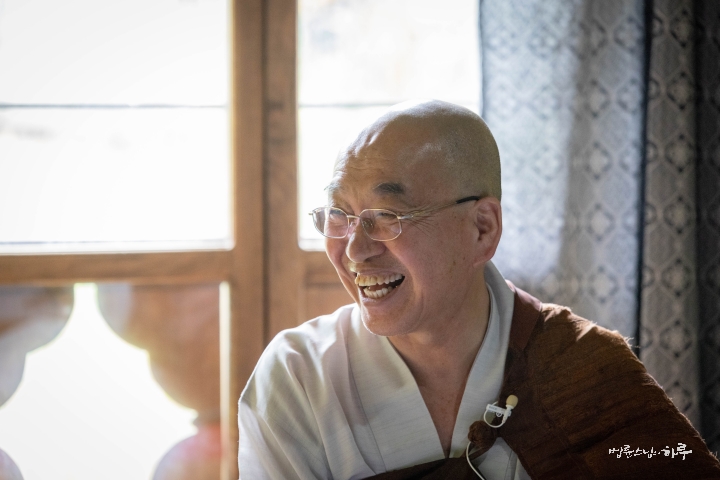
Although they wanted to talk more, they had to end the meeting after an hour because it was about to rain and it would be more dangerous to drive in the dark.
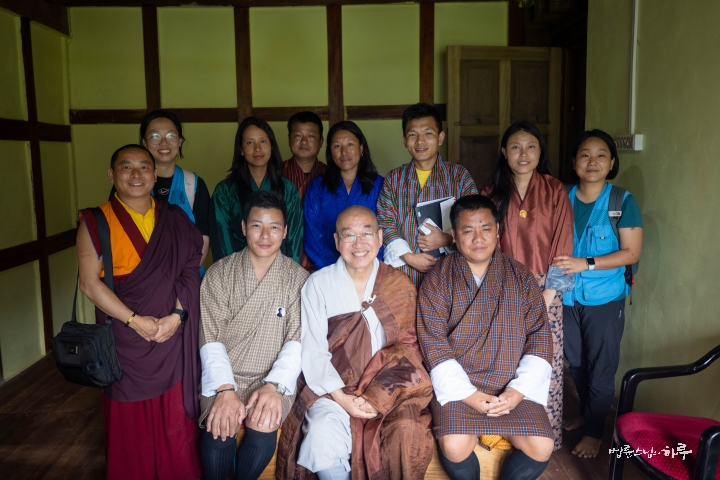
Together, shouted “Bardo, we’ll do well!” and took a commemorative photo. We thanked the Chokpa and the house owner who prepared lunch for us.
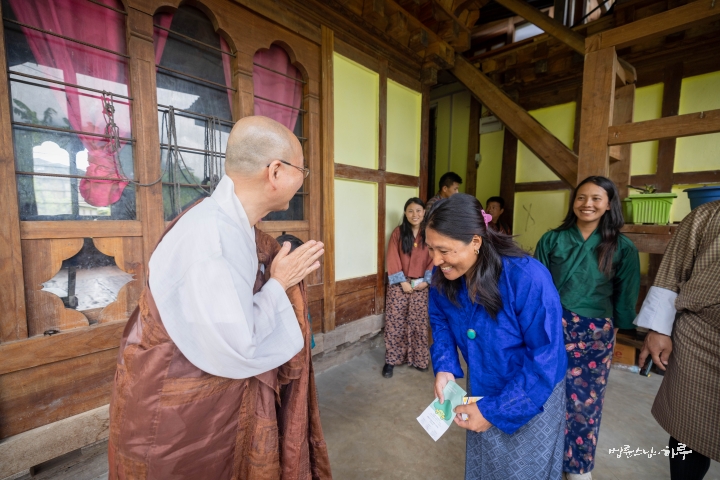
Before leaving Khomsar, Sunim asked Gep:
“Please tell the residents of Langdurbi Chiwog that I’m sorry I couldn’t come to congratulate them and give them gifts for completing the school repairs because the road was blocked by a landslide. If only one side of the road had been blocked, I would have tried to go around, but both sides were blocked, so we couldn’t make it.”Sunim left Khomsar Chiwog at 3:10 PM and moved to Zhemgang.
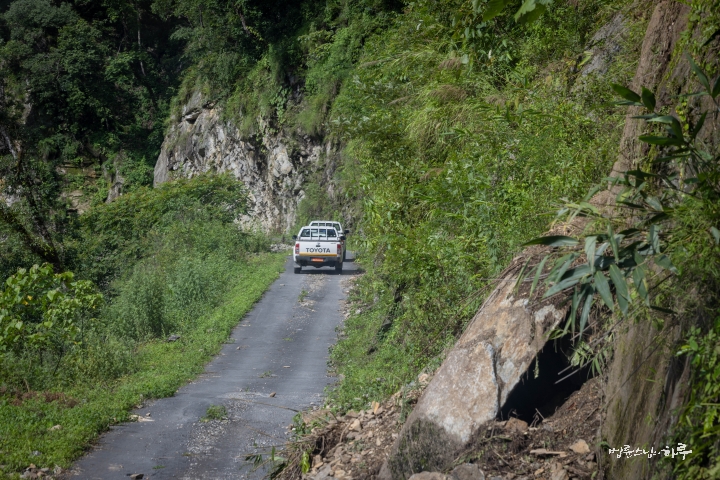
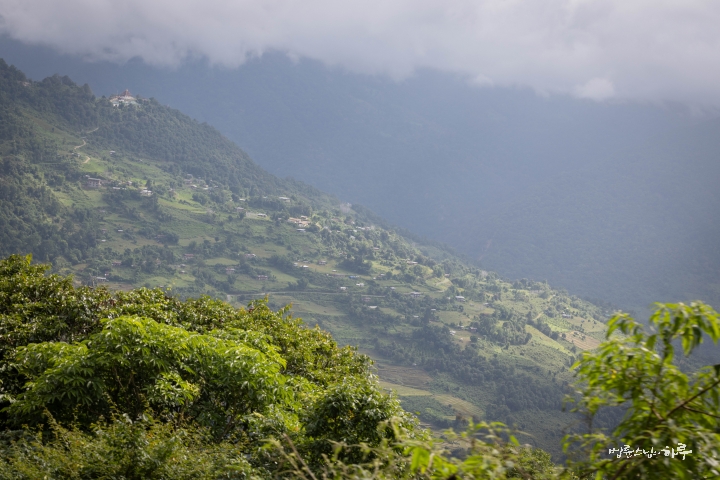
Sunim drove for another 5 hours. There were landslides in many places with fallen rocks.
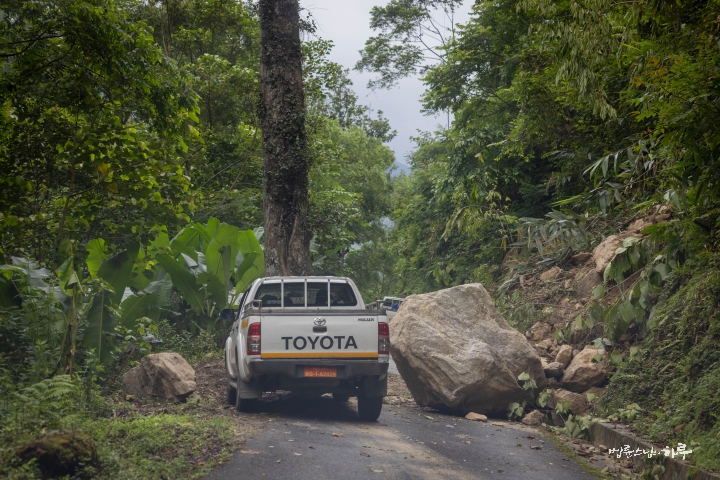
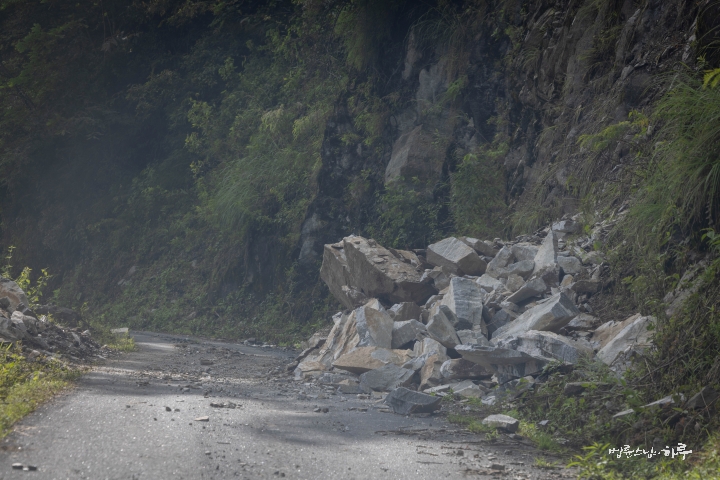
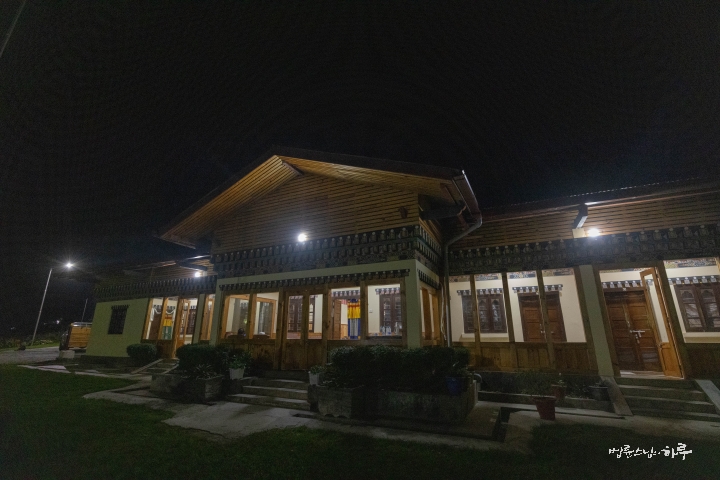
Sunim finally arrived at the Zhemgang guesthouse as the sun set and it got dark.
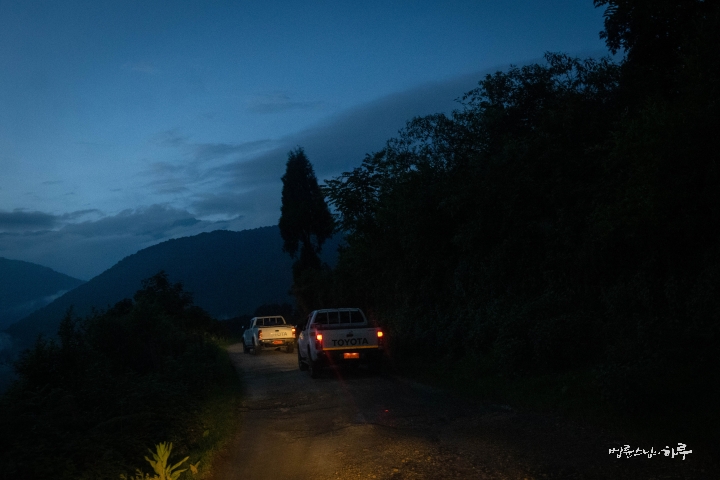
After unpacking and having dinner, Sunim had a conversation with Bhutanese central government officials from 9 PM. Two officials, Ishi and Kesang, are accompanying Sunim on this survey trip.
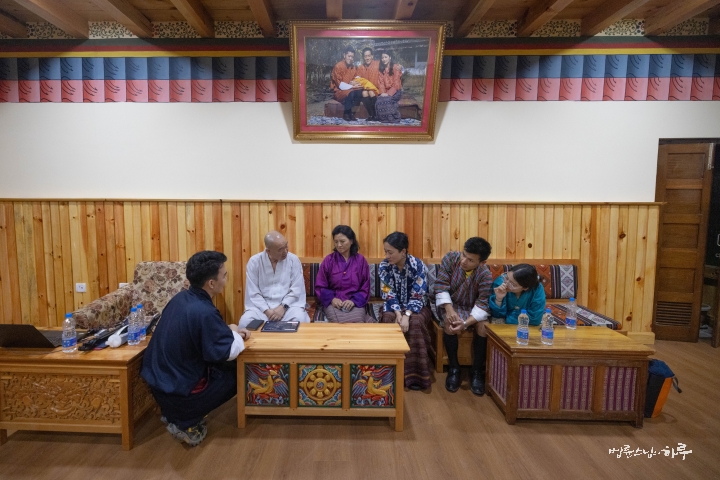
I plan to visit Paro Taktsang Monastery the day after tomorrow. After explaining what to focus on during the survey, Sunim gave some advice on what perspective to have for sustainable development in the future.
“As government officials, you need to set an example. How you young people act will determine how Bhutan will change in the future. You shouldn’t approach your work with the attitude of just receiving a salary.”“We’re trying. But it’s hard to put our thoughts into practice.”
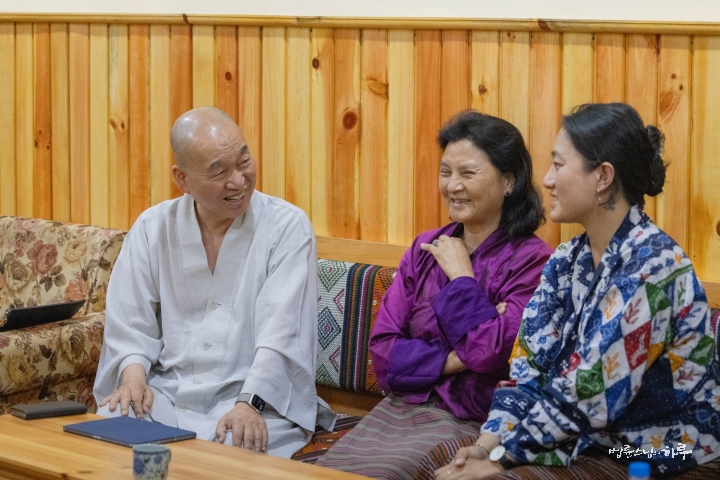
“The reason why Bhutanese youth are going abroad now is all because of money.”
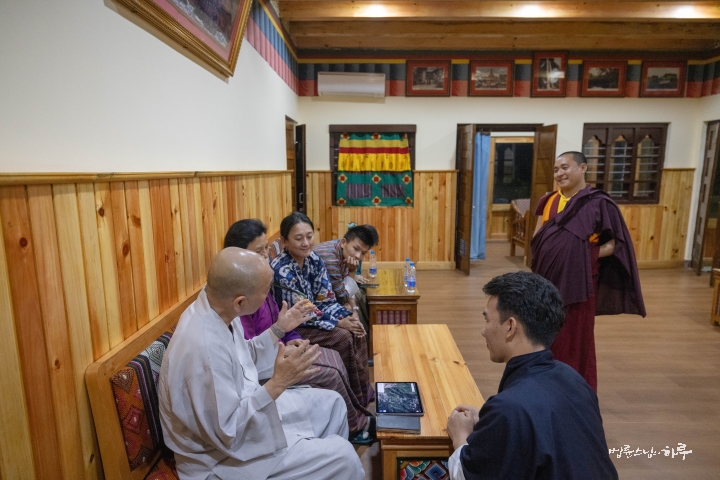
Why Don’t You Try Having Hope to Change Bhutan, Instead of Just Focusing on Money?
When I was in my 30s, I left Korea and went to the United States. At that time, Korean society was under a military dictatorship. I opposed it and even went to prison, so I disliked Korea. So I went to live in New York, and one day I looked at Manhattan from the George Washington Bridge. The buildings were rising like a bamboo forest. I thought that even if I succeeded to the maximum extent possible living there, all I would get would be one of those numerous buildings. And I wondered what meaning there would be in obtaining that. So I thought, ‘Whether I like it or not, it would be better for me to go back to my country and do what I want to do.’ I hope that young people in Bhutan will stay in Bhutan and play a role in changing Bhutan. For example, how proud would you be if you just made one beautiful park in front of Taktsang Monastery? How fulfilling would it be if we developed Zhemgang and made even just Khomsar Chiwog a better place to live? But it’s hard to do these things when you go abroad. There’s not much you can do as a foreigner in a place that’s not where you were born, where you don’t have relatives or friends. No one recognizes what you do well. Even if you live well in Korea, who in Korea would recognize you? If you’re from Khomsar, you need to come to Khomsar to be recognized. In Korea, we call it ‘returning home in silk clothes’ when someone succeeds and returns to their hometown. It means returning to your hometown wearing silk clothes. In old Korea, wealthy people wore silk clothes. So wearing silk clothes symbolizes that person’s success. But there’s also a saying, ‘Even if you wear silk clothes, who would recognize you if you wear them at night?’ Similarly, no matter how well you live abroad, there’s no one to recognize it. You may be materially affluent, but it’s difficult to feel spiritual fulfillment.”Ishi and Kesang smiled and replied:
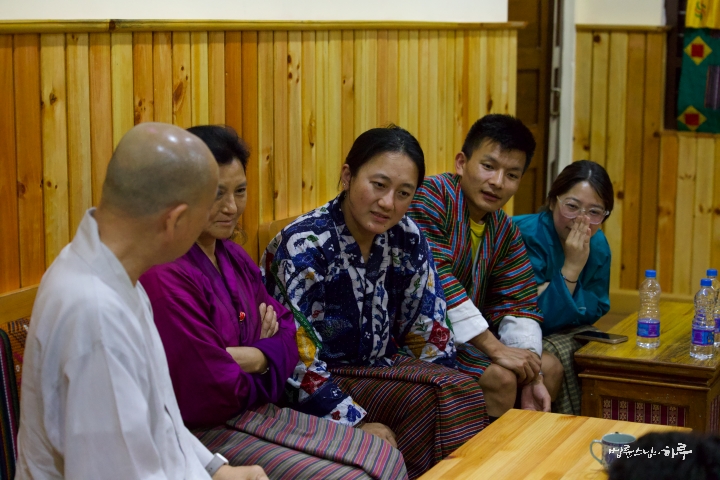
“Sunim, you should go to Australia and have a conversation with the Bhutanese youth there.”
“Are you saying I should tell the Bhutanese youth, ‘Come back to Bhutan with me’?” (Laughs)“We’d like to arrange time for you to have conversations with Bhutanese college students and youth whenever you come to Bhutan.”
It was past 10 PM when we finished our conversation. It was another long day.
Tomorrow morning, Sunim will move to Trongsa to meet and talk with the governor. In the afternoon, he will move to Thimphu to meet with a cabinet minister of the Bhutanese central government to share the contents of this survey trip and have a meeting.