I Want My Son to Become a Monk, but My Wife Opposes It
Jul 1, 2024 - Vietnam Day 3, Giac Ngo Temple
Hello. Today is the third day of Sunim’s visit to Vietnam at the invitation of the Vietnam Buddhist Sangha Council.
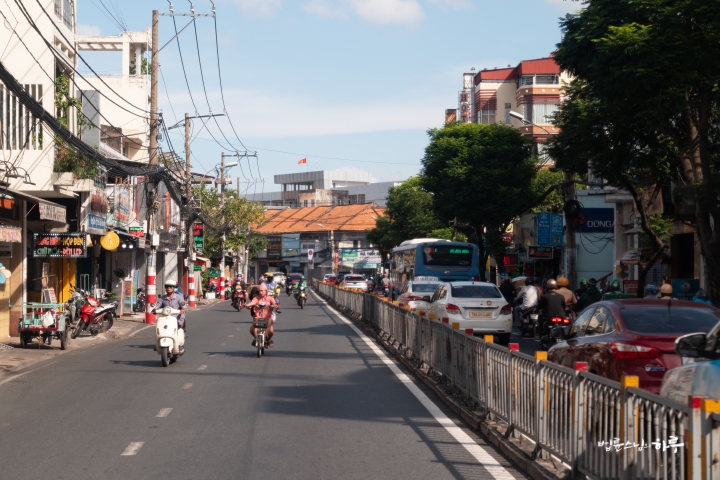
After completing his morning practice and meditation, Sunim had breakfast at his accommodation at 6:30 AM. There were no scheduled activities this morning. Due to the social atmosphere in Vietnam, large-scale public Dharma talks were not permitted, which created some free time.
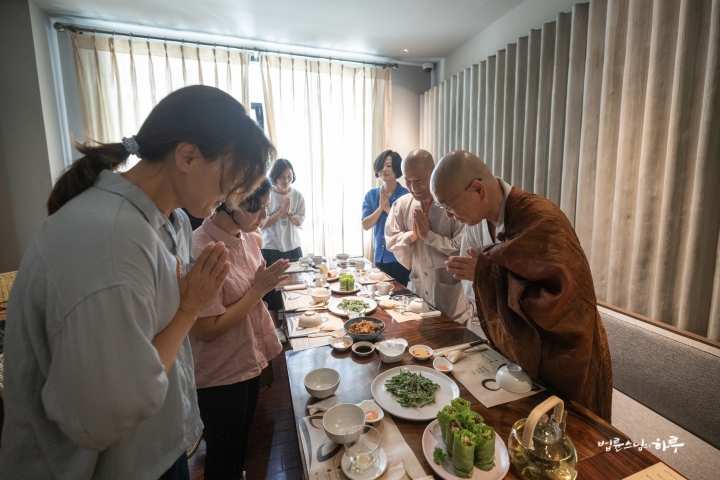
For lunch, Sunim had a meal and conversation with Jungto Society members living in Ho Chi Minh City. The members had participated in a training session with Venerable Yusu in the morning and were feeling lighter in spirit.
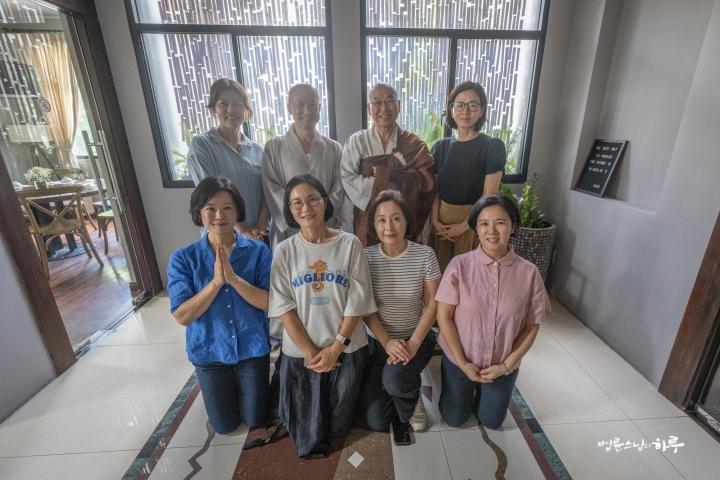
After the meal, everyone took commemorative photos together. The afternoon Dharma talk was also canceled, leaving the schedule open. Phuong, who was coordinating the schedule with the Vietnam Buddhist Sangha Council, made a suggestion to Sunim.
“Sunim, would you like to visit the complex Cu Chi tunnels used by the Viet Cong during the Vietnam War or the Independence Palace?”
Sunim replied:
“Rather than the past, I’d like to learn about the lives of people who are struggling in present-day Vietnam. I would like to visit a traditional market.”At 3 PM, they went to Xom Chieu Market. While this market is usually bustling with locals and tourists in the morning, it becomes relatively quiet in the afternoon. By this time, most people who came to buy fresh ingredients in the morning have already left. The market vendors were also taking a short break after their morning business, so there weren’t many visitors.
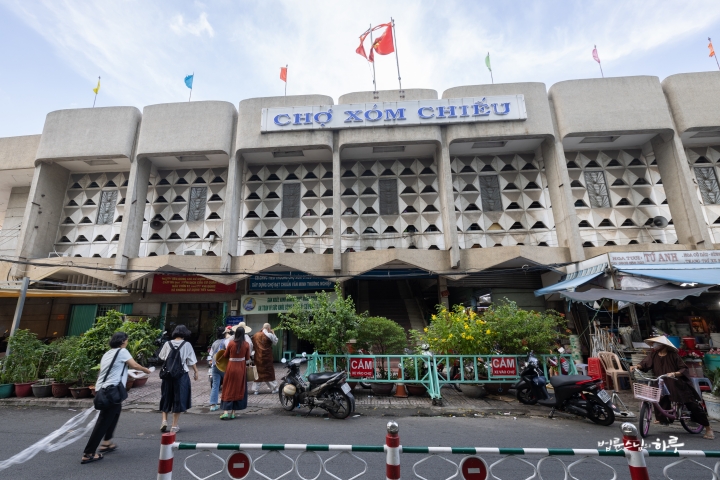
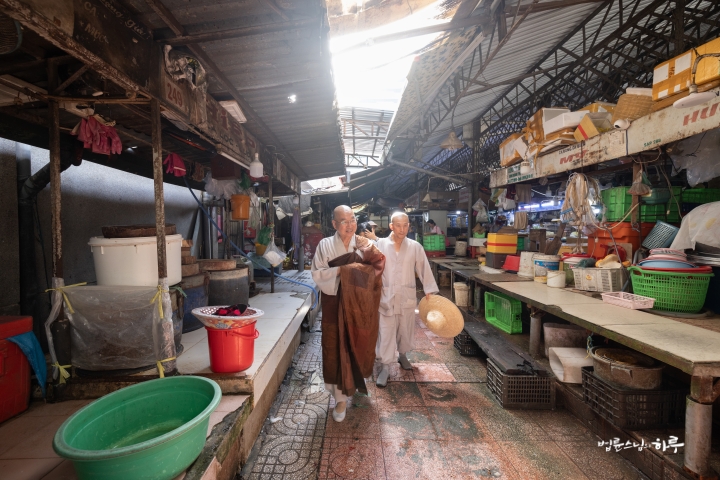
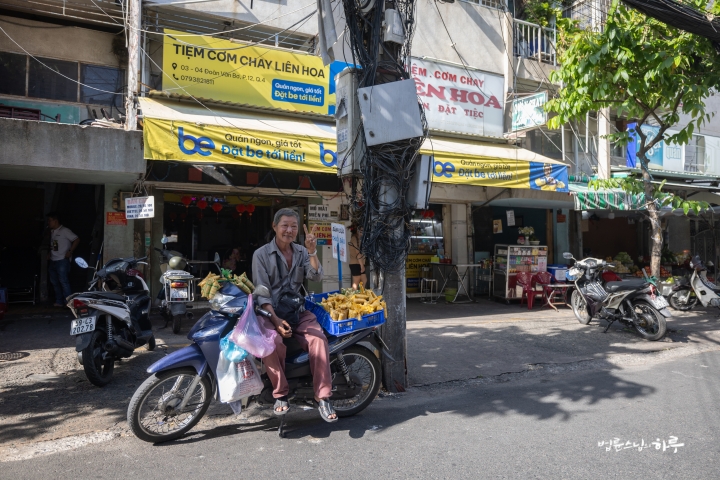
During this quiet afternoon, Sunim explored every corner of the market, observing the various goods and the vibrant atmosphere created by the merchants. The market was filled with colorful fruits, seafood, and various spices. It was a space that perfectly reflected the daily life of Vietnam.
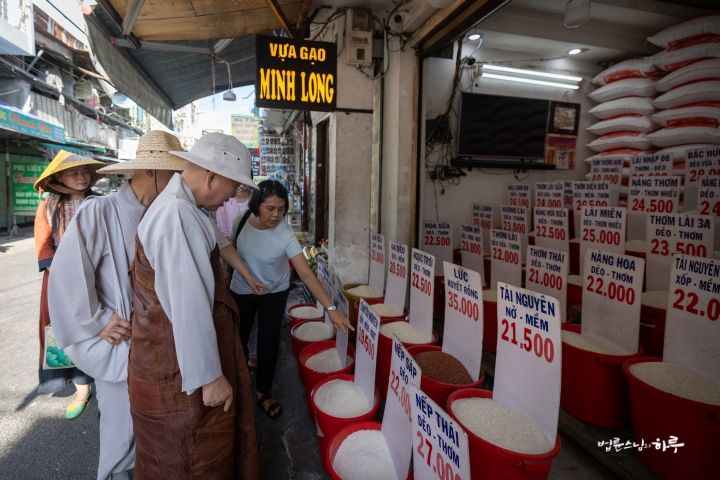
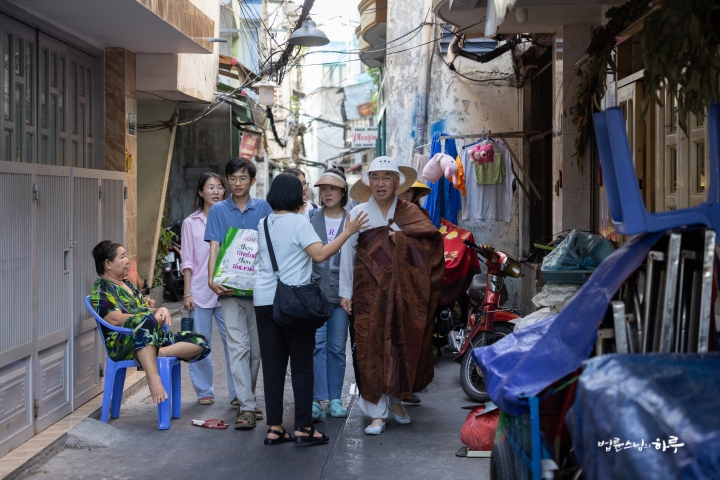
Checking the weather, the temperature was 36 degrees Celsius. Even a short walk caused perspiration.
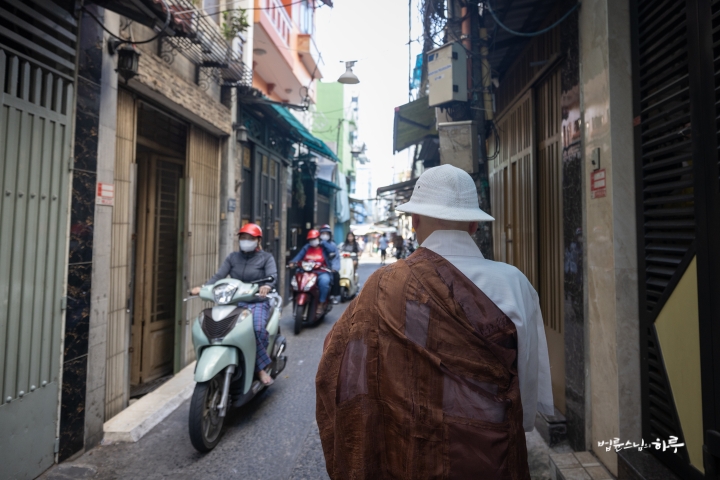
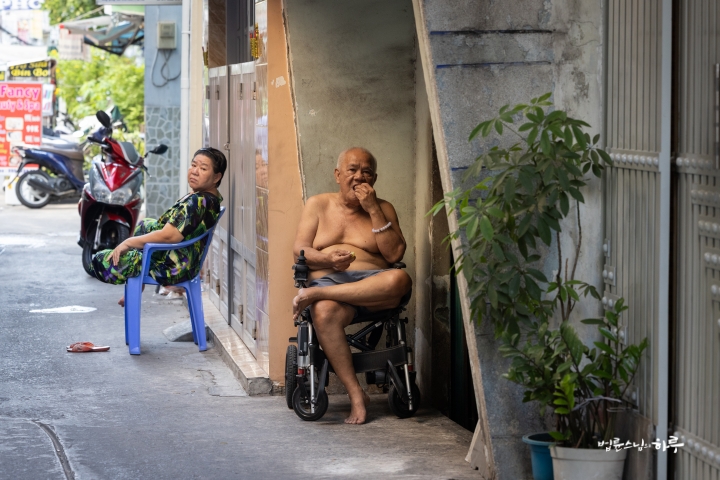
Under Phuong’s guidance, Sunim also toured the residential areas. The houses were tightly packed together with narrow alleys between them. After exploring the market and residential areas, Sunim remarked:
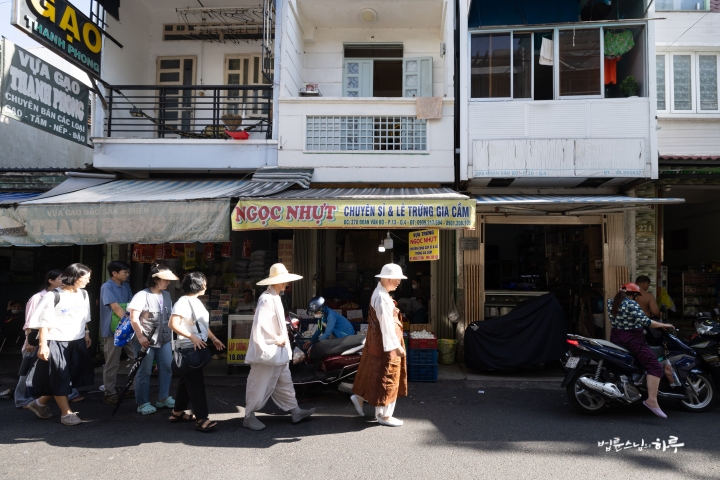
Currently in Vietnam, there is strong criticism on social media against monks who don’t live frugally. In contrast, a certain monk who walks barefoot throughout Vietnam, sleeps in forests, and lives by alms has been inspiring many people. This has led to intense criticism of some monks who live in luxury.
Sunim drove to Giac Ngo Vegetarian Restaurant where they were scheduled to meet Venerable Thich Nhat Tu. The meal was offered by a devotee of Giac Ngo Temple. While in the car, Sunim checked the next day’s schedule. Both lunch and dinner were arranged at Giac Ngo Vegetarian Restaurant.
“Please cancel both lunch and dinner. I appreciate the Sangha’s desire to host me. However, there’s no need to keep accepting meals offered by devotees. Tonight’s dinner is sufficient.”Phuong, who was coordinating this Vietnam visit, smiled and said:
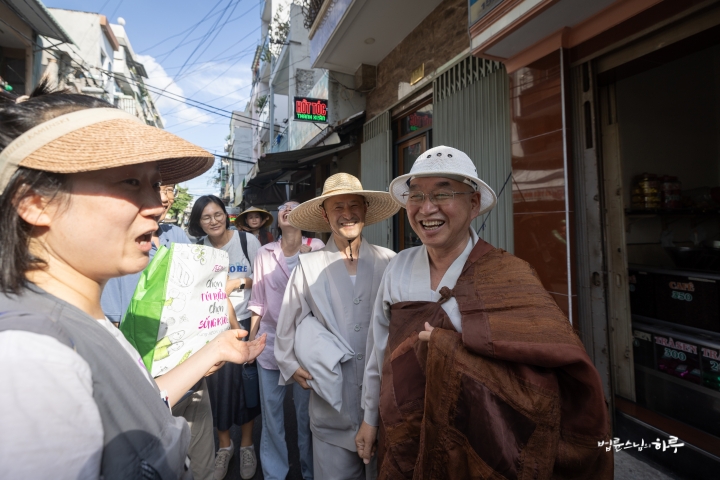
“I understand the Jungto style well. However, the Buddhist Sangha Council also wants to host you. I’ll try to find a good balance.”
Upon arriving at Giac Ngo Vegetarian Restaurant, a devotee from Giac Ngo Temple tried to offer a donation to Sunim. Sunim politely declined.
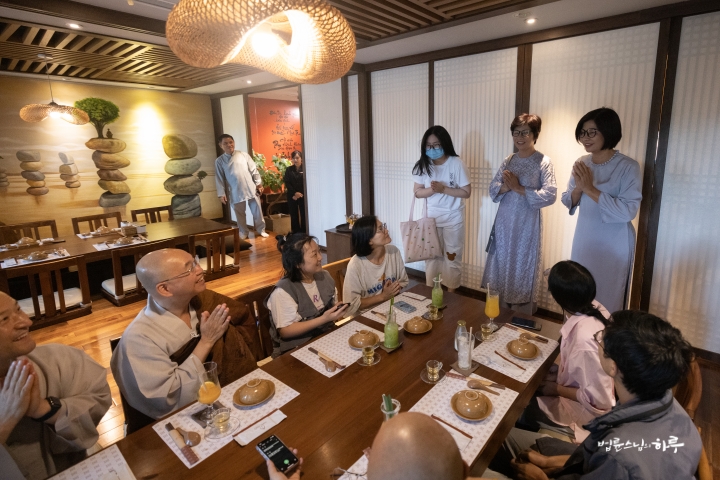
Shortly after, Venerable Thich Nhat Tu arrived at the restaurant with a bright smile. Venerable Thich Nhat Tu serves as the director of the international department of the Vietnam Buddhist Sangha Council and as the vice president of the Ho Chi Minh Buddhist University. Sunim greeted him warmly in English.
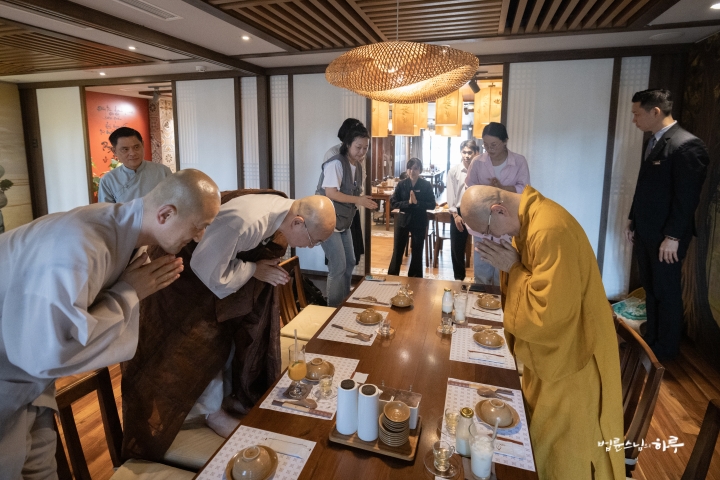
“I’m fine thank you. and you?”
“Good!”Venerable Thich Nhat Tu tried using an AI translation app on his phone for Vietnamese-Korean interpretation.
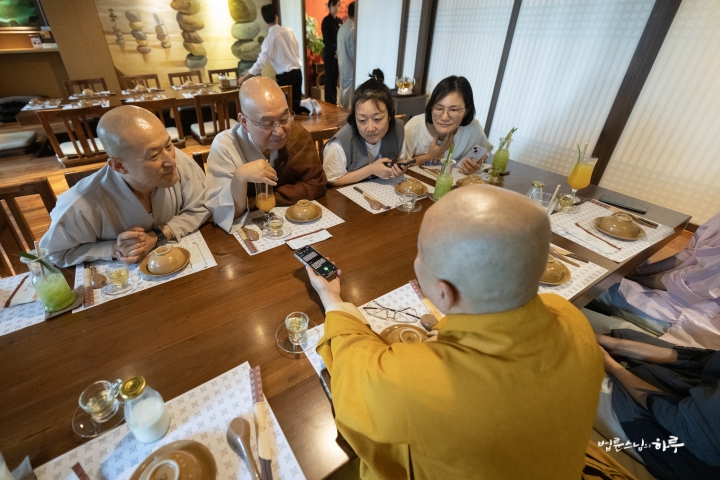
“Sunim, I apologize for the sudden cancellation of the Dharma talk.”
The translation worked reasonably well for a few exchanges but gradually became less accurate. They switched back to human interpretation. Venerable Thich Nhat Tu continued to apologize.
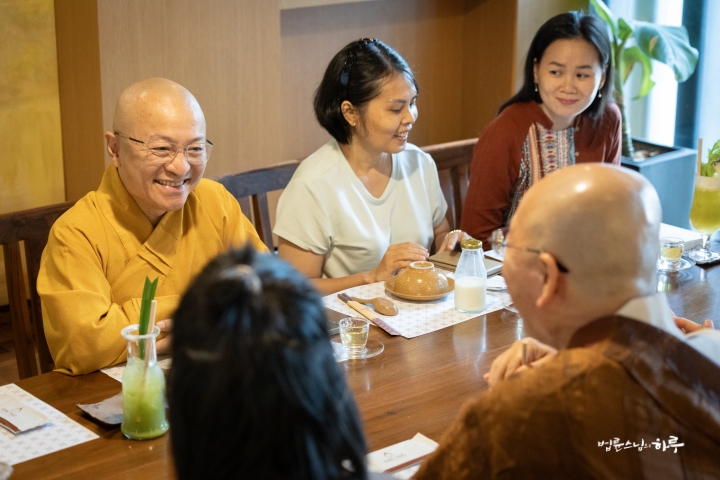
“Sunim, it’s an honor to meet you in Vietnam. I sincerely apologize to you. For the past two days, various temples were planning to go to the airport to welcome you but couldn’t. I was surprised to hear that you said there was no problem despite the cancellation of all public Dharma talks and schedule disruptions just two days before your arrival.”
Sunim smiled and responded:
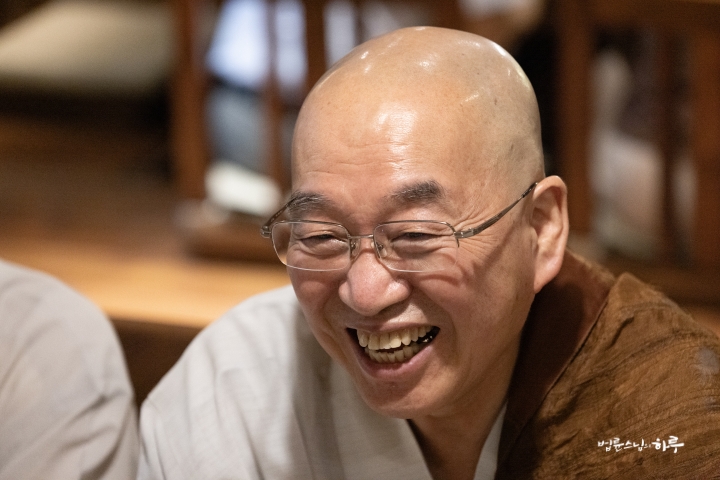
Sunim discussed whether the 2025 Vesak event organized by the Vietnam Buddhist Sangha Council was being well-prepared and whether he could hold a Dharma talk when visiting Hanoi on July 19.
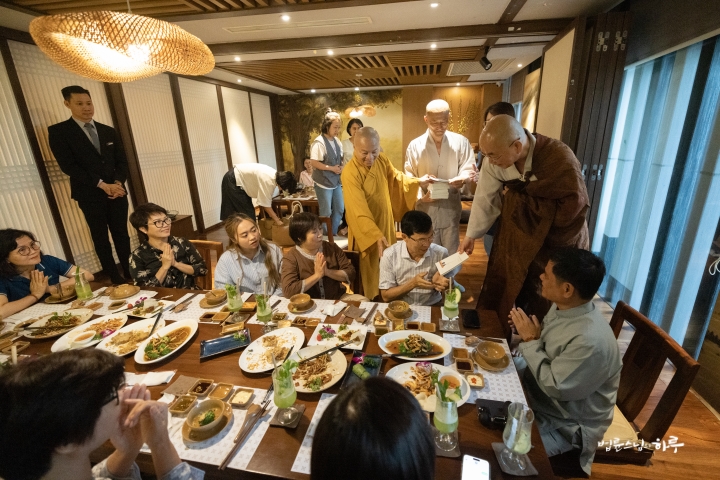
Nearby, devotees from Giac Ngo Temple were also having their meals. They presented copies of Sunim’s “Letters of Hope” translated into Vietnamese as gifts. After giving the books, they discussed them. Venerable Thich Nhat Tu shared his thoughts on the book.
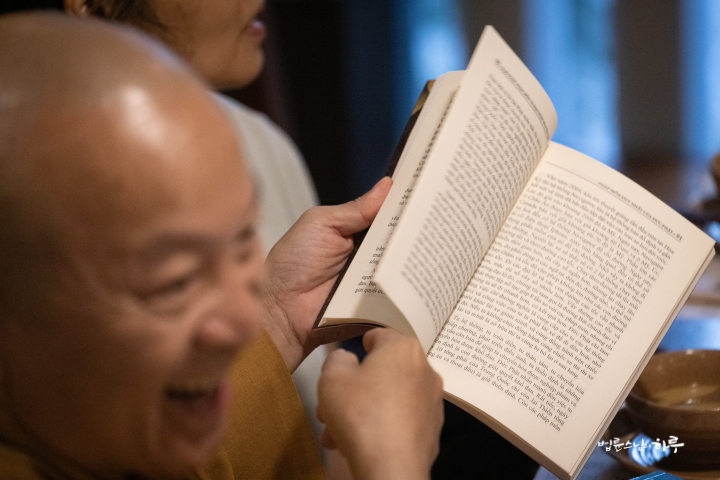
“This book is very well translated. I’m also an expert in editing and publishing books. I’ll personally review all future translations of your books into Vietnamese. Your books are all good, but the text ‘Venerable Pomnyun’ is too small. We should make it larger.” (laughs)
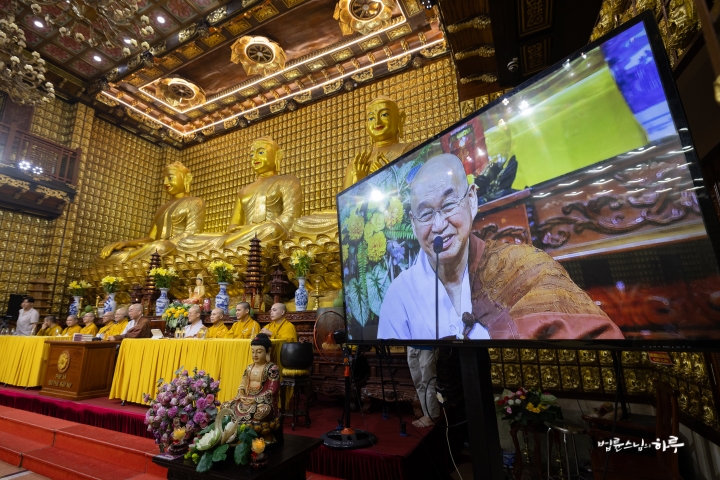
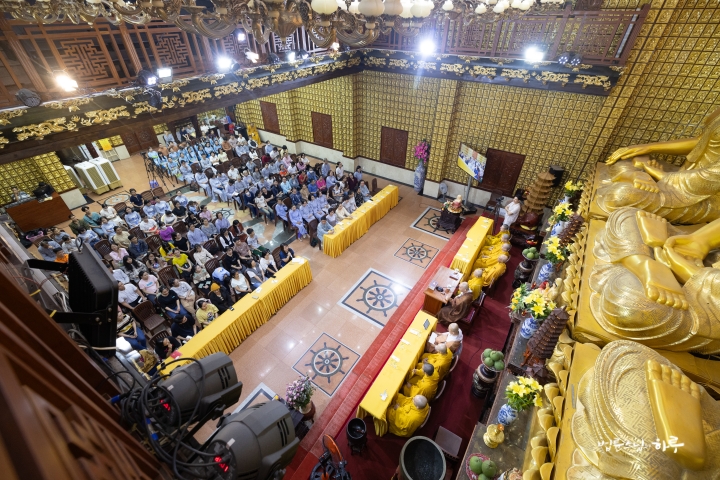
At 6:20 PM, Sunim left the restaurant and headed to Giac Ngo Temple. The temple was right in front of the restaurant, standing prominently in the middle of the city.
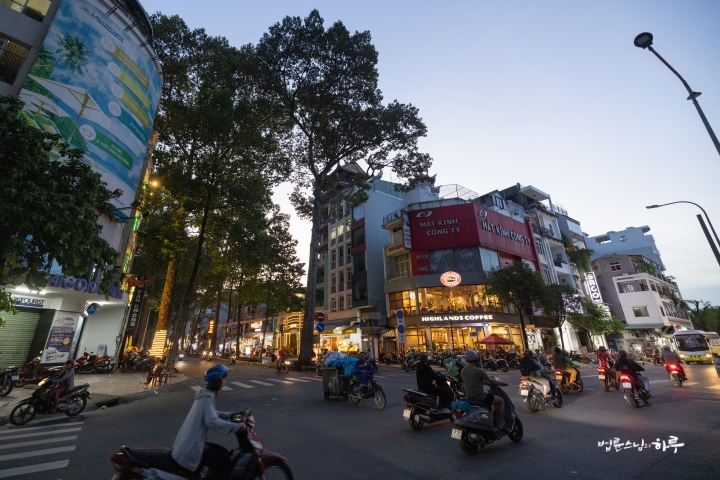
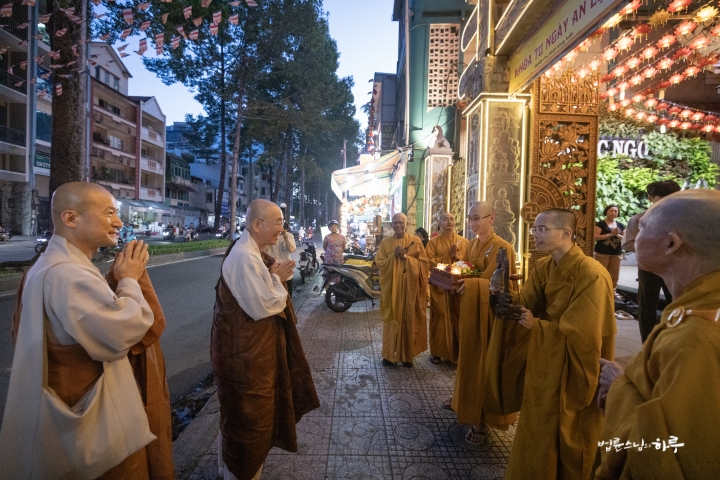
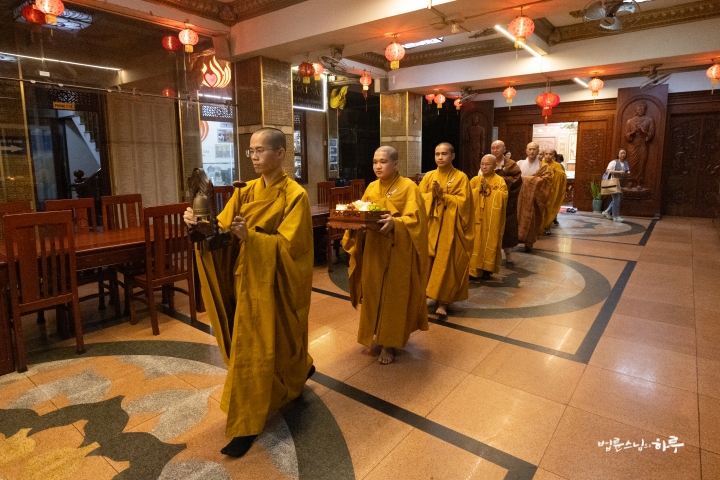
In front of the temple, monks from Giac Ngo Temple were waiting with flowers and bells. Following these monks, Sunim proceeded to the main hall.
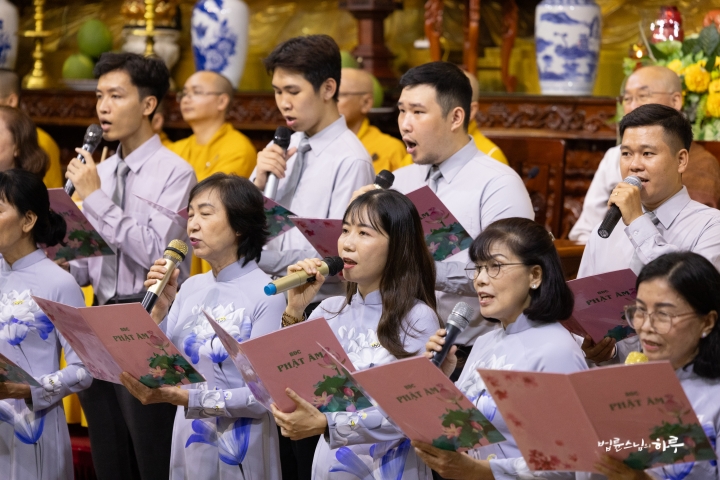
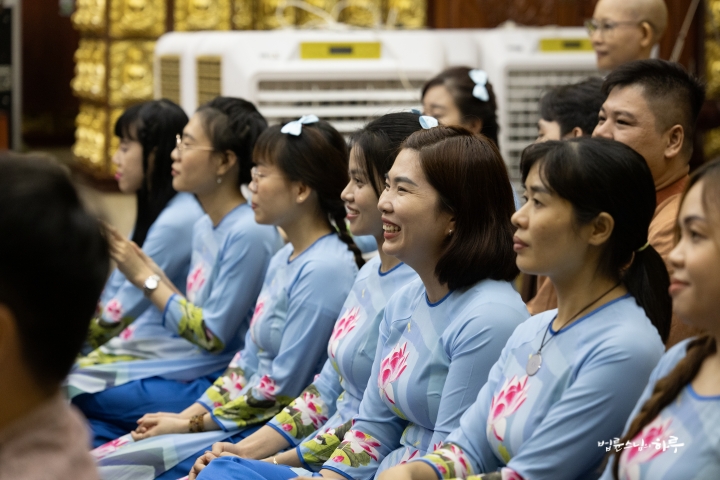
First, two choirs performed songs consecutively. Their beautiful harmonies and voices received enthusiastic applause.
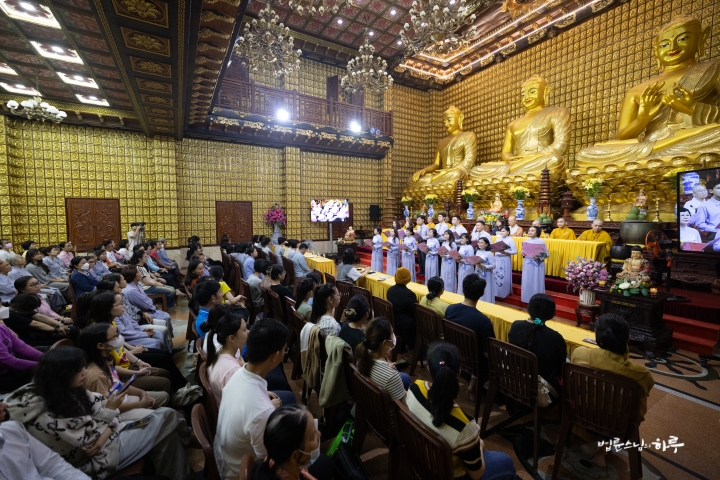
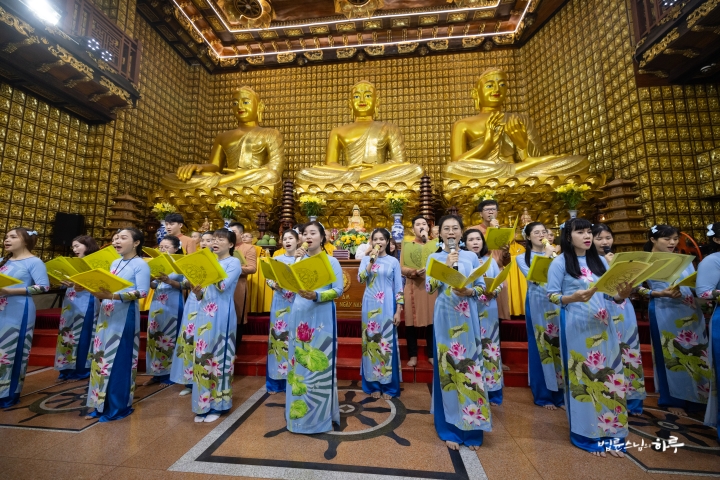
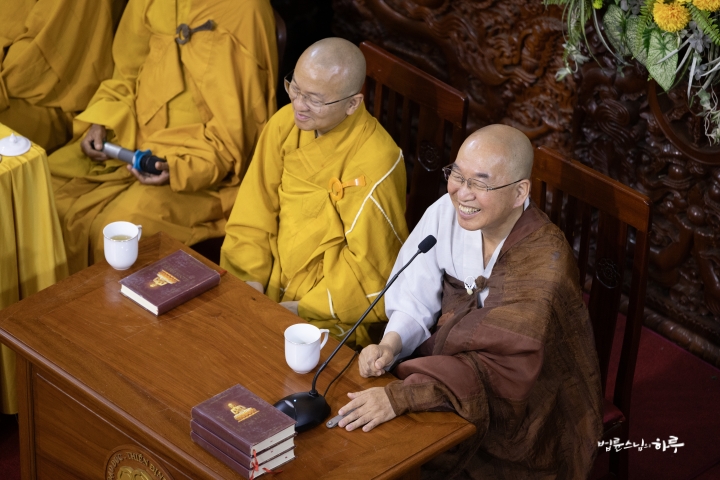
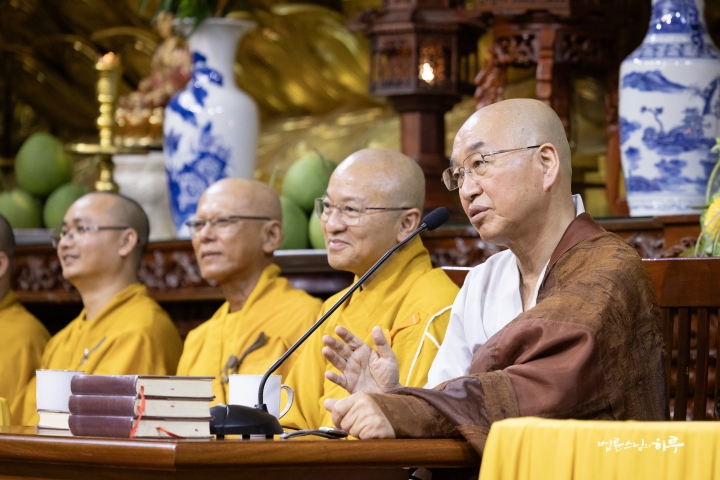
Then, Venerable Thich Nhat Tu introduced Venerable Pomnyun Sunim and gave a welcoming speech.
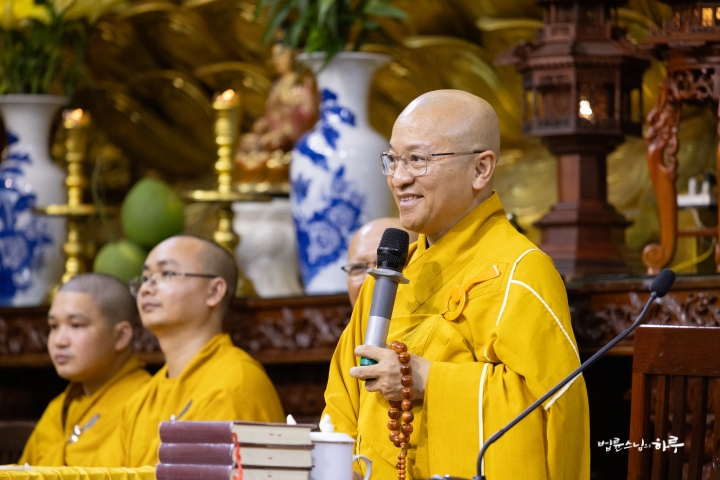
“Venerable Pomnyun Sunim is famous for his Dharma Q&A in Korea and has over 1 million YouTube subscribers. You don’t need to ask him about content from books or knowledge that can be found through searches. Feel free to ask about difficulties you face in life. Sunim is very intelligent, so there’s no need for lengthy questions. Please keep your questions simple.”
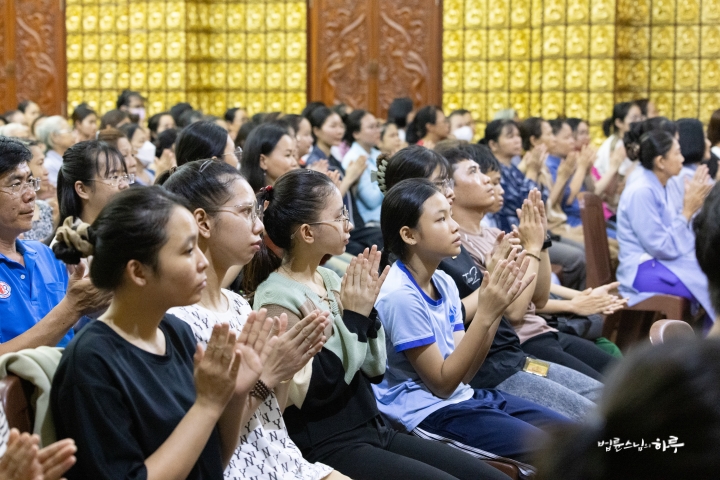
Amid enthusiastic applause, Sunim began the conversation.
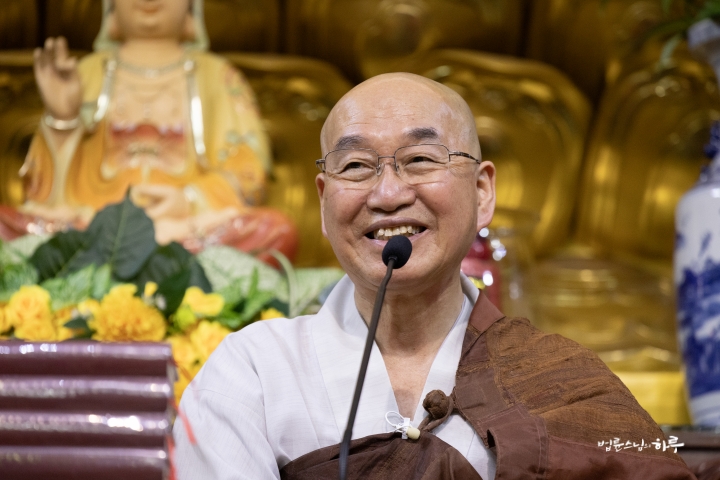
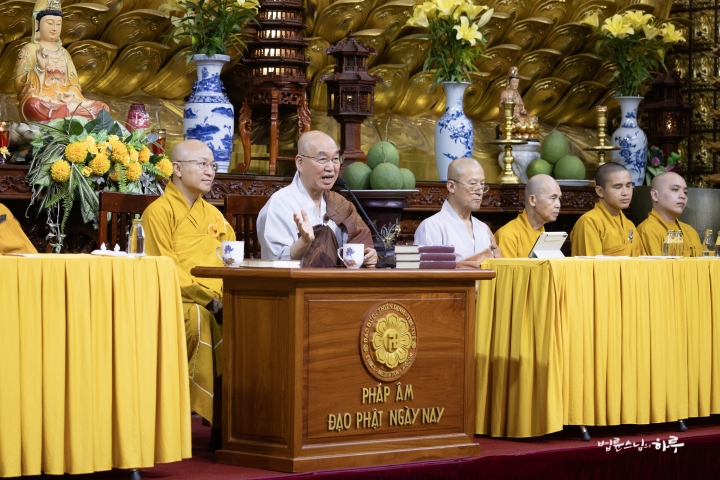
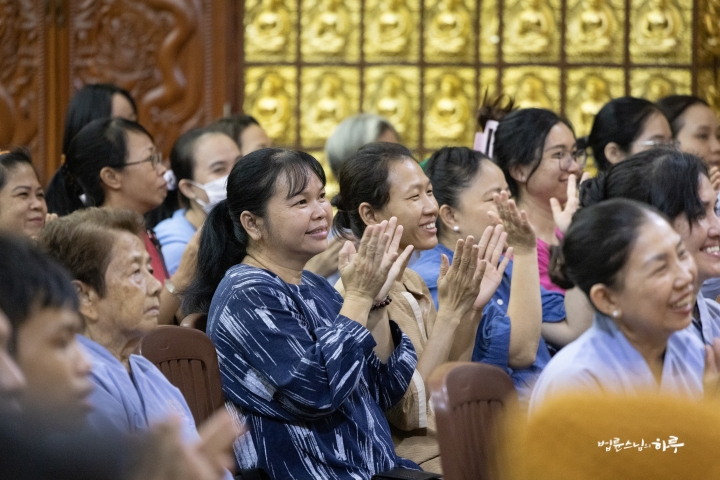
When Sunim finished speaking, thunderous applause erupted from the audience.
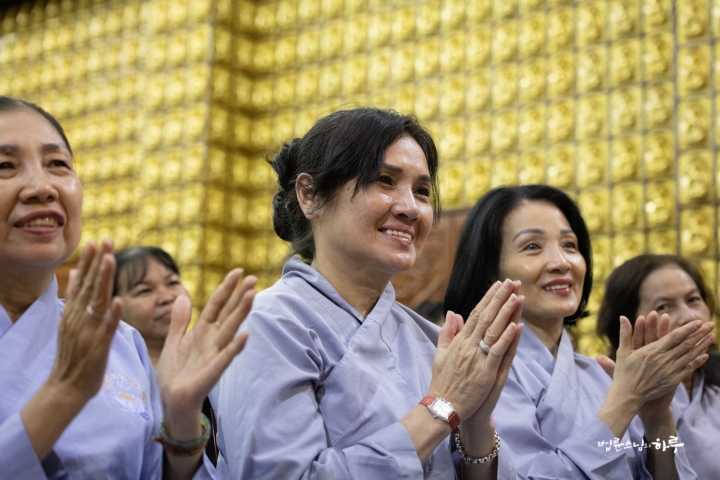
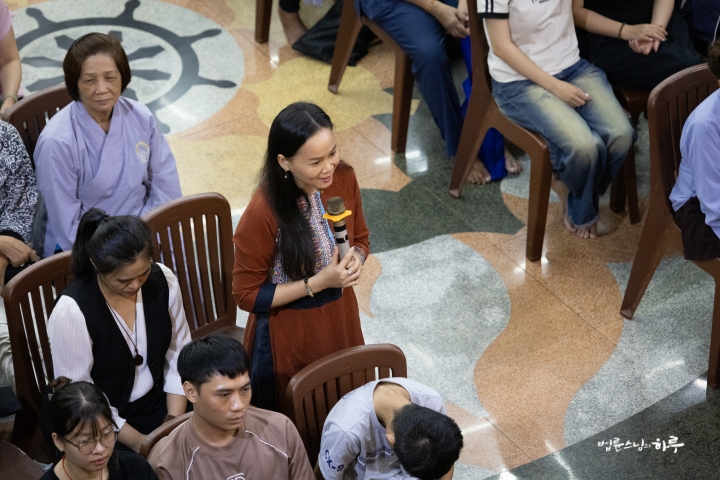
Following this invitation, people raised their hands to engage in conversation with Sunim. Eight people asked questions. The first questioner sought Sunim’s advice about wanting his 10-year-old son to become a monk, but his wife was against it.
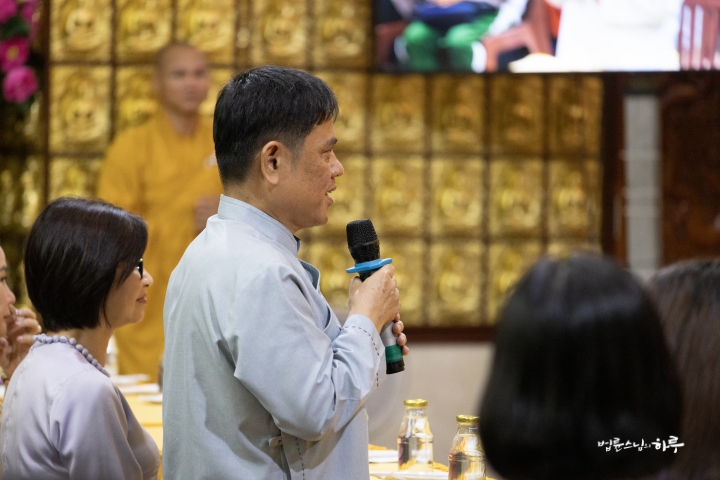
I Want My Son to Become a Monk, but My Wife Opposes It
“I am a Buddhist, and I have a 10-year-old son. I would like my son to become a monk. However, his mother opposes this, saying it would be too difficult for him. Still, I want my son to become a monk. Should I continue arguing with my wife about this?”
“Did you have this child by yourself, or did you have him with your wife?”“I had him with my wife.”
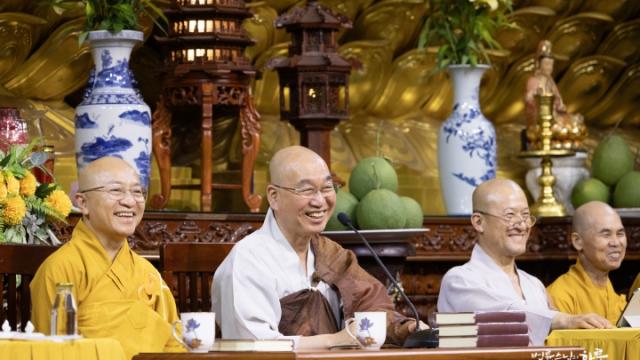
“I believe that even in a business partnership, if one person has more authority, it’s right for that person to use it. It’s the same in our family. Since I have more authority than my wife, I plan to make the decision. I’m planning to send my son to the temple anyway, so I’m considering whether to continue arguing with my wife until the end or just send him without further discussion.”
“Are you a Vietnamese citizen?”“Yes, I am.”
“As a Vietnamese citizen, should you follow the Vietnamese constitution and laws? Or can you disregard them?”“I should follow them.”
“Then, do Vietnamese laws state that men have more authority than women?”“No, they don’t.”
“I can’t do that.”
“Thank you. I understand now.”
The questions continued.
Modern people face various difficulties such as relationships and health issues. How should we view and solve these problems?
I want to let go of desires according to the Buddha’s teachings, but I can’t stop my desire to play. How can I stop these desires?
I don’t want to get married and want to do volunteer work while earning money, but my family raises objections. What should I do?
I lead 50 performers, and there’s someone whose behavior I find uncomfortable. What should I do in this situation?
My mother keeps getting sick and going to the hospital. I’m worried about what I’ll do if she passes away.
I want to live doing what I want, even if my friends think it’s strange. Is that okay?
The final questioner expressed concern about the numerous posts criticizing monks on social media and asked for Sunim’s advice on how to view this situation.
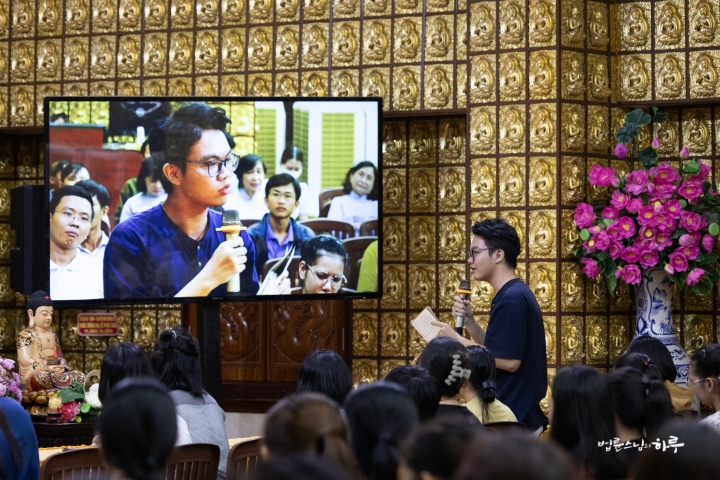
My Mind Wavers When I See Critical Posts on Social Media
“Recently in Vietnam, there have been continuous incidents on social media where monks are criticized and Buddhism’s image is tarnished. Vietnamese Buddhists are worried about this issue and our minds are wavering. I would like to hear Venerable Pomnyun Sunim’s teachings on this matter.”
“Was the Buddha a more excellent person than us? Or less?”“The Buddha was more remarkable and greater.”
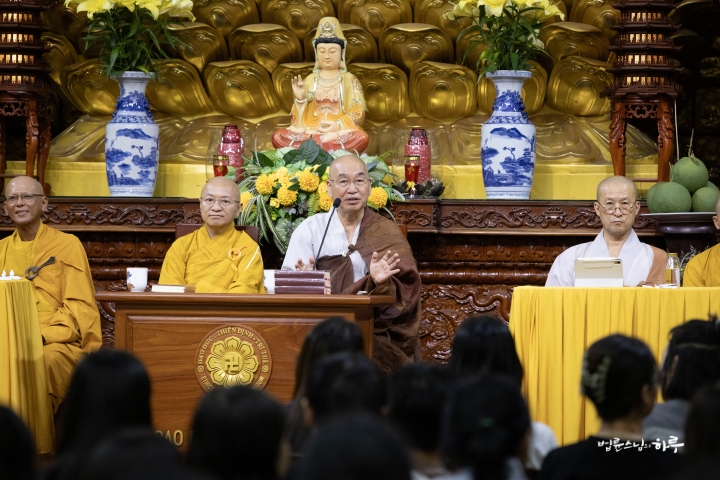
“He was criticized.”
“If even the Buddha was criticized, how can we expect not to be criticized?”“I understand that point well, but Buddhism’s image has become so negative that families tell us not to go to temples, and people around us even prevent us from going. This creates obstacles during our practice. What mindset should we have as Buddhists?”
“Do you personally think Buddhism is good or not good?”“Buddhism is very good.”
“Then, is your family right or wrong?”“They are wrong.”
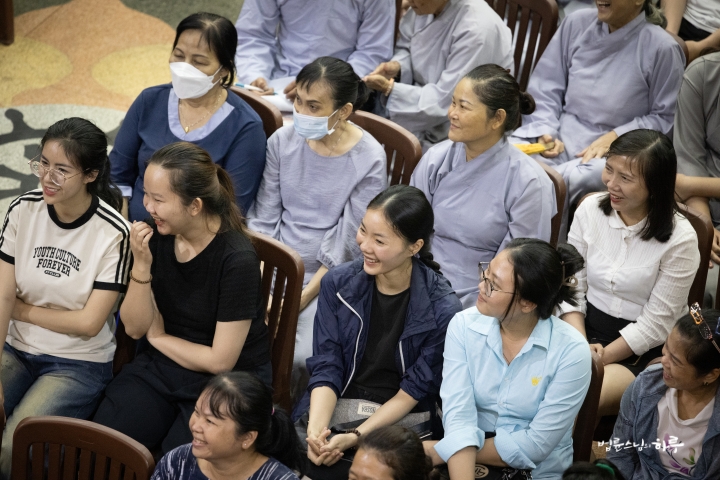
“Thank you.”
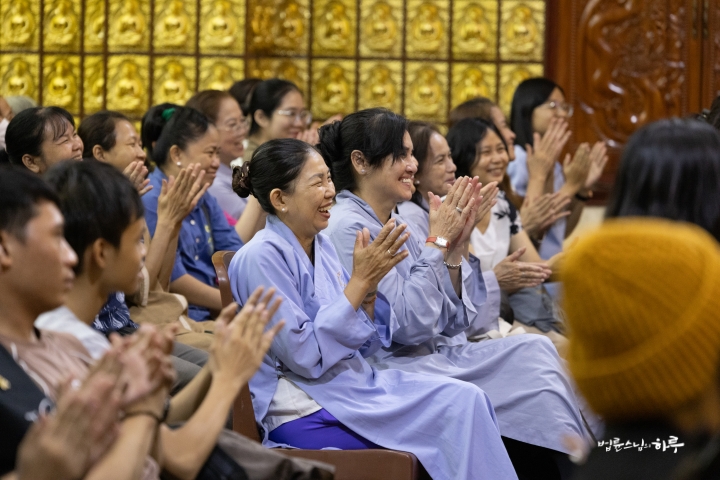
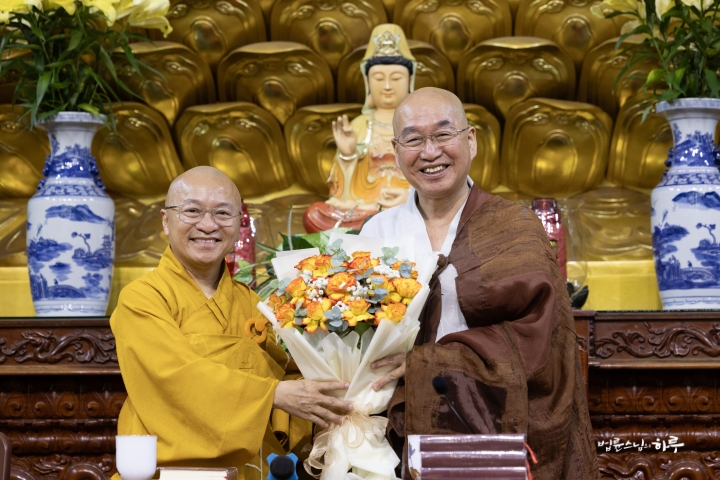
After the conversation, Thich Nhat Tu presented Sunim with a bouquet of flowers.
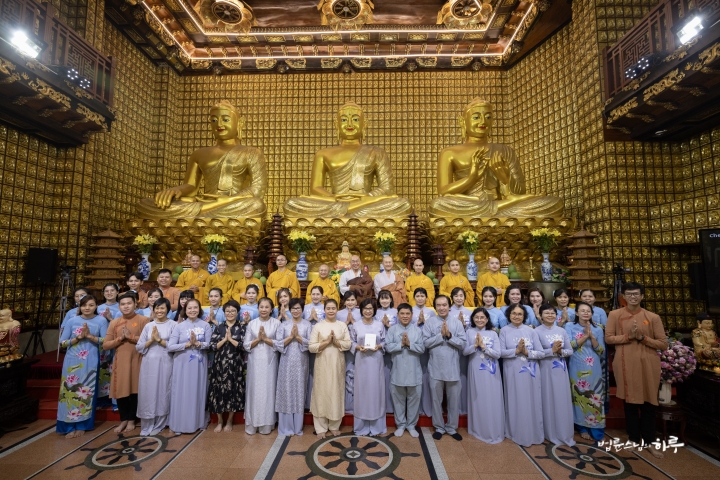
Everyone gathered for a commemorative photo. Even after the group photo, many people approached Sunim to take additional pictures with him.
Sunim distributed copies of “Letters of Hope,” translated into Vietnamese, to the monastics and lay practitioners.
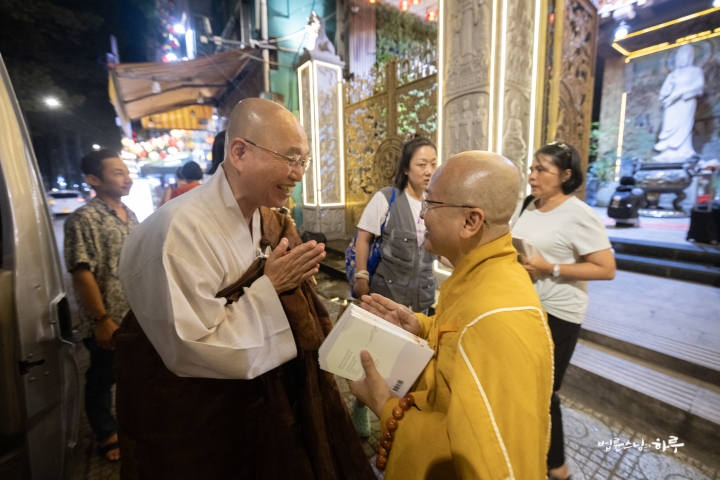
After saying goodbye to Thich Nhat Tu, Sunim arrived at his accommodation close to 10 PM.

Tomorrow’s schedule includes a Dharma discussion in the morning with monastics observing the rainy season retreat at Hung Phuoc Temple, followed by a visit to Phuong Temple to meet with the Vice Chairman of the Elder Council. In the afternoon, Sunim will have a Dharma discussion with Thich Giac Thon at Minh Dang Quang Temple, then move to Wat Khadaransi to meet with the abbot.