What are the practice methods of Seon Buddhism?
Jun 30, 2024 - Day 2 in Vietnam, Phuoc Son Monastery, Quang Duc Monastery
Hello. Today is the second day of Sunim’s visit to Vietnam at the invitation of the Vietnam Buddhist Sangha Council.
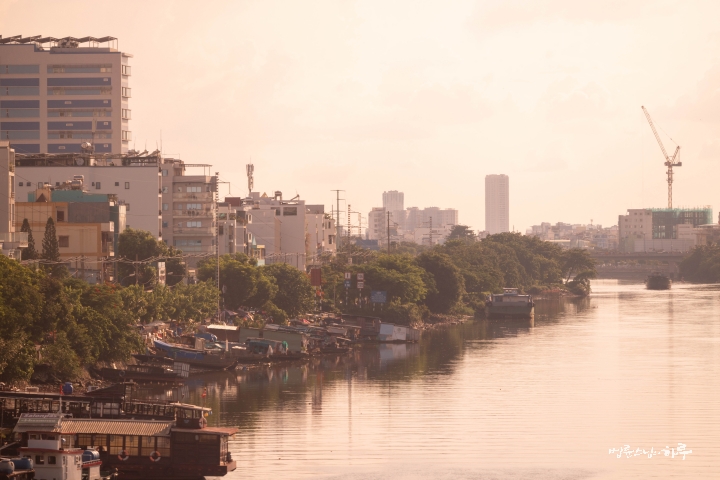
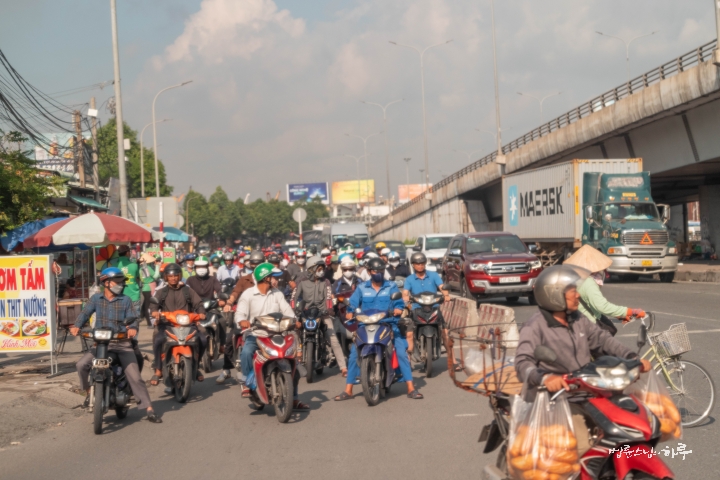
After completing his morning practice and meditation, Sunim began his day with breakfast at the lodging at 6:20 AM. At 7:30 AM, he left for Phuoc Son Monastery, located on the eastern outskirts of Ho Chi Minh City. Once again, an endless stream of motorcycles filled the morning commute.
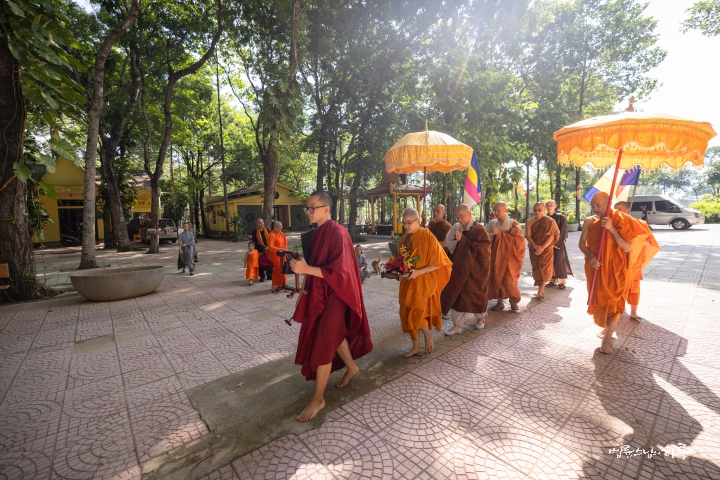
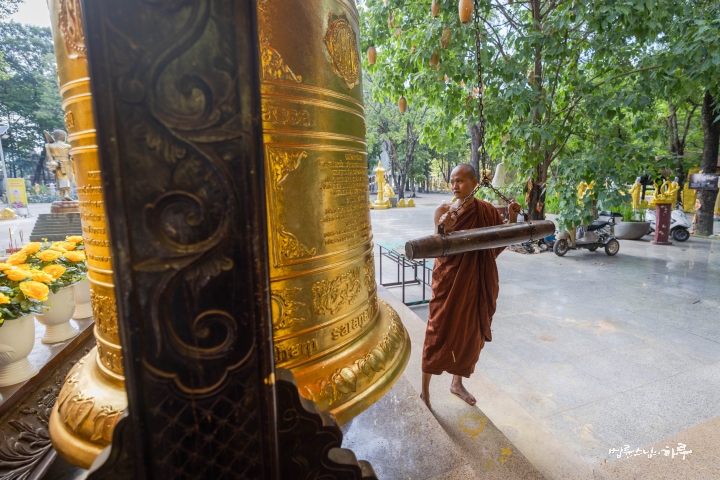
After a 1 hour and 20 minute drive, he arrived at Phuoc Son Monastery at 8:40 AM. The monks of Phuoc Son Monastery greeted Sunim, walking in a line holding flowers and bells.
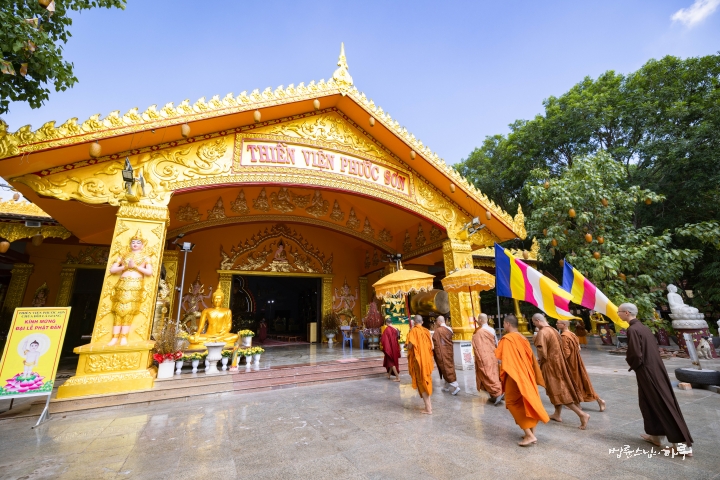
Following the guidance of the Phuoc Son monks, Sunim walked to the main hall. In the hall, they welcomed Sunim’s group with the ringing of bells and beating of drums.
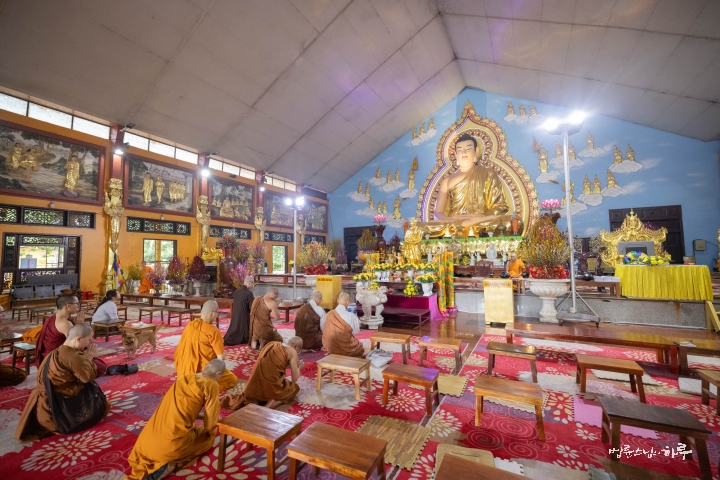
First, they paid respects at the main hall. Vietnam is a multi-ethnic country with 54 ethnic groups living together. Among them, the largest ethnic group, accounting for 86 percent of the entire Vietnamese population, is the Viet (Kinh) people. Phuoc Son Monastery is a Theravada temple built by the Kinh people, not the Khmer.
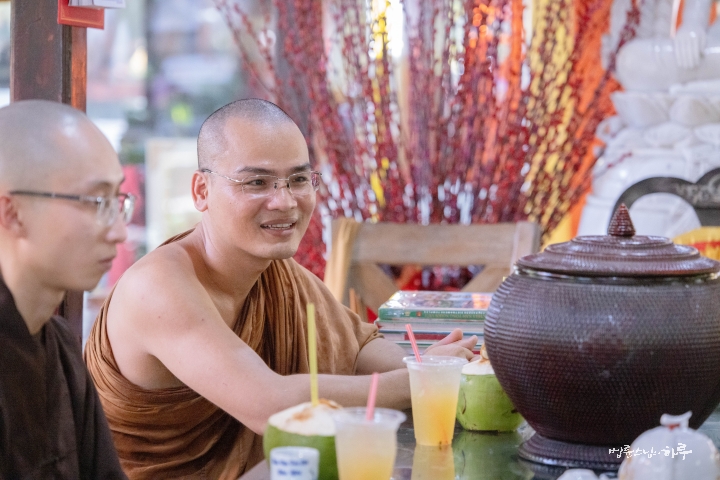
Before the Dharma talk, they had a tea conversation. First, Venerable Phuoc Tri, the attendant of the abbot, asked for understanding.
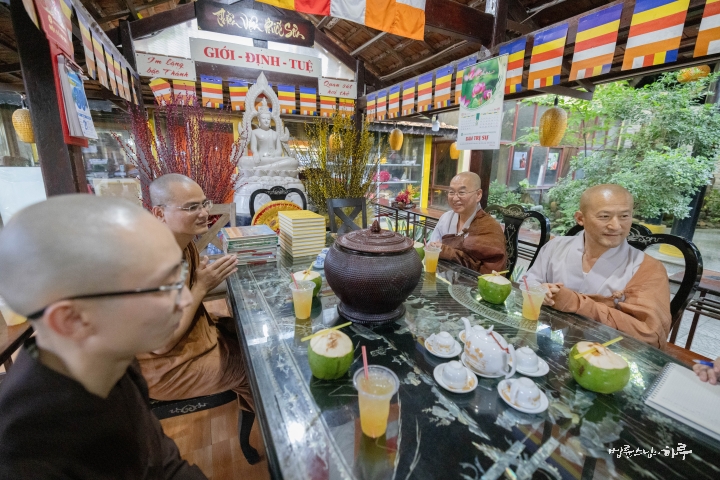
“The abbot is away today because Venerable Pomnyun Sunim was originally scheduled to visit on July 3rd. We apologize.”
“That’s alright.”Sunim asked about the overall operation of Phuoc Son Monastery, and the attendant monk provided a detailed introduction. Sunim showed particular interest in the bhikkhunis visible throughout the monastery.
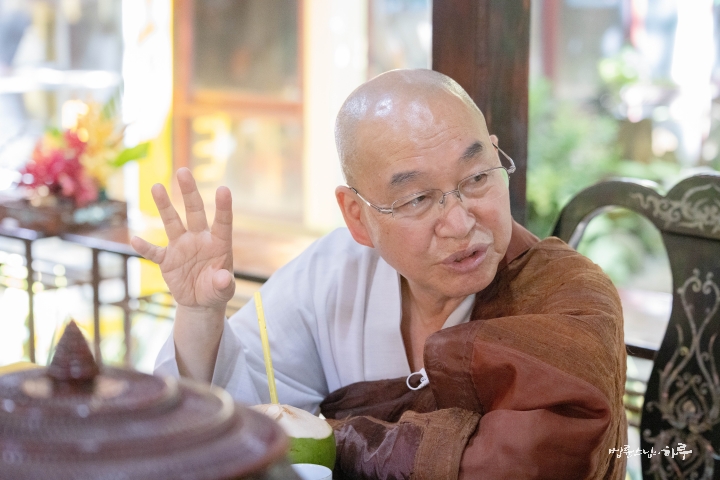
The attendant monk replied.
“The abbot has neither forbidden nor explicitly allowed it. However, he is allowing all women who wish to practice to come and do so.”
“That’s wise.”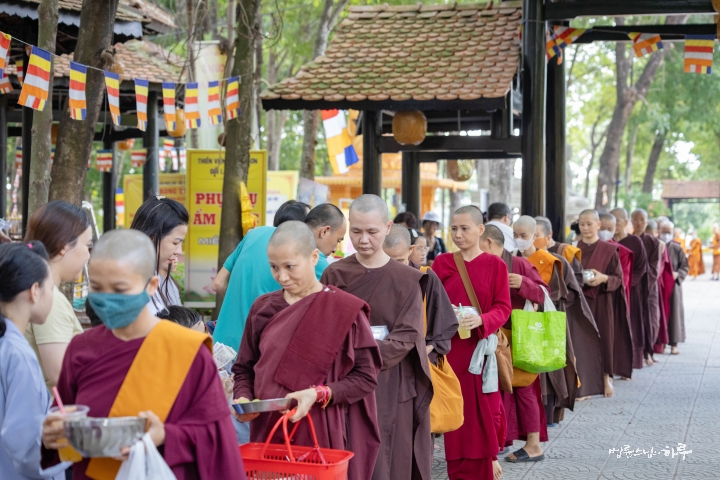
After the tea conversation, they moved to start the Dharma talk.
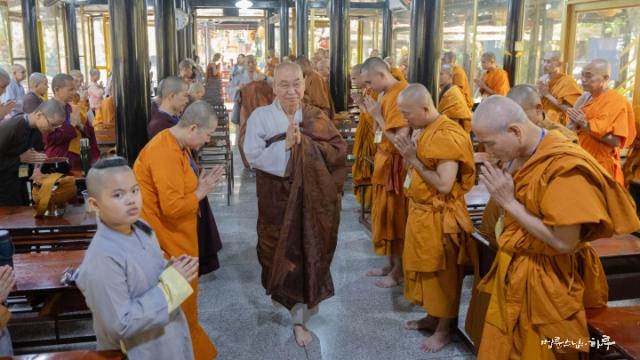
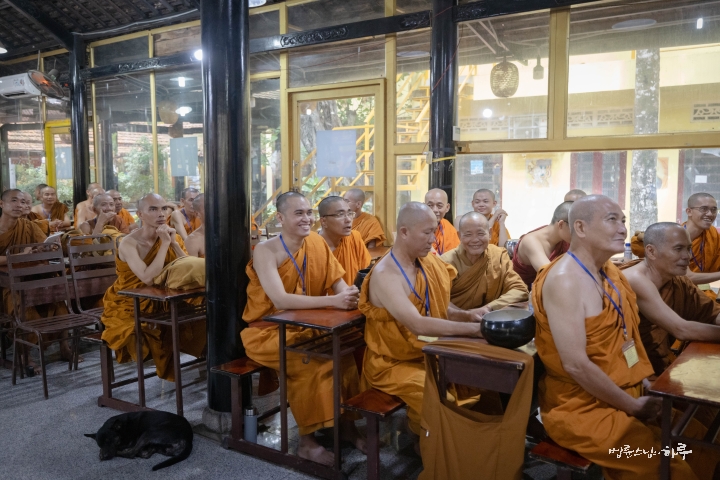
The bhikkhus were seated on the right, and the bhikkhunis on the left. It was truly impressive to see bhikkhus, bhikkhunis, Theravada, and Mahayana all gathered in one place. The sight of monks in different robes sitting together was particularly striking.
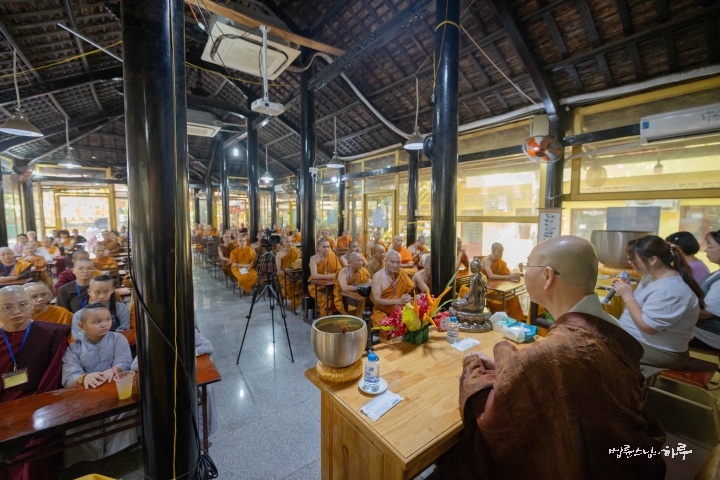
Sunim began the conversation by introducing himself, sharing how he encountered Buddhism, and talking about Korean Buddhism.
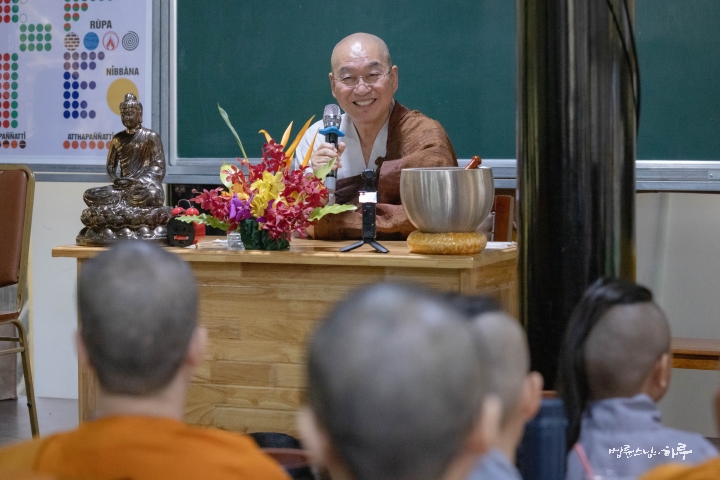
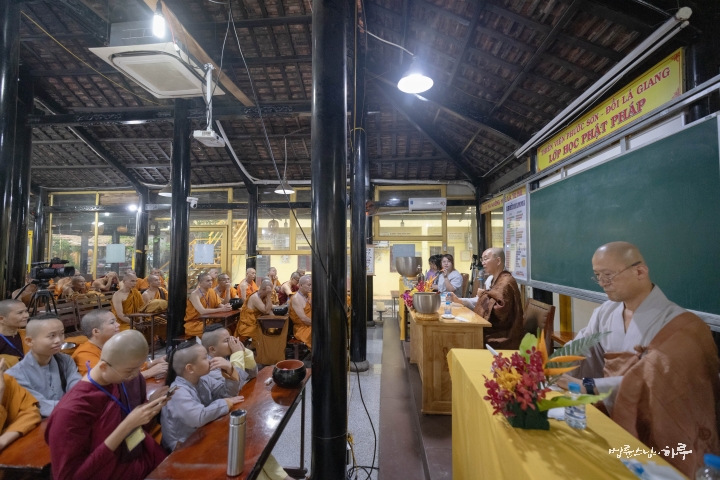
I understand that most of Vietnamese Buddhism is also Mahayana. I’ve heard that in the south, there’s Khmer Theravada and Kinh Theravada, to which you belong. I’ve visited a Khmer Theravada Buddhist temple before, but I didn’t know until I came here today that the Kinh people also built such a large temple with so many practitioners. Theravada Buddhism doesn’t recognize bhikkhunis, but it’s good to see so many bhikkhunis here. (Laughter)
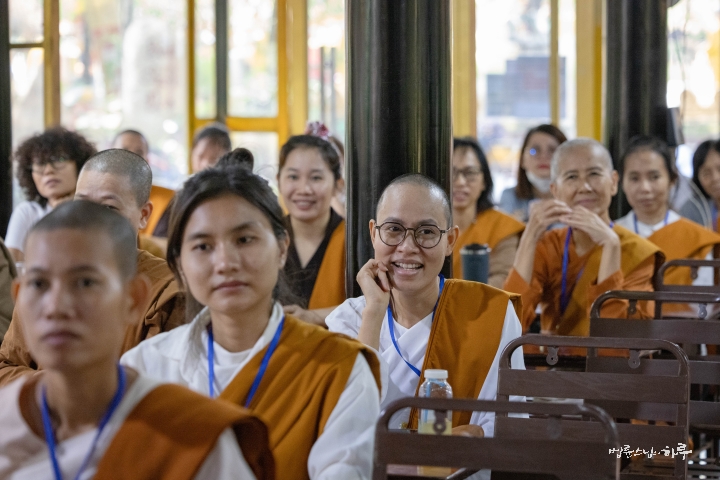
Sunim then invited anyone with questions or concerns to freely ask. Over the course of two hours, five people raised their hands and engaged in dialogue with Sunim.
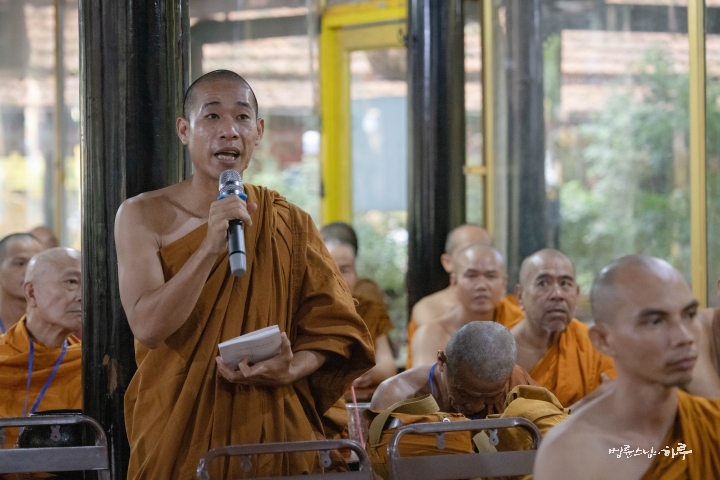
One bhikkhu raised his hand and asked about Seon Buddhist practice methods.
What Are the Practice Methods of Seon Buddhism?
“You mentioned that you belong to Seon Buddhism. What are the practice methods of Seon Buddhism? I’m curious if they are similar to the practices of Thich Nhat Hanh.”
“In Seon Buddhism, there are seven different schools known as the Five Houses and Seven Schools (Ogachiljong). Among these, we follow the Imje (Linji) lineage, which practices hwadu Seon, investigating ‘What is this?’ (Imwotgo). We constantly live saying ‘I’, ‘I’, ‘me’. But we investigate what this ‘I’ really refers to. In English, it would be expressed as ‘Who am I?’ We investigate ‘What is this?’ in the sense of what this ‘I’ is. In Chinese, it’s expressed as ‘Shi san ma? (是什么?)’, and in Korean, we say ‘I mwotgo?’ Thinking ‘I know what I am’ based on what we already know is delusion. Instead of thinking, we only maintain a state of questioning. We investigate the state before thoughts arise, rather than learning doctrines, memorizing knowledge, or reading scriptures. We explore the moment before thoughts occur. We think we know a lot. However, after just three or four questions, we often end up saying ‘I don’t know’. Everything we think we know is delusion. It’s all thoughts and knowledge. So, true study begins when we reach the point of saying ‘I really don’t know’. Because we receive questions from a state of not knowing, we must now investigate. We’re not looking for answers among what we already know, but starting anew. If we investigate like this, we can reach a state where thoughts cease.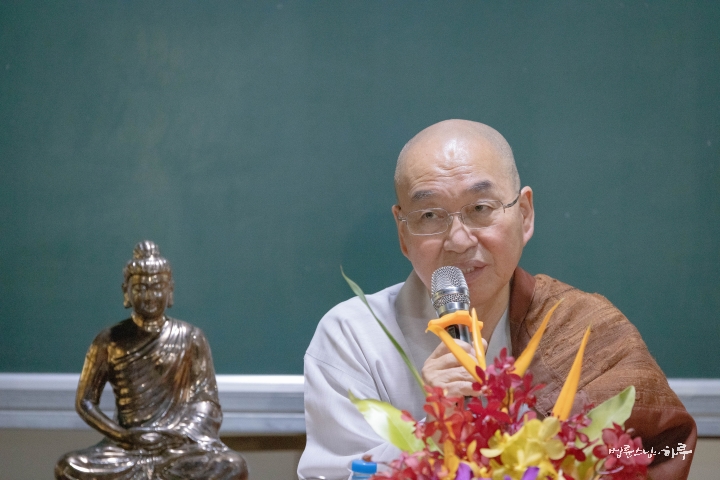
Similarly, contemplating a hwadu is not about thinking, but about investigating in a state where thoughts have stopped. Reading books or acquiring knowledge is of no help. One must return to the state before thoughts arise and investigate, asking “What is this?” Do you understand?
“YES!”
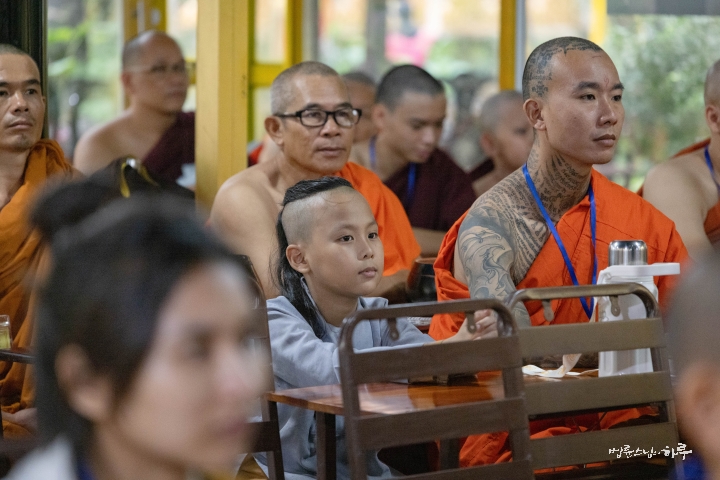
The questions continued.
Sunim, you are ordained but engage in many social practices. I am ordained but write poetry. People around me don’t understand. How should I practice?
In Mahayana Buddhism, people pray to be reborn in the Pure Land. What is rebirth in the Pure Land?
The last monk to ask a question expressed his lack of confidence in studying Buddhism due to limited education before ordination, and sought Sunim’s advice.
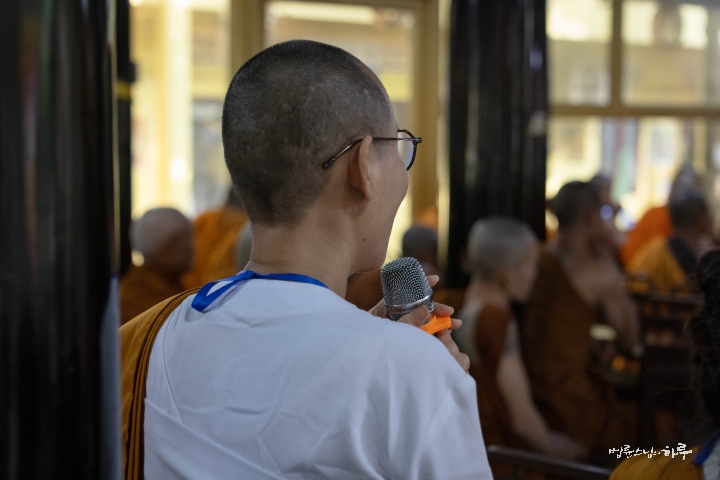
I Lack Confidence in Myself
“I love studying Buddhism. However, I didn’t have much education in society, so I don’t have much knowledge. Therefore, I lack confidence in my Buddhist studies. I doubt myself, thinking, ‘I haven’t learned much, can I really learn the Buddha’s teachings properly?’ Please teach me how to have the right faith in my Buddhist studies.”
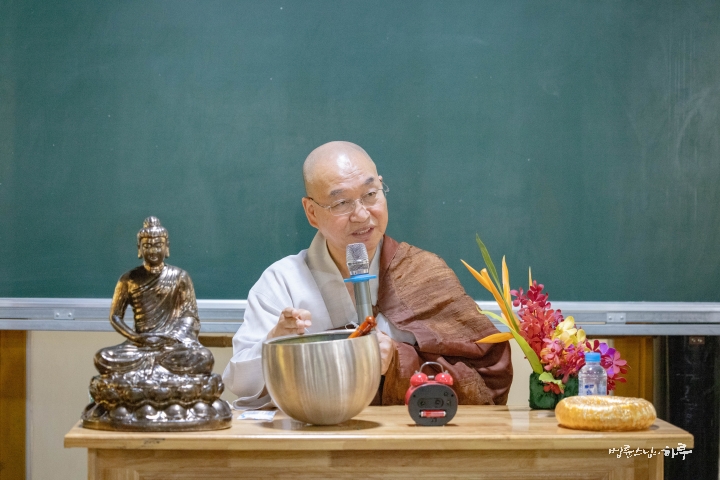
“The Buddha statue is bigger.”
“The bell is smaller than the Buddha statue. Is that correct?”“Yes, that’s correct.”
“Now, let’s compare the clock and the bell. Is the bell bigger or is the clock bigger?”“The bell is bigger.”
“So we can say that the bell is smaller than the Buddha statue but bigger than the clock, right? Now, let’s remove the Buddha statue and the clock, and I’ll ask you about just this bell. Is this bell big or small?”“It’s neither big nor small.”
When we look at things in this world and say ‘big,’ ‘small,’ ‘narrow,’ ‘wide,’ ‘long,’ ‘short,’ ‘new,’ ‘old,’ ‘expensive,’ ‘cheap,’ ‘noble,’ ‘humble,’ ‘right,’ ‘wrong,’ none of these are facts. These are all matters of perception. In reality, things are neither right nor wrong, neither big nor small; they simply are what they are.
In Mahayana Buddhism, this is called ’emptiness’ (空). Depending on conditions, something is called big under certain conditions and small under others. Originally, it is nothing in particular, but it becomes this or that according to conditions. The Diamond Sutra refers to this as ‘No Everlasting Abiding Dharma’ (無有定法).
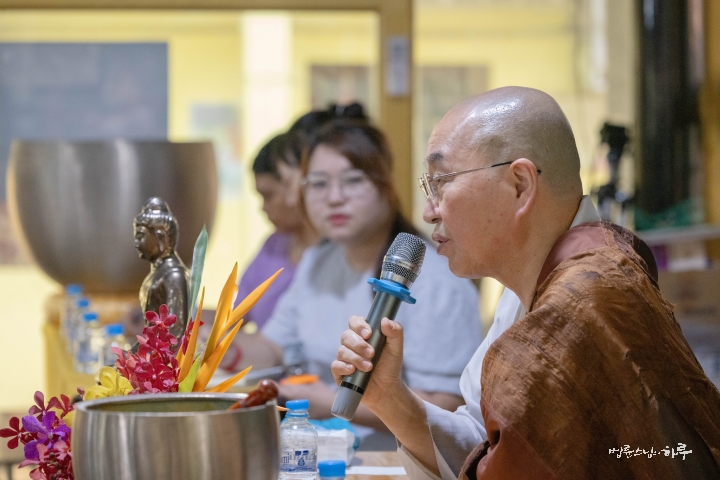
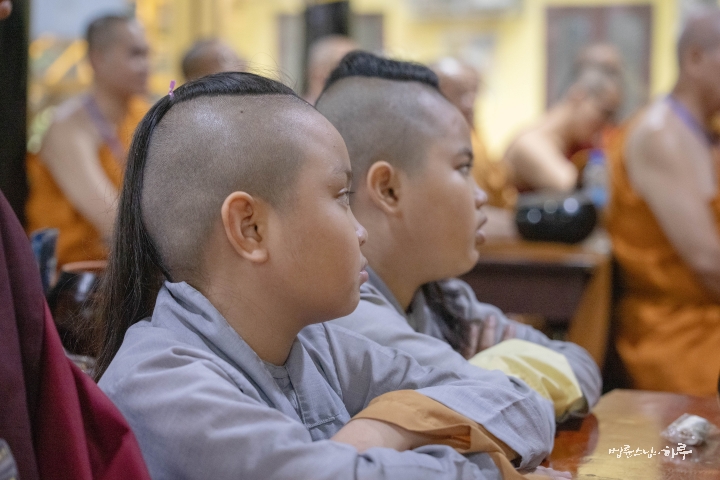
As Sunim finished his answer, thunderous applause erupted. All the monks seemed deeply moved.
After concluding the conversation, Sunim gave a closing remark, looking forward to the next opportunity.
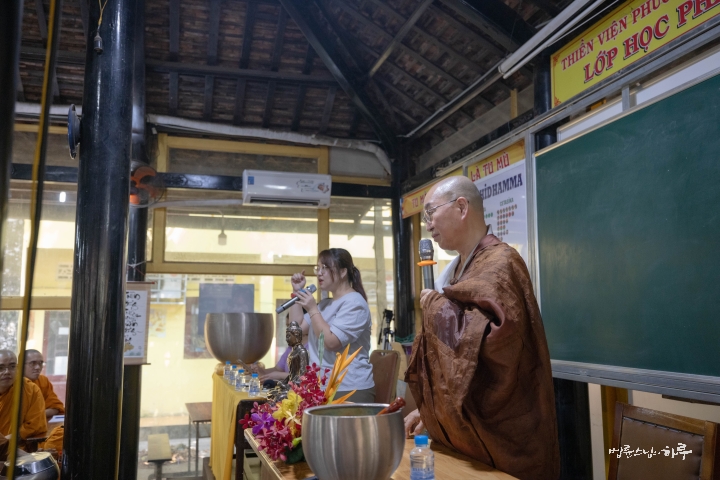
All the monks chanted the homage in Pali together.
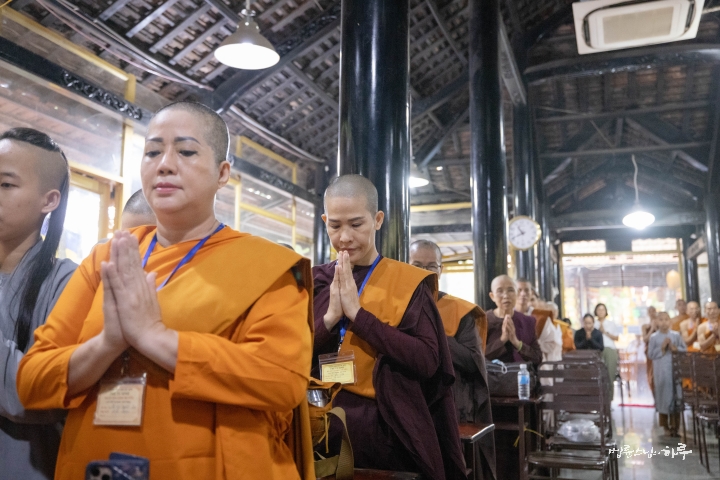
“Namo tassa bhagavato arahato sammāsambuddhassa”
After the Dharma talk, everyone gathered for a group photo. The harmony of various colored robes resembled a flower garden in bloom.
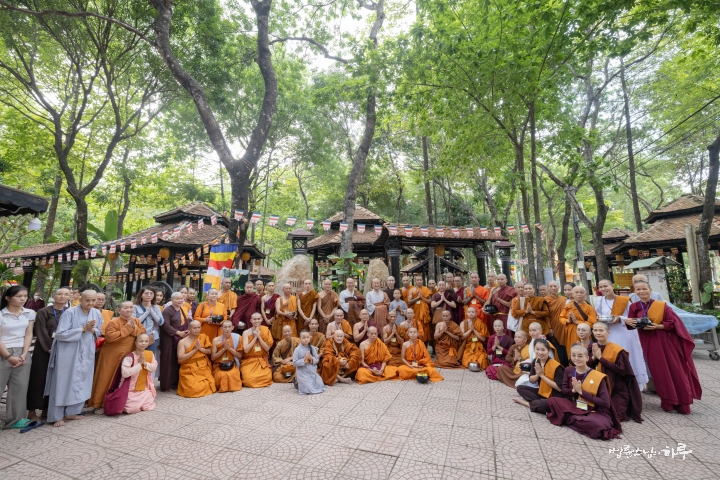
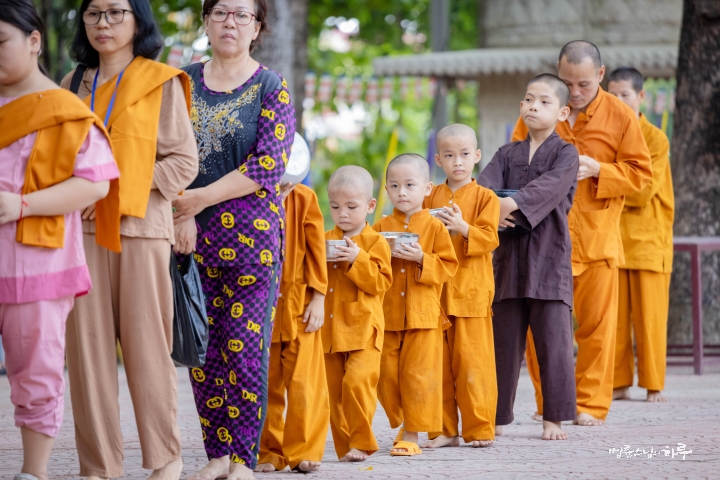
Next, lunch was served with food prepared by Phuoc Son Temple. All the monks received offerings from the devotees in their alms bowls before eating.
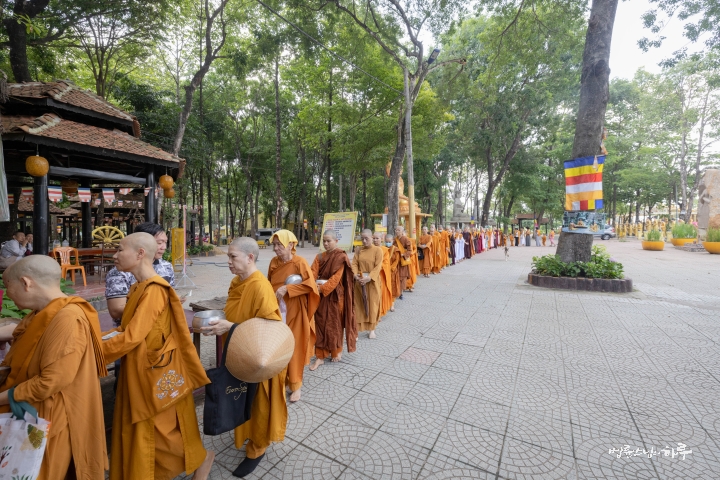
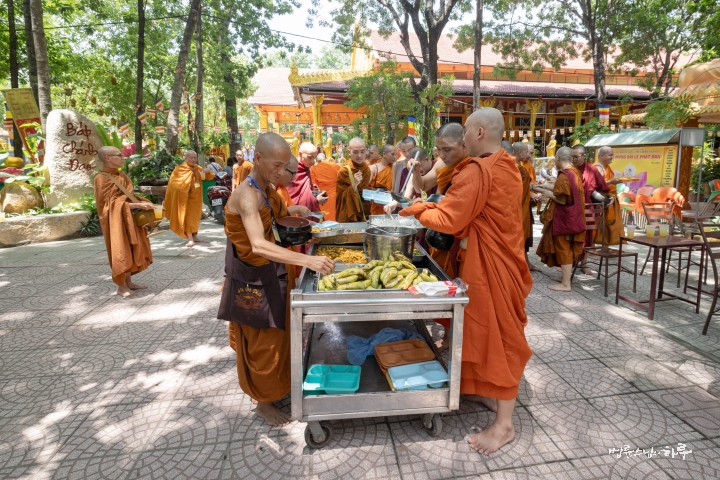
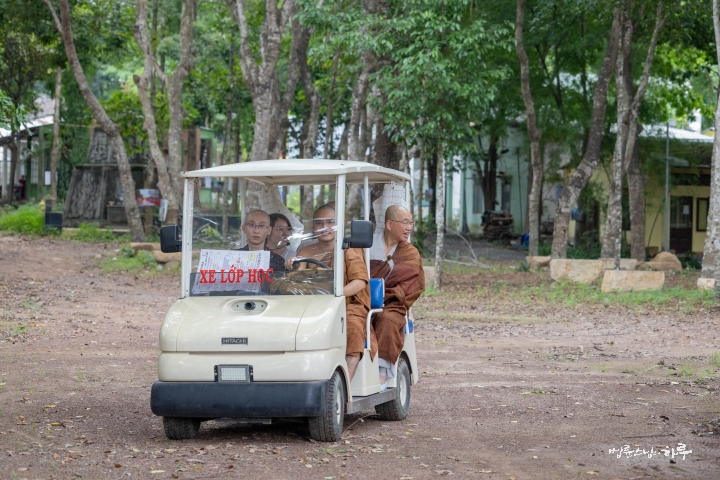
Afterwards, we took a tour of the temple. As the temple was quite large, a novice monk drove an electric cart to guide us. The living spaces for the monks varied, including single rooms and shared rooms.
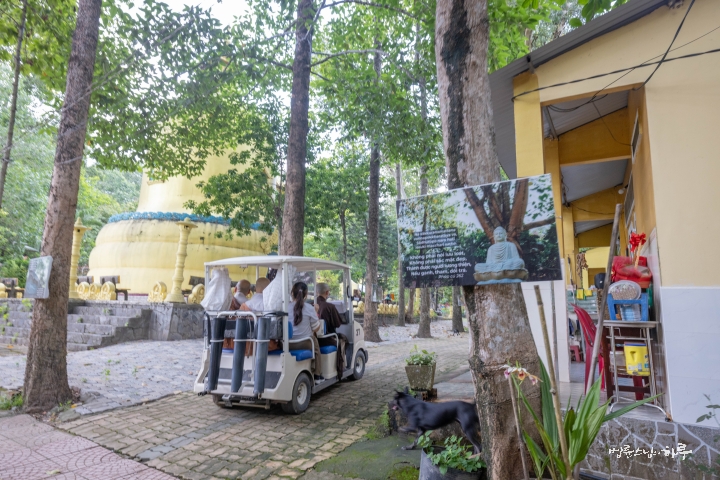
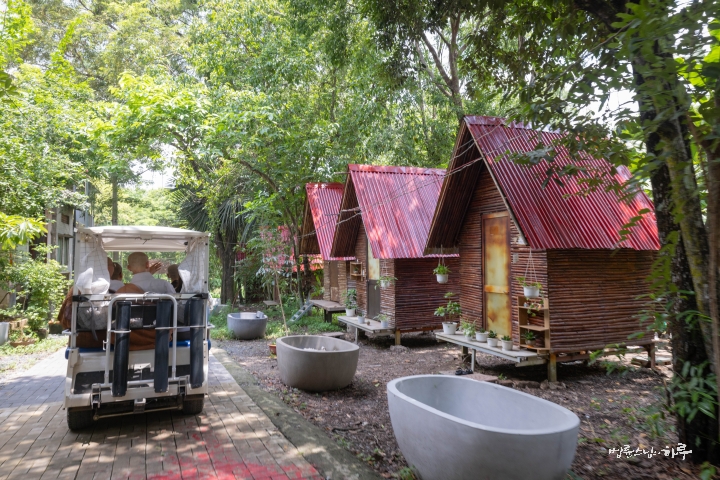
There was a very large Dharma hall and many outdoor spaces for meditation.
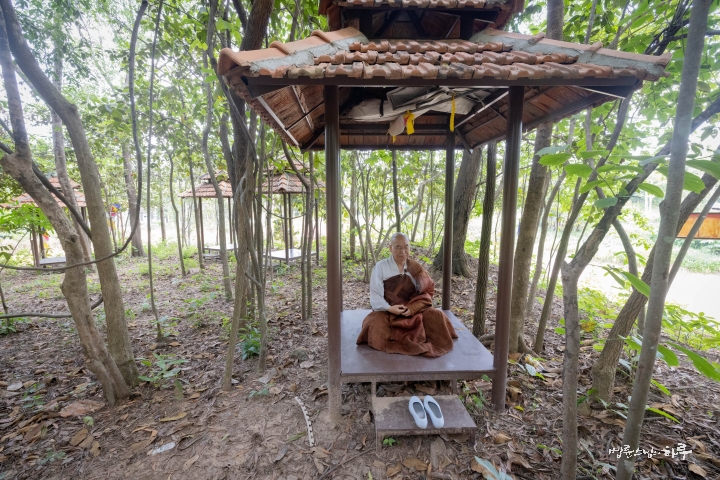
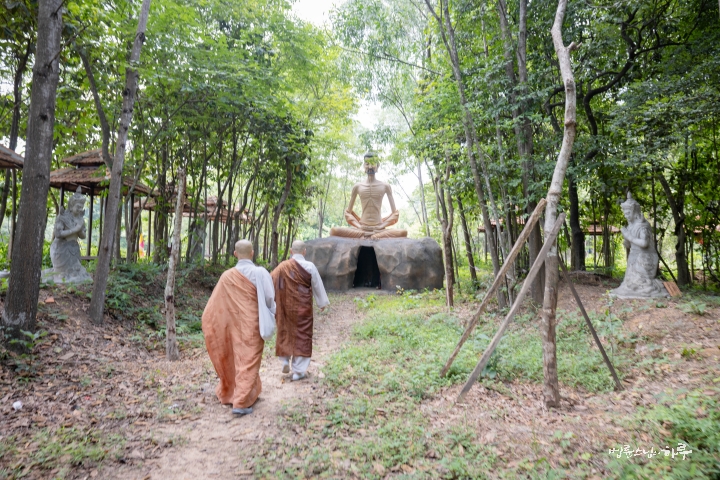
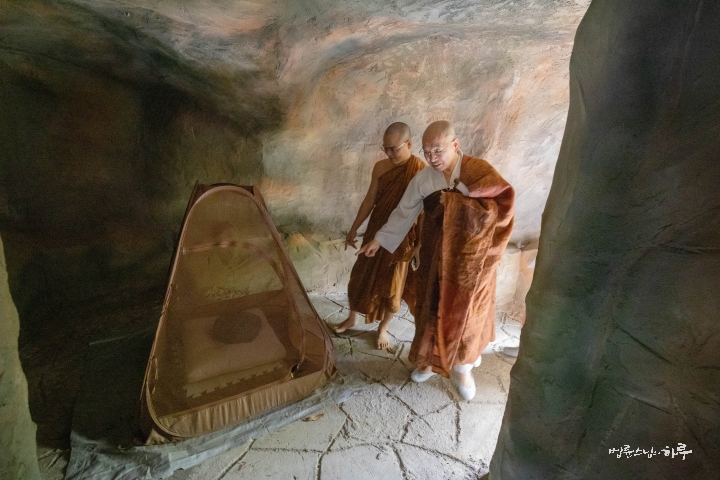
After touring the temple, we said our goodbyes.
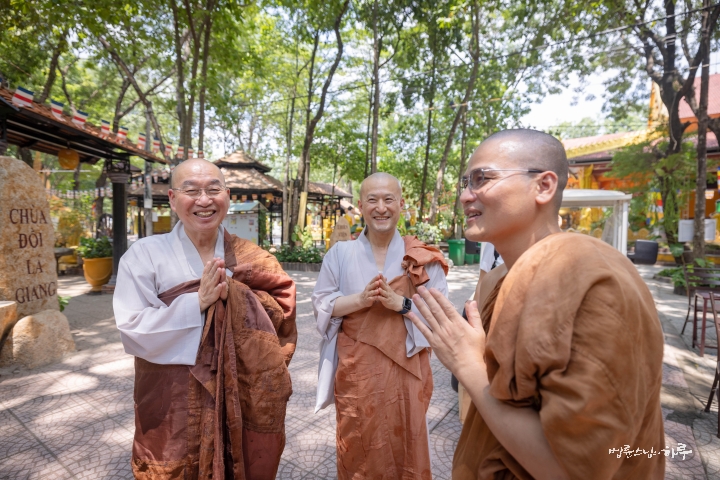
“Sunim, if there were any shortcomings in my reception of you, please forgive me.”
“There was no inconvenience at all. Thank you.”“When you come to Vietnam next time, please visit our temple again. Then, I will provide you with a private meditation space.” (Laughter)
We got back in the car and moved to the next Dharma talk location.
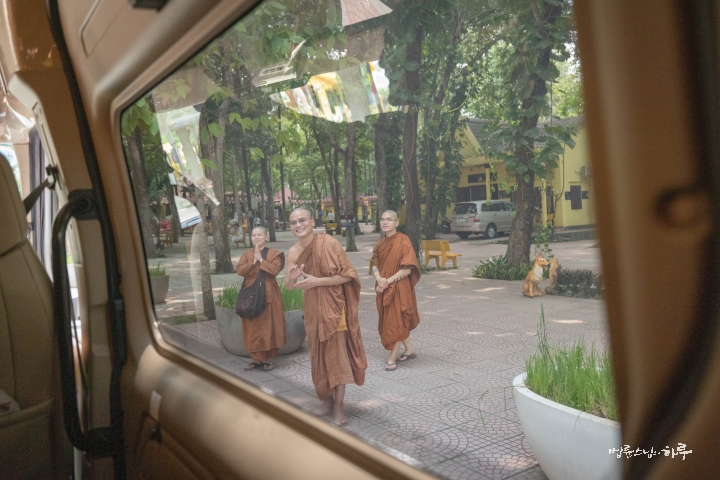
After an hour’s drive, we arrived at Quang Duc Temple in Ho Chi Minh City at 1:30 PM.
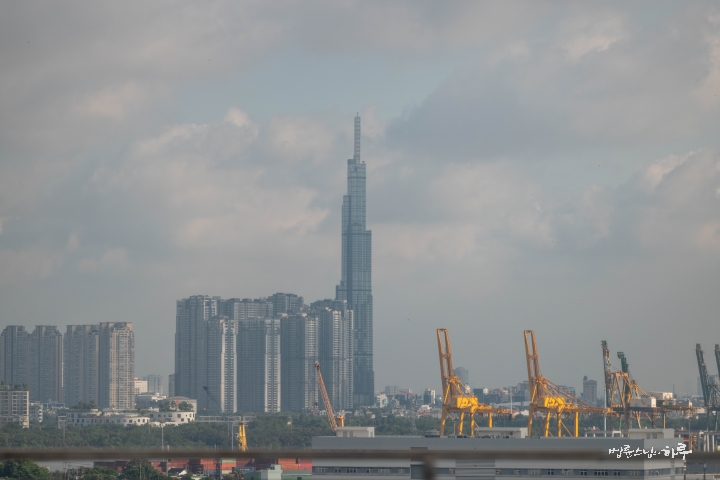
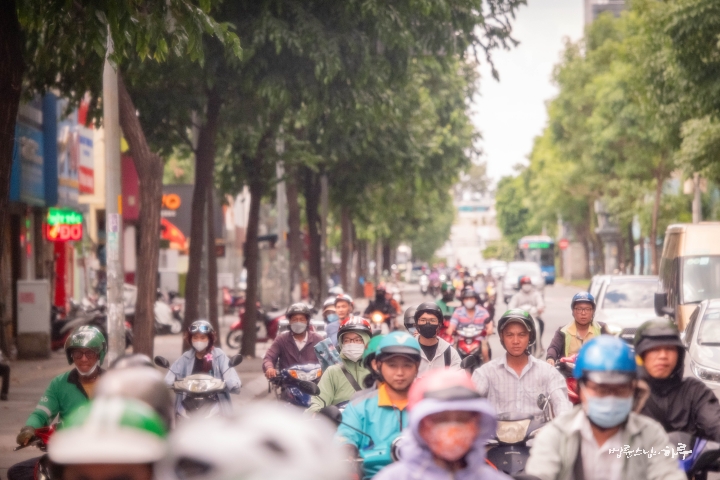
At Quang Duc Temple, Venerable Thich Phuoc Nguyen, the current Deputy Secretary-General of the Vietnam Buddhist Sangha Council, is conducting a summer retreat program for ordained monks. He visited Korea last fall when Jungto Society invited the Vietnam Buddhist Sangha Council. As Sunim got out of the car, the Deputy Secretary-General and several other monks warmly welcomed him.
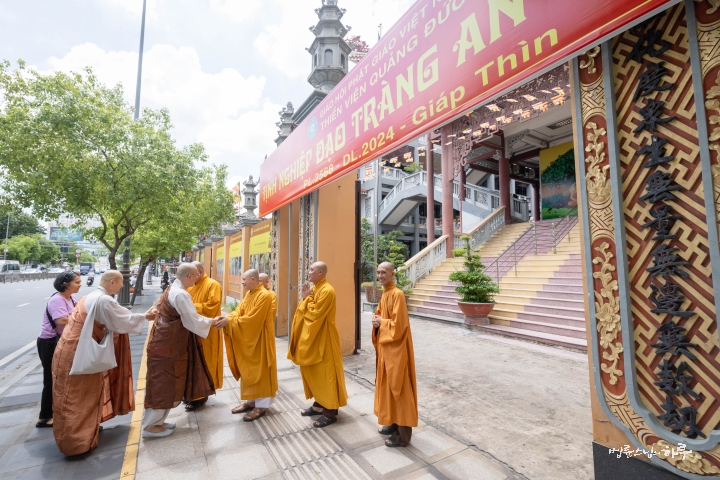
Quang Duc Temple houses the Second Secretariat of the Vietnam Buddhist Sangha Council. We moved to the reception room and had tea with the senior monks of the Second Secretariat.
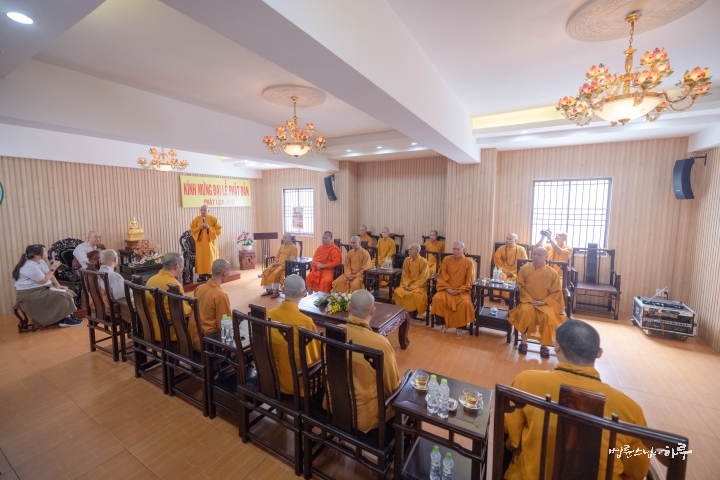
First, the Deputy Secretary-General gave a welcome speech. Due to the social atmosphere in Vietnam, the Dharma talk was suddenly reduced and changed. The Deputy Secretary-General repeatedly expressed his apologies.
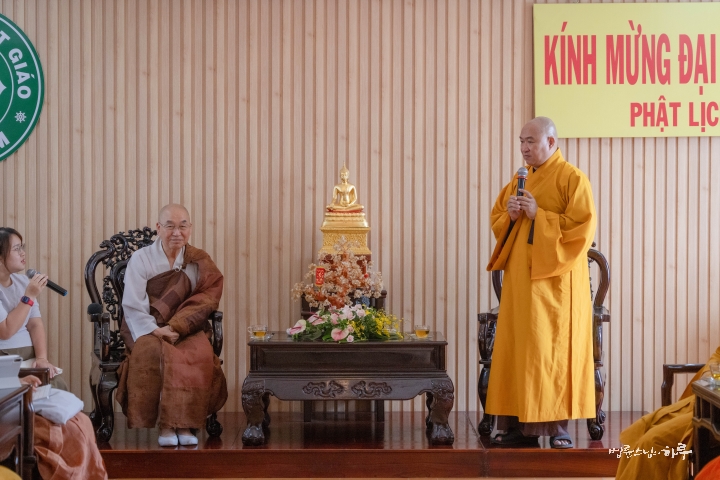
“We invited Venerable Pomnyun Sunim to share Dharma talks with the monks who are in summer retreat. This is Venerable Pomnyun Sunim’s third visit to Vietnam. Recently, there have been some unfortunate incidents in Vietnamese Buddhism. Issues related to religion have arisen, affecting Buddhism and society, and we were unable to carry out our planned publicity and volunteer activities properly. We hope Venerable Pomnyun Sunim understands and forgives this situation.
Not only myself but everyone knows who Venerable Pomnyun Sunim is in Korea. We are well aware of Sunim’s merits not only in Korea but worldwide. Our monks and young practitioners want to emulate what Sunim has done, not just in Korea but in other countries as well. Many of us monks have visited Korea, but we saw that Venerable Pomnyun Sunim doesn’t just work indoors but goes into the fields to plant and cultivate vegetables directly. He always proves himself through actions, not just words. We will always strive to follow Sunim’s life and philosophy.”
Then Sunim gave his greeting.
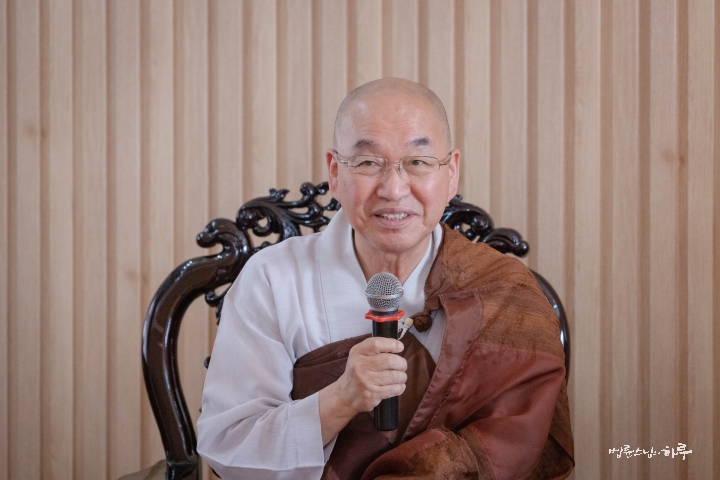
The Buddha was not concerned whether people welcomed or rejected him. If no one offered food, he simply returned with an empty bowl. The world may welcome or criticize us. But we don’t need to be bound by that. We just continue on our path. We might have planned for 100 people to gather, but only 10 might come, or we might not be able to meet due to rain. However, we continue to walk the path of spreading the Dharma.
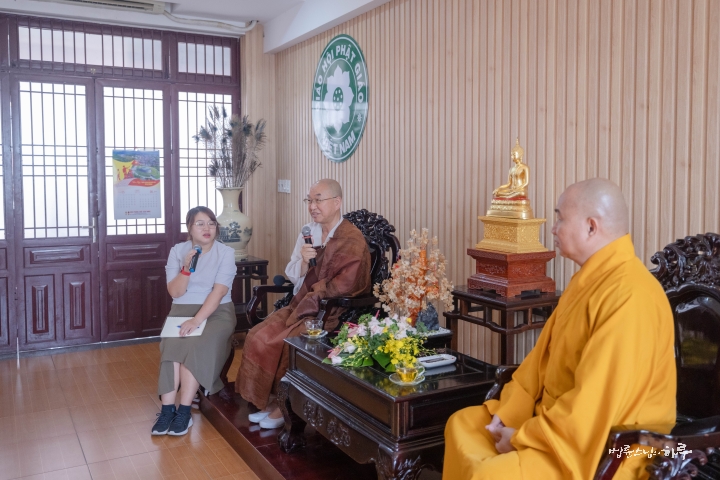
Even before Sunim finished speaking, the Vietnamese monks applauded loudly, showing their agreement with his words.
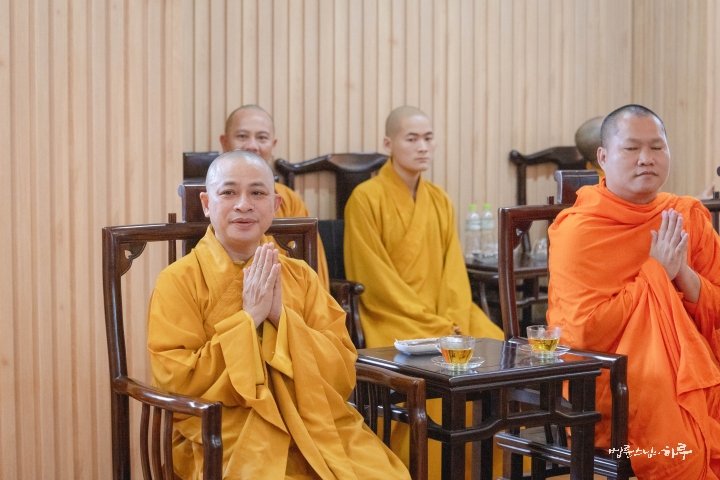
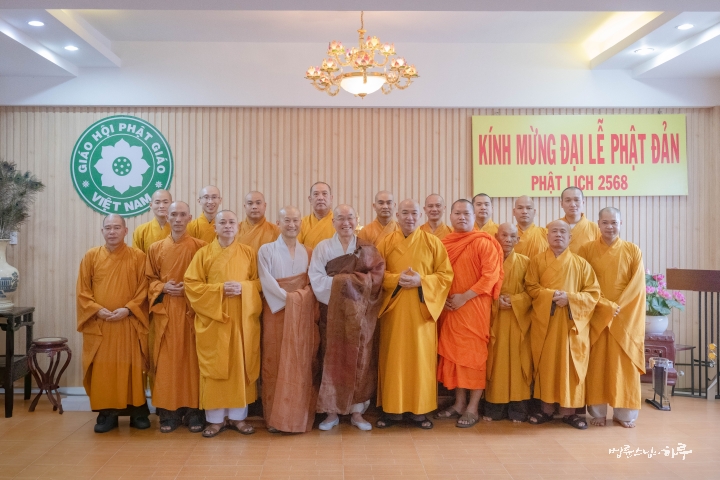
After the tea talk and taking commemorative photos, a meeting was held with the monks observing the summer retreat from 2 PM.
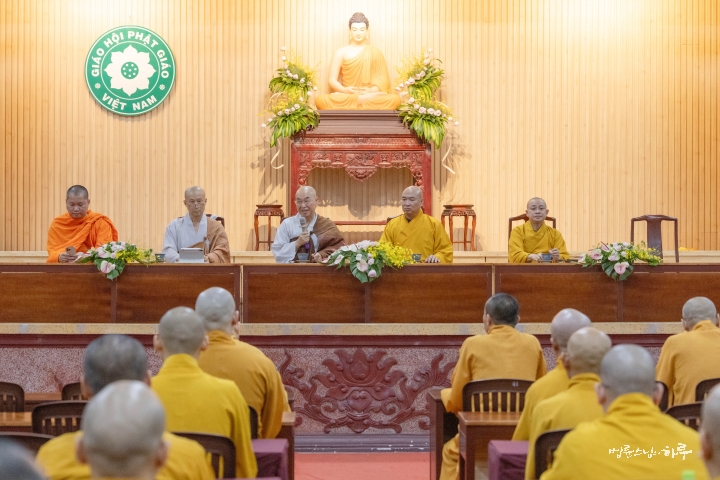
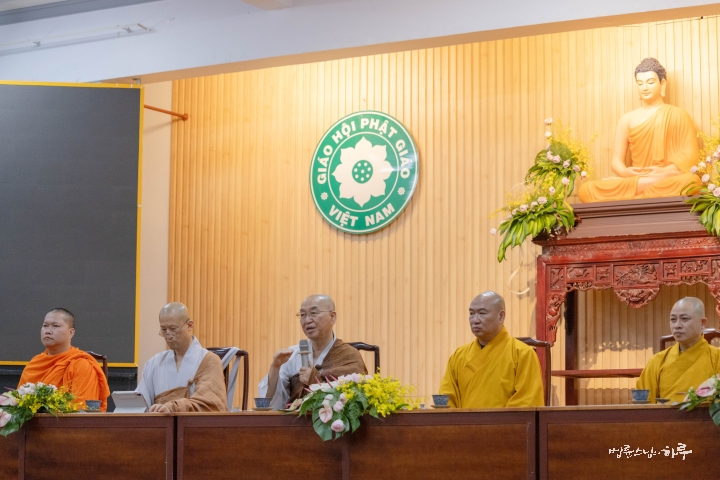
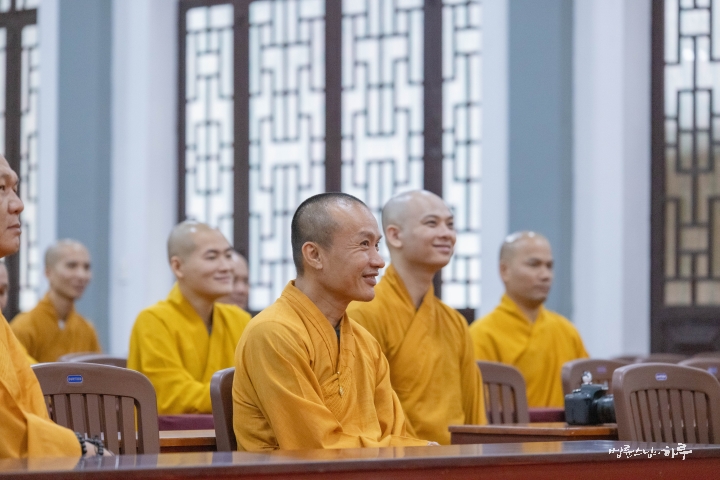
Fifty monks observing the summer retreat gathered in the hall. It was reported that these 50 monks, representing 19 provinces, were participating in the summer retreat. Most of them were young monks.
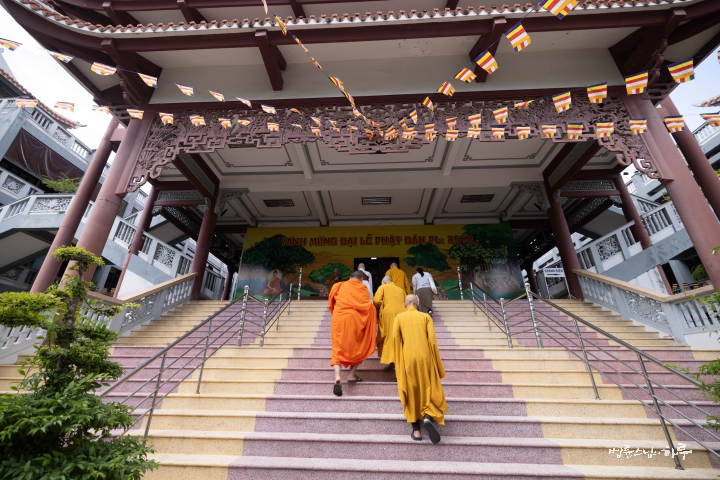
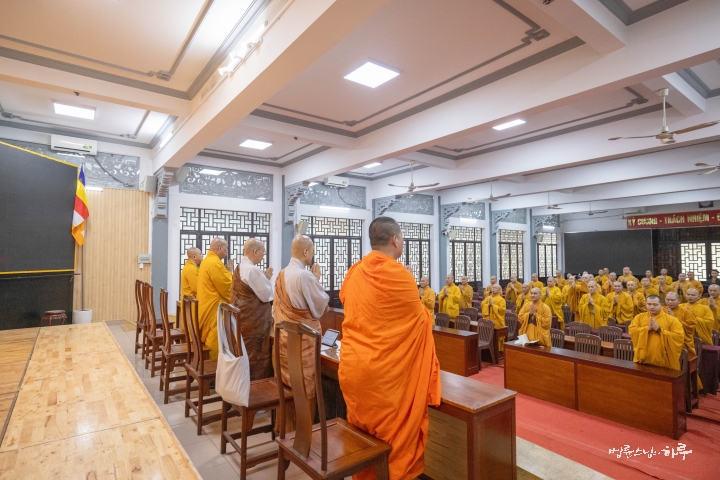
Then, while encouraging the monks in their summer retreat, Sunim spoke about the three activities that practitioners should engage in.
Three Activities a Practitioner Should Engage In
Sunim believes that those who follow the Buddha’s teachings should focus on three things. First is practice. Practice means maintaining a state free from afflictions and suffering in one’s mind. The goal of practice is to attain Nirvana. We should always maintain a state free from suffering. If there is suffering, we should be aware of it, thinking, “There is suffering.” With awareness, the mind settles again. We should maintain equanimity while maintaining awareness. The goal is to reach a state free from suffering. When doing any task, the body may get a little tired, but we shouldn’t be mentally stressed. If we can work without stress, we can continue that work.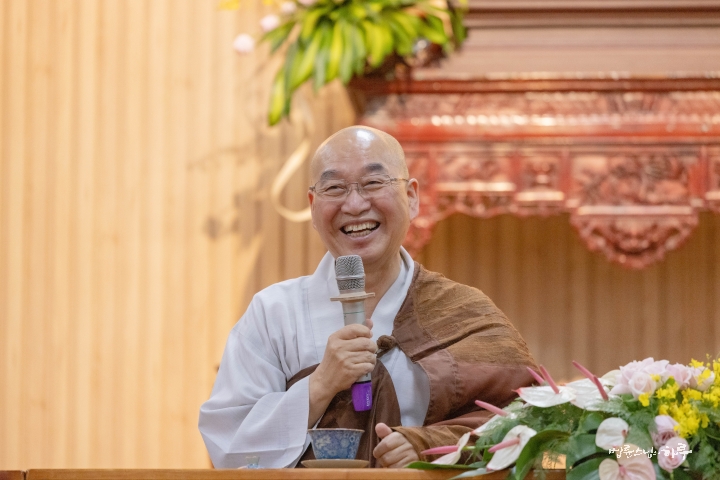
Third is social practice. In this world, many people suffer from survival hardships unrelated to the Buddha’s teachings. Some are starving due to lack of food, some are sick but can’t receive treatment due to lack of medicine, some have become refugees due to war, and some children can’t go to school due to poverty. It’s not appropriate to tell such people to believe in the Buddha’s teachings. We should first give water to the thirsty, food to the hungry, medicine to the sick, and ensure children can go to school and learn. Only after that should we spread the Dharma. Therefore, we must practice helping those in need.
Moreover, excessive human desires are now causing a climate crisis. Many people mistakenly believe that consuming more means living well. We need to awaken people to the fact that such desires are leading humanity to destruction. So, we need to demonstrate that we can live happily while being frugal. In this era of climate crisis, we should engage in environmental movements to reduce consumption and promote recycling.
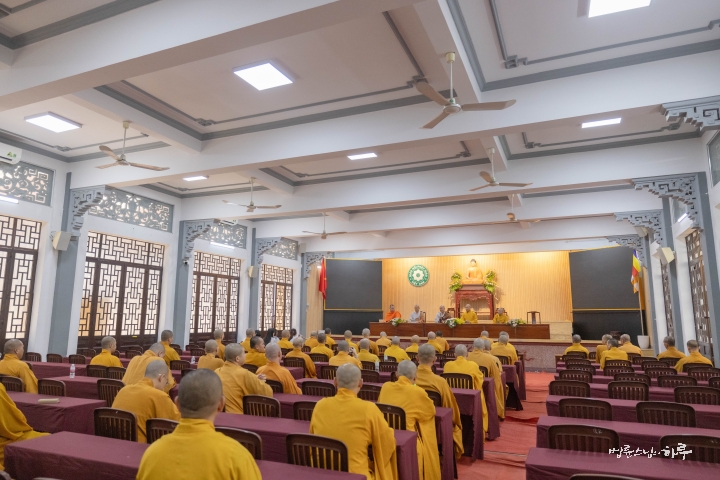
I hope you will adopt this perspective in your practice, in spreading the Dharma, and in your social engagement activities. Right now, you’re in the middle of your summer retreat, so you should focus on your practice. When the retreat ends, I hope you will engage in spreading the Dharma and social activities. Whatever you need, I will be there with you. Although we are from different countries and have different nationalities, we are all disciples of one Buddha (一佛弟子). We are disciples of the same Buddha. Therefore, we are Dharma friends and brothers and sisters in the Dharma.”
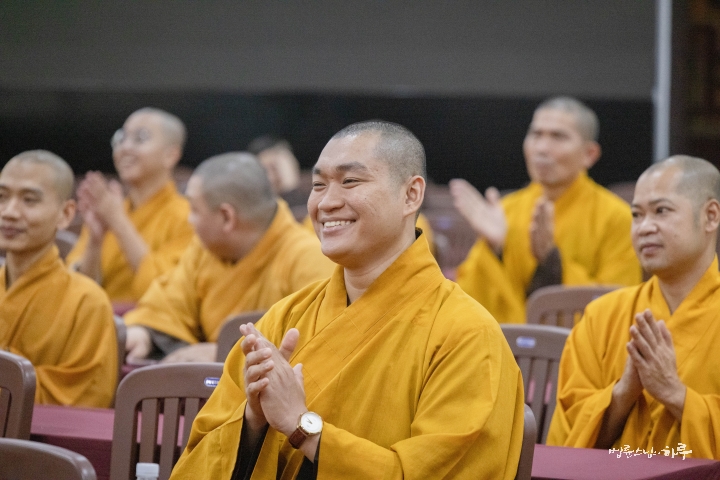
After that, Sunim received questions about various topics. After Sunim answered, the Deputy Secretary-General asked additional questions, and then other monks inquired about their curiosities, leading to a free-flowing conversation.
One of the monks mentioned that he had learned about the declining Buddhist population in Korea and asked for Sunim’s advice on how to develop Buddhism further.
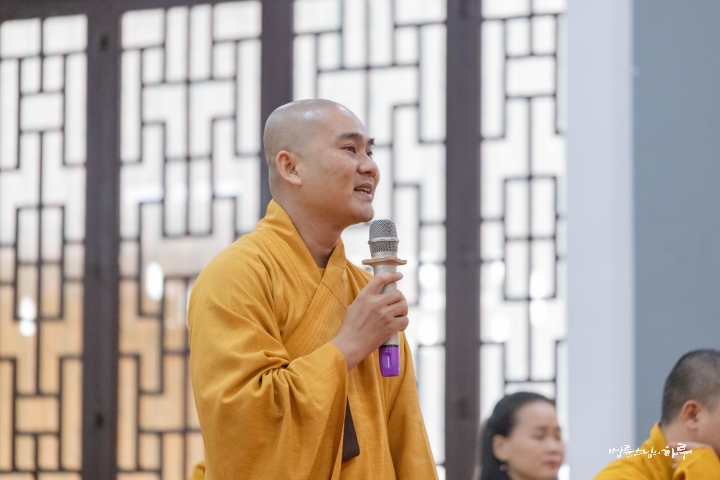
How Can We Develop Buddhism as the Buddhist Population Declines?
“I haven’t been to Korea yet, but I learned through social media that the Buddhist population in Korea is gradually decreasing. It seems that young people, in particular, hardly believe in Buddhism. I would like to know the reasons for this. How do you think we can consistently develop Korean Buddhism?”
“Don’t you think young people don’t believe in Buddhism because it doesn’t solve the difficulties they face in life? That’s why I believe we should focus on ‘how Buddhism can solve the difficulties young people face’ rather than setting a goal to increase the Buddhist population.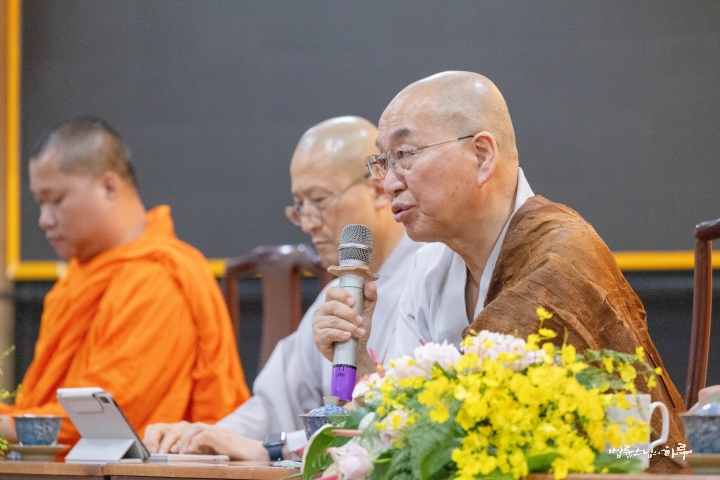
Also, people used to rely heavily on religion when facing death. We all have a fear of death. So, people would perform ancestral rites or hold memorial services. This acted as a factor in bringing people to temples. However, for today’s young people, this also doesn’t offer much benefit.
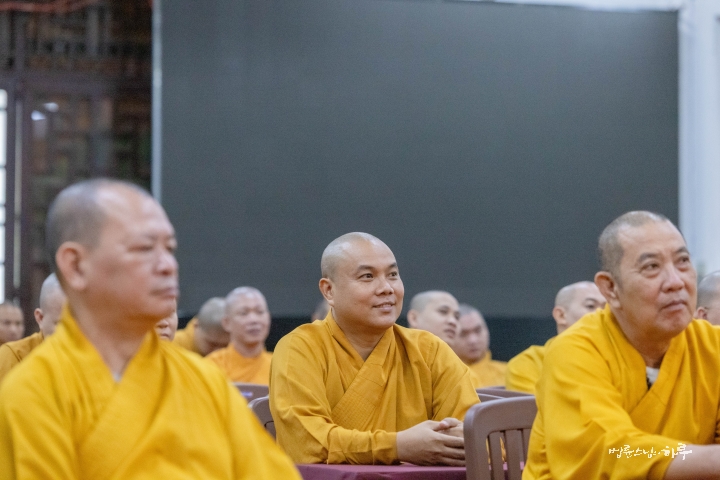
We must return to the original teachings of the Buddha. The original teaching of the Buddha is to reach a state without suffering, that is, nirvana. The ultimate goal of practice is to attain nirvana. Nirvana is not impossible. If we practice according to the Buddha’s teachings, we can live without suffering. We need to open the door for people in the world to practice these teachings in their daily lives. The original teaching of Buddhism is to help all people break free from suffering.
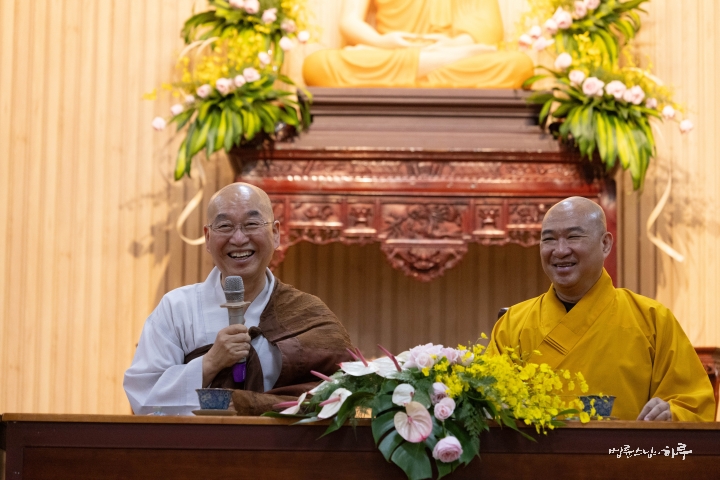
After two hours of conversation, the Dharma talk concluded at 4 PM.
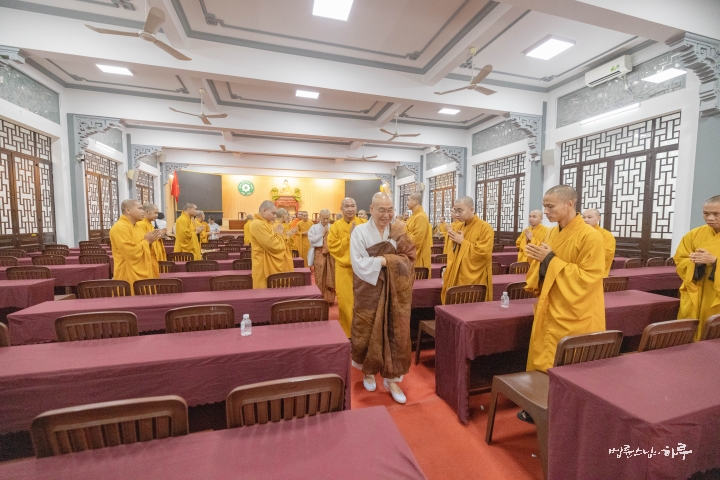
Leaving the hall, Sunim took a commemorative photo with the attending monastics.
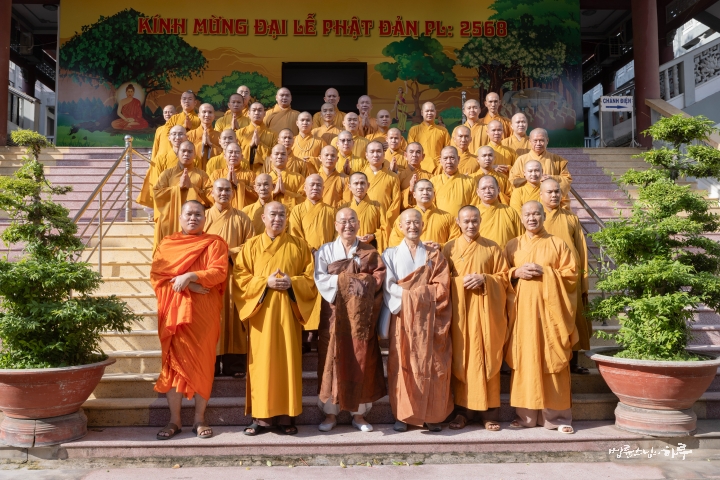
Sunim gifted each of the participating monastics a copy of his book translated into Vietnamese, then left Quang Duc Temple with a promise to meet again.
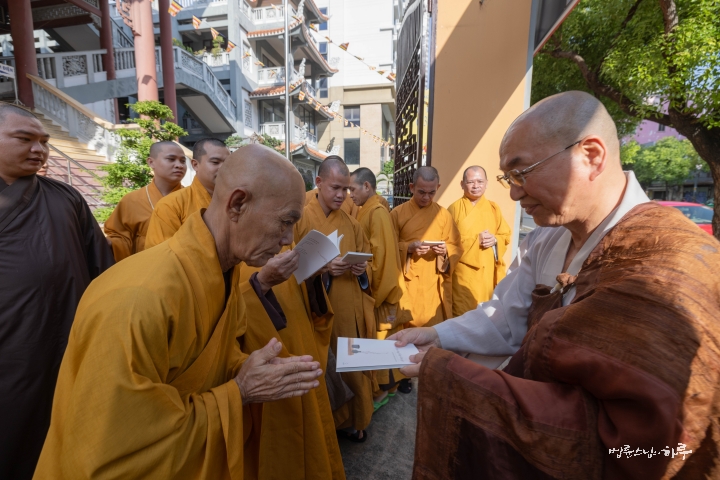
He then boarded the car to return to the lodging. After a 50-minute drive, he arrived at the accommodation at 5 PM, concluding the day’s schedule.
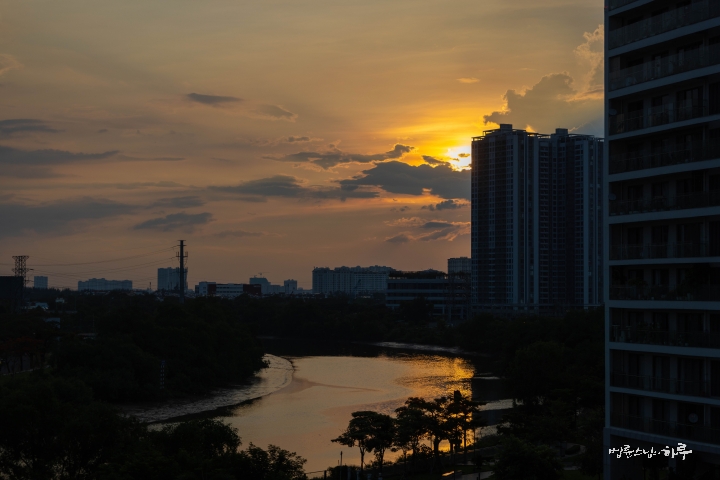
After having dinner at the lodging, the group discussed the next day’s schedule, and Sunim retired early.
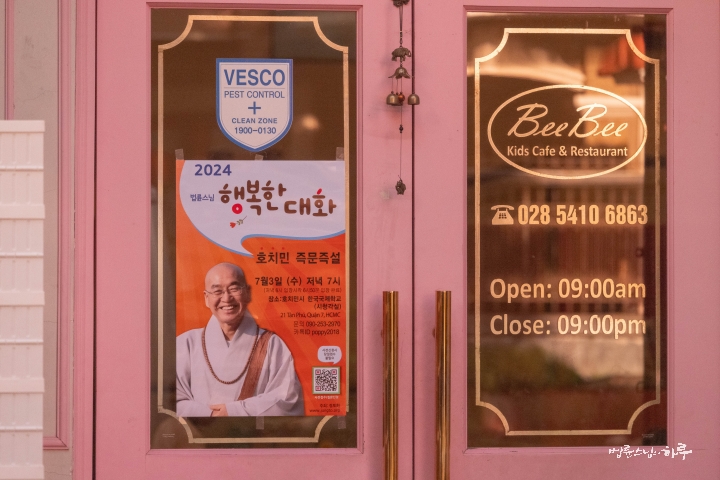
Tomorrow’s plan includes having lunch with Jungto Society members living in Ho Chi Minh City, Vietnam, visiting a traditional market in the afternoon, and having a conversation with practitioners at Giac Ngo Temple in the evening.