We Can No Longer Visit the Cheongsanri Battle Site
Aug 6, 2025 - Day 4 of the Northeast Asian History Tour: Mount Baekdu Cheonji Lake, Cheongsanri Battle Site
Hello. This is the 4th day of the Northeast Asian History Tour. Today, we’re ascending to Cheonji Lake at Mount Baekdu, our nation’s sacred mountain.
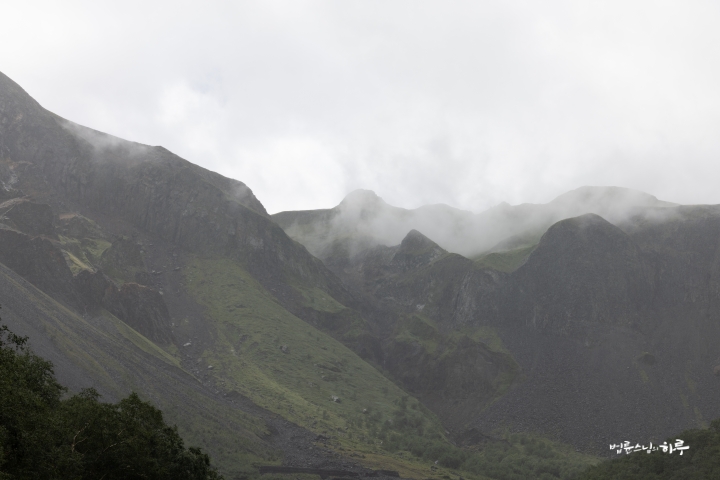
The tour group, having arrived at their accommodation after midnight, caught a brief rest before departing at 5 AM from Idobaekha toward Mount Baekdu’s Cheonji Lake.
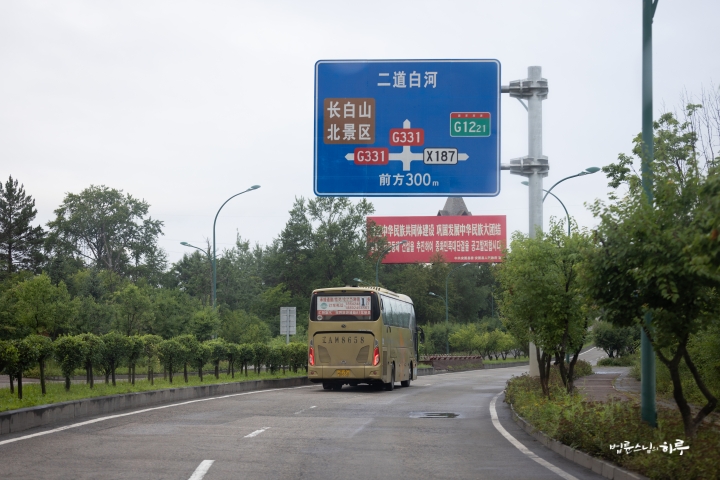
Once everyone boarded the bus, Sunim’s voice came through the transceiver.
“Yes.”
As the bus climbed steadily toward Mount Baekdu, Sunim explained about the mountain.
“Mount Baekdu is a volcano. There are two main types of volcanoes: stratovolcanoes, where viscous magma rises to form a cone shape, and shield volcanoes, where fluid magma flows far to create a shape like a pot lid or conical hat. Ulleungdo is a stratovolcano, while Mount Baekdu and Mount Halla are shield volcanoes.Why Mount Baekdu’s Cheonji Is Not Just a Simple Lake
When a volcano erupts, it first releases enormous amounts of dust along with gases, followed by magma flow. When magma is fluid, it flows far, creating gentle slopes. When magma discharge stops, a volcanic body forms, and water collecting in the cooled crater is called a crater lake. However, when repeated eruptions occur from the same crater, it gradually enlarges until the peak disappears, creating a wide collapsed structure. Water collecting in such a large, wide crater is called a ‘caldera lake.’ Mount Halla has a ‘crater lake,’ while Mount Baekdu’s Cheonji is a ‘caldera lake.’ You can see typical caldera lake formations in the Philippines, where water collects in craters from major volcanic eruptions to form lakes, then another eruption creates a volcano within the lake. This creates another crater, and when water collects there, another lake forms. This creates multiple volcanoes within volcanoes, lakes within lakes. The Taal Volcano south of Manila, popular among Korean tourists, was formed by two volcanic eruptions.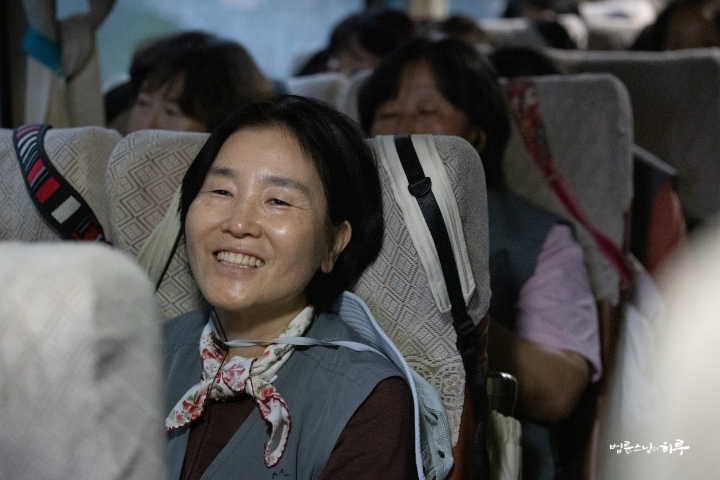
We learned about Mount Baekdu from various historical and scientific perspectives. Then we sang the “Mount Baekdu” song together with vigor.
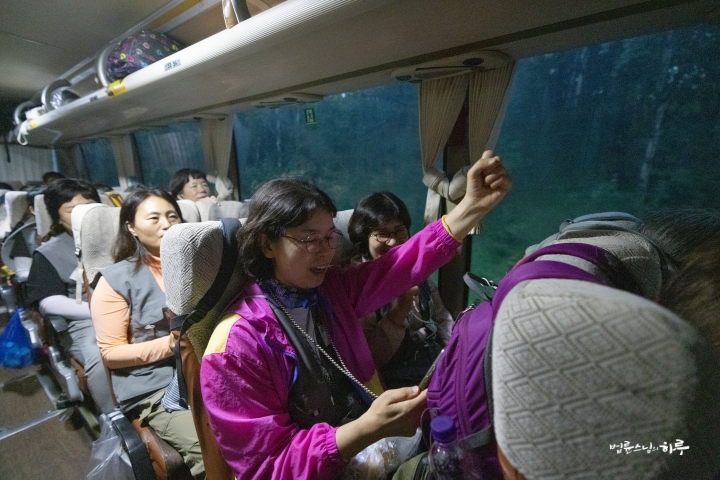
Let’s go to Mount Baekdu, to our Mount Baekdu ♬ Where the fresh breath of our people lives and breathes ♬
While singing together, we arrived at Mount Baekdu’s Huangsongpu Transfer Center at 5:50 AM. Thanks to staff who had pre-purchased tickets to the second ticket office, we passed through the first ticket office easily.
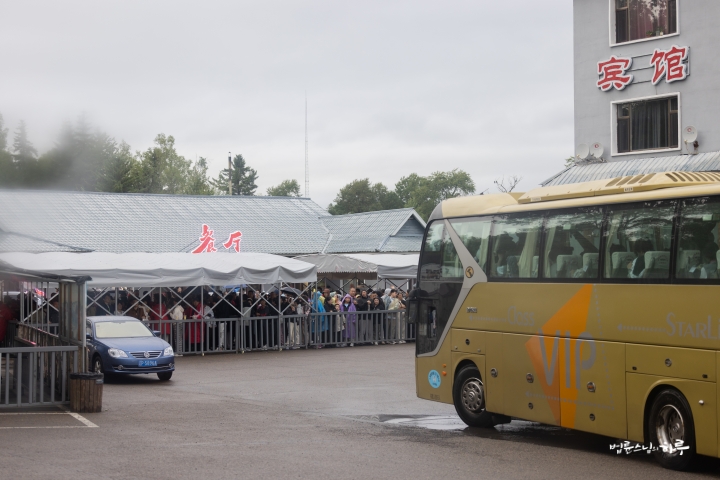
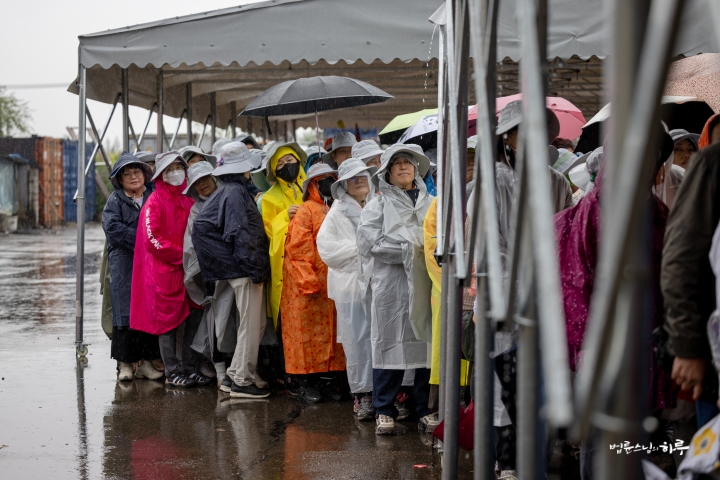
Despite the rainy weather, the ticket office was bustling with tourists. Over 30,000 people visit Mount Baekdu daily on average. Since not everyone can ascend to the summit simultaneously, the management office admits tourists in timed intervals. After waiting over an hour, we transferred to shuttle buses at 7:10 AM and moved to the next station.
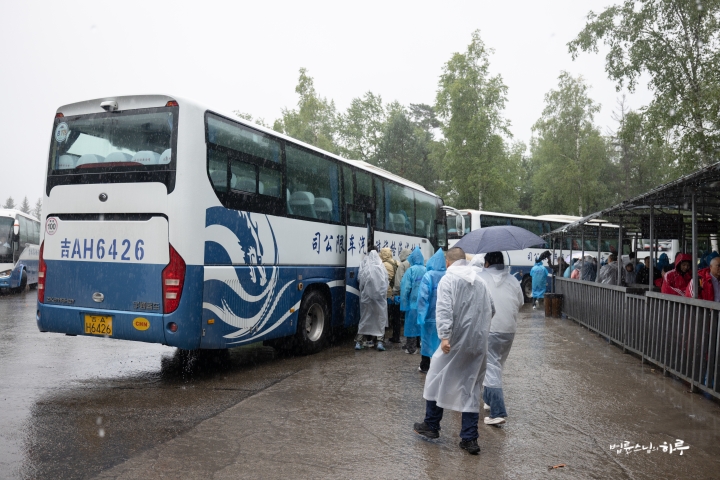
After about 30 minutes on the shuttle bus, we could feel Mount Baekdu’s Cheonji getting closer.
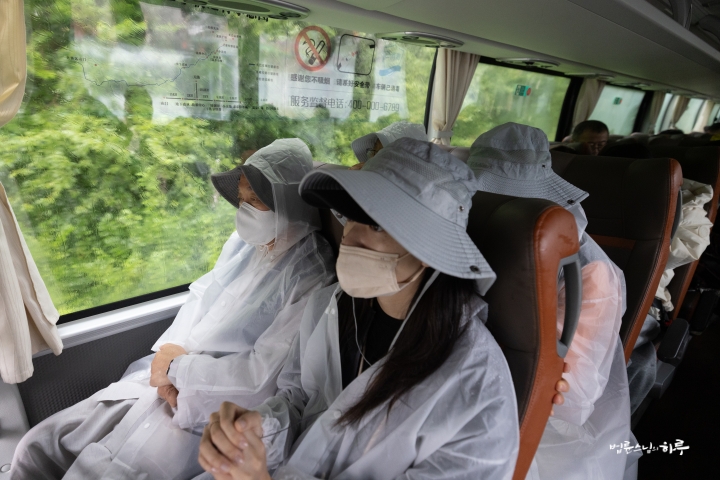
At 7:45 AM, we transferred to vans. From this point, the steep and winding roads require van transportation.
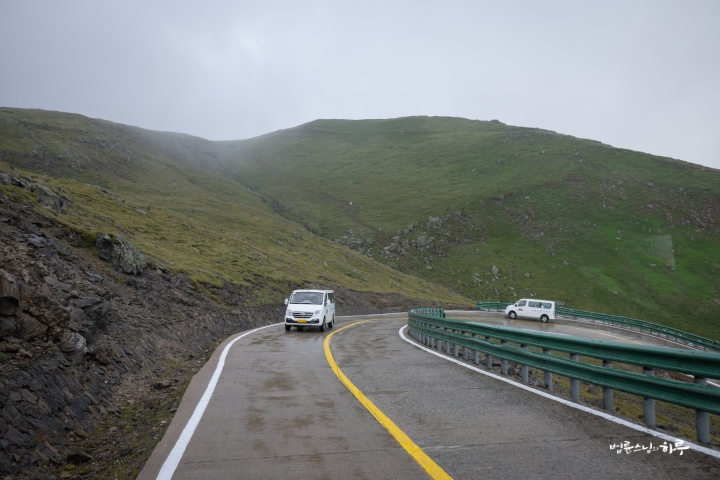
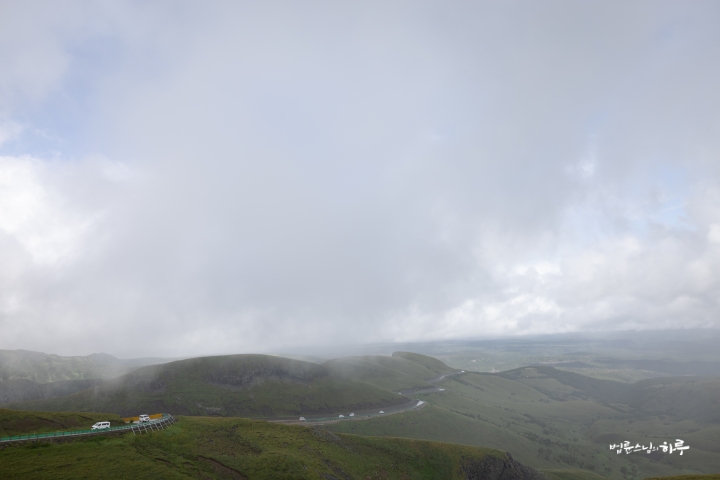
Winding roads led up to the summit at over 2,600 meters elevation. We headed toward the summit, enjoying the thrilling ride thanks to the drivers’ acrobatic driving skills.
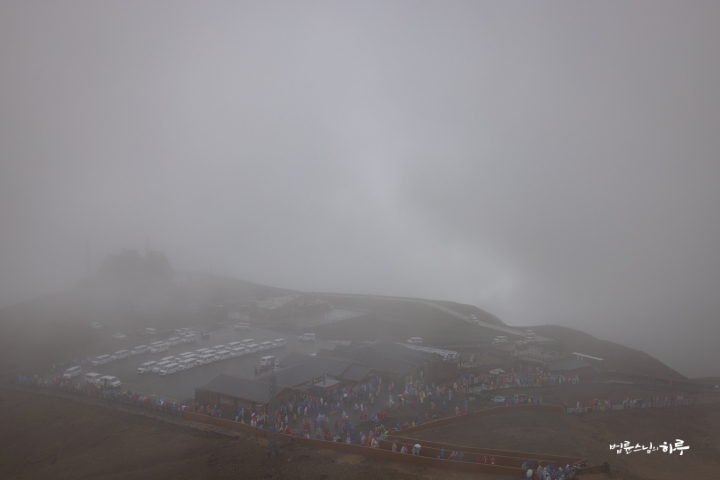
We reached Mount Baekdu’s summit at 8:10 AM. Upon arriving, we found ourselves completely enveloped in clouds with driving rain. Many people had already arrived and were climbing toward the peaks.
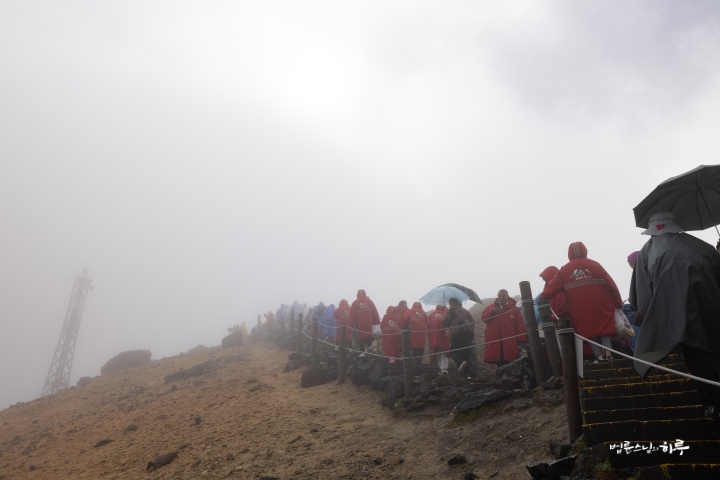
Everyone was delighted just to have set foot on Mount Baekdu’s summit, despite facing the wind with their whole bodies. Through the haze, we climbed step by step onto the ridge.
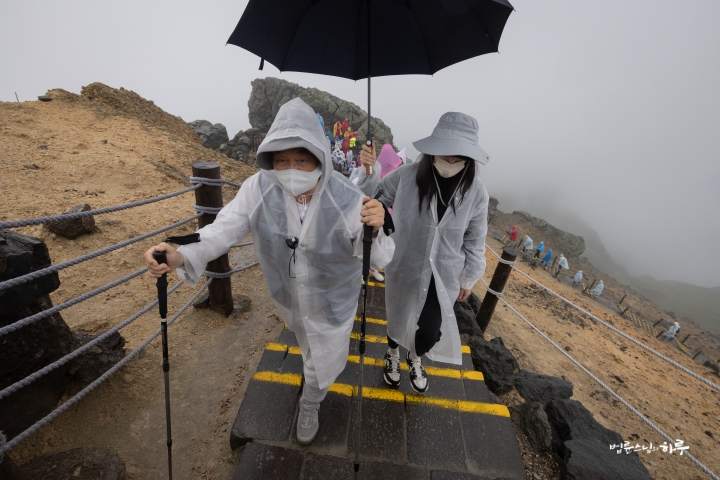
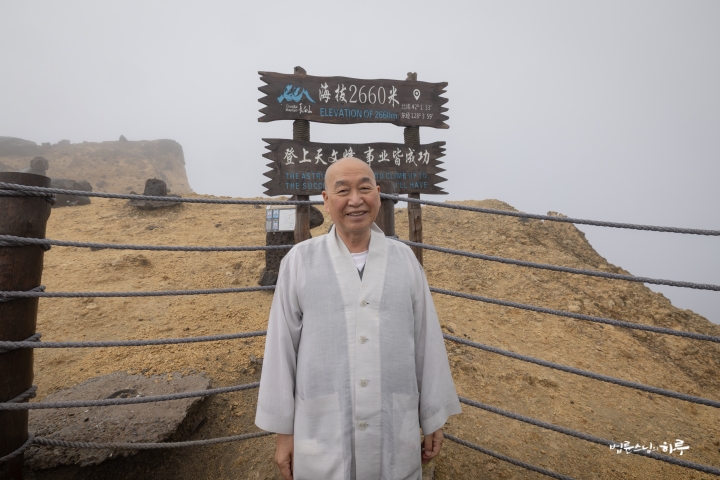
Despite the heavy clouds, Sunim arrived at Cheonmun Peak at 2,660 meters elevation and gave a brief introduction through the transceiver.
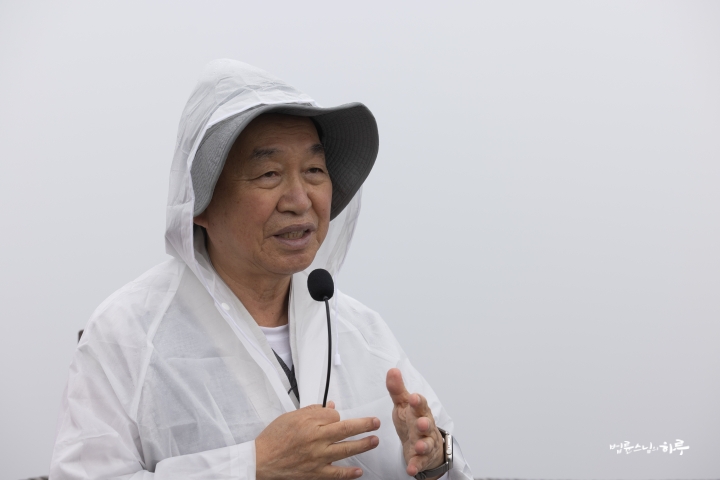
There were so many Chinese tourists that it was difficult even to find a spot with a view of Cheonji. We tried to take group photos but couldn’t secure a position among the massive crowds. We gave up on photos and waited, hoping the fog might clear.
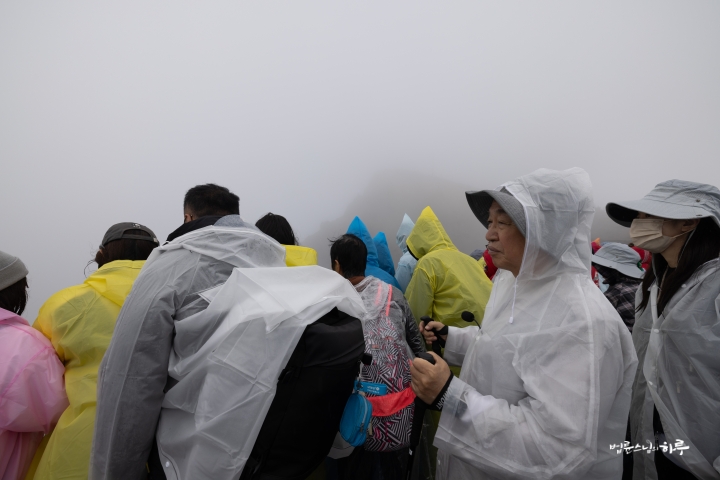
We strained our eyes looking down from the summit, but Cheonji wasn’t even visible in outline. Only fierce winds greeted us. Sand flew up and hit our faces. Those who were cold and tired went down first, while the rest waited about another hour.
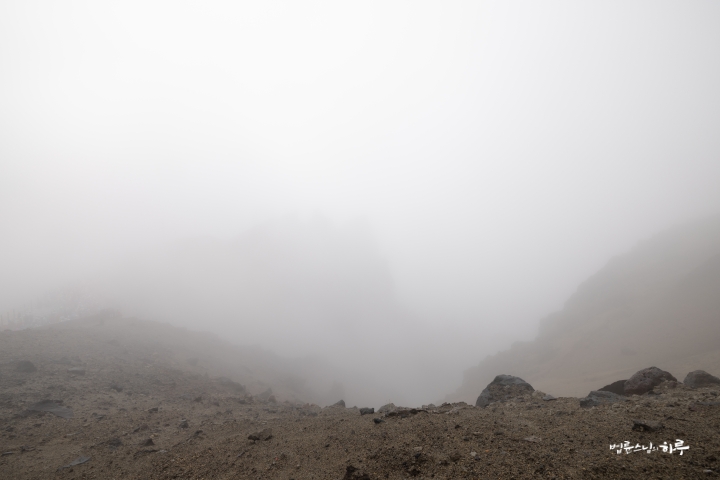
As the sun appeared and disappeared between clouds, people couldn’t leave and stood clinging to the ridge watching for Cheonji. Then the clouds suddenly rose higher into the sky, and the jade-colored Cheonji briefly revealed itself.
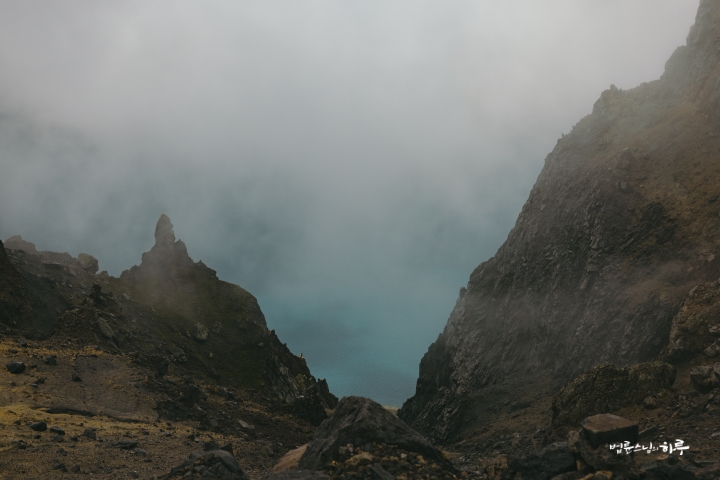
“Wow! I can see it!”
Cheonji was barely visible. Then thick fog rolled in again, obscuring everything. It was like playing hide-and-seek. The weather changed moment by moment.
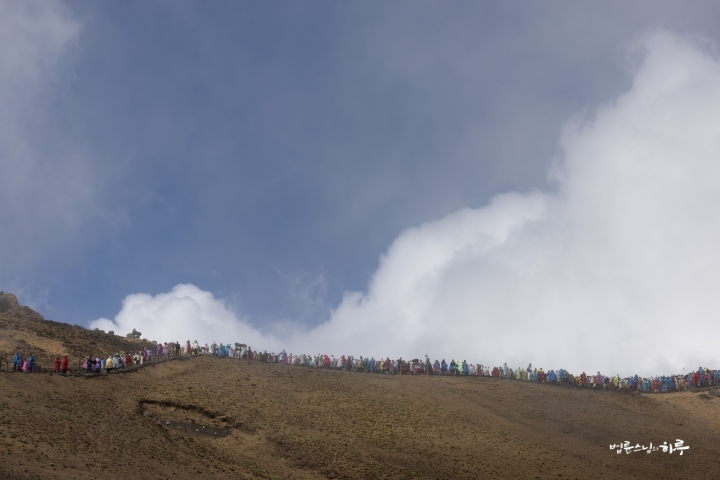
After waiting longer, the clouds cleared considerably this time. The entire view of Cheonji appeared very briefly. Exclamations erupted again.
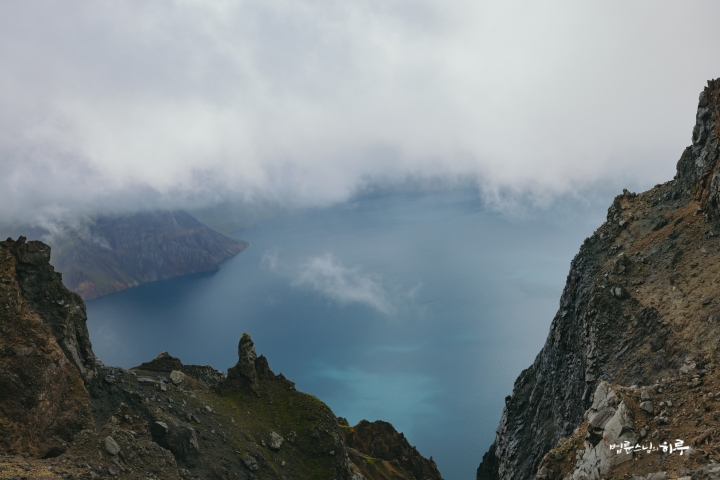
“Wow! I can see Cheonji!”
The wait was worthwhile. Though it wasn’t clear weather, we experienced Mount Baekdu’s summit with its clouds and winds. Everyone was happy to have seen Cheonji after all.
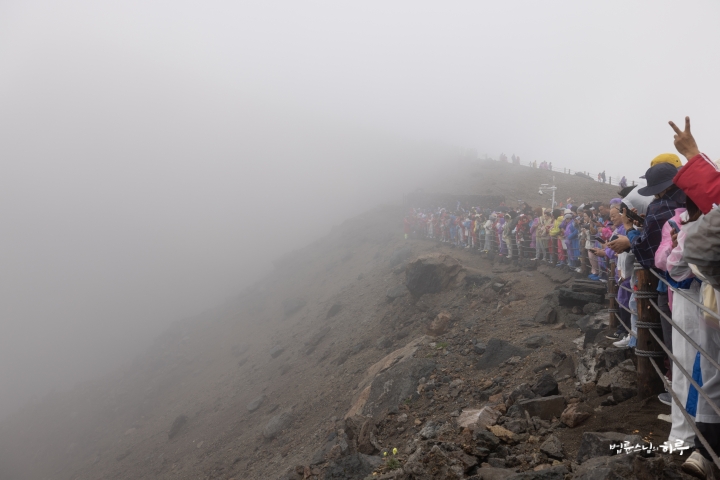
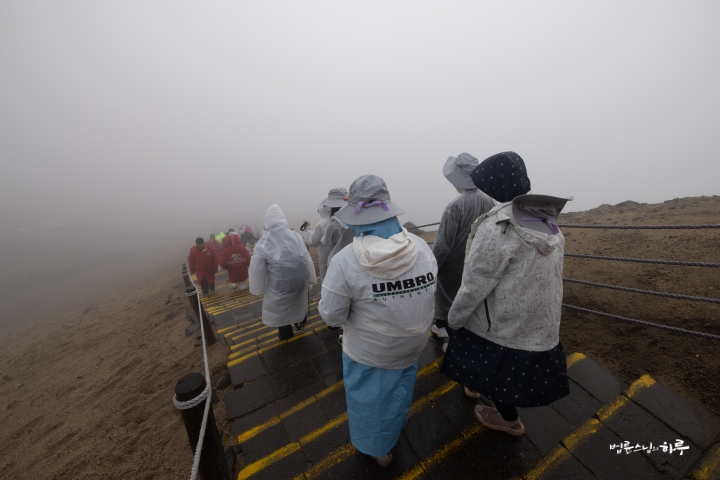
After capturing Mount Baekdu’s Cheonji in our hearts, we began descending at 9:30 AM.
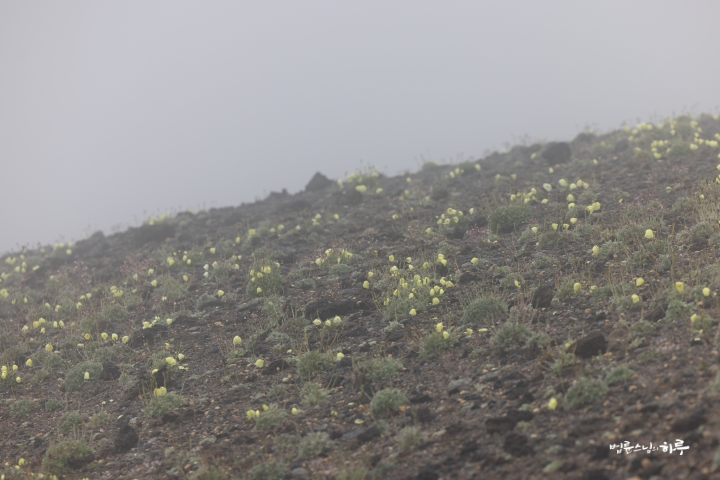
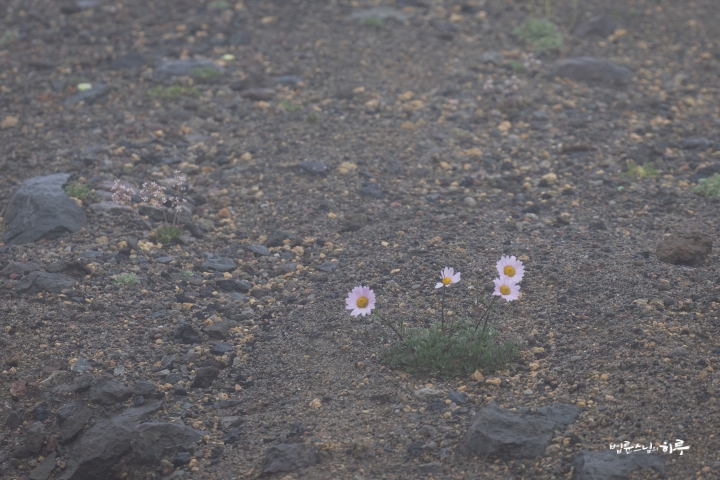
Looking closely, wildflowers bloomed throughout the mountain. They sprout under the snow and bloom all at once as soon as it melts, then bear fruit. It was truly wondrous to see them blooming with all their might to complete their lives in such a short time.
We rode the vans again, descending the steep slopes like a roller coaster, twisting and turning. The endless landscape stretching below the sky opened our hearts.
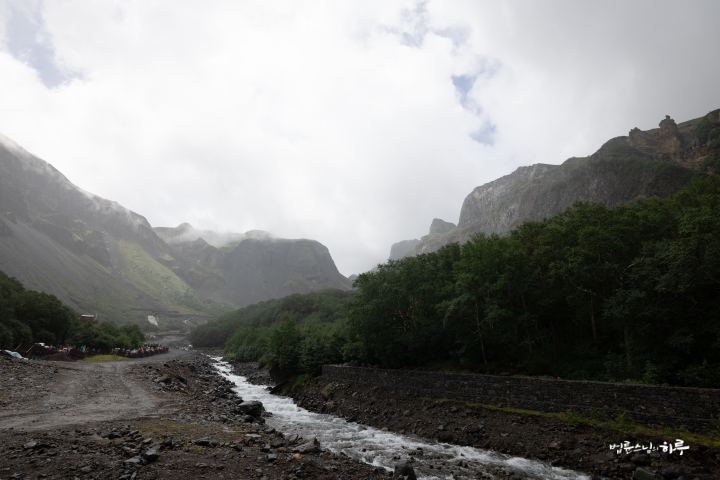
Next, we headed to Biryong Falls. After getting off the shuttle bus and walking along wooden stairs, we saw hot spring water steaming here and there, and in the distance, white water cascading powerfully down between gray volcanic terrain – Biryong Falls.
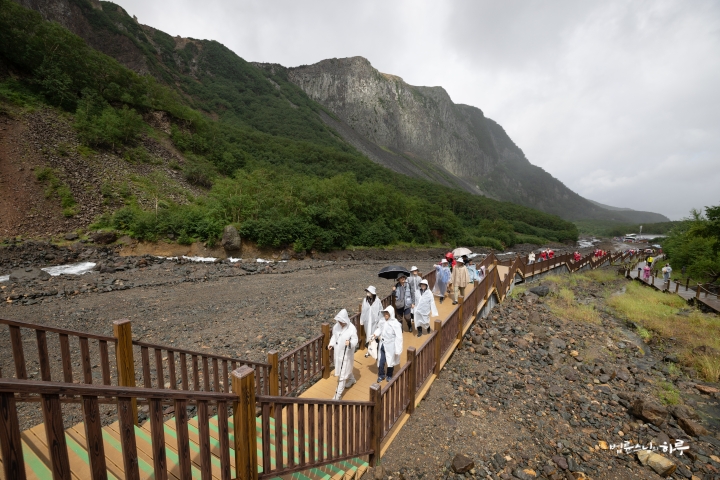
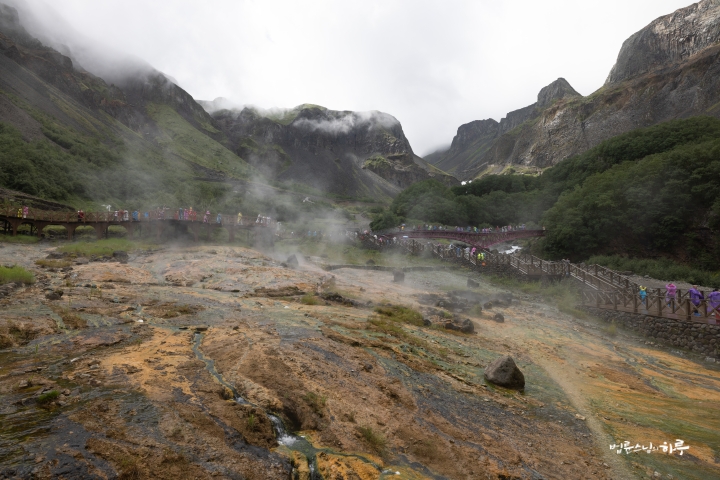
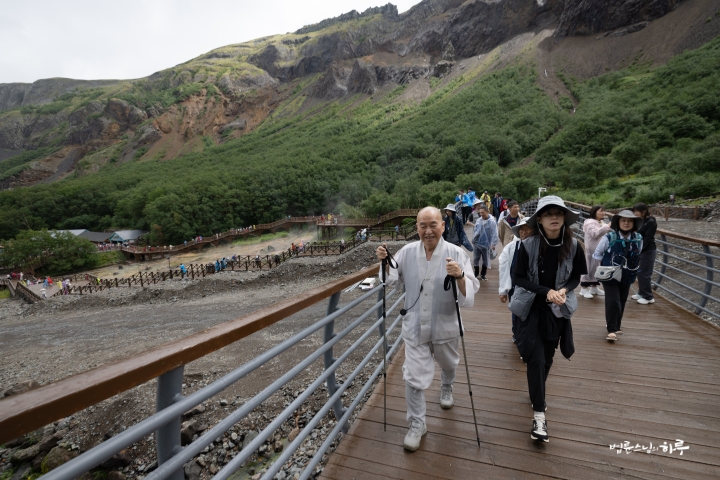
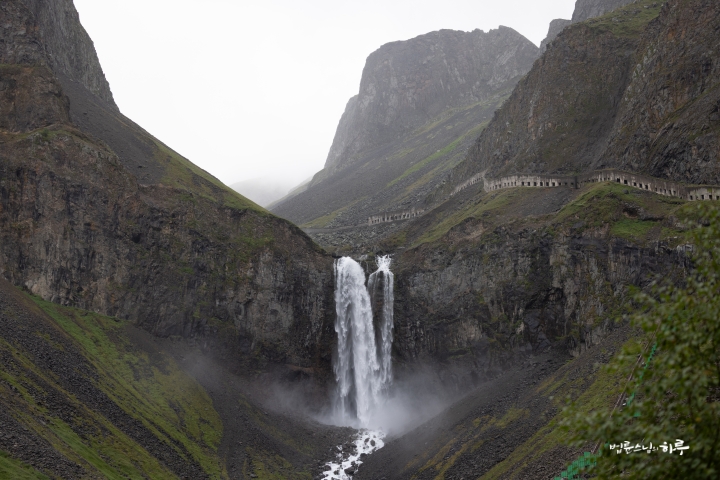
After taking commemorative photos at Biryong Falls, we walked down to Socheonji (Small Heaven Lake).
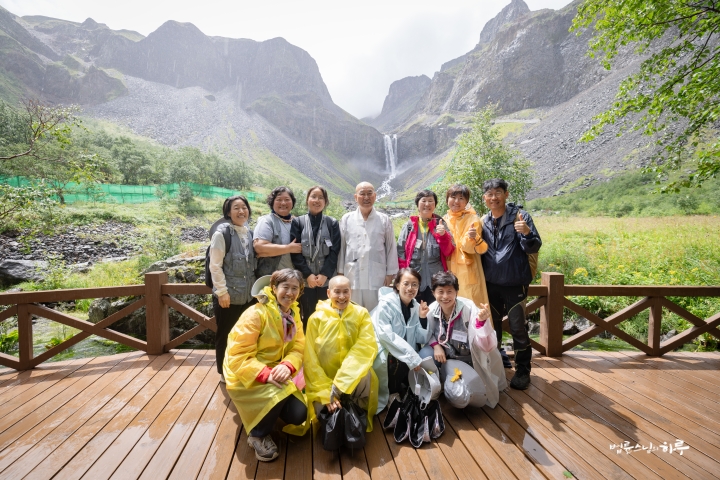
We sang children’s songs together while descending through the forest path.
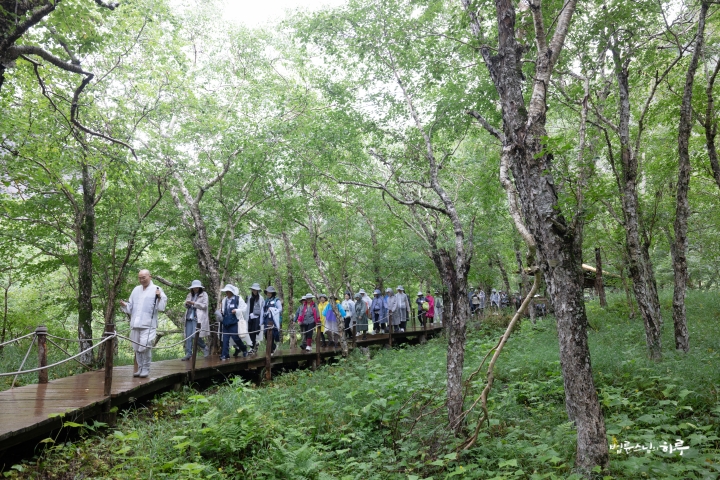
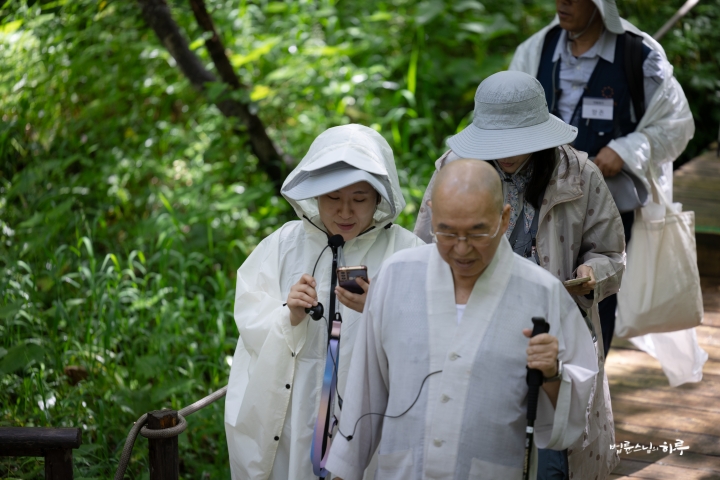
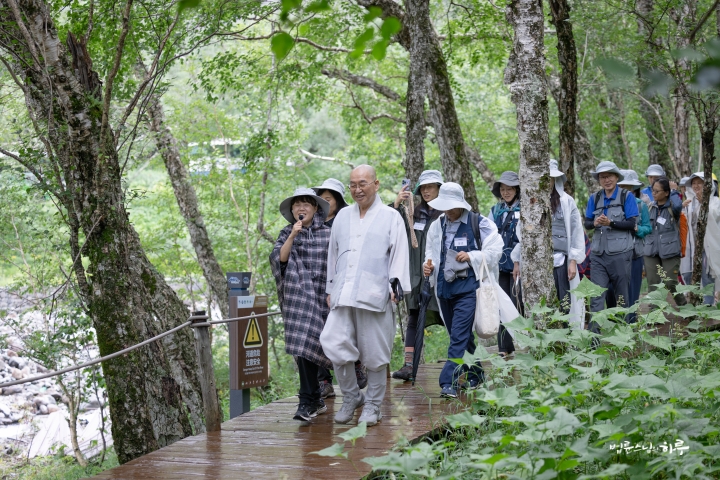
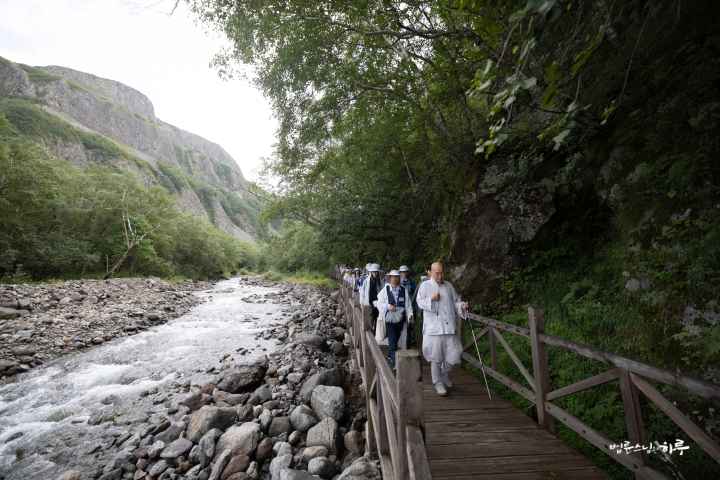
Breathing the fresh air while walking, drowsiness faded and our eyes felt clearer. Chatting leisurely while walking through the forest, we soon arrived at Socheonji.
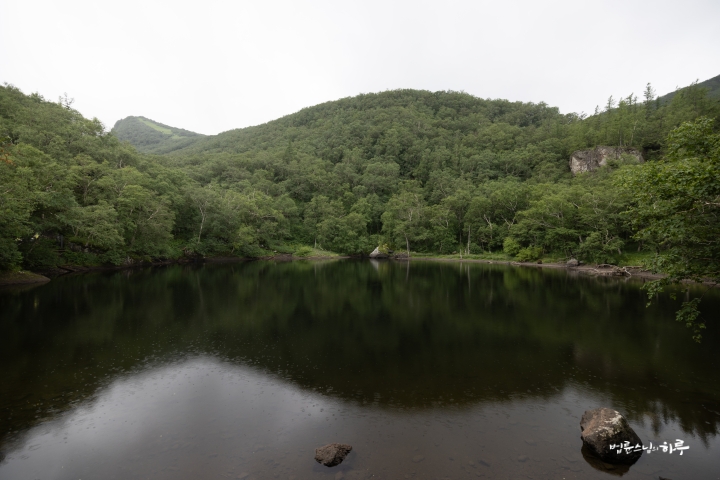
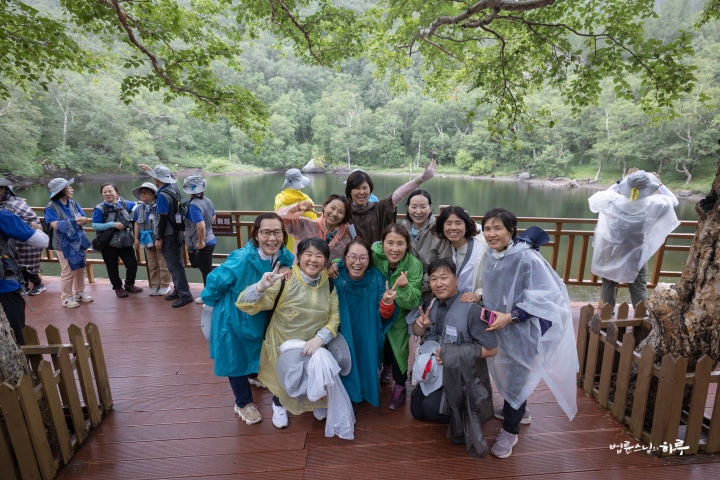
Socheonji was a truly clear and transparent lake. We took a brief rest at Socheonji while listening to Sunim’s explanation.
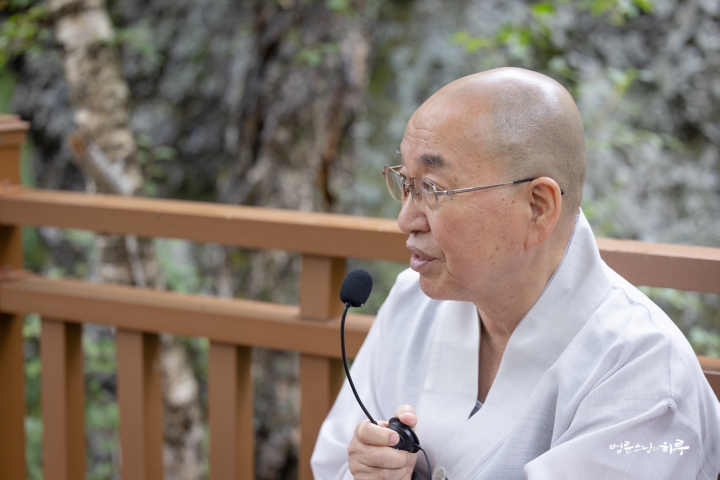
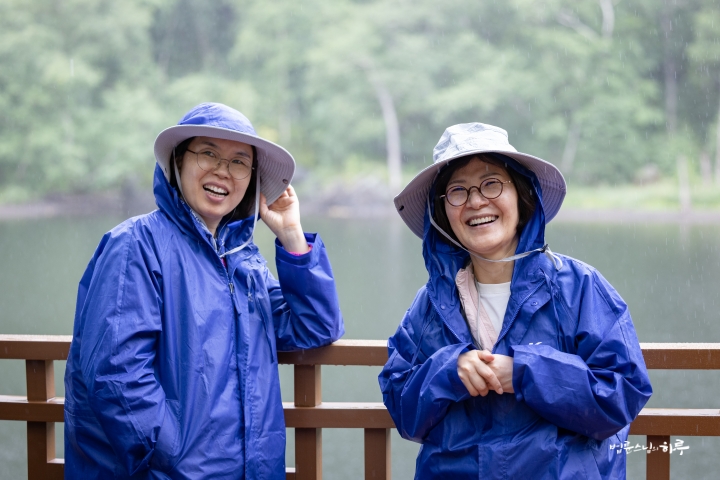
Sunim walked through the forest path again. He explained about the forests around Mt. Baekdu’s Cheonji area.
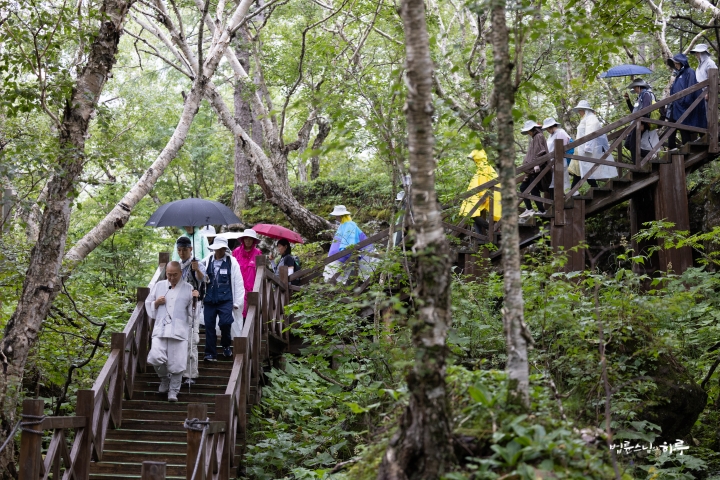
Land Created by Lava: The Secret of Mt. Baekdu’s Forest
The ground here is entirely made of basalt formed from lava. To us, the trees appear to be standing normally, but since the ground is all lava, the trees can’t root deeply and spread sideways instead. When wind blows and knocks a tree over, the bottom part looks like a grilled mung bean pancake. That’s why some people use uprooted trees for carving. They sometimes express dozens of intertwined roots as dragon shapes.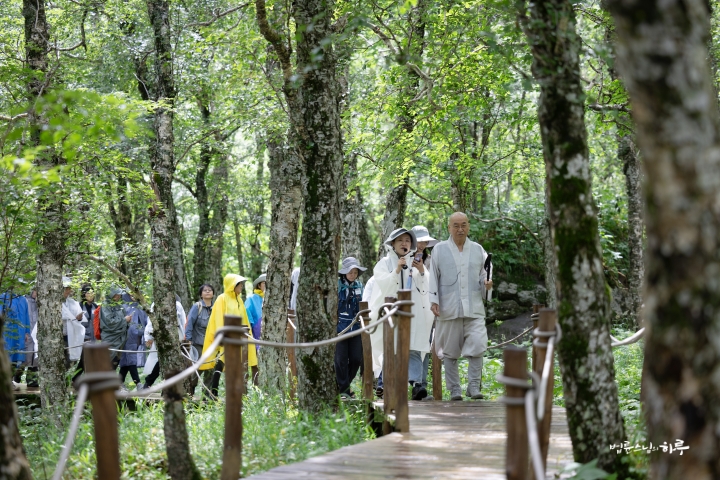
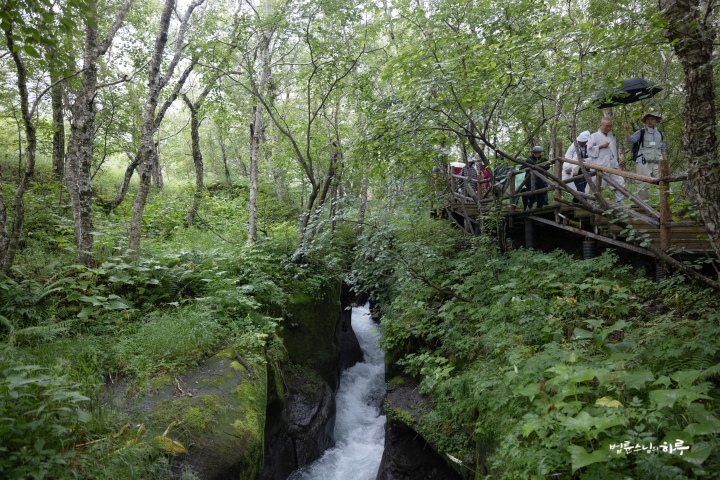
After walking for a while, Nogyeondam (綠淵潭) appeared.
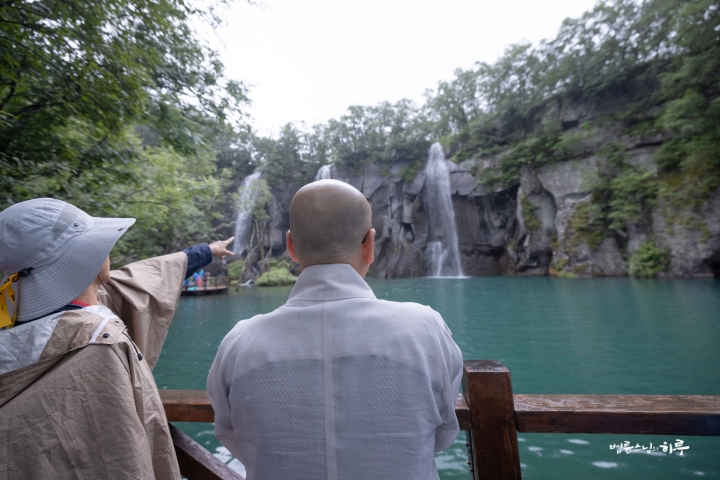
The pond with a small waterfall flowing into it was filled with green emerald light. It was truly amazing how such beautiful colors could appear.
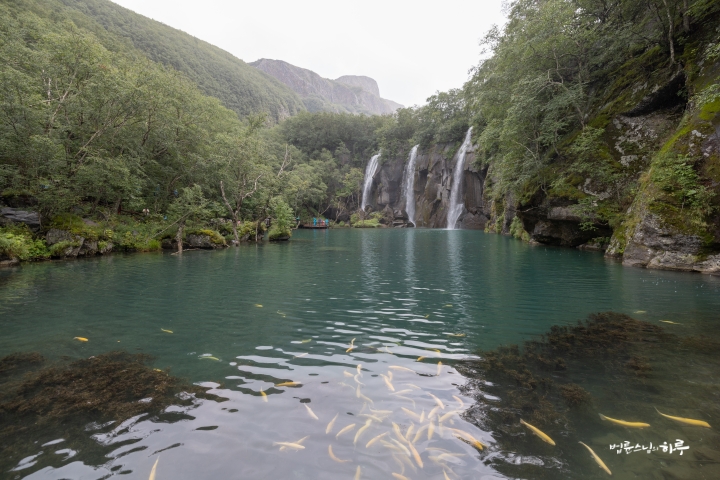
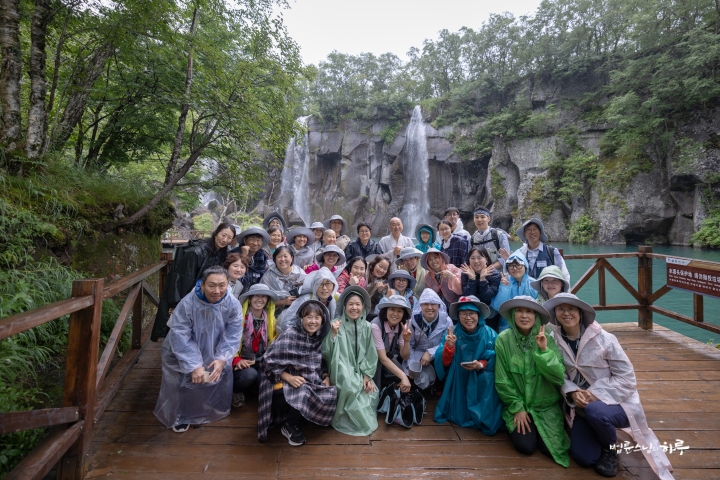
Everyone took time to photograph each other with the beautiful waterfall as a backdrop.
Upon leaving Nogyeondam, shuttle buses to the underground forest kept passing by, but there wasn’t enough time to visit the underground forest. After finishing at Nogyeondam, the Mt. Baekdu tour concluded at 1 PM, and Sunim headed toward the exit gate.
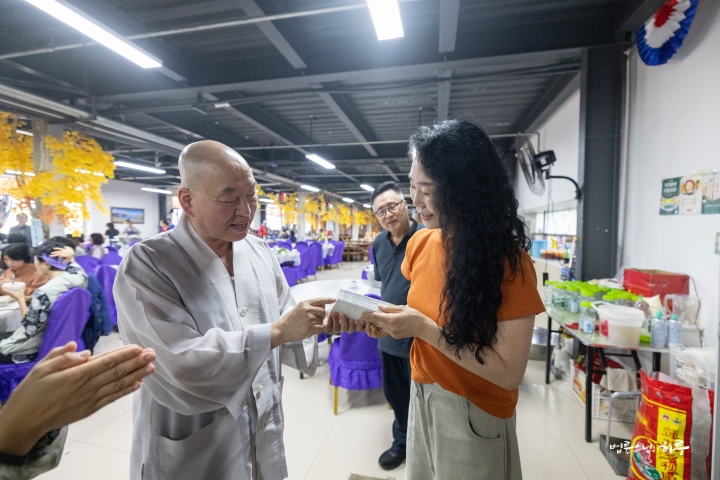
At 2:30 PM, Sunim arrived at Idobaekha for lunch. Since they had arrived at 11 PM yesterday and made the restaurant staff wait a long time, today they skipped the underground forest to try to eat on time. However, some people had gone to see the underground forest, and waiting for them delayed the overall schedule. Sunim expressed gratitude to the restaurant owner and staff who had prepared food according to the constantly changing schedule and presented them with his books as gifts.
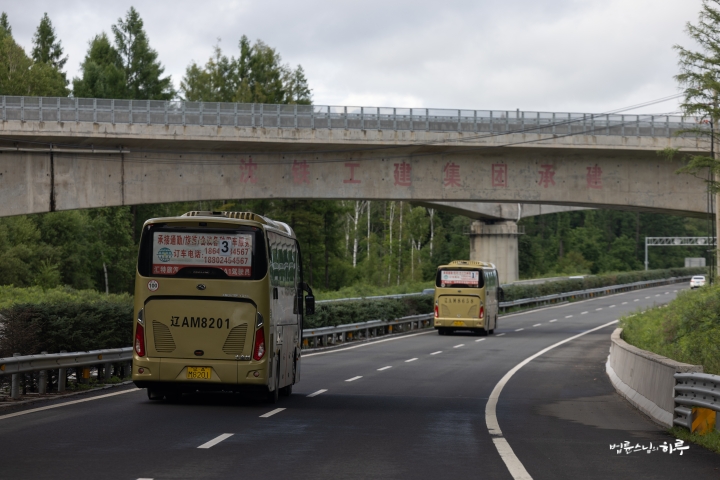
After finishing their meal, the group departed from Idobaekha at 3:40 PM and headed toward Hualong, where the Cheongsanri Battle site is located.
“Yes, we saw it!”
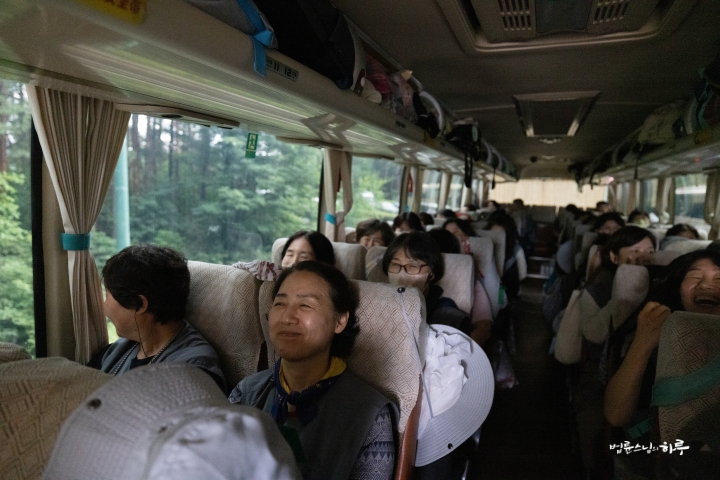
Someone boasted about praying all night. Sunim laughed and said:
“Someone prayed all night last night? You should pray for peace on the Korean Peninsula, not to see Cheonji! (laughter) Now we’ll descend from Mt. Baekdu. Since we’ve walked a lot and eaten, let’s rest for an hour or two before studying. Get some good sleep.”After walking more than 20,000 steps all morning, everyone looked visibly tired. During the journey, everyone fell asleep on the bus without any special explanations.
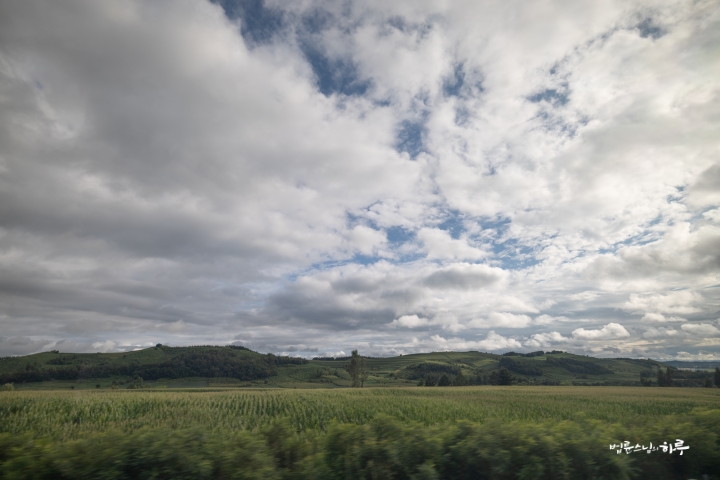
As they approached Cheongsanri village, Sunim woke everyone up again. He explained in detail about the circumstances surrounding the Cheongsanri Battle.
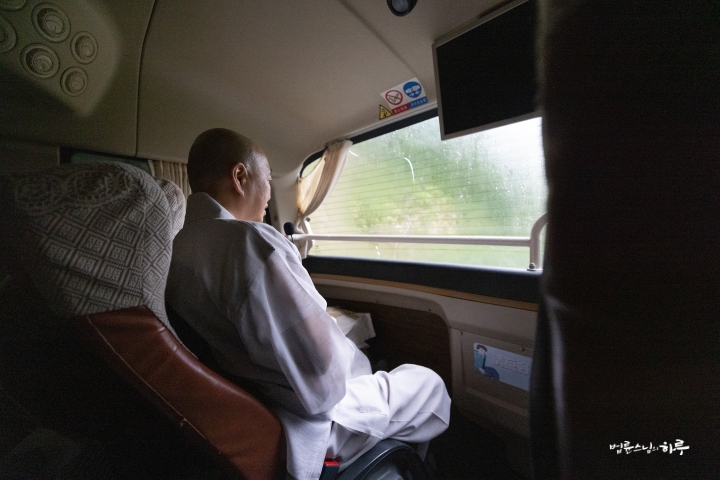
From Immigration to Independence Movement: The Transformation of North Gando
“Until before 1905, people who crossed over here did so because they absolutely couldn’t survive otherwise. But after the Eulsa Treaty of 1905, as the nation’s fate declined, patriotic intellectuals sold their private property and used that money to cross over, establish schools to teach children, and start movements to instill patriotism in young people. This became the seed that allowed this immigrant society to become a base for the independence movement. Among these, the largest in scale was North Gando, now the Yanbian Korean Autonomous Prefecture.” “Between 1905 and 1910, the righteous army wars were fierce within Korea. However, they couldn’t save the country through righteous armies, and forced annexation occurred in 1910. From then until 1919, the resistance movement for independence was relatively quiet. Then, as the March 1st Movement spread like wildfire in 1919, independence activists abroad harbored new hope and established the Provisional Government in Shanghai. Patriotic activists from North Gando, Maritime Province, West Gando, and other overseas locations, as well as from within Korea, gathered to dream of building a new Republic of Korea.” “However, there were several problems. First, the ‘self-determination of peoples’ advocated by U.S. President Wilson after World War I seemed to give hope for independence to all small nations. But in reality, its main purpose was to dismantle the Balkan Peninsula controlled by Germany to break German power. At the time, Japan was a victor nation, and Korea was Japan’s colony, so we weren’t eligible for this declaration. Second, although patriotic activists from various regions gathered, their views were all different. As time passed, instead of creating a comprehensive plan for national independence, only power struggles erupted. Eventually, the March 1st Movement ended in failure after brutal suppression. This led many people to think that the country couldn’t be recovered peacefully and that they must fight with force. So from late 1919 to early 1920, preparations for armed struggle rapidly accelerated. They raised funds, purchased weapons, conducted training, and prepared for guerrilla warfare against the Japanese army. During this process, armed conflicts such as attacks on Japanese outposts became frequent, and the Japanese gradually increased their pressure.”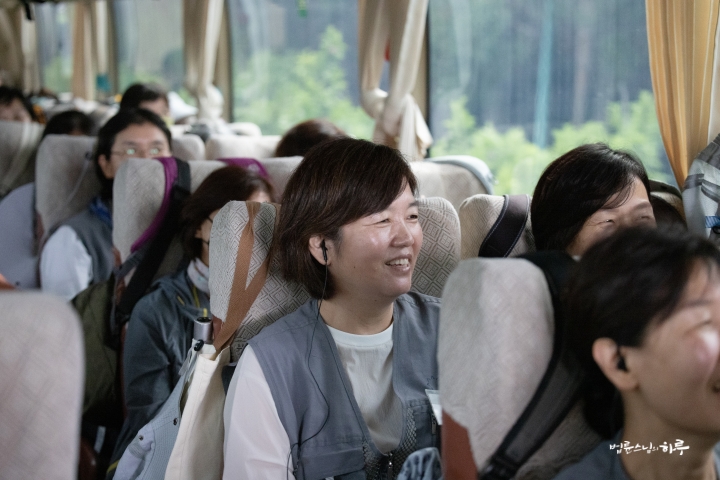
The Cheongsanri Battle: A Record of Six Fierce Days
“Japan then strongly pressured Manchurian warlord Zhang Zuolin to allow Japanese troops to advance into Manchuria to hunt down and suppress independence activists. To create a pretext for this, they staged the ‘Hunchun Incident.’ Using this incident as an excuse, they created grounds for large-scale deployment of Japanese troops to Manchuria under the pretext of protecting Japanese citizens. Thus, in October, a massive independence army suppression operation began. As a result, various units including Hong Beom-do’s Korean Independence Army and Kim Jwa-jin’s Northern Route Military Command retreated separately toward Mt. Baekdu. They scattered into various valleys, and the battles fought while retreating became known as the ‘Cheongsanri Battle.’ Generally, the various battles that occurred in this area between October 21st and 26th are collectively called the Cheongsanri Battle.”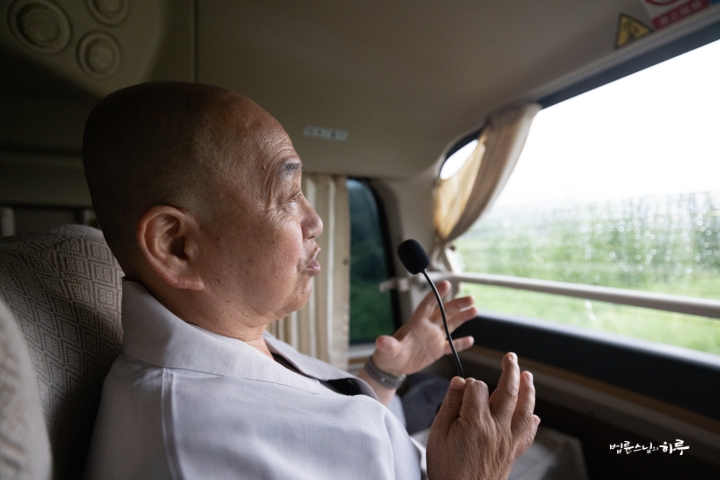
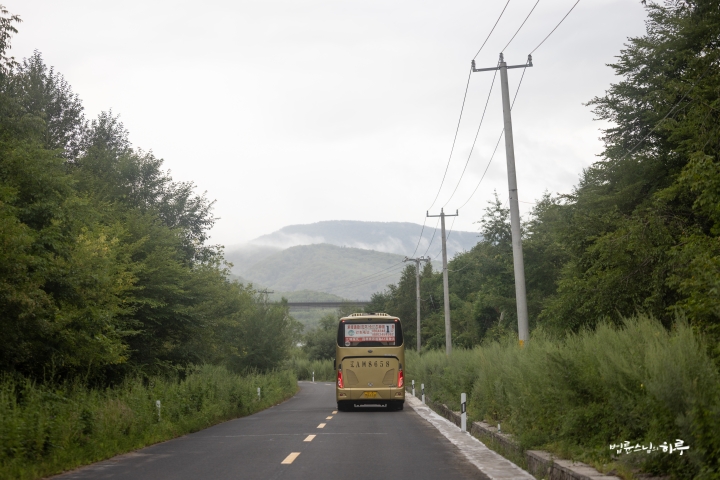
The tour group arrived at Cheongsanri village at 5:45 PM. However, Chinese public security came and blocked the road.
We Can No Longer Visit the Cheongsanri Battle Site
When the staff couldn’t get them to move aside despite repeated attempts, Sunim quietly called the staff over and said:
“Tell them we won’t sing songs or bow, we’ll just take photos and leave. If they say we can’t take photos either, ask if we can just quietly look and leave.”The staff went back to talk and returned.
“They say it’s difficult.”
Sunim requested once more.
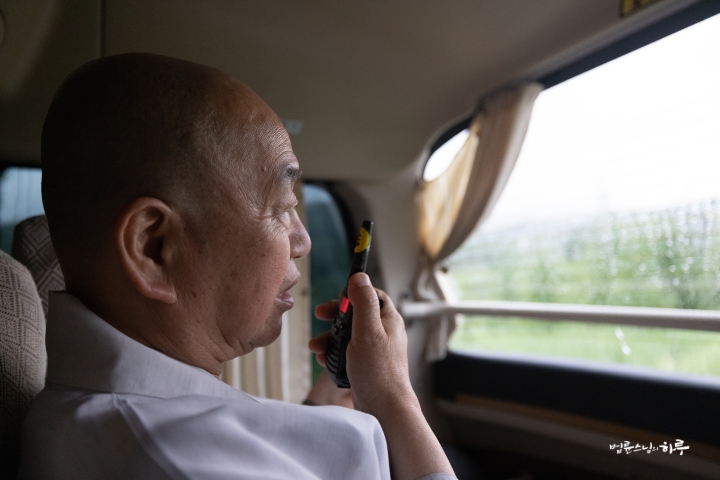
The staff tried persuading once more and made various proposals, but it was no use. The Chinese public security firmly opposed it, citing the dangerous road conditions due to rain damage. While waiting, trucks loaded with materials leisurely passed by the buses heading to Cheongsanri. We said we would walk if necessary, but this too was not accepted. Regrettably, we had no choice but to give up.
“There’s nothing we can do. Let’s go back.”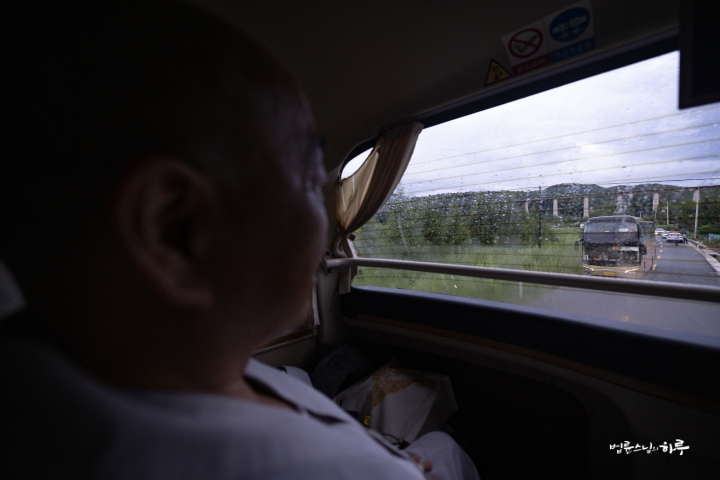
Though it didn’t make sense, there was nothing we could do. As the bus turned around, Sunim made a suggestion to lift everyone’s spirits.
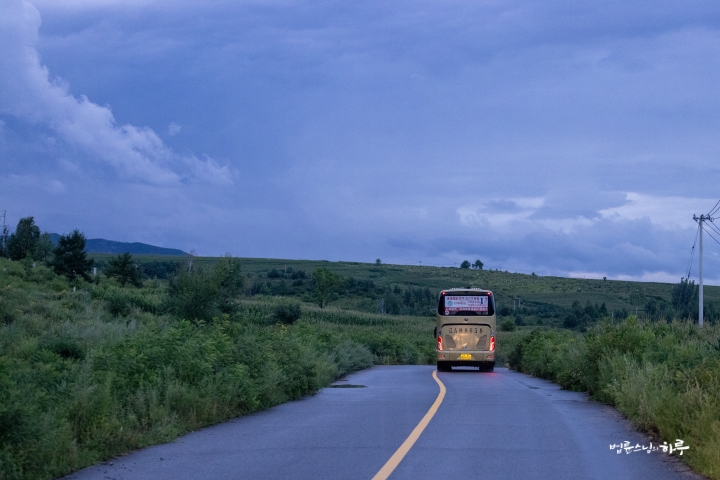
Leaving their disappointment behind, everyone sang independence army songs vigorously as they headed to their accommodation in Hualong.
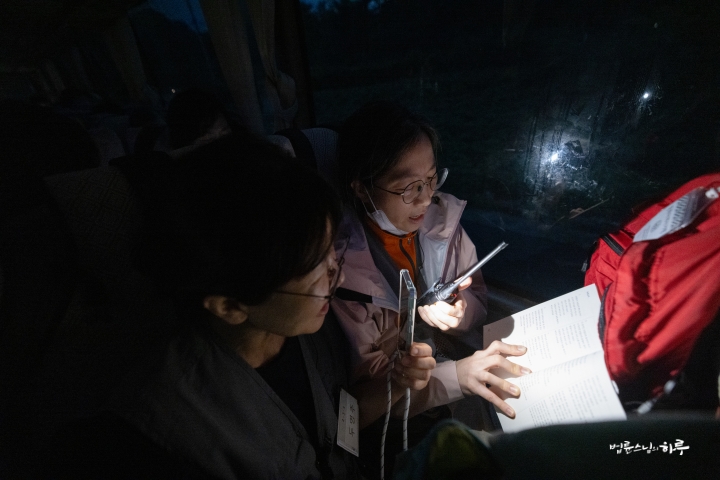
♬ Million brave soldiers of the New Korean Independence Army, do you hear your homeland’s call? Our thirty million compatriots across three thousand li, you and I must save them. Go out, go out to fight, go out to fight until the freedom bell at Independence Gate rings ♬
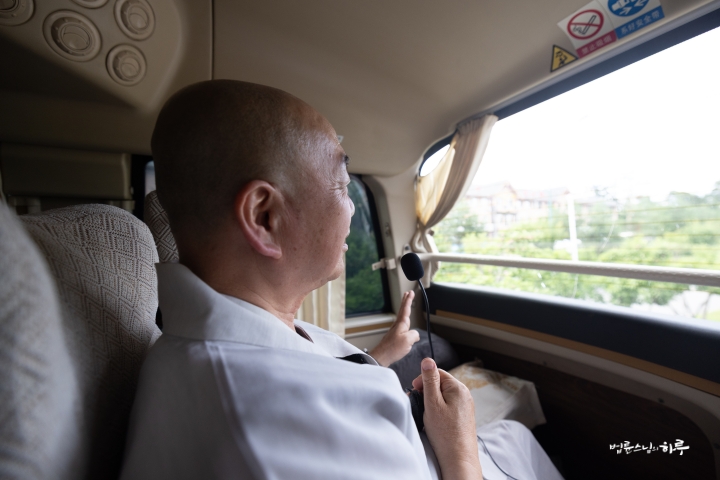
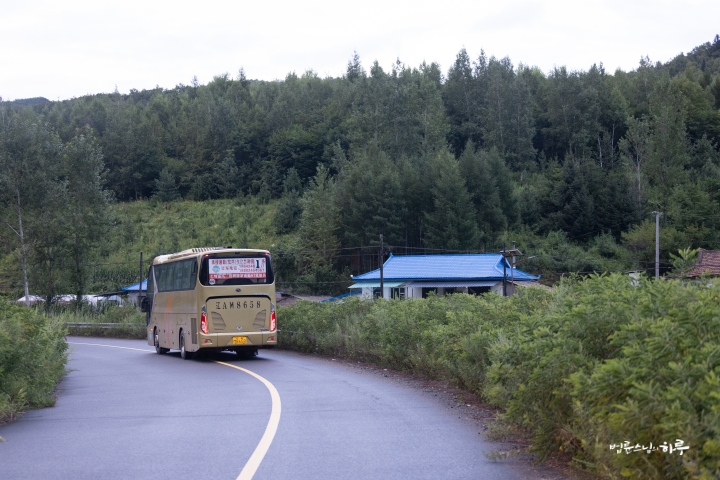
As they traveled by bus, villages appeared outside the windows. Sunim pointed to the roof shapes and explained.
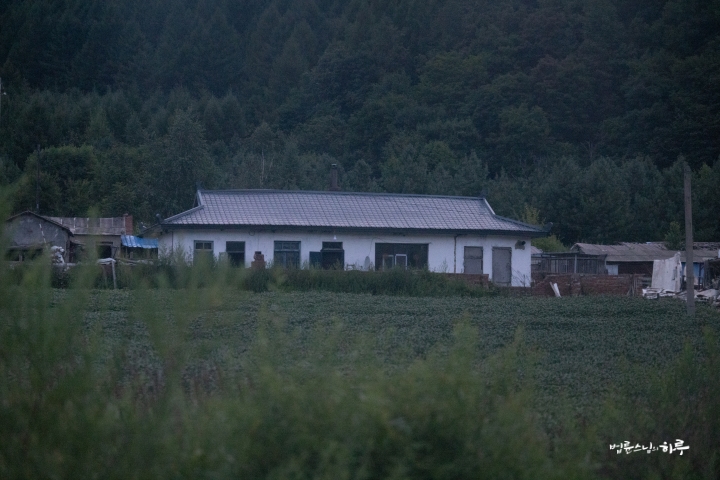
As the sun set, they arrived in Hualong at 7:30 PM and had dinner.
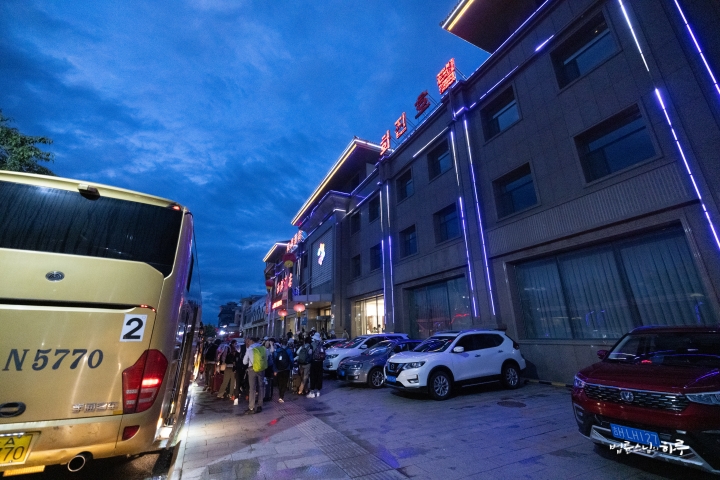
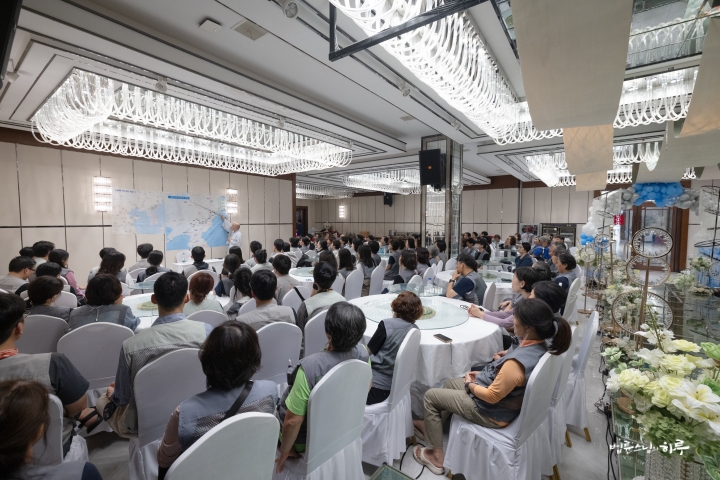
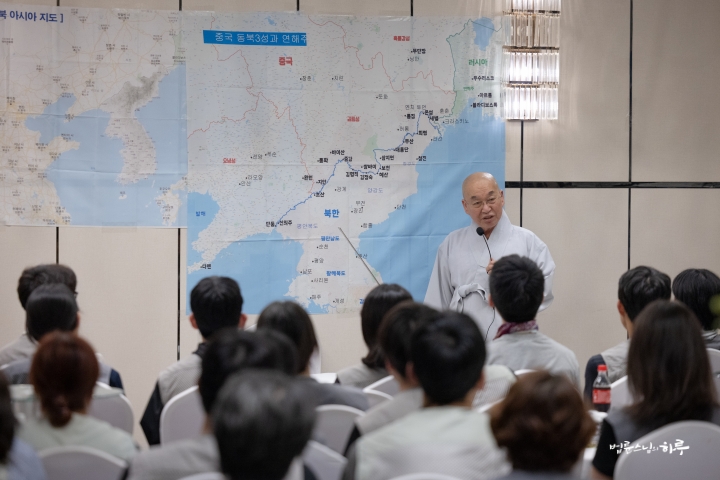
After dinner, everyone gathered in the auditorium at 8:30 PM. Sunim gave a lecture on “The History of the Independence Movement” for an hour and a half.
From Victory at Cheongsanri to the Free City Incident
“Particularly in the Cheongsanri Battle, Japanese casualties numbered about 3,300. While it was a huge victory for the independence army, strategically speaking, it’s difficult to call it a complete victory. For example, if the Japanese Kwantung Army had a million troops, even if 10,000 died, it wouldn’t be a major blow. Eventually, an enraged Japan launched an operation to annihilate the independence army, and the independence army could no longer hold out and had to cross from China into Russia.” “The Russian Revolution occurred in 1917. While the revolution succeeded in Moscow, in the borderlands, the White Army of the Tsar and the Red Army of the revolution continued fighting. The Siberian region hadn’t yet been secured by the Red Army. Among our independence fighters in Russia, there were two positions. One was that even though we were in China, we weren’t part of the Chinese army but simply the Korean Independence Army on Chinese soil. Similarly in Russia, since Koreans gathered to fight Japan for Korean independence, we should have all operational authority. However, the Russian Red Army had a different position. Due to their ‘one country, one party’ stance that all armies must be incorporated into the Red Army, they didn’t recognize a separate Korean Independence Army. These different positions created conflict in Maritime Province between those who sympathized with the Red Army position and those who stood with the independence army position.”Deep Wounds Following the Cheers of Victory
“We crossed into Russia for help, but we were fighting among ourselves there. At the time, several thousand independence fighters all went to Russia, but they were arguing over who would have command authority. Looking at both positions, from our independence army’s perspective, having independent military power for Korean independence seemed more reasonable. So we supported that side, but when the Red Army learned of this, they eventually surrounded and attacked the independence army, and battle broke out. The independence army couldn’t defeat the Russian army. They suffered heavy casualties and scattered, and as a result, the early nationalist independence movement was shattered in an instant. This was the Free City Incident. Due to this, the nationalist camp’s independence movement rapidly lost power.”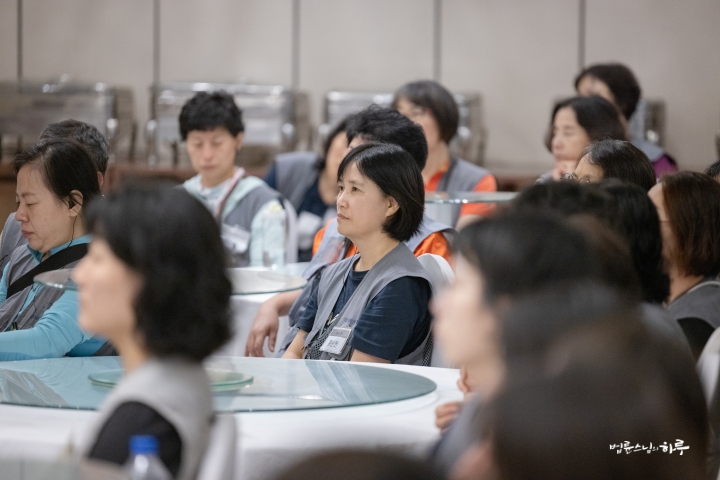
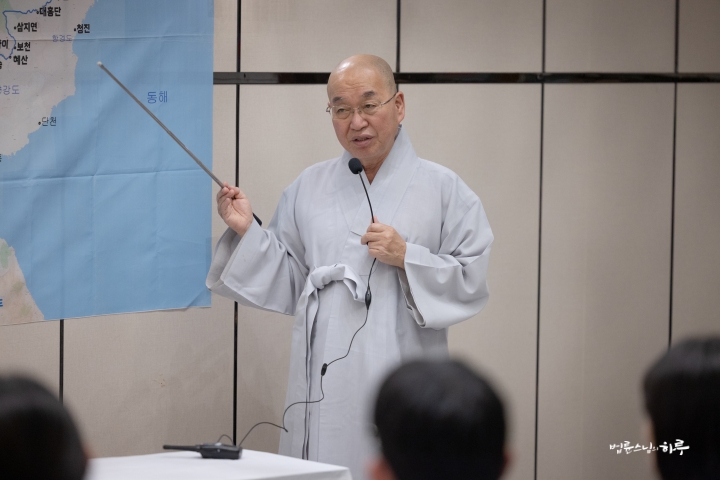
The Light and Shadow of the Independence Movement, and the Background of Division
Looking at our independence movement history broadly, in the early stages of the independence movement, righteous armies rose up vigorously. When that was frustrated, nationalist independence movements became central, with Daejonggyo (大倧敎) as the core ideology. Daejonggyo is a religion that honors Dangun as the national founder, established by Na Cheol (羅喆). Due to the Free City Incident, some independence forces were destroyed while others rose again. There was a brief vacuum period in between, and the nature of the independence movement afterward changed significantly. In China, many ethnic Koreans participated in the Northeast Anti-Japanese United Army, and there were also units like the Korean Volunteer Army that were somewhat leftist but didn’t join the Chinese Communist Party. While the Provisional Government of the Republic of Korea didn’t engage in armed struggle, Yun Bong-gil carried out a kind of righteous deed struggle. After 1940, we independently organized the Korean Liberation Army, but liberation came before they could properly operate, preventing recognition from the international community. However, Yun Bong-gil’s righteous deed made a strong impression on Chiang Kai-shek, and thanks to that, Korean independence was promised at the Cairo Conference. But afterward, when Stalin opposed Chiang Kai-shek’s participation in conferences, the situation arose where Korean independence wasn’t even discussed in the international community. Eventually, the Moscow Conference of Foreign Ministers brought up trusteeship, leading to division. The reason Korean independence could be mentioned once at the Cairo Conference was because it was discussed within the Allied powers’ strategic judgment to elevate China’s status, including Chiang Kai-shek, and within the plan to dismantle Japanese imperialism. However, Western society viewed Korea as part of Japan and didn’t recognize our self-initiated independence movement. While France’s Resistance was recognized, we weren’t. The domestic Korean Communist Party couldn’t engage in armed struggle, and independence activists operating in China and Russia belonged to the Chinese and Russian Communist parties respectively, so they weren’t seen as self-initiated independence movement forces. Whether self-independence is possible depends on how the independence movement is conducted and how much capability is possessed. We fought many struggles. It wasn’t so much a lack of capability as the fact that our fighting methods weren’t unified into independent resistance. That’s why we received no recognition from the international community. As a result, after Japan’s defeat, discussions took place from the perspective of ‘how to handle the post-war treatment of part of Japan.’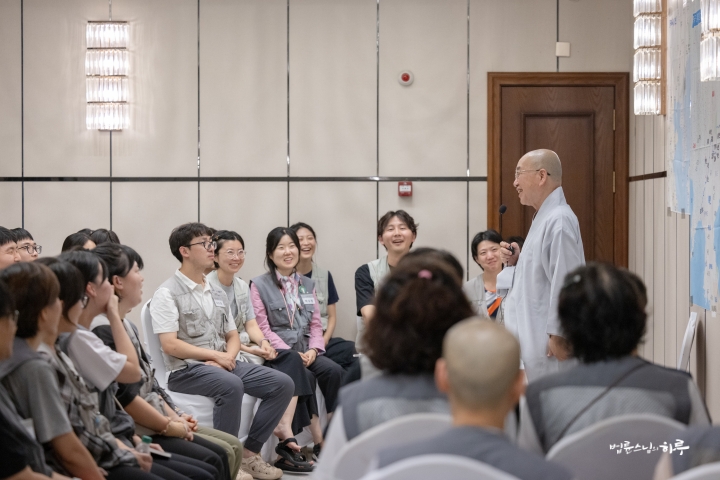
After finishing the lecture, Sunim took questions about any curiosities. Two people raised their hands to ask questions. One of them was curious about why the Chinese government prevents Korean people from visiting anti-Japanese historic sites.
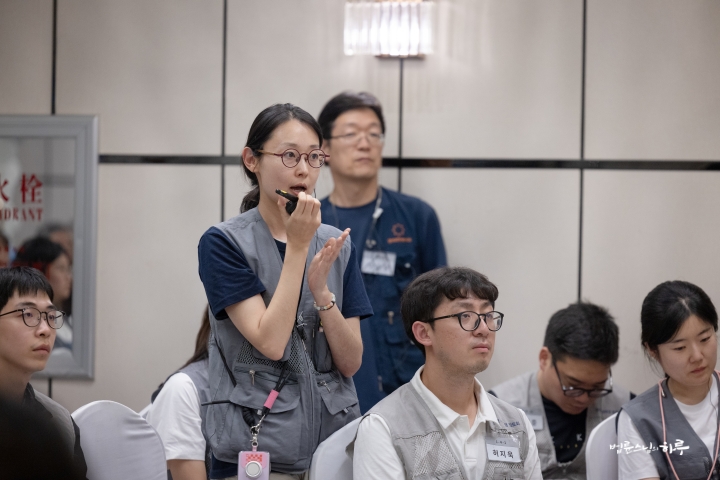
Why Does China Block Visits to Anti-Japanese Independence Movement Historic Sites?
“What I felt most strongly during this Northeast Asian history tour is that the Chinese authorities control our travel too severely. Yesterday we couldn’t go to Gukdong Daehyeol (國東大穴), and today they blocked us from going to the Cheongsanri battle site. I can understand Goguryeo or Balhae as part of the Northeast Project, but I don’t understand why they restrict visits to anti-Japanese independence movement-related historic sites so much. What is the Chinese government concerned about that makes them block visits to anti-Japanese independence movement historic sites?”
Sunim answered with a smile.
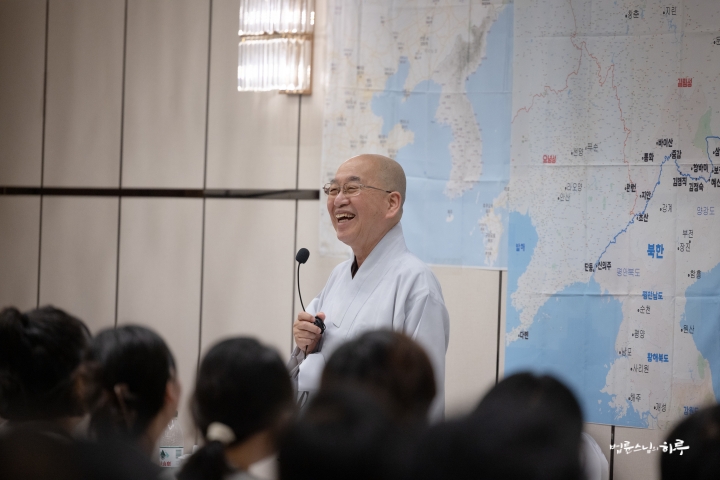
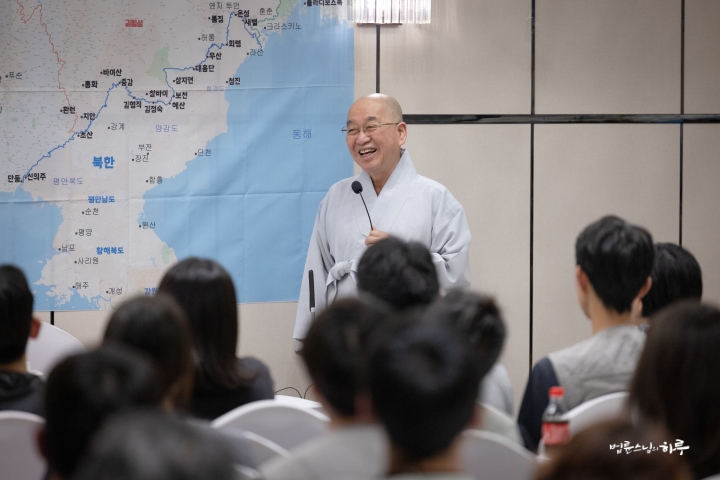
The lecture ended with loud applause. After finishing the lecture, Sunim had conversations with some participants of this history tour before going to bed.
Tomorrow is the 5th day of the Northeast Asian History Tour. Early in the morning, they will pay respects at the Three Founders’ Tomb of Daejonggyo, intensively examine anti-Japanese independence movement sites in Longjing in the morning, see North Korean land across the Duman River from Tumen at lunch, and in the afternoon, travel around the northernmost part of the Korean Peninsula to move to Yanji.